• Global CNC market projected to reach $128B by 2028 • New EU trade regulations for precision tooling components • Aerospace deman
NYSE: CNC +1.2%LME: STEEL -0.4%

When CNC industrial upgrades cut output instead of raising it
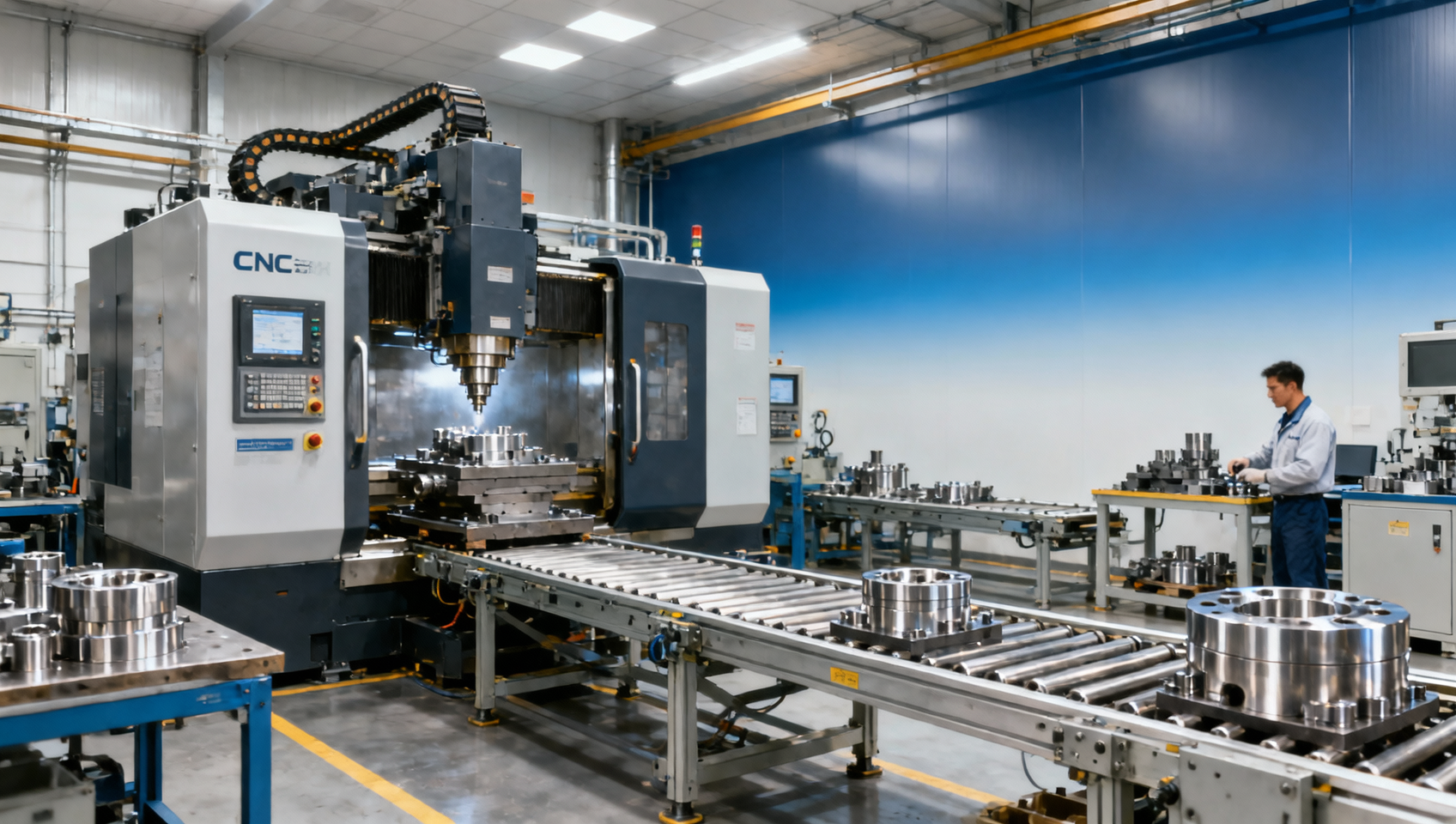
Many manufacturers expect industrial CNC upgrades to improve throughput, yet some projects deliver the opposite. When metal machining, CNC production, or an automated production line is introduced without matching the production process, tooling, and CNC programming to real shop-floor conditions, output can drop fast. This article explores why CNC industrial investments sometimes reduce efficiency and what decision-makers, buyers, and operators should examine before scaling automated production.
In the global CNC machine tool industry, the gap between promised capacity and actual shop-floor performance is often created by execution rather than equipment quality alone. A new machining center, CNC lathe, or flexible production line may offer higher spindle speed, more axes, and stronger digital integration, but those advantages do not automatically convert into more shipped parts per shift.
For operators, the concern is cycle time, setup stability, and ease of programming. For buyers, the focus is total cost of ownership, lead time, and utilization rate. For business leaders, the key issue is whether a CNC upgrade will improve output within 3–12 months or create a bottleneck that slows delivery, raises scrap, and extends payback.
Why higher-spec CNC equipment can still reduce production output
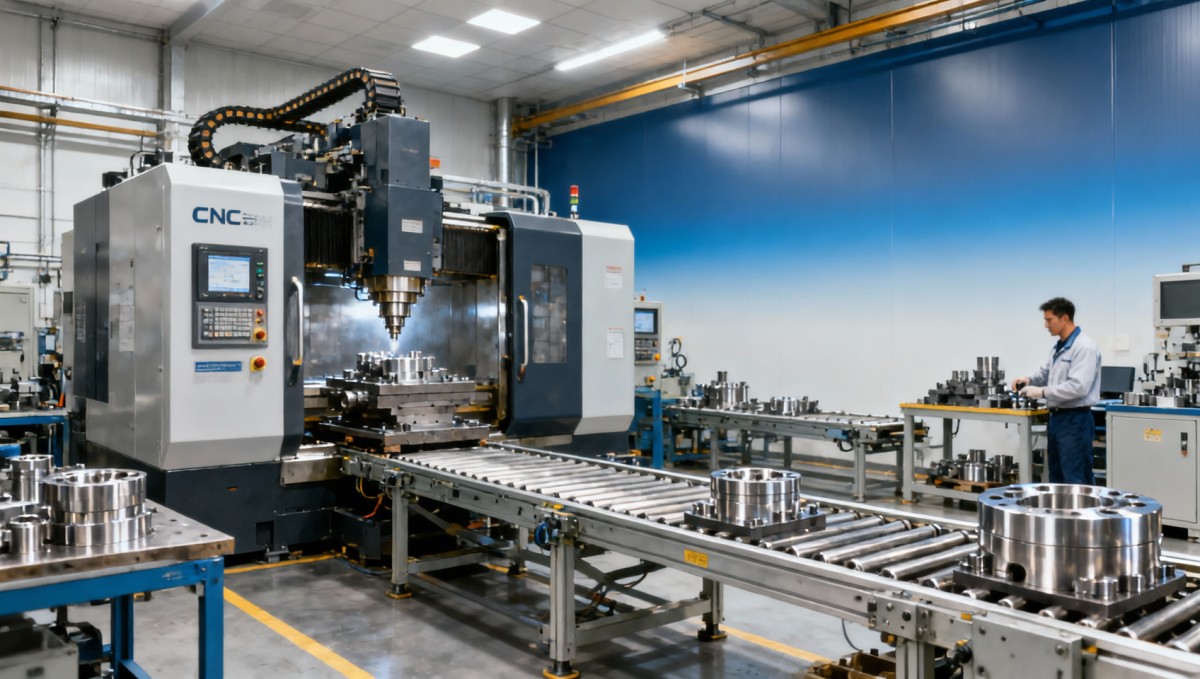
A CNC industrial upgrade often fails when the machine is selected by specification sheet instead of process fit. A 5-axis machining center may look superior to a 3-axis platform, but if 80% of the parts only require simple prismatic machining, the added programming time, fixturing complexity, and operator training burden can lower daily throughput by 10%–25% during the first 8–16 weeks.
Another common issue is mismatch between machine capability and upstream or downstream flow. A fast metal machining cell cannot lift total output if raw material preparation, tool presetting, inspection, deburring, or pallet transfer remains manual. In many plants, one upgraded CNC station runs at 85% spindle utilization, while the full line still delivers only 60%–70% of planned output because adjacent steps become the real bottleneck.
Programming depth also matters. A new CNC production cell may ship with a strong controller and simulation software, yet poorly optimized tool paths, excessive tool changes, and conservative feed rates can extend cycle time by 12–18 seconds per part. On batches of 2,000 to 5,000 units, that difference is large enough to erase the commercial value of the upgrade.
In automotive, aerospace, energy equipment, and electronics production, higher automation only works when process engineering, tooling, and quality control are upgraded together. A machine tool is not an isolated productivity asset. It is one node inside a production system that includes people, methods, measurement, maintenance, and data flow.
The most frequent output-loss triggers after CNC modernization
- Setup times increase from 20 minutes to 45 minutes because fixtures were not standardized across part families.
- Program prove-out takes 2–3 weeks longer than planned due to incomplete CAM post-processor tuning.
- Tool life becomes unstable because cutting parameters were copied from older machines without adjusting for spindle characteristics.
- Inspection frequency rises from every 30 parts to every 10 parts after dimensional drift appears in early production.
- Machine alarms and peripheral integration issues reduce actual availability below the target 90% level.
Where expectations and reality usually diverge
Many procurement teams compare machine speed, axis count, and controller brand, but overlook three practical variables: part mix volatility, operator capability, and batch size. If a plant runs 40–60 SKU changes per month, flexibility and setup repeatability may matter more than maximum spindle output. If the average lot size is under 100 pieces, quick changeover can create more value than adding full automation.
The table below shows why a technically advanced CNC upgrade may underperform when process readiness is low.
The main lesson is simple: industrial CNC upgrades fail less because of hardware defects and more because the production system was not prepared for the new operating window. Throughput is determined by the weakest linked process, not by the most advanced machine on the shop floor.
The hidden constraints inside process planning, tooling, and CNC programming
In precision manufacturing, output losses often begin before the machine arrives. If part routing, tolerance strategy, fixture design, and inspection logic are not reviewed in advance, the new CNC investment inherits old inefficiencies and adds new ones. Shops sometimes replace a stable 2-operation process with a more advanced single-setup concept, only to discover that workholding repeatability is not strong enough to maintain Cp or Cpk targets.
Tooling is another underestimated variable. Moving from conventional machining to higher-speed CNC production without revising insert grade, holder rigidity, coolant delivery, and tool change logic can create inconsistent wear patterns. A difference of only 8%–12% in tool life can force more offsets, more checks, and more downtime, especially in lights-out or semi-automated production.
Programming discipline affects output just as much as machine power. CAM-generated paths that look efficient in simulation may be too conservative in real cutting conditions or may contain unnecessary air cutting. In one common scenario, the machine cuts for 70 seconds but spends 25 seconds on non-cutting moves, probing, and redundant tool changes. That means more than 25% of cycle time produces no material removal.
For operators and supervisors, this is where practical process engineering matters. Feed, speed, stepover, tool engagement, and datum strategy should be validated against actual lot sizes, workpiece material, and gauge capability. A CNC machine tool industry upgrade becomes profitable when the process window is stable enough to repeat over 2 shifts, not just during a supervised trial run.
H4-level checks that should happen before the first production lot
Setup repeatability
Verify clamp force, reference surfaces, and changeover sequence. On families with 10–20 recurring part numbers, standardized locating logic can cut setup variance by 30% or more.
Tool path efficiency
Measure real spindle-cut ratio, not only total cycle time. A practical target for many machining centers is to keep non-cutting time below 20%–25% on repeat jobs.
Inspection burden
If first-piece and in-process checks are too frequent, the line may lose more time to measurement than it gains from faster machining. Control plans must be proportional to process capability.
The following table helps buyers and technical teams compare process readiness factors that directly affect output after a CNC upgrade.
These checkpoints are not administrative details. They determine whether a CNC upgrade shortens cycle time or simply transfers instability into a more expensive machine environment.
How buyers and decision-makers should evaluate an upgrade before purchase
For procurement teams, the safest approach is to buy output capacity rather than machine features alone. That means asking how many good parts per hour, how much changeover time, how many operators per cell, and how much maintenance interruption the proposed solution will realistically require. A low-price machine with 75% availability may be less valuable than a higher-priced platform that sustains 88%–92% availability in your actual process.
Decision-makers should also separate prototype, low-volume, and mass-production needs. A machine tool suited to high-mix aerospace work may not be ideal for repetitive automotive or electronics components. If the business model includes demand swings of 20%–30% per quarter, flexible fixturing and shorter validation cycles may matter more than maximum automation density.
Supplier evaluation should include post-installation support. In the CNC machine tool industry, output losses often appear during the first 30–90 days, not on acceptance day. Buyers should clarify response time for service, spare parts lead time, training coverage, and whether process optimization support is included after installation.
A disciplined procurement review can prevent many upgrade failures. Instead of only comparing quotations, compare the assumptions behind each quotation: cycle time model, material condition, operator level, tool package scope, and line integration boundary.
A 5-step purchasing review for CNC industrial upgrades
- Map current bottlenecks by shift, part family, and workstation before selecting a machine.
- Define measurable targets such as throughput gain, scrap ceiling, setup reduction, and payback window.
- Request cycle-time assumptions and prove-out scope from the supplier, not only machine specifications.
- Check service capability, training hours, spare parts readiness, and integration responsibility.
- Run a phased launch plan with first-piece approval, pilot batch, and stable production review.
Questions purchasing teams should ask suppliers
Ask whether the quoted cycle time includes probing, tool changes, loading, unloading, and inspection. Confirm whether fixture design is included, and whether the machine is optimized for steel, aluminum, cast iron, or mixed-material processing. Also ask how performance changes when part complexity rises or lot size falls below 200 pieces.
If the upgrade includes an automated production line, clarify the integration owner for PLC logic, robot interface, pallet transport, and fault recovery. Output problems often come from control handshakes and buffering logic rather than from the CNC unit itself.
Implementation mistakes that slow ramp-up after installation
Even a well-selected CNC system can lose output if implementation is rushed. One major error is treating FAT, SAT, and pilot production as a single event. In practice, these are 3 distinct gates. Factory acceptance may confirm machine motion and safety logic, site acceptance verifies integration in the real plant, and pilot production confirms stable output on actual parts over several shifts.
Training is another weak point. A 2-day machine introduction is rarely enough when a plant is moving to multi-axis machining, automated loading, or digital monitoring. Operators need training on alarms, tool wear correction, setup sequence, offset logic, and recovery procedures. Maintenance staff need a separate path covering lubrication, spindle warm-up, backup routines, and common fault diagnosis.
Ramp-up plans should include realistic output expectations. In many CNC production launches, week 1 reaches only 40%–60% of target throughput, week 2 reaches 65%–80%, and stable production appears only after process tuning, tool optimization, and documentation control are in place. Overpromising output on day 1 creates avoidable pressure and poor operational decisions.
Another mistake is ignoring maintenance discipline during the launch phase. Chips, coolant concentration, way cover contamination, air supply quality, and sensor alignment can all affect uptime. A modern machining center may be digitally advanced, but if basic preventive checks are missed for 5–7 days during ramp-up, alarm frequency can rise fast.
A practical ramp-up framework
- Days 1–3: installation verification, axis calibration, safety checks, dry-run validation.
- Days 4–10: first-part approval, fixture tuning, offset setting, initial cycle-time measurement.
- Weeks 2–4: pilot lot production, tool life study, inspection frequency adjustment, operator certification.
- Weeks 4–8: output stabilization, OEE review, spare part stocking, standard work release.
FAQ for operators, buyers, and plant managers
How long does a CNC upgrade usually take to show real productivity gains?
For standard machining cells, visible gains may appear within 4–8 weeks if tooling, fixturing, and programs are mature. For automated production lines or complex multi-axis systems, the stabilization period is often 8–16 weeks.
What is the most common sign that an upgrade is reducing output?
If cycle time improves on paper but shipped good parts per shift do not rise, the bottleneck is likely in setup, inspection, loading, tool change strategy, or line balance rather than pure machining speed.
Is more automation always better?
No. For high-mix, low-volume work, excessive automation can add programming and recovery complexity. The better choice may be modular fixtures, quick-change tooling, and simpler CNC process control.
What a successful CNC upgrade looks like in practice
A successful industrial CNC upgrade aligns machine capability, production process, operator skills, and quality control. It improves output not only by cutting faster, but by reducing setup variation, stabilizing tool life, improving part consistency, and making scheduling more predictable. In many cases, the best result comes from balanced optimization across 4 areas: machine, tooling, programming, and flow.
For metal machining and precision manufacturing businesses, the most reliable strategy is to validate the process before scaling. Pilot one product family, confirm actual cycle time, record downtime causes, and compare planned versus real output over at least 2 full shifts. If the process remains stable, then expand to more parts, more operators, or more automation.
This approach supports every audience in the CNC machine tool market. Researchers gain a realistic framework for comparing technologies. Operators get a clearer understanding of practical constraints. Buyers reduce procurement risk. Business leaders can make investment decisions based on output, not just equipment image or specification promises.
If you are planning a CNC machine, machining center, or automated production line upgrade, evaluate the full process chain before committing capital. A well-scoped project can improve throughput, quality, and delivery reliability. A poorly matched one can consume budget and reduce output. To review machine selection, process readiness, or integration risks in more detail, contact us to discuss your application, request a tailored solution, or explore more precision manufacturing options.
PREVIOUS ARTICLE
NEXT ARTICLE
Recommended for You
 What causes chatter in metal machining and how to stop itCNC Machining Technology Center
 Industrial CNC lead times are shifting in 2026Manufacturing Market Research Center
 When CNC industrial upgrades cut output instead of raising itMachine Tool Industry Editorial Team
 Automated lathe errors that often start with bar feedingMachine Tool Industry Editorial Team
 Why CNC metalworking scrap rates rise on thin wall partsCNC Machining Technology Center
 CNC cutting speed or finish quality: where losses beginCNC Machining Technology Center

Aris Katos
Future of Carbide Coatings
15+ years in precision manufacturing systems. Specialized in high-speed milling and aerospace grade alloy processing.
▶
When CNC industrial upgrades cut output instead of raising itMachine Tool Industry Editorial Team▶
Why CNC production planning breaks down during mixed batch runsMachine Tool Industry Editorial Team▶
CNC industrial machines that ship with embedded diagnostics—what’s actually working in practiceMachine Tool Industry Editorial Team▶
Low-maintenance CNC manufacturing sounds ideal—until coolant filtration costs double over three yearsMachine Tool Industry Editorial Team▶
Global CNC Machine Tool Industry Trends in 2026: Automation and Precision Manufacturing Driving GrowthMachine Tool Industry Editorial Team
Mastering 5-Axis Workholding Strategies
Join our technical panel on Nov 15th to learn about reducing vibrations in thin-wall components.

Providing you with integrated sanding solutions
Before-sales and after-sales services
Comprehensive technical support