• Global CNC market projected to reach $128B by 2028 • New EU trade regulations for precision tooling components • Aerospace deman
NYSE: CNC +1.2%LME: STEEL -0.4%

Why CNC production planning breaks down during mixed batch runs
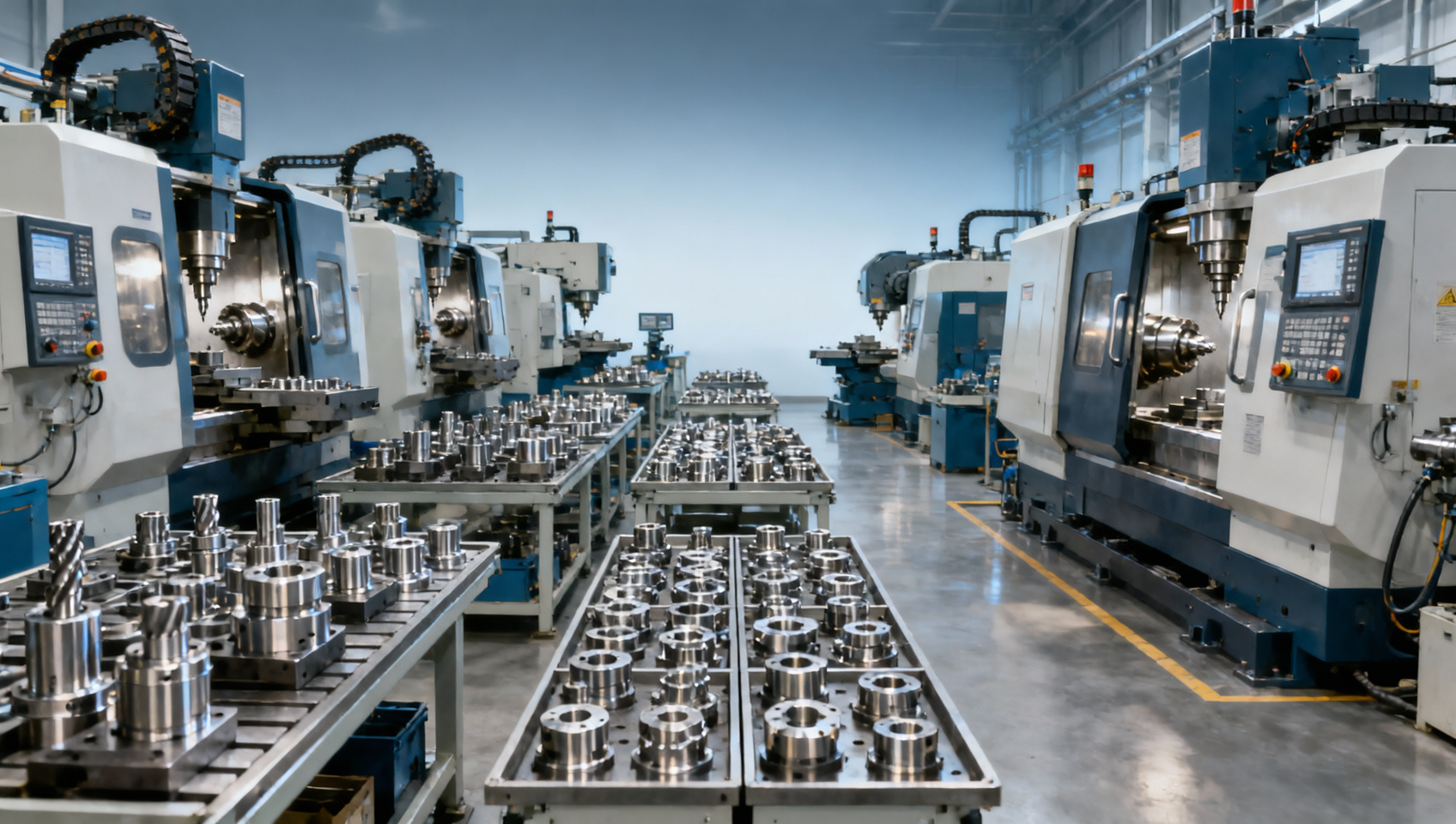
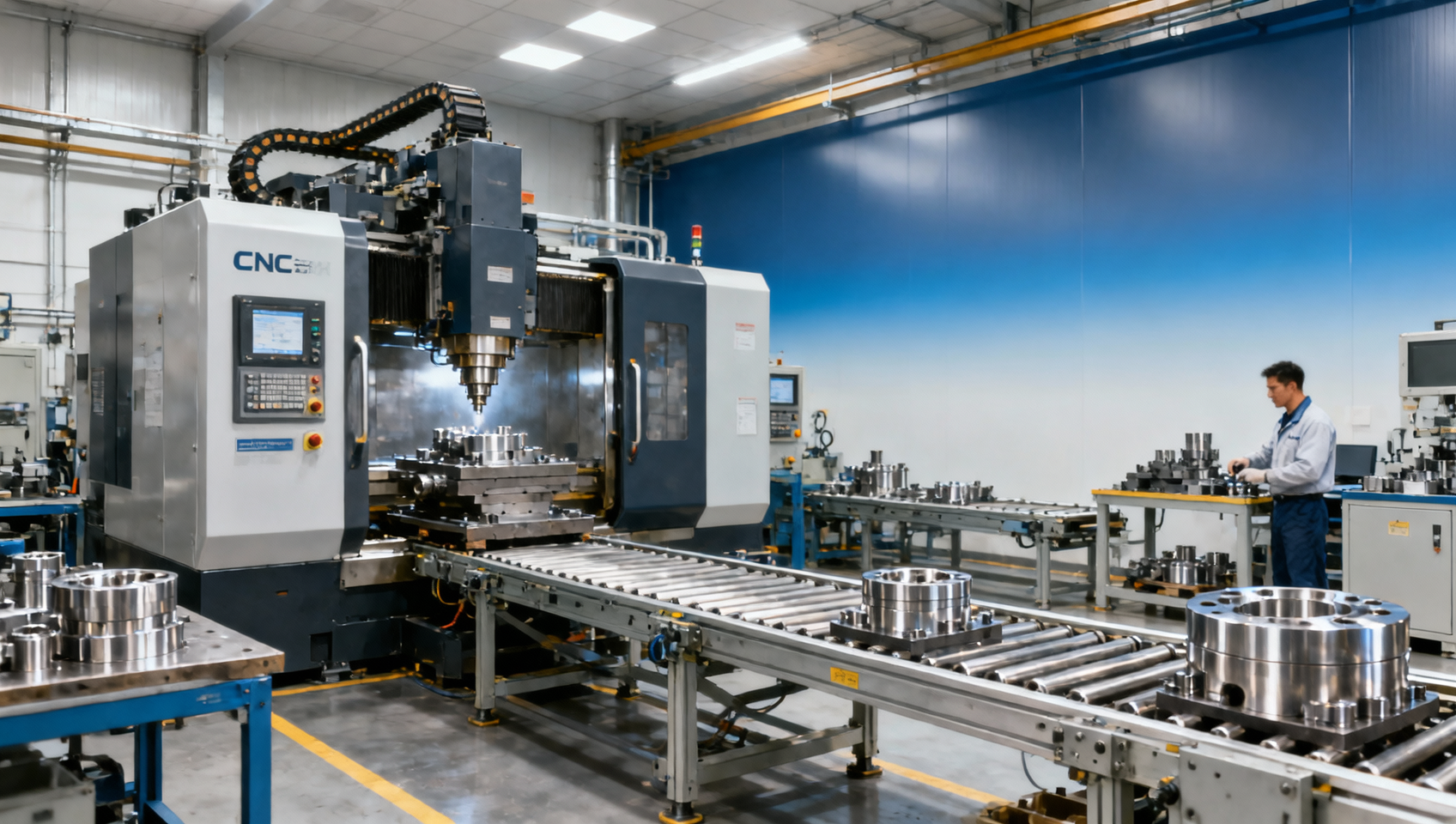
Mixed batch runs expose hidden weak points in CNC production, from unstable scheduling and tool changes to material flow and CNC Programming conflicts. In today’s Manufacturing Industry, where industrial CNC, CNC milling, automated lathe systems, and Automated Production Line setups must support flexible output, even small planning errors can disrupt the entire Production Process. This article explains why breakdowns happen and how smarter Industrial Automation can reduce them.
For researchers, operators, buyers, and manufacturing leaders, mixed batch runs are no longer a niche problem. They are now a daily reality in job shops, component plants, and multi-product production environments serving automotive, aerospace, electronics, and energy equipment customers. When lot sizes fall from 500 pieces to 50, or even 5, the planning logic that worked for long runs often starts to fail.
The issue is rarely caused by one machine alone. Breakdowns usually come from the interaction between scheduling, tooling, setup sequencing, fixture availability, material handling, and program revision control. Once these elements drift out of sync by even 10 to 20 minutes per order, the entire shift can lose capacity, delivery confidence, and traceability.
Understanding these breakdown points matters for more than productivity. It affects OEE, on-time delivery, scrap rates, operator stress, purchasing decisions, and investment planning for automation. In flexible CNC production, planning is not a back-office activity; it is a core production capability.
Why mixed batch production creates planning instability
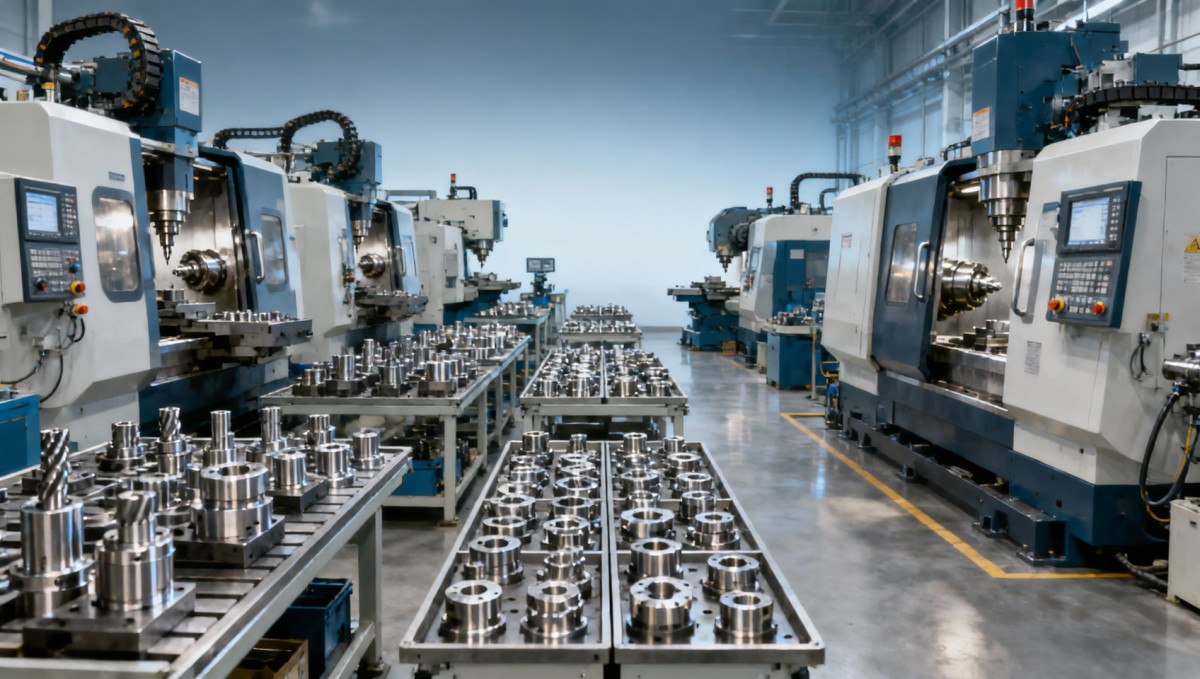
In a stable high-volume environment, production planners can optimize around repeatability. The same tool pack, fixture set, material grade, and cycle time may run for 3 to 7 days with few changes. Mixed batch runs replace that stability with frequent transitions. A machine may switch between aluminum housings, alloy steel shafts, and thin-wall precision parts in one shift, each requiring different setup logic.
This creates planning instability because standard ERP or basic scheduling boards often assume fixed cycle times. In reality, a nominal 6-minute cycle may become 8.5 minutes after tool offsets, warm-up cuts, chip evacuation checks, and first-article inspection. Across 20 orders in a day, that difference can consume more than 40 to 50 extra machine hours per week in a medium-sized shop.
Another problem is sequence sensitivity. If planners release work based only on due date, they may schedule parts in an order that forces 6 tool family changes instead of 2, or 4 fixture swaps instead of 1. The machine is technically busy, but productive spindle time drops while operators spend 15 to 30 minutes per changeover handling non-cutting tasks.
The risk is higher in facilities running CNC lathes, machining centers, and multi-axis systems together. A delay at one bottleneck process can block downstream balancing. If a 5-axis machining center slips by 2 hours, associated deburring, washing, inspection, or automated assembly cells may sit idle, even if other machines are ready.
Typical triggers behind scheduling failure
- Cycle time assumptions are based on ideal programs rather than actual shop-floor performance.
- Setup duration is estimated as a fixed value, even though mixed products may require 10 minutes, 45 minutes, or more than 90 minutes.
- Dispatching logic ignores tool commonality, fixture compatibility, and inspection queue capacity.
- Material arrivals are recorded as available before sawing, kitting, or pre-processing is complete.
What planners often underestimate
The most underestimated factor is variation stacking. A 12-minute delay in setup, a 7-minute probe routine, a 15-minute wait for a gauge, and a 20-minute forklift delay may seem minor separately. Combined, they can push one order beyond its planned completion window and create a chain reaction across the next 3 to 5 jobs.
The table below shows how common planning assumptions differ from mixed batch reality in CNC production environments.
The key lesson is that mixed batch planning fails when static assumptions are applied to dynamic conditions. Shops that continue using fixed setup standards, rigid machine loading, and due-date-only sequencing usually experience recurring late orders, overtime pressure, and avoidable rescheduling.
Where breakdowns happen on the shop floor
The shop floor reveals planning weakness faster than any meeting report. In mixed batch CNC production, the first visible sign is usually waiting: operators waiting for programs, tools waiting for presetting, machines waiting for fixtures, and quality staff waiting for stable first-off parts. These small interruptions often happen 8 to 15 times per shift and are more damaging than one large downtime event.
Tooling is a major source of disruption. A planner may group jobs by machine type but miss insert grade conflicts, holder length differences, or tool magazine capacity limits. If a machining center supports 30 tools but 3 different jobs in sequence need 42 tool positions, the operator must manually reconfigure the magazine. That can add 20 to 35 minutes and increase the chance of loading errors.
CNC programming control is another weak point. In mixed batch environments, multiple revisions may exist for one part family, especially when customer drawings change, fixtures are modified, or a roughing path is adjusted to reduce chatter. If one outdated version reaches the machine, the result may be scrap, rework, or inspection holds. Even a single wrong offset page can jeopardize a batch of 10 to 30 precision parts.
Material flow also causes hidden planning failures. Raw stock may be available in inventory, but not in the correct cut length, heat number grouping, or pallet location. In plants using automated production lines or robot tending, these details matter even more. A robot cell cannot compensate for a mislabeled blank or a tray staged at the wrong station.
Most common operational failure points
- Tool preset data is incomplete, causing manual offsets at the machine.
- Fixture sharing between departments creates schedule conflicts during peak periods.
- Programs are released before final simulation or post-processor checks are complete.
- First-article inspection capacity is lower than machine release volume.
- Material staging is not synchronized with order priority and machine sequence.
Why machine utilization can look healthy while delivery slips
A shop can report 80% spindle utilization and still miss customer commitments. That happens when machine time is consumed by low-priority orders, repeated setups, or restart losses after interruptions. Utilization without flow control is misleading. For mixed batch runs, schedule adherence, setup efficiency, and order completion rate are often better indicators than utilization alone.
The following table summarizes how common floor-level disruptions affect lead time, quality, and production planning reliability.
For procurement teams and decision-makers, these failure points are important because they show that planning problems are often system problems. Buying a faster CNC machine may not solve output instability if the plant still lacks tool data control, fixture visibility, and revision-safe program release.
How better production planning logic improves mixed batch CNC performance
Effective mixed batch planning starts with realistic routing logic rather than optimistic scheduling. Shops need to plan around setup families, tool commonality, fixture compatibility, inspection load, and material readiness. A useful rule is to separate machine capacity into three layers: cutting time, changeover time, and uncertainty allowance. In many flexible workshops, reserving 10% to 15% of capacity for variability leads to better delivery performance than pushing for 95% planned loading.
Another practical method is family-based sequencing. Instead of grouping all urgent jobs together, planners group jobs that share 60% to 80% of tooling, similar chuck jaws, or the same probing routine. This approach often reduces cumulative setup time by 20% to 35% without purchasing new equipment. It also lowers operator fatigue because repetitive adjustments become more predictable.
Digital preparation matters as much as sequencing. Tool preset systems, centralized program control, barcode-based material tracking, and machine dashboards can reduce information delays across shifts. In a plant with 10 to 20 CNC assets, saving 8 minutes of search and confirmation time per job can translate into several additional machine hours each week.
For automated production lines and robot-supported cells, planning must also account for handoff logic. If one process runs at 90-second takt time and the next process averages 140 seconds because of inspection or part orientation checks, the automation system will not behave like a continuous line. Buffer sizing, pallet count, and intervention rules must be built into planning from the start.
Five planning practices that usually deliver measurable gains
- Maintain setup standards by part family, not only by machine type.
- Use actual machine feedback to refresh cycle times every 2 to 4 weeks.
- Release CNC programs only after revision lock, simulation check, and tooling confirmation.
- Stage raw material and fixtures 1 shift ahead for high-mix cells.
- Set dispatch rules that consider due date, setup similarity, and inspection queue status together.
What smarter automation should really solve
Smarter industrial automation should not simply accelerate machine motion. It should reduce coordination loss. The most valuable functions are often digital tool life tracking, automatic job identification, pallet routing visibility, and revision-controlled program distribution. These features support planning discipline and lower the frequency of manual interventions that break mixed batch flow.
When evaluating improvement projects, buyers should compare not only spindle power or axis speed but also planning-enabling capabilities. A fast machine with weak data integration may underperform a slightly slower system with better setup repeatability, tool management, and scheduling transparency.
What buyers and manufacturing leaders should evaluate before investing
Mixed batch planning problems often push companies toward equipment upgrades, but the right investment depends on the true bottleneck. If the main loss comes from 30-minute setup events repeated 6 times per shift, a quick-change fixture strategy or tool presetting system may yield stronger returns than another machining center. If revision errors are frequent, software and process control may matter more than hardware.
For procurement teams, vendor discussions should include operational questions, not just machine specifications. Ask how the solution supports batch size variation from 1 piece to 200 pieces, how many tool pockets are available in real production, how revision control is handled, and what integration is possible with MES, ERP, or shop-floor terminals. These details shape actual planning performance.
Decision-makers should also evaluate changeover economics. If one machine loses 2.5 hours per day to setup and confirmation tasks, reducing that by 30% can recover roughly 37.5 hours per month in a single-shift pattern. Across 5 to 8 machines, the capacity effect can be large enough to postpone new equipment purchases or reduce subcontracting costs.
Implementation readiness is equally important. A new automation layer can fail if tool data is inconsistent, fixtures are not standardized, or operators are trained only on basic machine use. In most CNC plants, a 3-stage rollout works better than a one-time full deployment: data cleanup, pilot cell validation, then wider integration over 8 to 16 weeks.
Practical evaluation checklist for procurement and plant managers
This type of evaluation helps companies choose solutions that strengthen planning resilience, not just nominal machine capacity. For B2B buyers, the best investment is often the one that reduces variability, not simply the one with the highest speed specification.
Common buying mistakes
- Assuming automation will fix poor routing data automatically.
- Comparing machines by spindle metrics while ignoring setup ecosystem costs.
- Underestimating operator training needs for high-mix scheduling and verification.
- Skipping pilot runs before full deployment across multiple cells.
FAQ: practical questions about mixed batch CNC planning
Because mixed batch instability affects daily operations and capital planning at the same time, many teams ask similar questions before changing their systems or equipment strategy. The answers below address common concerns from production, purchasing, and management perspectives.
How do we know whether planning or machine capacity is the real problem?
Start by measuring three values for 2 to 4 weeks: actual cutting time, setup/changeover time, and waiting time caused by tools, programs, fixtures, or material. If non-cutting loss consistently exceeds 20% to 25% of available shift time, planning and preparation are likely more critical than adding pure spindle capacity.
What batch size range usually creates the most planning stress?
Stress is usually highest when batch sizes are too small to absorb setup time but large enough to require formal control, often in the range of 5 to 80 pieces. At that point, every setup error, revision mismatch, or missing tool has a visible cost, yet planners still need disciplined sequencing and traceability.
Can automation help small and medium CNC workshops, or is it only for large factories?
Automation can help smaller operations if it targets the right constraint. For a workshop with 4 to 12 machines, digital tool tracking, offline setup preparation, and centralized program release may deliver faster returns than a fully robotic cell. The best first step is usually low-complexity automation that removes repeated coordination errors.
How long does it usually take to improve mixed batch planning performance?
Basic visibility improvements can appear within 2 to 6 weeks if cycle times, setup families, and revision control are cleaned up first. More complete gains from digital integration, fixture strategy updates, and scheduling rule redesign often take 2 to 4 months, depending on the number of machines, product families, and operator shifts involved.
Mixed batch runs break CNC production planning because they expose every weak connection between scheduling, tooling, programming, material flow, inspection, and automation handoff. The solution is not only more equipment, but better planning logic, more realistic data, and stronger execution discipline across the entire production process.
If your factory is dealing with frequent changeovers, unstable lead times, or difficulty scaling industrial CNC and automated production line performance, a structured review of planning rules, tool strategy, and digital coordination can create immediate value. Contact us to discuss your workflow, compare solution paths, and get a more practical CNC production optimization plan for mixed batch manufacturing.
Recommended for You
 What causes chatter in metal machining and how to stop itCNC Machining Technology Center
 Industrial CNC lead times are shifting in 2026Manufacturing Market Research Center
 When CNC industrial upgrades cut output instead of raising itMachine Tool Industry Editorial Team
 Automated lathe errors that often start with bar feedingMachine Tool Industry Editorial Team
 Why CNC metalworking scrap rates rise on thin wall partsCNC Machining Technology Center
 CNC cutting speed or finish quality: where losses beginCNC Machining Technology Center



Aris Katos
Future of Carbide Coatings
15+ years in precision manufacturing systems. Specialized in high-speed milling and aerospace grade alloy processing.
▶
When CNC industrial upgrades cut output instead of raising itMachine Tool Industry Editorial Team▶
Why CNC production planning breaks down during mixed batch runsMachine Tool Industry Editorial Team▶
CNC industrial machines that ship with embedded diagnostics—what’s actually working in practiceMachine Tool Industry Editorial Team▶
Low-maintenance CNC manufacturing sounds ideal—until coolant filtration costs double over three yearsMachine Tool Industry Editorial Team▶
Global CNC Machine Tool Industry Trends in 2026: Automation and Precision Manufacturing Driving GrowthMachine Tool Industry Editorial Team
Mastering 5-Axis Workholding Strategies
Join our technical panel on Nov 15th to learn about reducing vibrations in thin-wall components.

Providing you with integrated sanding solutions
Before-sales and after-sales services
Comprehensive technical support