• Global CNC market projected to reach $128B by 2028 • New EU trade regulations for precision tooling components • Aerospace deman
NYSE: CNC +1.2%LME: STEEL -0.4%

Why CNC metalworking scrap rates rise on thin wall parts
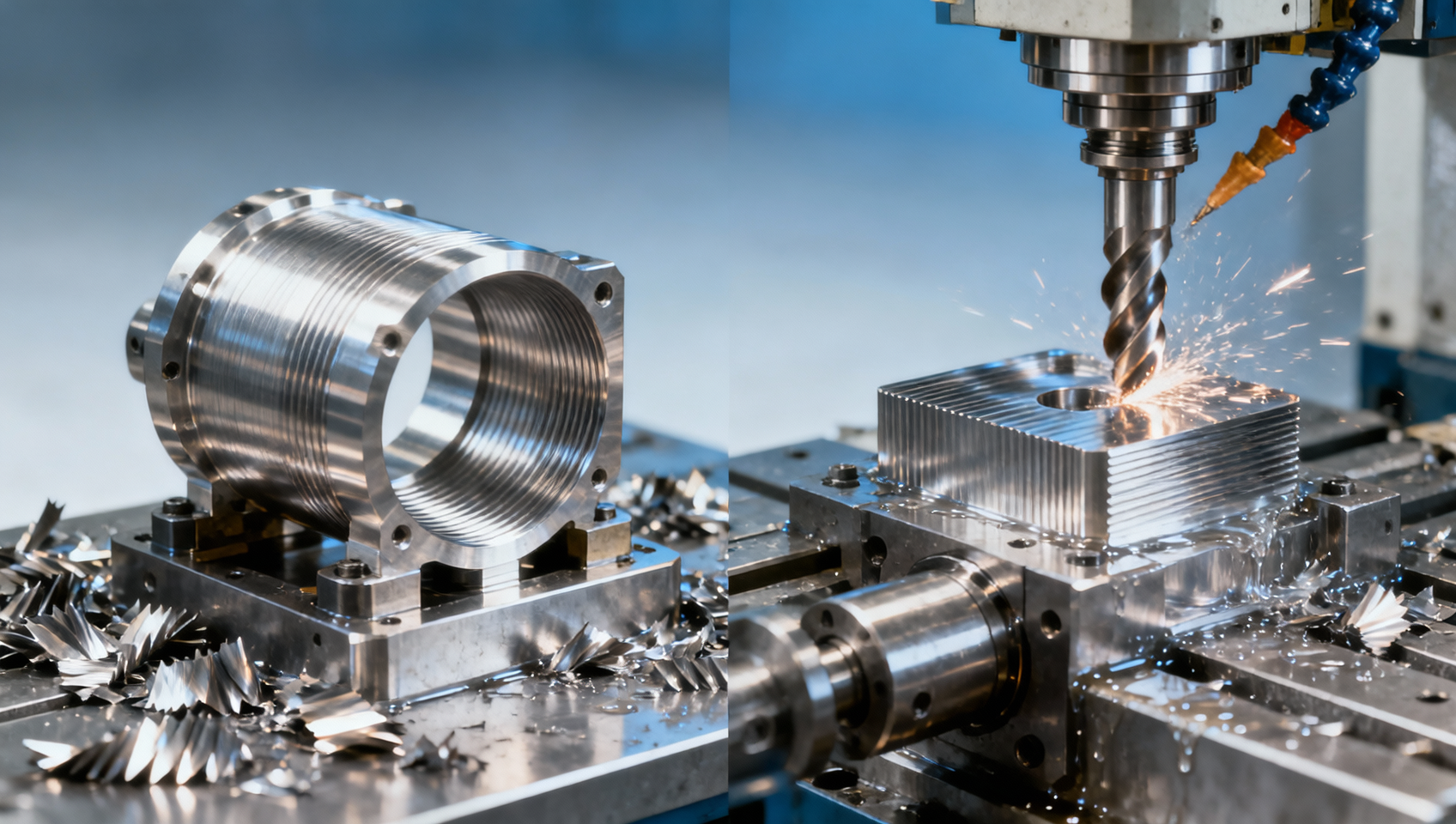
Thin wall parts often push CNC metalworking to its limits, where small errors in CNC cutting, tooling, and fixturing can quickly increase scrap rates. In today’s metal machining and industrial CNC environments, understanding why deformation, vibration, and unstable production process conditions occur is essential for operators, buyers, and decision-makers seeking better quality, lower waste, and more reliable automated production.
In practical CNC machining, thin wall components are common in aerospace brackets, electronics housings, energy equipment covers, medical frames, and lightweight automotive structures. These parts save weight and material, but they also react more strongly to cutting force, heat, and clamping pressure than solid sections. A wall thickness change from 3.0 mm to 1.0 mm can turn a stable process into one with chatter, distortion, and dimensional drift.
For shop-floor users, the main concern is process stability. For procurement teams, the focus is tooling life, machine capability, and fixture repeatability. For decision-makers, scrap is a cost issue that affects delivery, margin, and customer confidence. Understanding the root causes behind rising scrap rates on thin wall parts helps all four groups make better technical and commercial decisions.
Why thin wall parts are inherently difficult in CNC metalworking
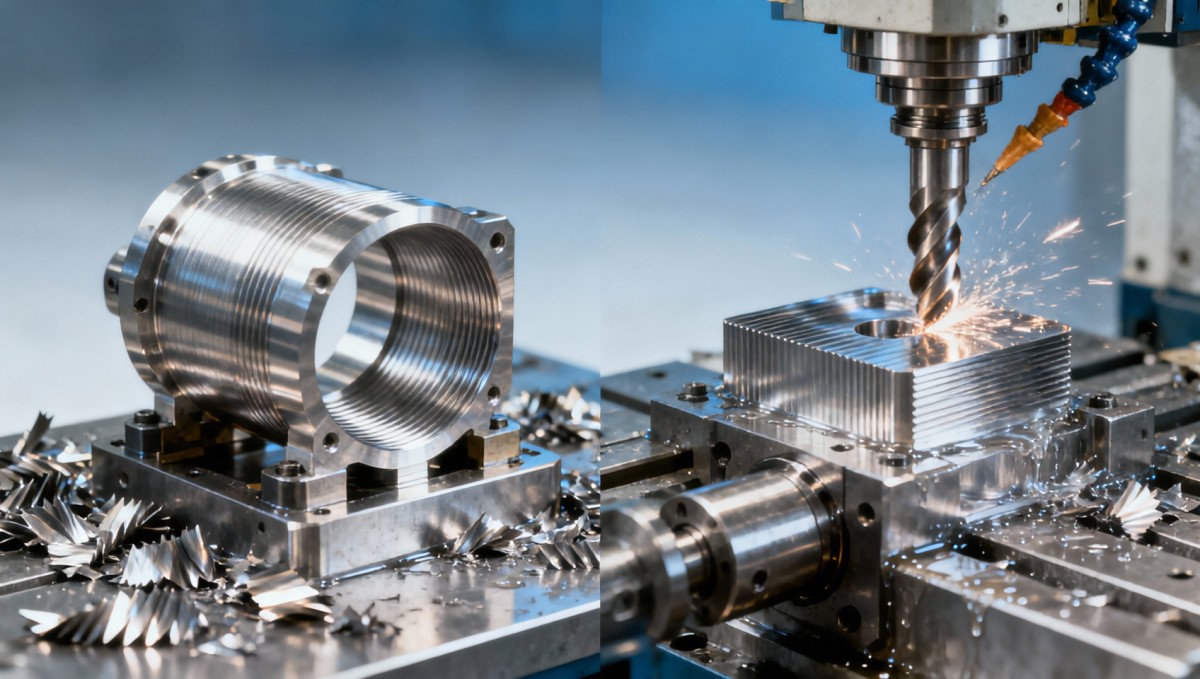
Thin wall machining is difficult because the part itself behaves like a flexible structure during cutting. When a tool engages a thin section, even moderate radial force can bend the wall by a few hundredths of a millimeter. That may sound small, but for tolerance bands such as ±0.02 mm or flatness targets below 0.05 mm, the error is enough to create reject parts.
Material removal also changes stiffness continuously. A billet that starts rigid becomes weaker with each pass. This means a cutting strategy that works on the first operation may fail on the finishing pass. Operators often see this when roughing appears normal, but the finished part springs back after unclamping, causing out-of-roundness, bowing, or wall thickness variation.
Heat is another major factor. Aluminum alloys, stainless steels, titanium, and nickel-based materials all respond differently to temperature rise. On a 150 mm long thin wall part, thermal growth of only 0.03 mm to 0.08 mm during machining can shift critical dimensions outside tolerance if coolant delivery, chip evacuation, or cycle timing is inconsistent.
Machine condition matters as much as programming. Spindle runout, axis backlash, and toolholder imbalance may be acceptable for general machining but become serious when wall sections are under 2.0 mm. In high-speed applications, even slight vibration can amplify surface waviness and edge burr formation, especially on unsupported corners and long ribs.
Typical failure modes seen on thin wall components
- Wall deflection during finishing, leading to thickness variation of 0.05 mm to 0.20 mm.
- Chatter marks caused by poor rigidity, often visible at spindle speeds above 8,000 rpm.
- Spring-back after unclamping, especially when clamping force is too high for a 1.5 mm or thinner section.
- Burrs and edge rollover on light-gauge features where feed and tool sharpness are mismatched.
The table below summarizes common technical causes behind rising scrap rates in CNC metalworking for thin wall parts and how those causes usually appear on the component.
The key takeaway is that scrap rarely comes from a single mistake. In most shops, thin wall rejects result from a combination of force, heat, and insufficient support. That is why correcting only speed or only clamping pressure often produces limited improvement.
The main process drivers behind rising scrap rates
In CNC metalworking, scrap rates usually rise when process windows are too narrow and variation is not controlled. Thin wall parts have smaller safety margins than solid parts. A tool wear increase of 10% to 15%, a fixture repeatability shift of 0.02 mm, or a coolant nozzle misalignment can be enough to create unstable results across a batch of 20, 50, or 200 pieces.
Toolpath design is one of the biggest hidden causes. Full-width cuts, abrupt direction changes, and uneven stock allowance create localized loads that thin sections cannot resist. Many scrap problems improve when shops switch to constant engagement paths, lower radial step-over, and staged finishing. For example, reducing radial engagement from 40% of tool diameter to 8% to 15% can significantly lower deflection in aluminum walls.
Fixturing is equally important. Standard vises and hard jaws are often too aggressive for delicate parts. Thin wall components may need soft jaws, vacuum support, custom nests, sacrificial ribs, or modular contact points. If the part has multiple open pockets or long unsupported edges, a fixture designed only for positioning will not control deformation during machining.
Tool selection also affects scrap. Sharp, polished cutters with appropriate helix design can reduce cutting force, while worn or unsuitable geometry raises temperature and pushes the wall away from the tool. On stainless steel or titanium, excessive flute engagement and poor chip evacuation often generate heat fast enough to alter dimensional stability before the cycle ends.
How process variation accumulates
1. Setup variation
Small differences in jaw pressure, support pad height, or work offset can change part behavior from one shift to the next. A repeatability error of only 0.01 mm to 0.03 mm becomes visible when wall thickness targets are tight.
2. Tool wear progression
As the edge wears, cutting force rises gradually. This may not cause immediate rejects, but the last 10 parts in a tool life cycle often show the highest dimensional spread. Without tool life monitoring, scrap tends to appear late in the batch.
3. Thermal cycling
Machine, spindle, and workpiece temperature change through the day. If a shop runs mixed materials or long cycles over 12 to 20 minutes, thermal stability should be treated as a process variable, not an afterthought.
The following table compares the most common process drivers and the control methods that reduce scrap on thin wall parts.
For buyers and managers, this comparison shows why thin wall machining capability should be evaluated as a system. Machine tool accuracy alone is not enough if tooling, workholding, and process control are not designed for low-force cutting.
How operators and engineers can reduce deformation and vibration
Reducing scrap on thin wall parts starts with controlling force paths. Instead of removing material aggressively from one side, shops should balance stock removal and maintain stiffness for as long as possible. Leaving 0.2 mm to 0.5 mm uniform finishing stock on walls often produces better predictability than uneven roughing that leaves one area heavy and another area nearly finished.
Tool engagement should be light and consistent. In many aluminum applications, higher spindle speed with lower radial engagement reduces load better than slower, heavier cuts. In harder alloys, conservative engagement paired with stable feed per tooth is usually safer. The exact values depend on material and machine, but the principle remains the same: stable force beats aggressive metal removal when wall stiffness is low.
Clamping strategy should support the part without reshaping it. If a wall flexes during setup, the machine may cut a dimension that looks correct under load but moves outside tolerance once released. Shops handling repeat production often gain measurable improvement by standardizing clamp torque, support point location, and inspection of unloaded geometry after the first 3 to 5 trial pieces.
Inspection must also match the risk. Checking only final dimensions may be too late. In-process probing, interim thickness checks, and first-off surface scans can identify a trend before a full lot is affected. For critical parts, adding one checkpoint midway through the cycle can prevent an entire batch from becoming scrap.
Practical control steps for production teams
- Start with a stiffness map of the part and identify walls below 2.5 mm, long ribs, and unsupported pockets.
- Select tooling with the shortest practical overhang and geometry intended for low-force cutting.
- Sequence operations to preserve support material until the final stage wherever possible.
- Validate clamping pressure using trial cuts and post-release measurement, not setup feel alone.
- Monitor tool life by part count or spindle time, such as every 25 to 40 pieces for risk-sensitive features.
Common operator mistakes
A frequent mistake is assuming that visible vibration is the only sign of instability. In reality, the process may be unstable before chatter becomes audible. Gradual surface waviness, rising burr size, and increased measurement spread are earlier warning signs. Another mistake is increasing clamping pressure to stop movement, which may simply move the distortion from machining to unclamping.
Another risk is copying parameters from thicker parts. A program that works well on a 6 mm wall may fail completely on a 1.2 mm wall, even with the same material and machine. Thin wall machining needs its own validated process sheet, not a scaled version of a general milling routine.
What buyers and decision-makers should evaluate before selecting equipment or suppliers
For procurement teams, rising scrap rates on thin wall parts are often a sign that the selected machine, fixture package, or supplier capability does not match the part family. When comparing CNC machine tools or outsourcing partners, it is important to ask how they control low-rigidity workpieces, not just what tolerance they claim on paper.
Machine structure and spindle performance matter, but they should be reviewed together with tooling strategy, workholding options, probing capability, and process documentation. A high-speed machining center with stable thermal behavior over an 8-hour shift may outperform a nominally more accurate machine if the second option lacks suitable fixturing and process control for thin sections.
Supplier evaluation should include sample part review, process stability discussion, and inspection method transparency. Ask whether the supplier measures parts in clamped and unclamped states, how often they change finishing tools, and whether they can share a control plan for critical wall features. These questions reveal far more than a basic capability brochure.
For internal capital investment, the business case should include scrap reduction, rework hours, tooling consumption, and delivery reliability. In many manufacturing environments, reducing scrap by 3% to 5% on a recurring thin wall component can justify better workholding, probing, or process engineering faster than chasing a headline machine specification alone.
Procurement checklist for thin wall CNC applications
The table below provides a practical evaluation framework for buyers, sourcing teams, and plant managers comparing machine tools, fixtures, or subcontract machining suppliers.
This type of checklist is useful because it converts a vague quality discussion into concrete selection criteria. For B2B purchasers, it also supports RFQ comparisons by separating basic machine capacity from real thin wall process capability.
Implementation roadmap, common misconceptions, and FAQ
Improving thin wall part quality does not always require a full equipment change. In many cases, scrap falls when shops standardize process development. A practical roadmap starts with 3 stages: diagnose the current failure mode, stabilize tooling and fixturing, and then optimize cycle time after quality is repeatable. Skipping directly to faster cycle times often recreates the original instability.
A common misconception is that slower cutting automatically reduces scrap. Slower settings may reduce shock load, but they can also increase heat exposure and worsen built-up edge, especially in sticky materials. Another misconception is that more rigid clamping always improves accuracy. On thin wall parts, over-restraint can be just as damaging as under-support.
Another error is treating scrap as only an operator issue. Thin wall performance depends on machine condition, CAM strategy, fixture engineering, tool maintenance, and inspection discipline. If one link is weak, the result will still be unstable. That is why cross-functional review between process engineers, machinists, quality teams, and sourcing managers is often the fastest route to improvement.
For companies building new automated production lines, thin wall parts should be validated with pilot quantities before full ramp-up. A pilot run of 20 to 50 pieces can expose thermal drift, tool wear trends, and fixturing weakness far better than a single successful sample part.
FAQ: How thin wall scrap is usually addressed
How thin is considered a thin wall in CNC metalworking?
There is no universal number, because material, part size, and geometry all matter. In many production environments, walls below 3.0 mm require extra attention, and walls below 1.5 mm are typically considered high-risk for deformation and vibration.
Which matters more: machine accuracy or fixture design?
Both matter, but fixture design often decides whether machine accuracy can be transferred to the part. A stable machine cannot prevent distortion if the component is bent during clamping or poorly supported during finishing.
Can automation reduce scrap on thin wall parts?
Yes, if automation is paired with controlled loading, repeatable clamping, and in-process verification. Automated loading alone will not solve instability, but repeatable setup combined with probing and tool monitoring can reduce variation from shift to shift.
What should a buyer ask a supplier before placing an order?
Ask for the planned workholding method, finish tool change interval, inspection checkpoints, and how spring-back is verified after release. Also ask whether pilot production of 10 to 30 parts is recommended before full-volume delivery.
Thin wall parts raise scrap rates because they magnify every weakness in the CNC metalworking system, from toolpath design and fixture pressure to thermal control and inspection timing. Shops that treat these parts as a dedicated process category usually see better dimensional stability, lower rework, and more reliable delivery than those using general-purpose settings.
Whether you are researching process risks, operating CNC equipment, sourcing machining capacity, or planning investment in precision manufacturing, a structured approach to thin wall machining can improve yield and reduce cost. To discuss machine tool selection, fixture concepts, or process optimization for thin wall components, contact us today for a tailored solution and more detailed technical guidance.
PREVIOUS ARTICLE
NEXT ARTICLE
Recommended for You
 What causes chatter in metal machining and how to stop itCNC Machining Technology Center
 Industrial CNC lead times are shifting in 2026Manufacturing Market Research Center
 When CNC industrial upgrades cut output instead of raising itMachine Tool Industry Editorial Team
 Automated lathe errors that often start with bar feedingMachine Tool Industry Editorial Team
 Why CNC metalworking scrap rates rise on thin wall partsCNC Machining Technology Center
 CNC cutting speed or finish quality: where losses beginCNC Machining Technology Center

Aris Katos
Future of Carbide Coatings
15+ years in precision manufacturing systems. Specialized in high-speed milling and aerospace grade alloy processing.
▶
Why CNC metalworking scrap rates rise on thin wall partsCNC Machining Technology Center▶
CNC milling burrs at pocket edges usually point to this mismatchCNC Machining Technology Center▶
Shaft Parts runout problems are not always caused by the spindleCNC Machining Technology Center▶
CNC metalworking quality checks that catch warping earlierCNC Machining Technology Center▶
How CNC milling accuracy shifts when cutting hardened alloy steelsCNC Machining Technology Center
Mastering 5-Axis Workholding Strategies
Join our technical panel on Nov 15th to learn about reducing vibrations in thin-wall components.

Providing you with integrated sanding solutions
Before-sales and after-sales services
Comprehensive technical support