• Global CNC market projected to reach $128B by 2028 • New EU trade regulations for precision tooling components • Aerospace deman
NYSE: CNC +1.2%LME: STEEL -0.4%

Automated lathe errors that often start with bar feeding
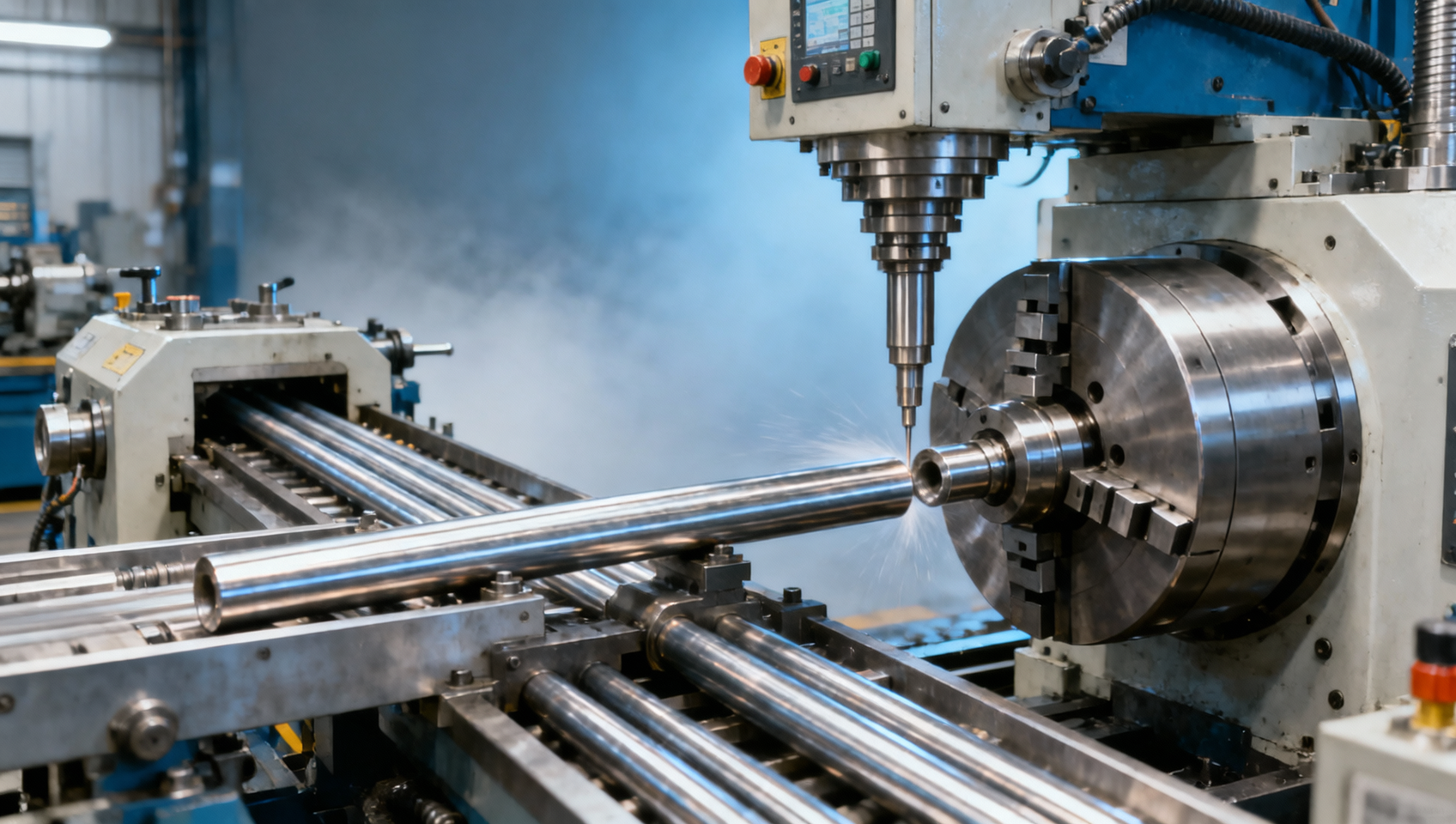
Many automated lathe problems do not begin at the cutting zone, but with unstable bar feeding that disrupts the entire production process. In metal machining and industrial CNC environments, small feeding errors can affect CNC cutting accuracy, shaft parts quality, cycle time, and overall automated production efficiency. This article explains the most common causes, warning signs, and practical checks operators, buyers, and manufacturing managers should understand.
For research teams, machine users, procurement staff, and factory decision-makers, the key issue is not only how to fix a bar feeder alarm after it appears, but how to identify upstream causes before scrap, downtime, or unstable output spread across an entire shift. In CNC turning, especially on shaft parts, bushings, connectors, and threaded components, a feeding deviation of even 0.1 mm to 0.3 mm can translate into dimensional drift, poor surface finish, or repeated spindle interruptions.
In high-mix and medium-to-large batch production, the bar feeder, guide channel, spindle liner, chucking system, and machine parameters must work as one system. If one element is mismatched, the machine may still run, but not at the process capability expected for automated production. That is why feeding stability deserves the same attention as tooling, coolant, and program optimization.
Why bar feeding errors become the starting point of automated lathe failure
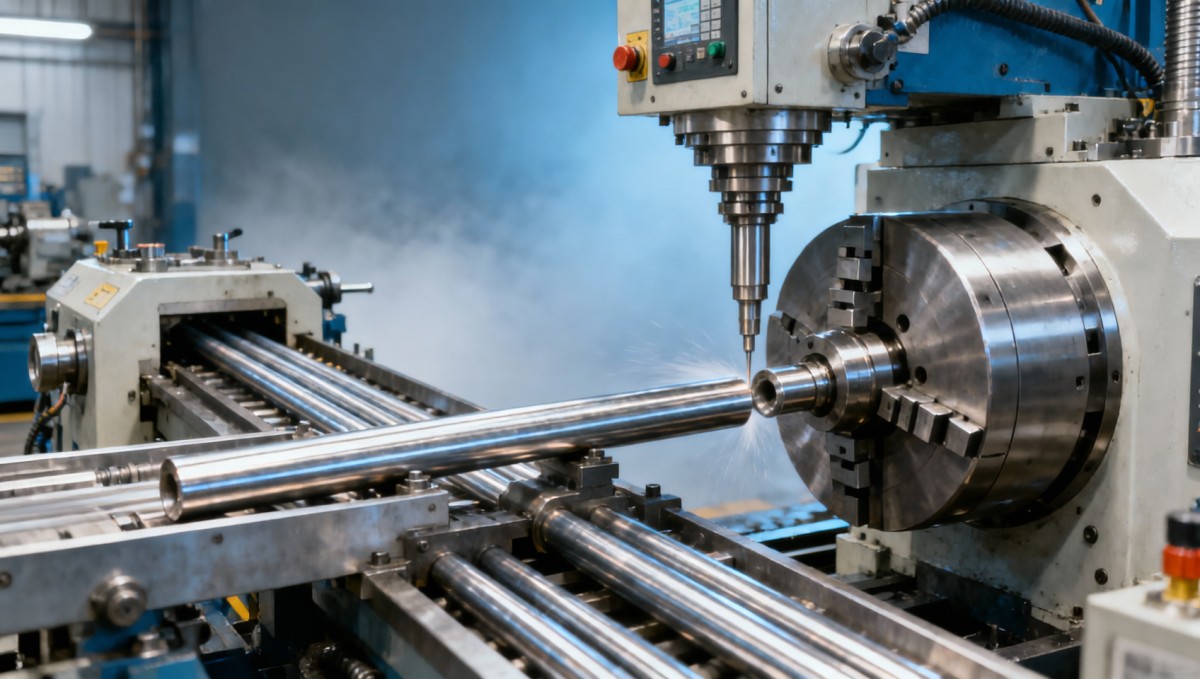
Bar feeding is the first motion that sets up the next machining cycle. If the raw material enters the spindle off-center, slips during push, vibrates inside the liner, or stops short of the programmed position, the downstream process inherits that error immediately. Operators often notice the cutting symptom first, but the origin is frequently mechanical feeding instability rather than tool wear alone.
In an automated CNC lathe, the feeding chain typically includes 5 linked stages: bar loading, alignment, pusher advance, spindle acceptance, and positional confirmation. A problem in any one stage can affect the next 2 to 4 cycles before it is visible in part inspection. That delay is one reason why feeding errors are expensive: they can create a batch of nonconforming parts before anyone reacts.
Another factor is speed. At spindle speeds above 3,000 rpm, unsupported or poorly supported bar stock can generate vibration, noise, and oscillation that gradually damage consistency. In long-bar applications, the ratio between bar length and diameter matters. A slender bar with inadequate support may not fail every cycle, but intermittent instability is often the hardest problem to diagnose in production.
For buyers and managers, this is also a system integration issue. A premium CNC lathe paired with an undersized, poorly matched, or weakly maintained bar feeder may never reach expected output. In many workshops, feeding-related downtime accounts for repeated short stoppages of 3 to 10 minutes each, which look minor individually but can reduce shift productivity by 8% to 15% over time.
Typical process links where feeding starts to drift
- Bar diameter variation exceeds the practical clamping or guide tolerance, especially when mixed lots are loaded without confirmation.
- Guide channel or spindle liner size does not match the stock closely enough, leaving excessive clearance and causing whip or chatter.
- Pusher force, acceleration, or stop position is set incorrectly, leading to short feed, overshoot, or repeated collet seating issues.
- Lubrication, chip contamination, or worn contact parts increase friction and make feed motion inconsistent over long production runs.
What this means in production terms
The practical impact is broader than a single alarm code. Feeding instability can raise scrap rate, extend setup time, increase first-piece verification frequency, and force operators to lower spindle speed or shorten unattended runtime. In facilities targeting lights-out production for 2 to 6 hours, these limitations directly affect the economic value of automation.
Common bar feeding errors, likely causes, and the first signs to watch
The most frequent feeding-related issues can be grouped into alignment errors, stock inconsistency, support mismatch, and control setting mistakes. The point is not to memorize every alarm pattern, but to recognize the combination of symptoms that usually appears before a major interruption. Early recognition reduces both troubleshooting time and part rejection.
The table below summarizes common failure patterns seen in automated lathe environments that process carbon steel, alloy steel, stainless steel, brass, or aluminum bars in diameter ranges such as 6 mm to 65 mm. These are typical industrial ranges, not fixed rules, but they give a useful screening framework.
A key lesson from these patterns is that not every feeding issue starts as a dramatic crash or hard stop. More often, the first signs are subtle: abnormal sound, occasional bar hesitation, length drift after the first dozen pieces, or unexpected insert wear. Shops that rely only on final inspection tend to catch the problem later than those that track process behavior cycle by cycle.
Research-oriented readers should also note that feeding errors are often multi-cause events. For example, slightly bent stock, a worn liner, and aggressive feed acceleration may individually seem acceptable, but together they create unstable performance. That is why root-cause analysis should consider machine, material, and process settings at the same time.
Four warning signs operators should not ignore
- Length offset corrections are required more than 2 times per shift on a stable program.
- Bar feeder alarms rise after material lot changes, even though the CNC program is unchanged.
- Surface chatter appears only at higher spindle speed bands, such as 2,500 rpm to 4,000 rpm.
- Cycle time increases because operators slow the process to avoid feeding interruptions.
Root-cause checks: what operators and maintenance teams should inspect first
When a CNC lathe begins showing unstable output, troubleshooting should start with a disciplined inspection sequence instead of immediate parameter changes. Random adjustments can hide the real problem and make later diagnosis harder. A structured 6-point check usually delivers faster results and reduces unnecessary downtime.
First, verify material condition. Check bar diameter, straightness, end-face quality, and lot consistency. Even in normal supply conditions, bar stock can show small variations. For precision shaft parts, a diameter variation within common shop tolerance may still be too large for a tight liner or collet system. Bent stock also increases dynamic instability as spindle speed rises.
Second, inspect the mechanical support path. The guide channel, spindle liner, pusher face, and contact surfaces must match the actual stock range. Too much clearance invites vibration; too little clearance raises friction and feed resistance. For many applications, the best result comes from a close but practical fit rather than the widest possible compatibility range.
Third, review machine-side settings. Feed acceleration, confirmation timing, spindle clamp sequence, and stop position logic matter. If the feeder pushes before the spindle is ready, or if the confirmation window is too narrow, intermittent alarms become likely. In automated production, even a 0.5-second timing mismatch can create nuisance stops across hundreds of cycles.
A practical 6-point inspection routine
- Measure incoming bar diameter at 3 positions and compare variation before loading a full batch.
- Check straightness visually and mechanically, especially on long bars above 1.5 m to 3 m.
- Confirm liner and guide dimensions are suitable for the actual bar size, not only the nominal size.
- Inspect pusher tip wear, contamination, and repeat positioning after at least 10 consecutive cycles.
- Verify sensor response and machine handshake timing during live operation, not only in manual mode.
- Review spindle speed versus support condition if vibration appears only in a certain rpm range.
Where troubleshooting often goes wrong
A common mistake is replacing tools or changing cutting data before checking the feed system. Another is treating every material lot as identical. In reality, procurement, warehouse handling, and supplier consistency all influence automated lathe performance. If the incoming bar quality changes from one order to the next, production stability may shift even though the machine itself is unchanged.
For decision-makers, this means maintenance and process control should connect with purchasing standards. A low material price loses value quickly if it causes repeated short stoppages, extra inspections, or overnight automation failures. In precision manufacturing, process capability depends on the full chain, not only on the machine brand or spindle power.
Selection and procurement factors that reduce feeding-related risk
When companies compare CNC lathes, bar feeders, and auxiliary systems, procurement often focuses on spindle specifications, axis travel, or price. Those factors matter, but feeding reliability should be part of the buying decision from the start. A feeder that matches the real production mix can reduce setup variability, support longer unattended runs, and lower operator intervention frequency.
The right selection depends on bar diameter range, material type, typical bar length, target cycle time, and whether the workshop runs short batches or repeat production. For example, a shop machining 12 mm to 20 mm stainless shaft parts in medium-volume batches has different needs from one processing 40 mm alloy steel blanks in longer cycles. One feeder design will not suit every operating model equally well.
The table below gives a practical procurement view for buyers evaluating feeding systems in automated turning lines. It can also help internal teams align technical requirements with budget and production goals.
The most important conclusion is that buyers should evaluate feeding equipment as a process tool, not only as a machine accessory. Compatibility with actual production conditions often matters more than the broadest specification sheet. Asking for demonstration on representative bar sizes can reveal issues that brochures do not show.
Decision-makers should also assess support capability. Response time for installation, commissioning, spare parts, and remote diagnostics affects total cost of ownership. In automated machining, a feeder component delayed by 7 to 14 days can disrupt more value than its purchase price suggests, especially in export manufacturing or tightly scheduled automotive and electronics work.
Procurement questions worth asking suppliers
- What bar diameter and material combinations are most stable, not just technically possible?
- How long does a typical size changeover take in real factory use?
- What maintenance items are expected every week, month, and 6 months?
- How is vibration controlled when running long bars at higher spindle speed?
- What commissioning support is available for alarm logic and machine interface setup?
Implementation, maintenance, and FAQ for stable automated production
Even well-selected equipment can underperform if implementation is rushed. Stable bar feeding depends on installation alignment, parameter setup, operator training, and routine maintenance discipline. A practical rollout usually includes 3 stages: mechanical installation and verification, process tuning on real parts, and monitored production handover. Skipping any stage increases the chance of recurring instability.
During the first 1 to 2 weeks after commissioning, manufacturers should track alarm frequency, first-pass yield, cycle time consistency, and any manual interventions per shift. These operating indicators provide a more useful picture than no-load demonstrations. If a line still requires repeated manual correction after setup, the root problem is probably not resolved.
Maintenance should be simple but regular. Daily cleaning, weekly inspection of wear points, and monthly verification of sensor and stop-position consistency can prevent gradual deterioration. In workshops with high chip load, coolant splash, or fine particulate contamination, inspection frequency may need to increase from weekly to every 2 to 3 days.
Recommended maintenance checkpoints
- Clean guide surfaces and remove chips or residue at the end of each shift.
- Inspect pusher contact wear and liner condition every 5 to 7 production days.
- Verify sensor repeatability and feed stop position at least once per month.
- Recheck machine-feeder synchronization after software changes, repairs, or material changes.
FAQ: How do you know whether the issue is material or feeder related?
If problems begin immediately after a new bar lot is introduced, material variation is a strong suspect. Measure diameter at multiple points, inspect straightness, and compare behavior with the previous lot. If the same issue remains across different lots and sizes, feeder wear, liner mismatch, or control settings become more likely.
FAQ: What unattended runtime is realistic for stable bar feeding?
There is no universal number, because part geometry, material, and feeder design vary. In well-matched applications with stable stock and verified settings, unattended operation for 2 to 6 hours is a common target. For complex parts or mixed material lots, a shorter monitored period is often safer until consistency is proven.
FAQ: Which metric should managers track first?
Start with three metrics: feeder-related stops per shift, scrap linked to length or concentricity drift, and operator interventions per 100 parts. These indicators connect technical stability with actual production cost. They also help procurement and management judge whether a new feeder, retrofit, or service adjustment is delivering measurable value.
Bar feeding errors are often the hidden trigger behind automated lathe instability, part variation, and lost production time. The most effective response is systematic: verify material quality, match the support path to the bar size, confirm control timing, and build procurement standards around real process conditions rather than catalog claims alone.
If your factory is evaluating CNC lathes, bar feeders, or process upgrades for precision turning, a structured review of feeding stability can quickly reveal where performance is being lost. Contact us to discuss your application, compare solution paths, and get a tailored recommendation for more reliable automated machining.
PREVIOUS ARTICLE
NEXT ARTICLE
Recommended for You
 What causes chatter in metal machining and how to stop itCNC Machining Technology Center
 Industrial CNC lead times are shifting in 2026Manufacturing Market Research Center
 When CNC industrial upgrades cut output instead of raising itMachine Tool Industry Editorial Team
 Automated lathe errors that often start with bar feedingMachine Tool Industry Editorial Team
 Why CNC metalworking scrap rates rise on thin wall partsCNC Machining Technology Center
 CNC cutting speed or finish quality: where losses beginCNC Machining Technology Center

Aris Katos
Future of Carbide Coatings
15+ years in precision manufacturing systems. Specialized in high-speed milling and aerospace grade alloy processing.
▶
Automated lathe errors that often start with bar feedingMachine Tool Industry Editorial Team▶
Why automated lathe cycle times drift over long production runsMachine Tool Industry Editorial Team▶
Why vertical lathe adoption is rising in high-precision shaft parts manufacturingMachine Tool Industry Editorial Team▶
Industrial lathe buyers overlooking thermal growth effects during long runsMachine Tool Industry Editorial Team▶
Vertical lathe vs. horizontal: which handles asymmetrical shaft parts better?Machine Tool Industry Editorial Team
Mastering 5-Axis Workholding Strategies
Join our technical panel on Nov 15th to learn about reducing vibrations in thin-wall components.

Providing you with integrated sanding solutions
Before-sales and after-sales services
Comprehensive technical support