• Global CNC market projected to reach $128B by 2028 • New EU trade regulations for precision tooling components • Aerospace deman
NYSE: CNC +1.2%LME: STEEL -0.4%

CNC cutting speed or finish quality: where losses begin
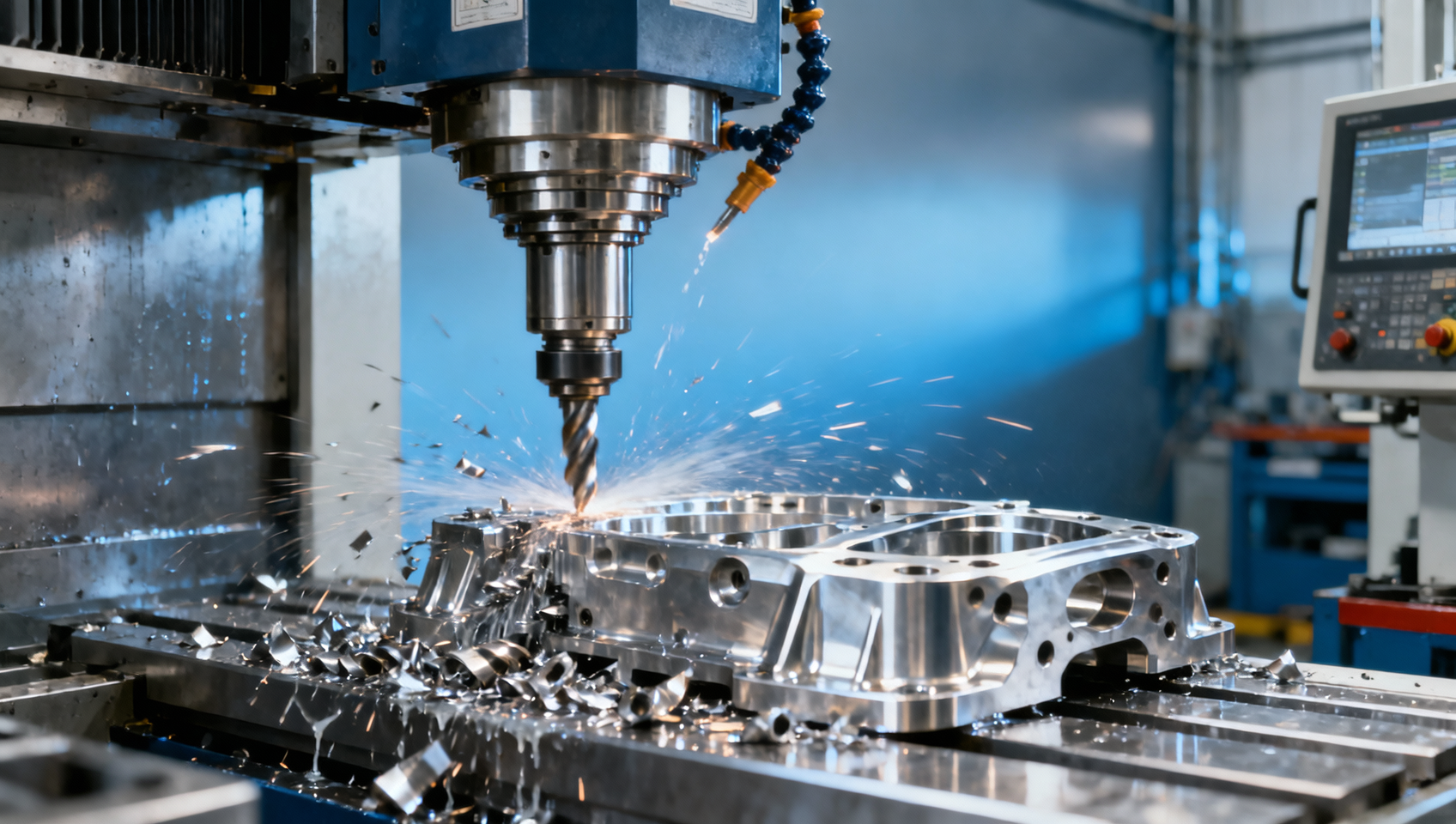
In metal machining, the first losses often appear in the trade-off between CNC cutting speed and finish quality. For buyers, operators, and decision-makers in industrial CNC and CNC metalworking, understanding this balance is critical to improving the production process, reducing scrap, and strengthening automated production performance across today’s Global Manufacturing landscape.
This issue is rarely limited to a single machine parameter. In practice, cutting speed affects tool wear, vibration, heat generation, dimensional stability, and downstream inspection results. A part that is produced 12% faster may still become more expensive if roughness rises beyond tolerance, rework increases, or tool life drops from 90 minutes to 55 minutes.
For research-oriented readers, the core question is where process losses actually begin. For machine operators, the concern is how to keep stable machining conditions shift after shift. For procurement teams and business leaders, the real priority is choosing CNC equipment, cutting tools, and process controls that protect output quality without sacrificing throughput.
In modern CNC machining, especially across automotive, aerospace, electronics, and energy equipment production, the answer depends on material, spindle capability, tool geometry, coolant strategy, fixture rigidity, and inspection standards. The balance between speed and surface finish is therefore not a fixed rule, but a measurable operating window that should be managed deliberately.
Why the speed-versus-finish conflict appears so early in CNC machining
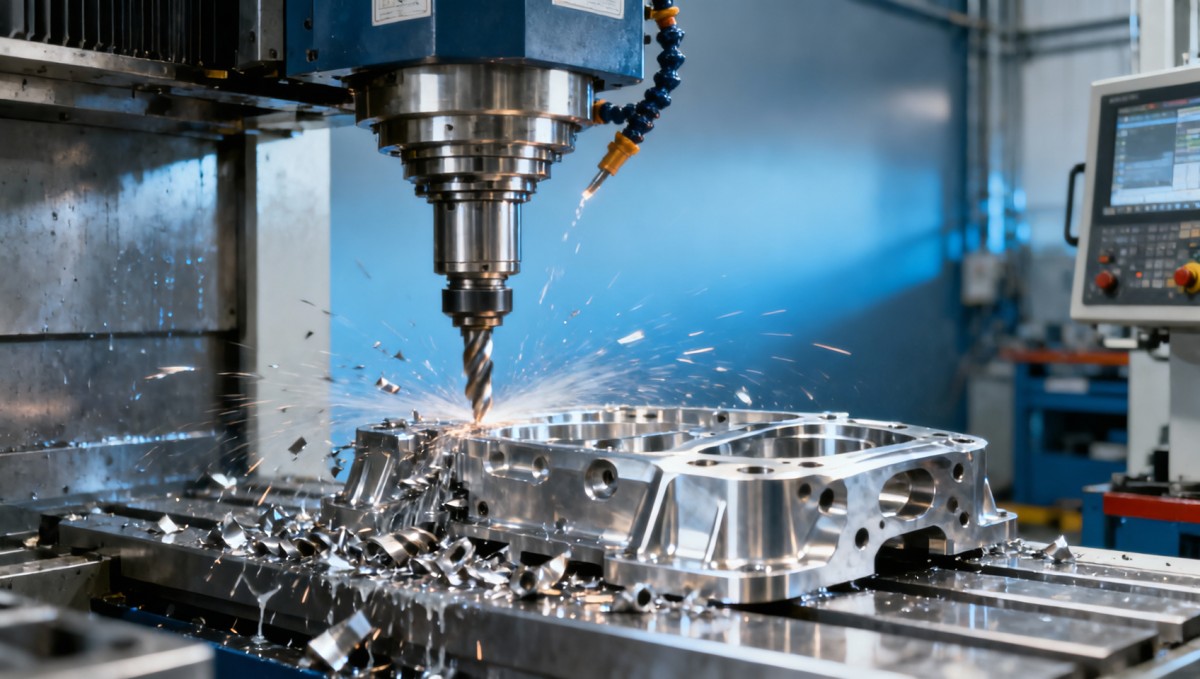
The conflict begins early because cutting speed influences several process variables at the same time. When spindle speed and feed rate rise, metal removal improves, but so do cutting temperature and tool edge stress. On steel, stainless steel, aluminum, and high-temperature alloys, even a moderate increase of 10% to 20% in cutting speed can shift the process from stable cutting into chatter, built-up edge formation, or accelerated flank wear.
Surface finish is not only a visual result. In many CNC metalworking applications, finish quality directly affects sealing performance, friction, coating adhesion, fatigue life, and assembly fit. A shaft, disc, or housing that misses a roughness target such as Ra 0.8 μm or Ra 1.6 μm may still look acceptable, yet fail in final assembly or shorten component life in service.
This is why losses usually begin before obvious scrap appears. The first signs may be subtle: a 0.02 mm drift in dimension, unstable chip evacuation, a rising burr rate, or shortened tool replacement intervals. In flexible production lines and automated cells, these small losses multiply quickly across 2 shifts, 3 shifts, or batch runs of 500 to 5,000 parts.
For operators, the practical challenge is that speed settings are often adjusted to recover cycle time pressure. For procurement teams, the hidden issue is buying machines based only on spindle power or catalog speed rather than system rigidity, control response, and real finish capability. For managers, the mistake is measuring performance only by hourly output instead of cost per conforming part.
The four early loss signals
- Tool life drops faster than cycle time improves, for example a 15% faster cycle but a 35% shorter insert life.
- Surface roughness variation increases from batch to batch, especially near corners, shoulders, or thin-wall sections.
- Machine load becomes unstable, often seen in spindle load spikes above 70% to 85% during repeated operations.
- Inspection failure shifts from random defects to repeatable patterns, indicating process instability rather than isolated operator error.
Typical interaction between speed and finish factors
The table below shows how key process factors usually change when cutting speed is increased in conventional CNC turning and milling environments. These are typical industrial patterns rather than fixed values, and actual results depend on material, insert grade, coolant, and machine structure.
The key conclusion is that the relationship is not linear. A speed increase can deliver clear productivity gains within the stable machining window, but once thermal and mechanical limits are crossed, total cost rises quickly. That is often where the first hidden losses begin.
How operators and engineers should define the stable machining window
A stable machining window is the range in which cutting speed, feed, depth of cut, and tooling conditions produce acceptable finish quality, dimensional control, and tool life at the same time. In many shops, this window is narrower than expected. A process may remain stable at 160 to 190 m/min, but become inconsistent at 205 m/min because of spindle vibration, fixture compliance, or coolant reach.
Operators should not evaluate cutting speed in isolation. Feed per tooth, nose radius, radial engagement, tool overhang, and workholding force all shape the final finish. For example, reducing feed too aggressively to improve surface finish can create rubbing rather than cutting, increasing heat and damaging both the tool edge and the machined surface.
For process engineers, a practical approach is to validate the machining window in 3 stages: baseline production, controlled speed increase, and finish verification. Each stage should track at least 5 indicators: cycle time, roughness, dimensional drift, tool life, and spindle load trend. Without this discipline, line teams often mistake temporary throughput gains for sustainable performance.
In automated production cells, this becomes even more important because process drift can spread unnoticed. A robot-fed CNC line producing 1,200 components per day can turn a small finish issue into a full shift of suspect inventory. Stable windows protect not only machine output, but also inspection workload, delivery reliability, and customer confidence.
A simple validation sequence for the shop floor
- Record the current stable program for at least 30 to 50 parts, including tool condition and measured roughness values.
- Increase cutting speed in small steps, typically 5% per trial, instead of making a single jump of 20% or more.
- After each step, inspect 3 critical dimensions and 1 to 2 finish zones with the tightest drawing requirement.
- Check tool wear under the same interval, such as every 20 parts or every 15 minutes of cutting time.
- Lock the new parameter only if cycle time, finish, and tool life all remain commercially acceptable.
Common parameter mistakes
One common error is pushing cutting speed without improving chip control. Another is using the same parameter set for two materials with different hardness or microstructure. A third mistake is ignoring machine maintenance. Backlash, spindle runout, and worn guideways can make a theoretically correct speed setting fail in actual production.
A good rule for B2B production environments is to prioritize repeatability over one-time peak speed. If a process holds tolerance and finish over 8 hours with predictable tool changes, it is usually more profitable than a faster process that becomes unstable after 90 minutes.
What buyers and procurement teams should evaluate before choosing CNC equipment or tooling
Procurement decisions often shape the speed-versus-finish outcome long before the first part is cut. A CNC machine with higher spindle speed on paper does not automatically deliver better production efficiency. In many metalworking applications, rigidity, thermal stability, control accuracy, and service support matter more than headline maximum rpm.
The same principle applies to tooling. A lower-cost insert may appear attractive if unit price is 8% to 15% lower, but if it reduces tool life, raises burr formation, or limits cutting speed flexibility, total production cost may increase. Buyers should therefore compare cost per accepted part rather than price per insert, holder, or machine option alone.
Decision-makers should also review the production environment. A supplier suitable for medium-volume batch machining may not be the right partner for high-mix, high-accuracy automated manufacturing. Requirements change when parts need repeatability within tight tolerance bands, frequent material changes, or integration with robots, tool monitoring, and MES systems.
In global machine tool sourcing, it is useful to assess the full operating ecosystem: spare parts lead time, training support, post-installation tuning, software compatibility, and process optimization assistance during the first 30 to 90 days. Those factors have direct influence on whether a machine can hold finish quality while sustaining target cutting speed.
Procurement comparison checklist
The following table helps procurement teams compare suppliers or equipment options using practical process criteria rather than catalog claims alone.
The main takeaway is that procurement quality affects machining quality. The more complex the production line, the more important it becomes to buy around process stability, not brochure speed. This is especially true for companies expanding into multi-axis machining, precision parts, or export-oriented manufacturing with strict inspection requirements.
Four questions buyers should ask suppliers
- At what cutting conditions was the finish performance demonstrated, and on which material group?
- How does the machine maintain repeatability over long production runs of 500 parts or more?
- What support is available for tool-path optimization, coolant setup, and fixture matching after installation?
- What are the realistic spare parts and technical response lead times in the target market?
Where losses actually show up in cost, quality, and delivery performance
When cutting speed and finish quality are not balanced, the financial impact appears in several layers. The most visible loss is scrap, but that is usually not the largest one. Rework, extra inspection, unplanned tool changes, machine stoppage, and delayed shipments often create a higher total burden than the rejected parts themselves.
Consider a line running 800 metal parts per week. If cycle time improves by 10 seconds per part, the apparent gain is substantial. But if roughness instability raises rework by 4% and tool consumption by 18%, the net margin may fall. In supply chains serving automotive or aerospace tiers, even one delayed batch can trigger premium freight, rescheduling, or customer corrective action requests.
Finish-related losses also affect production planning. If a process becomes unstable, quality teams often increase sampling frequency from every 20 parts to every 5 parts. That adds labor and slows line rhythm. In highly automated cells, alarms and pauses can reduce overall equipment effectiveness more sharply than a slower but stable cutting program would.
This is why business leaders should review CNC performance through three dimensions at the same time: accepted output, unit cost, and delivery reliability. A process that is 7% slower but reduces defect risk, tool changes, and downstream bottlenecks may create stronger monthly profitability than an aggressive speed-first strategy.
Common hidden-loss areas
- Extra measuring and inspection time caused by unstable finish readings.
- Reduced fixture life when vibration or cutting load spikes are ignored.
- Operator intervention frequency rising from occasional adjustment to multiple corrections per shift.
- Planning disruption when actual tool life no longer matches standard routing assumptions.
A better management metric
Instead of focusing only on cycle time, many manufacturers benefit from tracking cost per conforming part and tool life variance. These indicators reveal whether productivity gains are real or simply being transferred into quality cost and scheduling instability elsewhere in the factory.
For international sourcing and expansion projects, this perspective also improves supplier discussions. It allows teams to evaluate machine tools, cutting tools, and process support in terms of long-term operating economics rather than purchase price alone.
Practical strategies to improve cutting speed without sacrificing finish quality
The most effective strategy is not simply to slow down. It is to improve process capability so the stable window becomes wider. In many CNC machining operations, finish quality can be protected while raising productivity through coordinated adjustments in tooling, coolant, workholding, path programming, and machine condition.
A common improvement path starts with tool selection. Insert geometry, coating, and chipbreaker design should match the material group and target finish level. For example, a geometry optimized for roughing may support high removal rates but produce inconsistent finish in semi-finishing. Separating roughing and finishing tools often delivers better economics than forcing one tool to do both tasks.
Coolant and chip evacuation are equally important. Heat concentration and recutting of chips often become the real reason finish degrades at higher speed. Through-tool coolant, pressure optimization, and cleaner chip flow can make a 5% to 12% speed increase sustainable where dry or poorly directed coolant cannot. Fixture stiffness and shorter tool overhang also reduce vibration, especially on thin-wall or long-reach features.
Programming strategy matters as well. Smooth toolpaths, reduced dwell, controlled radial engagement, and proper lead-in and lead-out movements all influence the final surface. In multi-axis machining and complex contour work, path refinement may improve finish more effectively than lowering speed alone.
Priority actions for different stakeholders
The table highlights a key operational reality: improving CNC cutting speed without damaging finish quality requires alignment across departments. The machine, tool, process, and purchasing decision all contribute to the final result. When teams act independently, losses tend to reappear in another part of the production chain.
FAQ: common decisions in CNC speed and finish control
How do I know if my cutting speed is already too high?
Typical warning signs include sudden roughness variation, more frequent burrs, spindle load spikes, rising temperature, and tool life falling faster than cycle time improves. If a 5% speed increase causes a tool life drop above 15%, the process should be reviewed before further acceleration.
Is slower always better for finish quality?
No. Cutting too slowly can cause rubbing, built-up edge, and poor chip formation. Surface finish improves within a suitable process window, not simply at the lowest speed. The correct balance depends on material, tool geometry, and machine stability.
What should be checked first during procurement?
Start with process fit: material range, target tolerance, finish requirement, batch size, and automation level. Then review rigidity, thermal performance, tooling ecosystem, and support response time. These factors influence real machining results more than maximum speed claims alone.
In CNC machining, losses rarely begin with a dramatic machine failure. They usually start when cutting speed is pushed beyond the stable process window and finish quality begins to drift in small but costly ways. The most effective response is to define that window clearly, validate parameters in steps, and evaluate equipment and tooling based on accepted-part economics rather than speed alone.
For operators, this means controlling wear, vibration, and process consistency. For buyers, it means selecting CNC machine tools and production support with long-term stability in mind. For decision-makers, it means measuring productivity through quality, cost, and delivery together. To discuss machining scenarios, compare equipment options, or get a tailored solution for your production line, contact us today and explore more CNC manufacturing solutions.
PREVIOUS ARTICLE
NEXT ARTICLE
Recommended for You
 What causes chatter in metal machining and how to stop itCNC Machining Technology Center
 Industrial CNC lead times are shifting in 2026Manufacturing Market Research Center
 When CNC industrial upgrades cut output instead of raising itMachine Tool Industry Editorial Team
 Automated lathe errors that often start with bar feedingMachine Tool Industry Editorial Team
 Why CNC metalworking scrap rates rise on thin wall partsCNC Machining Technology Center
 CNC cutting speed or finish quality: where losses beginCNC Machining Technology Center

Aris Katos
Future of Carbide Coatings
15+ years in precision manufacturing systems. Specialized in high-speed milling and aerospace grade alloy processing.
▶
CNC cutting speed or finish quality: where losses beginCNC Machining Technology Center▶
CNC cutting tool wear looks normal until edge failure startsCNC Machining Technology Center▶
Does CNC cutting performance drop more with worn inserts or misaligned fixtures?CNC Machining Technology Center▶
How much does cutting speed drop when using coated inserts for CNC cutting of hardened steels?CNC Machining Technology Center▶
CNC metal cutting tools wear faster than specs claim—real-world data from Tier-1 aerospace linesCNC Machining Technology Center
Mastering 5-Axis Workholding Strategies
Join our technical panel on Nov 15th to learn about reducing vibrations in thin-wall components.

Providing you with integrated sanding solutions
Before-sales and after-sales services
Comprehensive technical support