• Global CNC market projected to reach $128B by 2028 • New EU trade regulations for precision tooling components • Aerospace deman
NYSE: CNC +1.2%LME: STEEL -0.4%

Vertical Lathe Demand Is Rising in Energy Equipment Supply
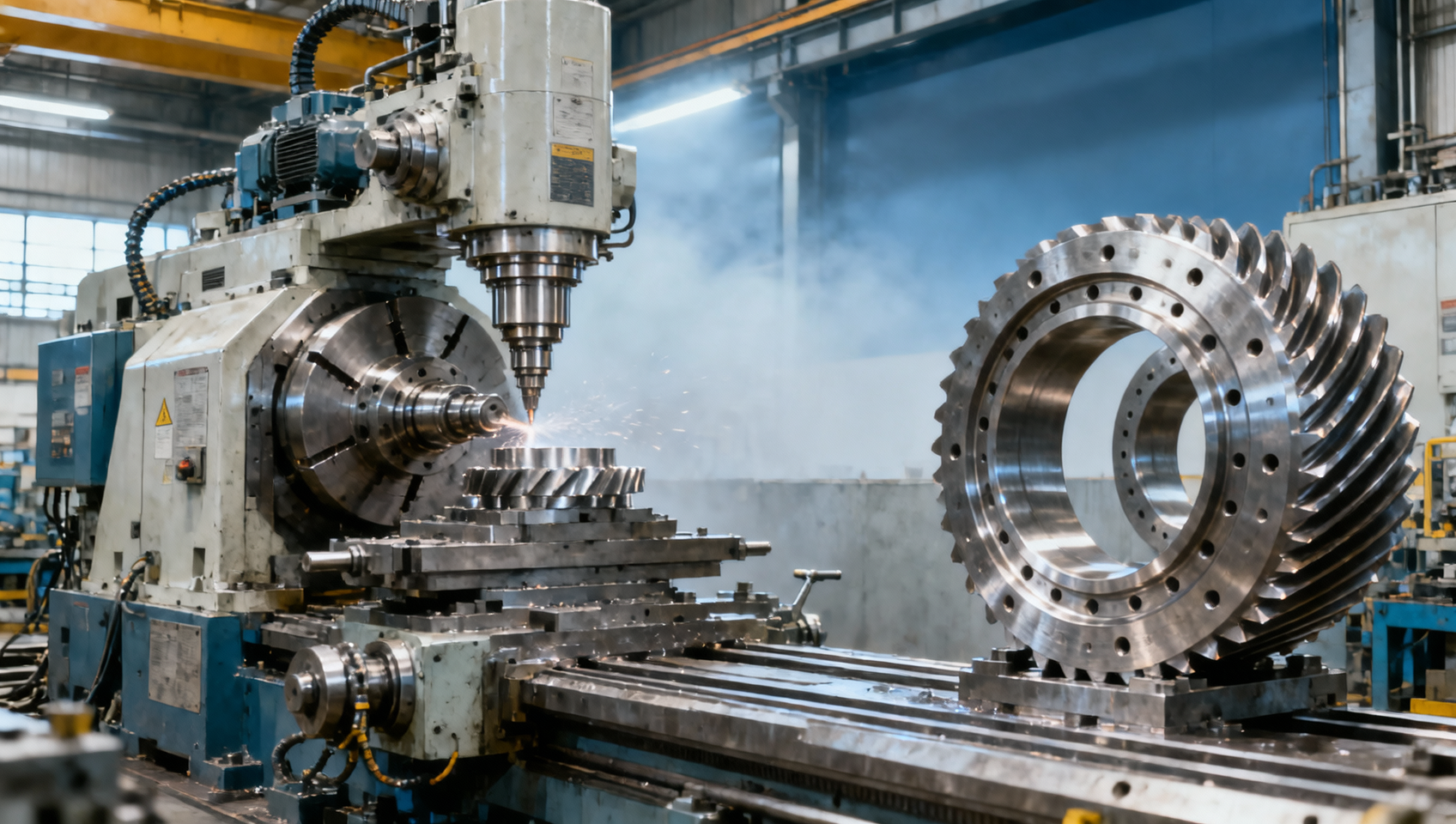
Demand for the vertical lathe is rising as energy equipment manufacturers upgrade metal machining capacity for larger, heavier, and more complex parts. Across the Global Manufacturing landscape, industrial CNC systems, automated production, and CNC metalworking are reshaping the Manufacturing Industry. For buyers, operators, and decision-makers, understanding how industrial lathe technology supports precision, efficiency, and stable production is becoming essential.
Why is vertical lathe demand increasing in energy equipment supply?
The rise in vertical lathe demand is closely linked to structural changes in energy equipment manufacturing. Wind power, hydro components, pressure-bearing parts, large valve bodies, bearing housings, flanges, and turbine-related discs all require stable machining of large-diameter workpieces. In many of these cases, a vertical lathe offers better loading stability than a horizontal solution because gravity supports part positioning. That matters when a single part may move through roughing, semi-finishing, and finishing over 2–4 production stages.
For information researchers, the key issue is not simply whether the machine is larger. The real question is whether the vertical turning platform can deliver repeatable accuracy under continuous operation, often across 8–16 hour shifts. For operators, ease of loading, chip evacuation, and tool access affect productivity every day. For procurement teams, spindle power range, table diameter, control compatibility, and service lead time usually determine shortlist decisions.
Energy equipment suppliers are also facing tighter delivery expectations. Large forged rings, heavy castings, and precision sealing surfaces often cannot tolerate secondary handling errors. When production lines move toward more automated production and digital process control, the vertical lathe becomes part of a broader CNC metalworking system rather than a standalone machine. Its value comes from process stability, not only from maximum swing.
Another reason demand is rising is diversification of part mix. Many workshops no longer process only one standard component family. They may switch between medium-batch flange machining, low-volume turbine covers, and repair work on large rotating parts. That shift increases interest in CNC vertical lathe configurations that balance rigidity, programmable flexibility, and manageable setup time within 30–90 minutes depending on fixture complexity.
Typical drivers behind current purchase inquiries
- Growth in large-diameter part demand for wind, oil and gas, power generation, and industrial transmission equipment.
- Need to reduce out-of-roundness risk and improve face and bore machining stability on heavy parts.
- Pressure to integrate industrial CNC systems with tool monitoring, probing, and production traceability.
- Replacement of older machine tools that lack modern controls, spare parts support, or automated loading options.
Which energy equipment parts are better suited to a vertical lathe?
A vertical lathe is especially suitable for round or near-round components with significant diameter, high mass, or demanding concentricity requirements. In the energy equipment supply chain, that often includes turbine discs, ring-shaped housings, large end covers, valve seats, pump casings, gearbox rings, and flanges. The machine layout makes it easier to clamp workpieces securely when the diameter is large relative to thickness, a common challenge in conventional horizontal turning.
Application fit also depends on process sequence. If the part requires turning of end faces, internal bores, external diameters, grooves, and possibly drilling or milling in one setup, a CNC vertical lathe with live tooling or a combined turn-mill function may reduce handling steps from 3 operations to 1–2. That reduction can improve not only throughput but also dimensional consistency between features that share a common datum.
For operators, part access is another practical advantage. Tool changes, chuck inspection, and fixture verification are often more convenient when the work zone is open from above and the workpiece sits on a table. In energy equipment workshops, where some parts may require crane loading and careful alignment, this can lower setup risk and improve safety during repeated jobs.
However, not every large part automatically belongs on a vertical lathe. Long shafts, slender rotors, and components dominated by length rather than diameter often remain better matched to horizontal lathes or specialized turning centers. The choice should follow part geometry, tolerance priorities, and the intended production flow, not only machine size.
Application scenarios by part type
The following comparison helps buyers and process engineers judge whether a vertical lathe is the right fit for common energy equipment components and where alternative machine tools may still be preferable.
This table shows why vertical lathe demand is strongest in part families where weight, diameter, and face-to-bore relationship dominate quality control. It also explains why procurement teams should evaluate actual part portfolios over the next 12–24 months instead of selecting equipment only for the largest current job.
A practical screening checklist
- Check whether the part diameter-to-height ratio favors table-supported loading.
- Confirm whether the process combines facing, boring, and OD turning in one clamp.
- Review crane access, fixture space, and operator handling path within the workshop.
- Estimate batch frequency: prototype, low batch, medium batch, or repeat orders each month.
What technical parameters and machine features matter most?
When evaluating a vertical lathe for energy equipment supply, buyers should begin with workpiece envelope and process loads. Typical decision points include table diameter, maximum turning diameter, maximum workpiece height, admissible workpiece weight, spindle torque, ram or tool post structure, and CNC control architecture. These are not isolated values. A machine with a large nominal turning diameter but limited table load or weak torque may still fail under real roughing conditions.
Rigidity is often more important than catalog speed. Many energy equipment parts use carbon steel, alloy steel, stainless materials, or cast structures that generate significant cutting force. Stable roughing may require low-speed, high-torque cutting over long cycle times. In those cases, thermal behavior over 4–8 continuous hours can affect size control as much as theoretical positioning precision. That is why machine structure, bearing arrangement, and lubrication design deserve close review.
Control and automation features also influence total value. Modern industrial CNC systems may support tool life management, probing cycles, remote diagnostics, and interface readiness for MES or production monitoring. For enterprises moving toward smart manufacturing, these functions help reduce manual intervention and improve traceability. They are especially useful when the same vertical lathe serves multiple product families with frequent program changes.
Operators should also pay attention to ergonomics and maintenance access. Chip control, coolant delivery, guarding visibility, and access to tool positions directly affect machine uptime. A technically advanced machine can still create bottlenecks if chip removal requires repeated stoppage every 30–60 minutes in heavy roughing applications.
Parameter ranges often reviewed during selection
Although exact values depend on the part family, the table below summarizes common parameter categories used in procurement discussions for CNC vertical lathe projects in energy equipment machining.
The main takeaway is that parameter matching must follow your part mix and machining sequence. A larger machine is not always the best investment. In many plants, the most effective solution is the one that covers 70%–80% of recurring orders with stable productivity while leaving rare oversized work to subcontracting or a separate heavy-duty line.
Three technical questions procurement should ask suppliers
- What is the recommended cutting condition window for the target materials and diameters?
- How is thermal stability managed during long-cycle roughing and finishing?
- Which optional features are truly necessary for the process, and which only increase cost without improving throughput?
How should buyers compare vertical lathe options, costs, and alternatives?
A sound procurement decision balances capacity, process fit, lifecycle cost, and delivery risk. Purchase price alone can be misleading, especially when a lower-cost machine requires more setups, more manual alignment, or more frequent stoppage. For energy equipment supply, the real comparison should include fixture investment, operator training time, expected maintenance intervals, spare parts availability, and whether the machine can support future process upgrades within 1–3 years.
Alternatives also need honest evaluation. Some part families may be processed on a large horizontal lathe, a horizontal boring machine, or a turn-mill center. Yet these alternatives may increase handling complexity when parts are heavy and disk-shaped. Conversely, if the part family includes many long rotational components, buying only a vertical lathe may reduce flexibility. Many factories therefore use a mixed equipment strategy rather than expecting one machine type to solve every machining task.
Lead time is another decision variable. Depending on machine size, optional configuration, and acceptance scope, common project cycles may range from 8–16 weeks for standard machines to several months for larger customized systems. Decision-makers should therefore align procurement with production planning early, especially if the new vertical lathe is tied to a major contract in wind power, hydro, or industrial energy equipment.
From a cost perspective, it helps to estimate total use over 3 cost layers: acquisition, operation, and support. Operation includes tooling, energy consumption, labor, and scrap risk. Support includes preventive maintenance, software updates, and response time for service visits. This broader view gives a more reliable basis for capital approval than a simple machine-to-machine quotation comparison.
Comparing machine paths for common purchasing scenarios
The table below is designed for procurement teams that need to compare not only a CNC vertical lathe but also common alternatives used in large-part CNC metalworking.
This comparison helps decision-makers avoid two common mistakes: overspending on functions the shop will rarely use, or underbuying and then losing productivity on core energy equipment jobs. The best procurement path usually starts with actual part drawings, target tolerances, expected annual volume, and required delivery window.
Five cost checkpoints before placing an order
- Machine base price and included standard accessories.
- Fixture, tooling, probe, and chip handling additions.
- Installation, commissioning, and operator training over the first 3–7 days.
- Spare parts response and preventive maintenance plan by quarter or year.
- Production loss risk if acceptance and handover are delayed.
What risks, compliance points, and implementation steps should companies consider?
In heavy-duty CNC machine procurement, implementation risk often starts before the machine arrives. Floor loading, foundation design, power supply, crane path, coolant management, and operator access all need confirmation. For larger vertical lathe installations, site preparation can take several days to several weeks depending on civil work scope. A machine that meets cutting requirements on paper may still create delays if workshop infrastructure is not ready.
Compliance is another important layer. While exact requirements vary by market and project, industrial buyers commonly review electrical safety, guarding design, documentation completeness, and standard operational procedures for acceptance. If the machine will serve export-oriented energy equipment production, traceability and process documentation may be just as important as cutting performance. Clear maintenance records and calibration routines support both internal quality systems and customer audits.
A practical implementation plan usually works best in 4 steps: technical confirmation, site readiness, installation and test cutting, then operator training and process optimization. During acceptance, many users define 5–6 checkpoints such as geometry verification, no-load running, loaded cutting trial, control function verification, safety interlock test, and documentation handover. This approach reduces misunderstanding between equipment suppliers and end users.
One common misconception is that a vertical lathe automatically solves quality issues caused by poor process planning. In reality, fixture design, tool selection, insert grade, cutting parameters, and measurement routine all matter. Another misconception is that more automation always means faster return. If the order mix is highly variable and batch size remains low, some automated options may not pay back within a reasonable cycle.
FAQ for researchers, operators, and buyers
How do I know whether a vertical lathe is better than a horizontal lathe?
Start with part geometry. If the workpiece is heavy, wide in diameter, and relatively short in height, a vertical lathe often offers better loading stability and easier setup. If the workpiece is long and shaft-like, a horizontal lathe is usually the better choice. Review at least 10–20 representative parts from recent and upcoming orders before making a decision.
What should operators check during daily use?
Operators should inspect clamping condition, tool wear, coolant flow, chip evacuation, and abnormal vibration. In heavy roughing, periodic checks every shift are common, while tool condition may need monitoring more frequently depending on material and interrupted cuts. Stable setup and clean workholding are basic but critical for precision on large energy equipment parts.
What is a common delivery and implementation window?
For standard or moderately configured machines, procurement and delivery may take around 8–16 weeks, while larger custom projects can require a longer schedule. Installation and commissioning often take several days, followed by training and test-piece validation. Timing depends on machine size, optional functions, site condition, and acceptance scope.
Which mistake causes the most expensive rework?
A frequent mistake is selecting by maximum machine size alone without checking the actual process route. If torque, fixture access, chip removal, or control compatibility are ignored, the machine may still struggle on core parts. Another costly error is failing to verify workshop foundation and crane compatibility before purchase approval.
Why work with a manufacturing industry platform that understands CNC machining and global supply?
In the CNC machine tool industry, value comes from matching machine capability to production reality. A professional platform focused on global CNC machining and precision manufacturing can help buyers move faster from general research to usable technical judgment. That includes comparing vertical lathe solutions, understanding industrial CNC systems, reviewing application fit for energy equipment parts, and identifying where automated production can genuinely improve output.
Because the machine tool sector is becoming more digital, international, and process-driven, many companies need more than a product list. They need support in parameter confirmation, workflow review, alternative route comparison, and communication across suppliers, plants, and purchasing teams. This is especially important when sourcing spans different manufacturing regions such as China, Germany, Japan, or South Korea, each with different strengths in machine tool ecosystems.
If your team is evaluating a CNC vertical lathe for energy equipment supply, the most useful next step is a structured technical discussion. Prepare part drawings, material types, diameter and weight range, target tolerances, monthly volume, and desired delivery timing. With that information, it becomes easier to compare feasible configurations, likely lead times, and whether a standard or customized solution is the better fit.
You can contact us for practical support on parameter confirmation, product selection, delivery cycle planning, custom machining solutions, common compliance questions, sample or test-piece discussion, and quotation communication. This approach helps information researchers gain clarity, helps operators focus on usability, helps procurement reduce risk, and helps business decision-makers choose equipment that supports both present orders and future manufacturing growth.
PREVIOUS ARTICLE
NEXT ARTICLE
Recommended for You
 Global Manufacturing Lead Times Improve but Not EverywhereGlobal Machine Tool Trade Research Center
 Machine Tool Market Inventory Pressure Is Building AgainGlobal Machine Tool Trade Research Center
 Metal Lathe vs CNC Milling for Low Volume Round PartsCNC Machining Technology Center
 CNC Cutting Gas Choice Affects More Than Edge FinishCNC Machining Technology Center
 CNC Metalworking Shops Face New Pressure on TraceabilityManufacturing Policy Research Center
 Automated Lathe Cycle Time Gains Can Hide Quality LossesCNC Machining Technology Center

Aris Katos
Future of Carbide Coatings
15+ years in precision manufacturing systems. Specialized in high-speed milling and aerospace grade alloy processing.
▶
Vertical Lathe Demand Is Rising in Energy Equipment SupplyManufacturing Market Research Center▶
CNC Industrial Demand Is Moving Toward Mid Size FactoriesManufacturing Market Research Center▶
Is Industrial CNC Retrofitting Better Than New Equipment?Manufacturing Market Research Center▶
CNC industrial demand is shifting toward smaller batch runsManufacturing Market Research Center▶
Used metal lathe or new one? The cost gap is not always realManufacturing Market Research Center
Mastering 5-Axis Workholding Strategies
Join our technical panel on Nov 15th to learn about reducing vibrations in thin-wall components.

Providing you with integrated sanding solutions
Before-sales and after-sales services
Comprehensive technical support