• Global CNC market projected to reach $128B by 2028 • New EU trade regulations for precision tooling components • Aerospace deman
NYSE: CNC +1.2%LME: STEEL -0.4%

Is Industrial CNC Retrofitting Better Than New Equipment?
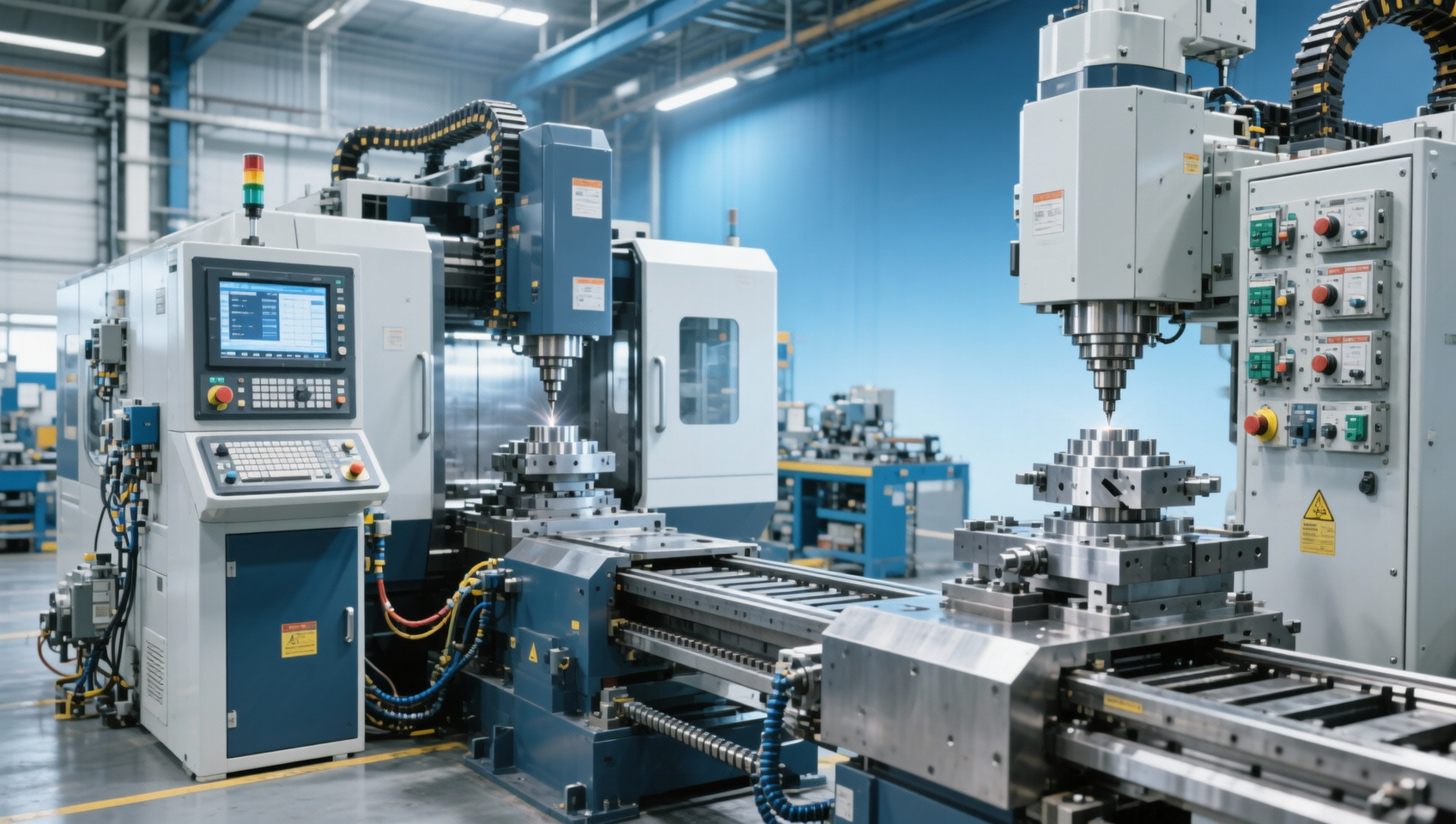
Is industrial CNC retrofitting a smarter investment than buying new equipment? For companies in metal machining, CNC metalworking, and automated production, the answer depends on cost, performance, and long-term production goals. This article explores how industrial CNC upgrades compare with new machines in terms of CNC cutting efficiency, CNC milling capability, industrial automation, and overall production process value across today’s manufacturing industry.
How should manufacturers frame the retrofit versus replacement decision?
In the CNC machine tool industry, retrofitting means upgrading an existing machine with newer controls, drives, motors, sensors, spindles, safety systems, or automation interfaces instead of purchasing a completely new unit. This approach is common in CNC lathes, machining centers, boring mills, grinders, and multi-axis systems where the machine structure remains mechanically sound but the electrical or control architecture has become outdated.
For information researchers and plant managers, the real question is not whether retrofitting is universally better. It is whether the current asset still has enough structural value to justify a 2-stage or 3-stage modernization plan. In many factories, cast iron bases, guideways, and machine frames can remain serviceable for 10–20 more years, while the CNC control, servo response, and HMI become the main bottlenecks.
For operators, a retrofit decision also changes daily work. A modernized machine can offer easier program input, more stable axis control, faster diagnostics, and improved safety interlocks. Those benefits matter in high-mix production, where setup frequency may be daily or weekly and downtime from obsolete parts can disrupt the full production process.
For procurement teams and business decision-makers, the evaluation usually comes down to 4 core dimensions: capital budget, required machining accuracy, delivery timeline, and digital integration. A retrofit can often reduce upfront expenditure and shorten disruption if the foundation, enclosure, and mechanical transmission remain acceptable. A new machine becomes more logical when performance targets have fundamentally changed.
What a CNC retrofit typically includes
- CNC control replacement for better programming, networking, and diagnostics.
- Servo and drive upgrades to improve axis response, positioning consistency, and maintenance support.
- Electrical cabinet renewal, wiring cleanup, and safety circuit modernization aligned with current industrial practice.
- Optional spindle, encoder, lubrication, probing, tool changer, or automation interface improvements.
When is industrial CNC retrofitting better than buying new equipment?
Retrofitting is usually more attractive when the machine’s core mechanical platform is still stable. If geometry can be restored through alignment, backlash compensation, ballscrew repair, scraping, or limited component replacement, then a control and drive upgrade may restore useful production value without the full cost of replacement. This is especially relevant in heavy-duty equipment with rigid cast structures that are expensive to replicate in a new purchase.
It is also a strong option when lead time matters. A retrofit project may be completed in phases over 2–8 weeks for a simpler machine or longer for a complex multi-axis platform, while new machine procurement can extend much further once manufacturing, shipment, installation, and operator training are included. For a factory facing urgent output pressure, avoiding a long production gap can be a decisive factor.
Another common scenario is software and integration pressure. Many legacy CNC machines cannot communicate smoothly with MES, tool monitoring, or production data systems. A retrofit can add Ethernet-based connectivity, alarm history, recipe storage, and basic industrial automation interfaces. For smart manufacturing roadmaps, this middle path often delivers meaningful gains without rebuilding the entire line at once.
However, retrofitting is not ideal when the machine suffers from chronic spindle damage, severe bed wear, unstable thermal behavior, or a mismatch between machine envelope and current product requirements. If the factory now needs 5-axis contouring, unattended operation, or tighter tolerance performance than the original design can support, new equipment may produce lower lifetime risk.
Typical scenarios where retrofitting makes sense
The table shows that retrofitting is most compelling when the machine still has structural value and the business needs better uptime, control responsiveness, or automation compatibility. It becomes less attractive when the required process capability exceeds what the original mechanical design can realistically deliver.
What changes in cost, performance, and risk?
Cost is usually the first filter, but it should not be the only one. A retrofit may lower capital expenditure, yet the smarter measure is total production value over the next 3–7 years. Buyers should compare not just purchase price, but also downtime cost, training burden, tooling compatibility, floor layout changes, energy use, spare part availability, and the probability of unplanned repairs after commissioning.
Performance gains from a retrofit can be significant in control speed, repeatability consistency, diagnostics, and user interface. In many cases, improved servo tuning and encoder feedback reduce cycle instability and help stabilize surface finish or contour tracking. For CNC milling and turning applications, this may be enough to support current orders without the higher investment of a new platform.
Risk, however, depends on what is left untouched. If the machine keeps worn guideways, aging spindle bearings, or weak auxiliary systems, then a modern control alone will not solve production reliability. This is why a proper retrofit scope often includes 5 key inspection points: machine geometry, spindle health, axis transmission, electrical safety, and lubrication or cooling condition.
A new machine generally provides a cleaner baseline, more predictable warranty coverage, and a broader upgrade path for automation. That matters in automotive, aerospace, energy equipment, and electronics production where part complexity, traceability, and process repeatability can become more demanding quarter by quarter.
Practical comparison for procurement teams
This comparison highlights why the cheapest option is not automatically the best value. If production accuracy, cycle time, or automation depth must improve by a large margin, new equipment often wins. If the main pain points are obsolescence, downtime, and interface limitations, industrial CNC retrofitting can be the more efficient capital decision.
Which technical checks matter before approving a CNC retrofit?
A retrofit should begin with a structured technical audit, not with a parts list. Before any purchasing decision, teams should verify machine alignment, backlash, spindle noise, thermal drift, repeatability trends, lubrication performance, and electrical cabinet condition. Even a 1-day site inspection can reveal whether the machine is a strong retrofit candidate or a hidden cost trap.
For operators, usability should be part of the audit. A modern HMI, alarm management, jog responsiveness, and program transfer workflow can directly affect setup time and training effort. In shops running multiple shifts, small interface improvements may save meaningful time every week. That matters when the same machine supports both small-batch and medium-batch work.
For decision-makers, compliance and safety cannot be ignored. When electrical systems are updated, review emergency stop circuits, interlocks, drive protection, cabinet ventilation, grounding, and documentation. In many industrial environments, retrofit work should also be checked against applicable machine safety expectations and internal acceptance procedures before restart.
If the retrofit includes automation interfaces, review signal mapping, tool management logic, probe routines, coolant coordination, and upstream or downstream line compatibility. The target should be a machine that does not simply power on, but fits into the factory’s broader manufacturing system with fewer manual workarounds.
A 6-point pre-retrofit checklist
- Measure geometry and repeatability under actual operating conditions, not only static conditions.
- Inspect spindle load behavior, bearing condition, and vibration signs across the normal speed range.
- Review ballscrews, guideways, couplings, and axis lubrication for wear or instability.
- Audit control obsolescence, drive support status, wiring quality, and spare part availability.
- Confirm operator workflow needs, including program handling, alarm display, and setup convenience.
- Define acceptance criteria in advance, such as axis accuracy, dry run performance, and trial-part results.
Common mistake to avoid
One of the most common errors is approving a retrofit based only on control brand preference. The control is important, but machine performance depends on the full system. A premium CNC on a mechanically unstable platform can still deliver disappointing results, while a well-scoped upgrade on a healthy machine can extend production life in a practical and economical way.
How do different application scenarios change the answer?
Application context matters because not every plant values the same result. A job shop producing variable shafts, flanges, housings, and repair parts may prioritize flexibility, repairability, and lower capital exposure. A high-volume producer making repeat components every shift may care more about cycle time, automation loading, and long-run consistency than about preserving existing assets.
In aerospace and energy equipment, part value is high and machining complexity can be substantial. If the machine must support advanced interpolation, stable thermal control, and documentation-friendly process repeatability, the replacement case becomes stronger. In contrast, for legacy heavy-duty lathes or boring mills used on large workpieces, retrofitting often remains attractive because the basic machine mass and rigidity are difficult to replace cost-effectively.
Electronics and precision components create another pattern. Where tolerances are tighter and response to micro-scale process variation matters, both retrofit quality and new equipment capability must be evaluated carefully. The practical issue is not the label “retrofit” or “new,” but whether the solution can sustain the process window over continuous production runs of 8–24 hours.
For multi-site groups, standardization may also influence the choice. If several plants need similar control architecture, spare parts, and training logic, a retrofit program across 3–10 existing machines can sometimes create more operational consistency than buying unrelated new machines from different generations or suppliers.
Scenario-based decision guidance
These scenarios show why the best answer is industry-specific and process-specific. The same retrofit that works well in a heavy machining environment may be the wrong choice for a precision cell that requires a much higher capability ceiling and future automation expansion.
What questions do buyers and operators ask most often?
Many searches around industrial CNC retrofitting are driven by practical uncertainty. Teams want to know how much performance can actually be recovered, whether operators will need retraining, and how to avoid hidden maintenance costs. Below are common decision questions that affect purchase approval, plant scheduling, and long-term production planning.
How long does a retrofit usually take?
The timeline depends on machine complexity and scope. A control-focused upgrade may move faster than a full electromechanical modernization. In practice, planning, parts preparation, installation, wiring, parameter tuning, and acceptance testing should be treated as separate stages. Factories should ask for a phased schedule, including shutdown days, recommissioning steps, and trial-part validation.
Can a retrofit improve CNC cutting efficiency enough for current orders?
Often yes, but within mechanical limits. Better servo control, more stable interpolation, and improved programming workflow can raise usable efficiency. If the bottleneck comes from axis lag, unreliable drives, or obsolete diagnostics, a retrofit may unlock clear gains. If the bottleneck is spindle power, rigidity, or thermal instability, the improvement ceiling is lower.
What should procurement verify before requesting quotations?
At minimum, confirm 5 items: current machine condition, target part family, required tolerance level, expected annual utilization, and integration needs with automation or data systems. Without these inputs, quotations are hard to compare. A low-price proposal can become expensive if it excludes geometry correction, trial cutting, operator training, or commissioning support.
Is a retrofit suitable for smart factory planning?
In many cases, yes. If the project adds modern controls, communication interfaces, alarm logging, and production data visibility, it can become a useful bridge between legacy assets and digital manufacturing goals. It may not match the full built-in architecture of a brand-new machine, but it can still support practical industrial automation priorities at a manageable investment level.
Why work with a specialist platform before making the final investment?
The CNC machine tool market is evolving toward higher precision, stronger automation, and deeper digital integration. That makes the retrofit versus new equipment decision more complex than a simple price comparison. Buyers need cross-border supply insight, machine condition judgment, process knowledge, and awareness of how controls, tooling, fixtures, and production lines interact in real manufacturing environments.
A specialist industry platform can help you compare technical routes across CNC lathes, machining centers, multi-axis systems, and automated production lines. Instead of looking only at hardware, you can review the broader production process, including delivery windows, spare part support, automation compatibility, operator adaptation, and the likely fit for your target industry such as automotive, aerospace, energy equipment, or electronics production.
If you are evaluating industrial CNC retrofitting, we can support the decision process with practical discussion points: machine condition screening, retrofit scope definition, new equipment comparison, control architecture options, expected implementation stages, and quotation alignment. This helps procurement teams avoid incomplete comparisons and helps decision-makers focus on long-term production value rather than short-term price alone.
Contact us to discuss parameter confirmation, product selection, delivery cycle planning, custom upgrade paths, automation matching, compliance considerations, sample-part feasibility, and budget quotation communication. Whether you need a retrofit roadmap for one machine or a modernization strategy for multiple production assets, a structured evaluation can reduce risk and improve investment timing.
PREVIOUS ARTICLE
Recommended for You
 Global Manufacturing Lead Times Improve but Not EverywhereGlobal Machine Tool Trade Research Center
 Machine Tool Market Inventory Pressure Is Building AgainGlobal Machine Tool Trade Research Center
 Metal Lathe vs CNC Milling for Low Volume Round PartsCNC Machining Technology Center
 CNC Cutting Gas Choice Affects More Than Edge FinishCNC Machining Technology Center
 CNC Metalworking Shops Face New Pressure on TraceabilityManufacturing Policy Research Center
 Automated Lathe Cycle Time Gains Can Hide Quality LossesCNC Machining Technology Center

Aris Katos
Future of Carbide Coatings
15+ years in precision manufacturing systems. Specialized in high-speed milling and aerospace grade alloy processing.
▶
Vertical Lathe Demand Is Rising in Energy Equipment SupplyManufacturing Market Research Center▶
CNC Industrial Demand Is Moving Toward Mid Size FactoriesManufacturing Market Research Center▶
Is Industrial CNC Retrofitting Better Than New Equipment?Manufacturing Market Research Center▶
CNC industrial demand is shifting toward smaller batch runsManufacturing Market Research Center▶
Used metal lathe or new one? The cost gap is not always realManufacturing Market Research Center
Mastering 5-Axis Workholding Strategies
Join our technical panel on Nov 15th to learn about reducing vibrations in thin-wall components.

Providing you with integrated sanding solutions
Before-sales and after-sales services
Comprehensive technical support