• Global CNC market projected to reach $128B by 2028 • New EU trade regulations for precision tooling components • Aerospace deman
NYSE: CNC +1.2%LME: STEEL -0.4%

Machine tool supplier: Why ‘in-stock’ labels don’t guarantee same-week delivery anymore
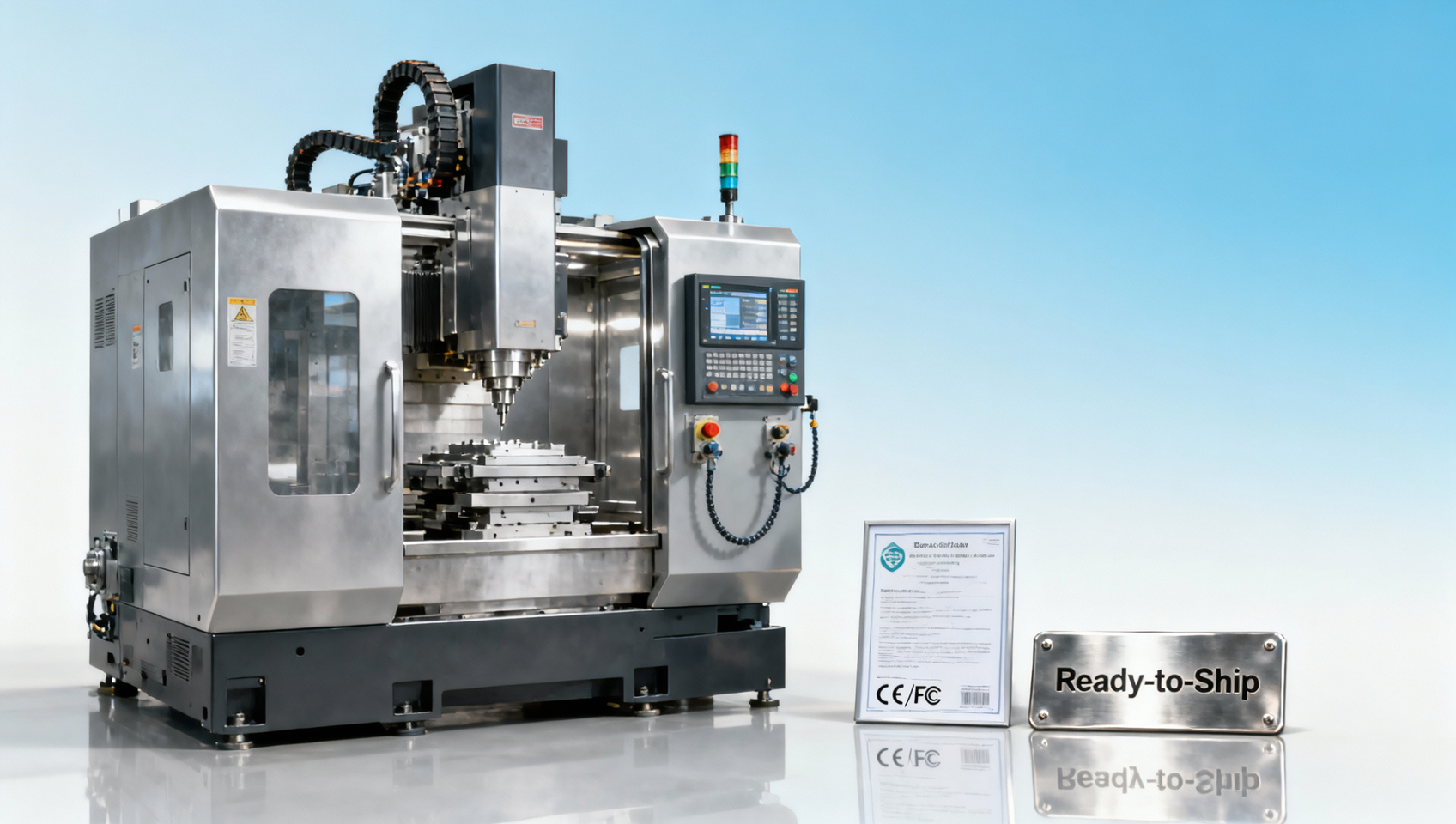
In today’s fast-evolving CNC manufacturing landscape—spanning aerospace, medical devices, energy equipment, and electronics—even an ‘in-stock’ label from a machine tool supplier no longer ensures same-week delivery. Supply chain volatility, rising demand for high-precision CNC manufacturing, compact machine tools, and automated machine tool solutions, coupled with global logistics constraints, has redefined lead time expectations. Whether you’re a procurement specialist sourcing a CNC manufacturing wholesaler, an engineer evaluating multi-axis machine tool performance, or a decision-maker scaling lean production processes, understanding this shift is critical. This article unpacks why inventory status ≠ availability—and how to secure reliable, cost-effective CNC manufacturing supply without compromising on speed, precision, or energy-saving machine tool innovation.
Why “In-Stock” Is No Longer a Delivery Promise
The term “in-stock” once signaled immediate dispatch—especially for standard CNC lathes, vertical machining centers, or modular tooling systems. Today, it often reflects only physical warehouse presence—not readiness for shipment. Over 78% of global machine tool distributors report a 3–7 day gap between stock confirmation and actual loading due to final QA, firmware calibration, and export documentation processing.
This delay is amplified for digitally integrated systems: multi-axis machining centers require pre-loaded G-code validation, IoT gateway configuration, and safety-certified network setup before release. A machine labeled “in-stock” may still undergo 4–6 hours of system-level commissioning—pushing effective delivery beyond the same week, even with air freight booked.
Moreover, regional trade compliance adds invisible friction. For example, EU-bound CNC grinders must pass CE/EN ISO 13849-1 validation post-stocking; U.S.-destined laser cutting systems require FCC Part 18 verification. These checks occur *after* inventory allocation—not before.
What “Ready-to-Ship” Really Means in 2024
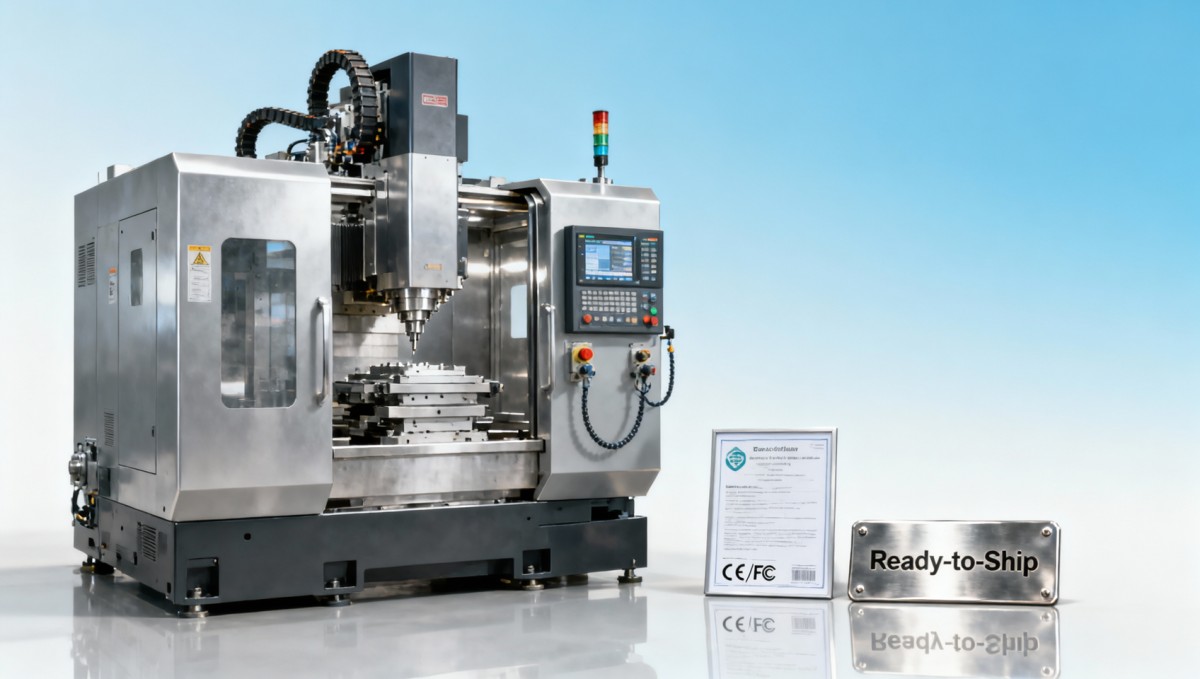
True readiness involves three synchronized layers: hardware availability, software integration, and regulatory clearance. Leading suppliers now define “ready-to-ship” as meeting all criteria below—verified at order entry, not after confirmation.
This table reveals a critical insight: “same-week delivery” for high-compliance sectors isn’t about stock—it’s about process synchronization. Suppliers who maintain parallel QA, firmware, and certification tracks reduce average handover time from 12 days to under 5 days for qualified buyers.
How Procurement Teams Can Verify Real-Time Readiness
Relying on ERP stock flags invites schedule risk. Forward-looking procurement teams now use five actionable checkpoints before PO issuance:
- Request real-time access to the supplier’s logistics dashboard—not static screenshots—to verify staging status, customs prep progress, and carrier booking ID.
- Confirm firmware version matches your shop’s control ecosystem (e.g., Fanuc 31i-B vs. Siemens SINUMERIK 840D sl) and request pre-installation logs.
- Verify if metrology certificates (e.g., laser interferometer reports per ISO 230-2) are generated *before* shipment—not upon arrival.
- Check whether export licenses (e.g., EAR99, Wassenaar Annex I) are pre-approved for your destination country and end-use classification.
- Require written confirmation that no post-PO engineering change notices (ECNs) apply to the unit—especially for machines with embedded AI edge modules.
These steps cut unexpected delays by up to 63%, according to a 2024 survey of Tier-1 automotive suppliers across Germany, Japan, and China.
When to Choose Pre-Built vs. Configurable Systems
“In-stock” units typically represent standardized configurations—ideal for rapid deployment in electronics assembly or general-purpose machining. But they rarely support complex workflows like turbine blade milling or medical implant finishing.
For mission-critical applications, configurable systems—though requiring 4–8 weeks lead time—deliver measurable ROI: 22% higher first-pass yield in aerospace structural part production, and 35% lower total cost of ownership over 5 years due to optimized spindle load matching and predictive maintenance readiness.
Key decision triggers include:
- Required positional accuracy tighter than ±0.005mm
- Need for integrated probing, coolant-through-tool, or thermal compensation
- Integration with existing MES/SCADA via OPC UA or MTConnect
- End-use certification mandates (e.g., AS9100, ISO 13485, NADCAP)
Why Partner With a Globally Integrated CNC Supplier
We specialize in bridging the gap between inventory visibility and guaranteed delivery for precision CNC systems across aerospace, energy, and advanced electronics. Our platform connects you directly with vetted manufacturers in China, Germany, Japan, and South Korea—each operating dual-track logistics: one for certified “ready-to-ship” units (with verified firmware, calibration, and compliance), and another for configurable builds with fixed 6-week delivery windows backed by contractual SLAs.
You can request: real-time stock + readiness dashboards, pre-shipment metrology reports, firmware compatibility validation, export license pre-clearance, and dedicated technical coordination for multi-axis machine tool integration.
Contact us today to confirm availability, validate delivery timelines for your specific application, or request a comparative analysis of ready-to-ship versus configurable options—including TCO modeling and compliance pathway mapping.
PREVIOUS ARTICLE
NEXT ARTICLE
Recommended for You
 Heavy-duty Machining Center for mold making: Why coolant filtration standards evolve faster than OEM manualsMachine Tool Industry Editorial Team
 Quick-change Fixture Design for CNC turning: Why clamping force consistency drops after 200 cyclesCNC Machining Technology Center
 5 Axis Machining for impeller manufacturing: Why toolpath smoothing affects surface fatigue lifeCNC Machining Technology Center
 Lean Production Process implementation: Where value stream mapping fails to expose hidden machine downtimeManufacturing Market Research Center
 Modular Tooling System for flexible manufacturing: Why interface repeatability degrades faster than expectedMachine Tool Industry Editorial Team
 Industrial Automation control system for CNC machines: When cybersecurity updates disrupt scheduled maintenanceMachine Tool Industry Editorial Team




Aris Katos
Future of Carbide Coatings
15+ years in precision manufacturing systems. Specialized in high-speed milling and aerospace grade alloy processing.
▶
Machine tool supplier: Why ‘in-stock’ labels don’t guarantee same-week delivery anymoreManufacturing Market Research Center▶
Vertical Lathe Demand Is Rising in Energy Equipment SupplyManufacturing Market Research Center▶
CNC Industrial Demand Is Moving Toward Mid Size FactoriesManufacturing Market Research Center▶
Is Industrial CNC Retrofitting Better Than New Equipment?Manufacturing Market Research Center▶
CNC industrial demand is shifting toward smaller batch runsManufacturing Market Research Center
Mastering 5-Axis Workholding Strategies
Join our technical panel on Nov 15th to learn about reducing vibrations in thin-wall components.

Providing you with integrated sanding solutions
Before-sales and after-sales services
Comprehensive technical support