• Global CNC market projected to reach $128B by 2028 • New EU trade regulations for precision tooling components • Aerospace deman
NYSE: CNC +1.2%LME: STEEL -0.4%

CNC Industrial Demand Is Moving Toward Mid Size Factories
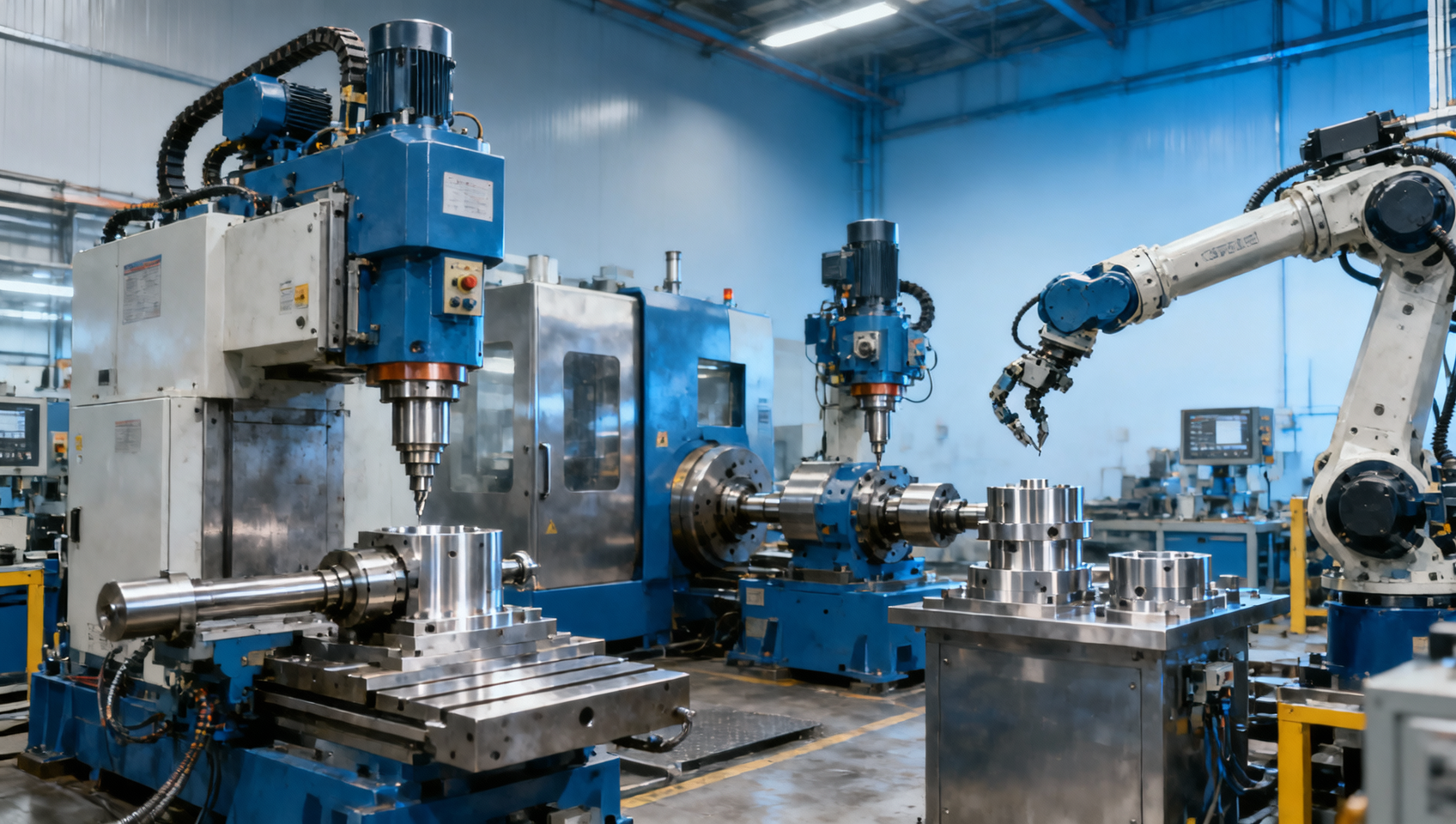
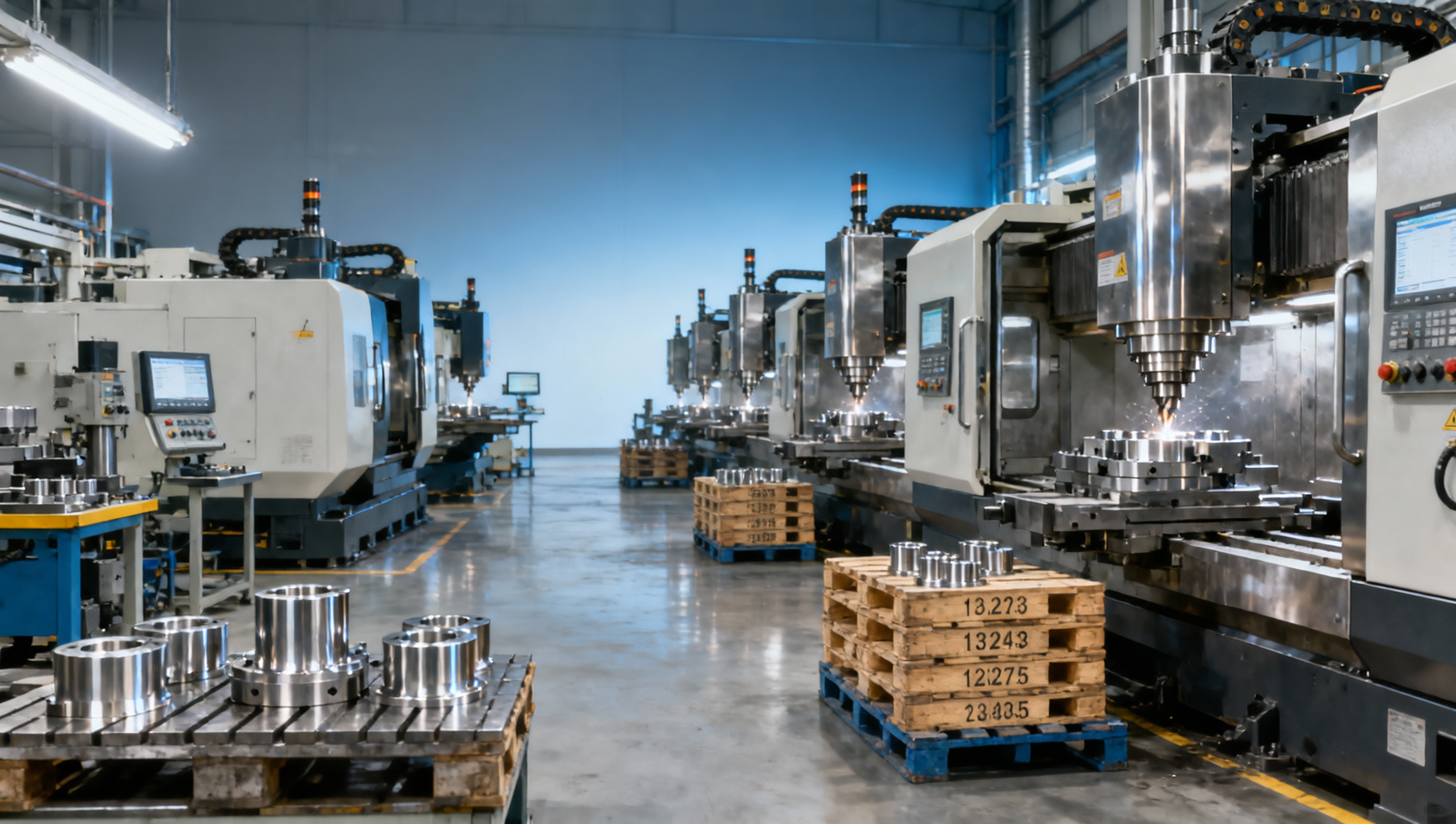
As Global Manufacturing shifts toward flexible, mid size factories, industrial CNC and automated production are becoming the new standard in the Manufacturing Industry. From metal machining and CNC milling to automated lathe systems, companies are redesigning the production process for higher precision, faster output, and smarter Industrial Automation—making this transition a key trend for buyers, operators, and decision-makers across the Machine Tool Market.
Why mid size factories are becoming the new center of CNC industrial demand
The shift toward mid size factories is not a short-term purchasing pattern. It reflects a deeper change in how manufacturers balance cost, flexibility, lead time, and production resilience. Large plants still dominate very high-volume output, but many buyers now need production systems that can switch between small batch, medium batch, and repeat orders without long setup delays.
In practical terms, a mid size factory often operates with tighter floor space, leaner engineering teams, and more mixed-product schedules. That changes CNC equipment priorities. Instead of buying only for maximum spindle power or the largest possible envelope, these factories look for machining centers, CNC lathes, and automation cells that can deliver stable performance across 2–3 product families and multiple shift patterns.
This trend is especially visible in automotive components, electronics housings, energy equipment parts, and subcontract machining. Order cycles are shorter, quality requirements are stricter, and customers increasingly expect reliable output within 2–6 weeks rather than long planning windows. As a result, industrial CNC demand is moving closer to flexible production units that can respond faster without carrying the overhead of mega-factory structures.
What makes the mid size factory model attractive
- Lower capital pressure than a full-scale large plant, while still supporting automated production and measurable process control.
- Faster line conversion for mixed parts, especially when batch sizes range from tens to several thousand pieces.
- Better fit for regional supply chains that need local delivery, rapid prototyping, and shorter replenishment cycles.
- Stronger adoption path for industrial automation because robot loading, tool management, and inspection can be added in 3 stages instead of one large investment.
For information researchers, the key takeaway is clear: the machine tool market is no longer driven only by heavy-capacity installations. For operators, the advantage is simpler process control and more standardized workcells. For procurement teams and business leaders, the benefit lies in faster return visibility, lower implementation risk, and a more scalable investment path.
Which CNC systems fit mid size factories best?
Not every CNC machine is equally suitable for a mid size factory. Selection depends on part geometry, target output, tooling strategy, and the desired level of industrial automation. In many cases, the best solution is not the most complex platform, but the one that integrates machining accuracy, maintenance simplicity, and repeatable throughput within a manageable operating footprint.
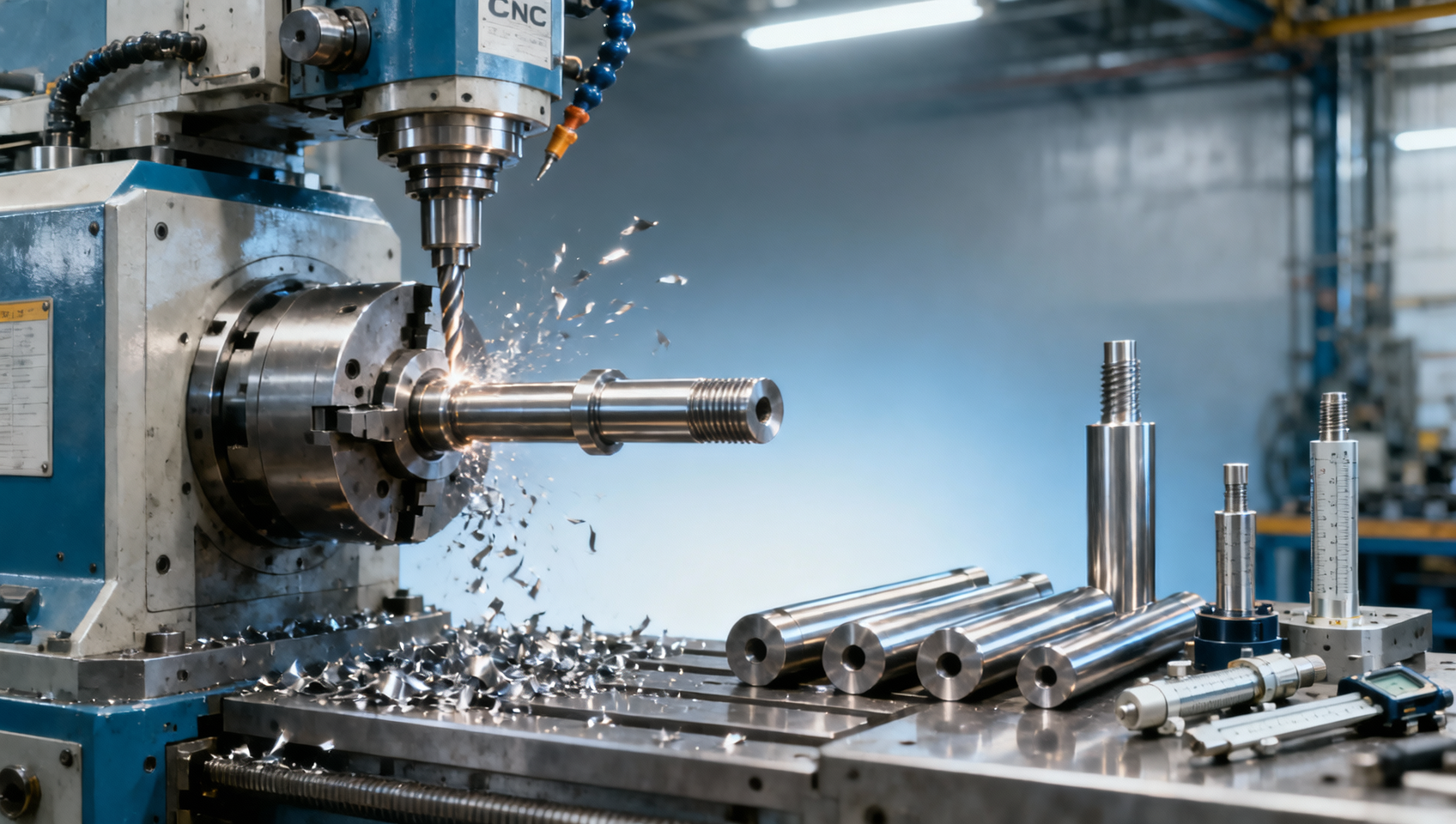
For example, a factory producing shafts, sleeves, and threaded parts may prioritize CNC lathes with bar feeding and automatic unloading. A plant focused on aluminum housings or steel structural components may get better value from vertical machining centers with pallet options. If the product mix includes complex contours or angled surfaces, 4-axis or 5-axis systems may reduce fixture changes and secondary operations.
The table below compares common CNC configurations used in mid size factories. It is designed to help purchasing teams and plant managers match application needs with production scale, automation readiness, and process complexity.
For many mid size factories, the most effective path is a balanced mix: 1–2 CNC lathes for rotational parts, 2–4 machining centers for prismatic parts, and selective automation added where labor intensity or takt variation becomes a bottleneck. This structure supports both current orders and future expansion without overloading the initial budget.
Three selection questions that matter early
First, how many setups does the part require today? If a machine can reduce setup count from 3 operations to 1 or 2, productivity gains may be greater than a small difference in spindle specification. Second, what is the expected batch range? Equipment sized for 5 pieces and 5,000 pieces will not be optimized the same way. Third, how easily can the machine join a future automated production line?
These questions help prevent a common mistake: buying a CNC machine tool only for immediate output, while ignoring fixture repeatability, tool life monitoring, loading method, and digital data integration. Mid size factories usually benefit more from system compatibility than from isolated peak-machine capability.
What should buyers, operators, and decision-makers evaluate before purchasing?
A successful CNC procurement process should connect technical needs with business constraints. Buyers often focus on quotation and delivery time, operators focus on usability and maintenance, and company leaders focus on output, risk, and cash flow. Good selection happens when these views are reviewed together instead of separately.
In the machine tool market, mid size factories should compare equipment across at least 5 key dimensions: accuracy stability, automation readiness, tooling ecosystem, service response, and implementation complexity. These points are often more relevant than headline specifications alone, especially when production must ramp within 4–8 weeks after installation.
The table below offers a practical procurement checklist for industrial CNC investments. It is useful for RFQ preparation, supplier comparison, and internal approval discussions.
This type of comparison helps procurement teams move from price comparison to total-use evaluation. A lower initial quotation may become more expensive if setup time is high, operator training is slow, or future automation requires redesign. In contrast, a well-matched CNC solution can improve utilization over 12–24 months even if the initial ticket price is higher.
A practical 4-step purchasing process
- Define parts and production targets: list materials, annual volume, tolerance range, and current bottlenecks.
- Match machine architecture to workflow: turning, milling, multi-face machining, or integrated cells.
- Review implementation requirements: power, foundation, operator skill level, and software integration.
- Confirm lifecycle support: installation window, training schedule, maintenance intervals, and spare parts plan.
When buyers follow a structured process, decision quality improves. It also becomes easier to align sourcing, production, and management expectations before a purchase order is issued.
How should mid size factories think about cost, automation, and implementation risk?
Cost is no longer only the machine price. For a mid size factory, the real question is how quickly the CNC investment starts producing predictable output with acceptable labor intensity and quality stability. That includes tooling, fixtures, programming time, operator training, preventive maintenance, and potential downtime during the first 30–90 days of production ramp-up.
Many factories overestimate the value of a fully automated line at the start. In reality, a phased approach often works better. Stage 1 may begin with stand-alone CNC machining centers or lathes. Stage 2 adds automatic loading, in-process probing, or pallet handling. Stage 3 links machines into a flexible production line with centralized scheduling and traceability. This lowers risk while preserving upgrade potential.
A common cost comparison appears below. It does not use fixed market prices, because those vary by region, configuration, controller, and supplier. Instead, it shows how different investment paths affect labor, flexibility, and ramp complexity in the manufacturing industry.
For most mid size factories, semi-automated deployment is often the most balanced option. It can reduce dependence on repetitive loading tasks, improve cycle repeatability, and still remain manageable for a plant that does not yet run a full smart factory platform. This is particularly useful when labor availability is inconsistent or when quality variation between shifts must be reduced.
Risk points that should be checked before approval
- Underestimating tooling and fixture cost, which can materially affect real payback in the first 6–12 months.
- Ignoring operator learning curve, especially when moving from manual machining to CNC milling or multi-axis systems.
- Choosing a machine that cannot be linked to future automation, even though the production plan expects phased expansion.
- Failing to plan spare parts, preventive inspection, and service response for continuous or two-shift operation.
When these issues are identified early, the investment case becomes much clearer. Mid size factories succeed when they treat CNC procurement as a production system decision, not only an equipment purchase.
Application scenarios, compliance concerns, and common buying questions
Where is the strongest demand coming from?
Demand is strong in industries that combine precision requirements with changing order structures. Automotive suppliers need repeatable machining for shafts, brake-related parts, housings, and connectors. Aerospace and energy equipment manufacturers require higher structural accuracy and process control. Electronics production needs stable machining for enclosures, heat sinks, and small precision components, often with shorter product life cycles.
This is why CNC machining, precision machine tools, and automated production lines are increasingly relevant outside giant manufacturing campuses. Mid size factories can serve as regional production hubs, supplier bases, or specialist process centers, especially when they can maintain consistent quality across multiple order types.
From a compliance perspective, buyers should review machine safety, electrical conformity, traceability capability, and calibration planning. Exact requirements depend on destination market and industry, but common expectations include documented maintenance, measurable inspection routines, and safe operation procedures for operators and automation interfaces.
FAQ for buyers and plant teams
How do I know whether a CNC lathe or machining center is the better first investment?
Start with part geometry and batch pattern. If the majority of parts are rotational and can be fed in sequence, a CNC lathe may create faster ROI. If the factory handles plates, housings, brackets, or multi-face parts, a machining center is usually more versatile. Many mid size factories begin with the process that covers at least 60%–70% of current orders.
What delivery and ramp-up timeline is typical?
A standard project usually includes 3 phases: configuration confirmation, installation and commissioning, then pilot production. Depending on machine type and customization level, practical lead time may range from several weeks to a few months. Ramp-up often takes an additional 1–4 weeks as programs, tooling, and operator routines are stabilized.
What do operators care about most after installation?
Operators usually focus on setup repeatability, HMI clarity, tool access, chip evacuation, alarm logic, and preventive maintenance workload. In real production, these factors can affect output more than catalog specifications. A machine that is easier to reset, clean, and inspect often performs better over long shifts.
What is the biggest mistake in CNC purchasing for a mid size factory?
The biggest mistake is selecting for maximum specification but minimum system fit. A machine tool that looks powerful on paper may create bottlenecks if fixturing is difficult, automation is impossible, or service support is slow. The better decision is the one that fits parts, people, and the next 12–24 months of production planning.
Why choose us for CNC market insight, sourcing guidance, and project planning
We focus on the global CNC machining and precision manufacturing industry, covering machine tools, production technology, supplier trends, and international trade developments. That means our value is not limited to product descriptions. We help readers and buyers connect market information with real procurement and implementation decisions.
If you are evaluating CNC lathes, machining centers, multi-axis systems, tooling support, or automated production line options, we can help you narrow the decision based on part type, output target, budget stage, and delivery expectation. We can also support comparison of alternative solution paths for stand-alone machines, semi-automated cells, and scalable factory layouts.
What you can contact us about
- Parameter confirmation for CNC milling, turning, and precision machining applications.
- Product selection advice based on part drawings, materials, tolerance goals, and batch size.
- Delivery cycle discussion, including standard lead times, integration windows, and pilot production planning.
- Customized solution support for automation interfaces, fixtures, tooling strategy, and production line expansion.
- Compliance and documentation questions related to general machine safety, process control, and export-oriented sourcing.
- Quotation communication and supplier comparison for buyers who need a clearer decision framework before approval.
Whether you are an information researcher building a supplier list, an operator preparing for process change, a procurement manager comparing CNC machine tool options, or a business decision-maker planning a mid size factory upgrade, our platform can help you move from market noise to practical action. Contact us to discuss configuration matching, project timelines, sourcing priorities, or a tailored CNC and automation roadmap for your manufacturing needs.
PREVIOUS ARTICLE
Recommended for You
 Global Manufacturing Lead Times Improve but Not EverywhereGlobal Machine Tool Trade Research Center
 Machine Tool Market Inventory Pressure Is Building AgainGlobal Machine Tool Trade Research Center
 Metal Lathe vs CNC Milling for Low Volume Round PartsCNC Machining Technology Center
 CNC Cutting Gas Choice Affects More Than Edge FinishCNC Machining Technology Center
 CNC Metalworking Shops Face New Pressure on TraceabilityManufacturing Policy Research Center
 Automated Lathe Cycle Time Gains Can Hide Quality LossesCNC Machining Technology Center

Aris Katos
Future of Carbide Coatings
15+ years in precision manufacturing systems. Specialized in high-speed milling and aerospace grade alloy processing.
▶
Vertical Lathe Demand Is Rising in Energy Equipment SupplyManufacturing Market Research Center▶
CNC Industrial Demand Is Moving Toward Mid Size FactoriesManufacturing Market Research Center▶
Is Industrial CNC Retrofitting Better Than New Equipment?Manufacturing Market Research Center▶
CNC industrial demand is shifting toward smaller batch runsManufacturing Market Research Center▶
Used metal lathe or new one? The cost gap is not always realManufacturing Market Research Center
Mastering 5-Axis Workholding Strategies
Join our technical panel on Nov 15th to learn about reducing vibrations in thin-wall components.

Providing you with integrated sanding solutions
Before-sales and after-sales services
Comprehensive technical support