• Global CNC market projected to reach $128B by 2028 • New EU trade regulations for precision tooling components • Aerospace deman
NYSE: CNC +1.2%LME: STEEL -0.4%

Where the Machine Tool Market is slowing in 2026

The Machine Tool Market is entering 2026 under growing pressure from weaker capital spending, slower export demand, and cautious investment across key manufacturing sectors. For business evaluators, understanding where growth is losing momentum is essential to identifying regional risks, segment-level weakness, and the strategic shifts reshaping global CNC and precision manufacturing.
Why the slowdown signal in the Machine Tool Market matters now
The most important shift heading into 2026 is not a collapse in demand, but a broader loss of momentum across parts of the Machine Tool Market that had previously benefited from post-pandemic reshoring, industrial automation upgrades, and aggressive capacity expansion. For business evaluators, that distinction matters. A slowing market does not affect every product category, geography, or buyer type equally. Instead, it creates uneven pressure across CNC lathes, machining centers, multi-axis systems, cutting tools, automation cells, and retrofit services.
In practical terms, many manufacturers are still committed to long-term modernization. However, near-term purchase decisions are becoming more selective. Buyers are delaying replacement cycles, splitting large capital projects into smaller phases, and favoring equipment that can improve utilization rather than simply add new capacity. This means the Machine Tool Market may continue to show activity, but the quality of demand is changing. New orders increasingly depend on measurable productivity gains, labor substitution value, and faster payback periods.
This is especially relevant in industries such as automotive, electronics, energy equipment, and general industrial manufacturing, where production planning has become more cautious. Even when factories remain busy, uncertainty around inventories, export orders, financing costs, and customer forecasts can reduce willingness to commit to premium machine tool investments.
Where the Machine Tool Market is slowing the most in 2026
The slowdown is likely to be most visible in regions and segments where recent expansion was driven by aggressive capital expenditure rather than steady underlying consumption. Business evaluators should pay close attention to markets that experienced strong machine installations in 2023 to 2025, because those same areas may now be entering a digestion phase.
Several pressure points stand out. First, export-oriented manufacturing hubs are exposed to weaker external demand. When overseas buyers cut back on industrial goods, local suppliers often delay machine replacement and automation upgrades. Second, sectors facing overcapacity or inventory correction are more likely to postpone orders for large machining centers and multi-axis systems. Third, small and mid-sized workshops may feel financing pressure more sharply than large OEMs, especially when interest rates remain elevated or bank lending standards tighten.
The Machine Tool Market in 2026 may therefore slow most clearly in mature, cyclical, and heavily export-linked categories, while niche areas tied to aerospace precision parts, energy transition components, medical manufacturing, or high-mix low-volume production may hold up better.

What is driving weaker momentum across global CNC investment
Three forces are shaping this slower pattern. The first is weaker capital discipline across manufacturing. After years of supply chain shocks and uneven recovery, many companies now demand faster returns from equipment investments. That affects the Machine Tool Market directly, because machine tools are often among the largest discretionary items in factory modernization budgets.
The second is softer export demand. Global trade is not disappearing, but order visibility is more limited in many industrial sectors. When downstream customers shorten forecasts or reduce volume commitments, upstream manufacturers become more conservative. CNC machine purchases move from being strategic expansion tools to tactical decisions tied to immediate contracts.
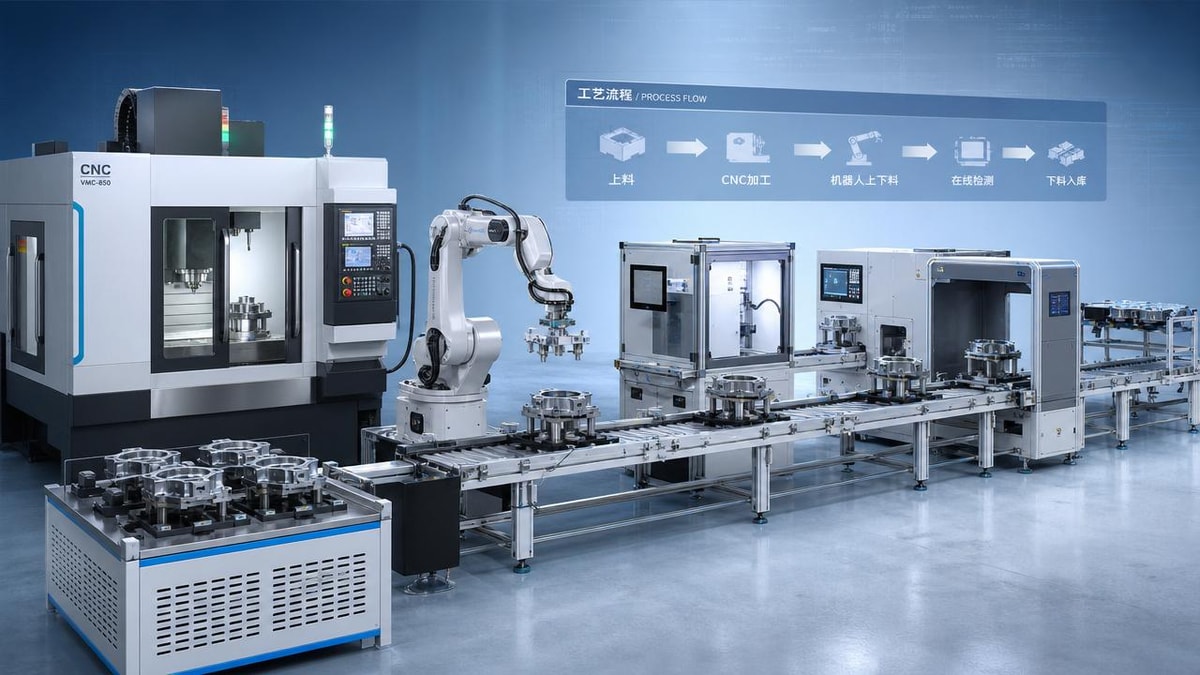
The third force is structural technology reprioritization. Manufacturers are still investing, but the emphasis is shifting. Instead of broad spending on standard equipment, buyers are prioritizing automation integration, software connectivity, predictive maintenance, spindle utilization monitoring, robotics interfaces, and flexible production lines. In other words, value is moving from pure machine quantity to digital productivity and manufacturing resilience.
This does not eliminate demand for machine tools. It changes what qualifies as an approved investment. Suppliers that sell equipment without a clear productivity case may face slower conversion, while those offering process optimization, tooling integration, and smarter automation packages may remain more competitive even in a softer Machine Tool Market.
Which regions and buyer groups may face the greatest pressure
Regional exposure in the Machine Tool Market depends on industrial structure. Countries with strong machine tool ecosystems such as China, Germany, Japan, and South Korea remain critical to global supply and demand, but each faces different risks. China may see pressure where domestic manufacturing expansion outpaced current order growth. Germany can feel the effect of export softness and energy-sensitive industrial sentiment. Japan and South Korea may encounter slower orders in categories linked to electronics cycles, general industrial exports, or cautious overseas investment.
At the buyer level, three groups deserve attention. The first is contract manufacturers serving volatile end markets. Their machine purchases depend heavily on customer schedules. The second is mid-market factories seeking financing for modernization; they are highly sensitive to credit costs and utilization rates. The third is companies with installed machine fleets that are still operational but aging. These firms may delay replacement and instead choose maintenance, software upgrades, fixturing improvements, or partial automation.
Why slower growth does not mean the same thing for every segment
One common mistake in evaluating the Machine Tool Market is to treat all equipment categories as moving together. In reality, slowdown intensity differs across standard CNC lathes, vertical machining centers, horizontal machining centers, grinding systems, five-axis platforms, and automated production cells. Standardized equipment used in broad industrial applications may encounter the heaviest margin pressure because buyers can compare alternatives easily and delay purchases without immediate production risk.
By contrast, specialized systems tied to strict tolerances, advanced materials, or certified production requirements often remain more resilient. Aerospace and defense, precision medical manufacturing, selected energy equipment segments, and high-value electronics components may still support targeted investment. These buyers are not immune to caution, but they often evaluate machine tools through quality assurance, process capability, and strategic customer requirements rather than price alone.
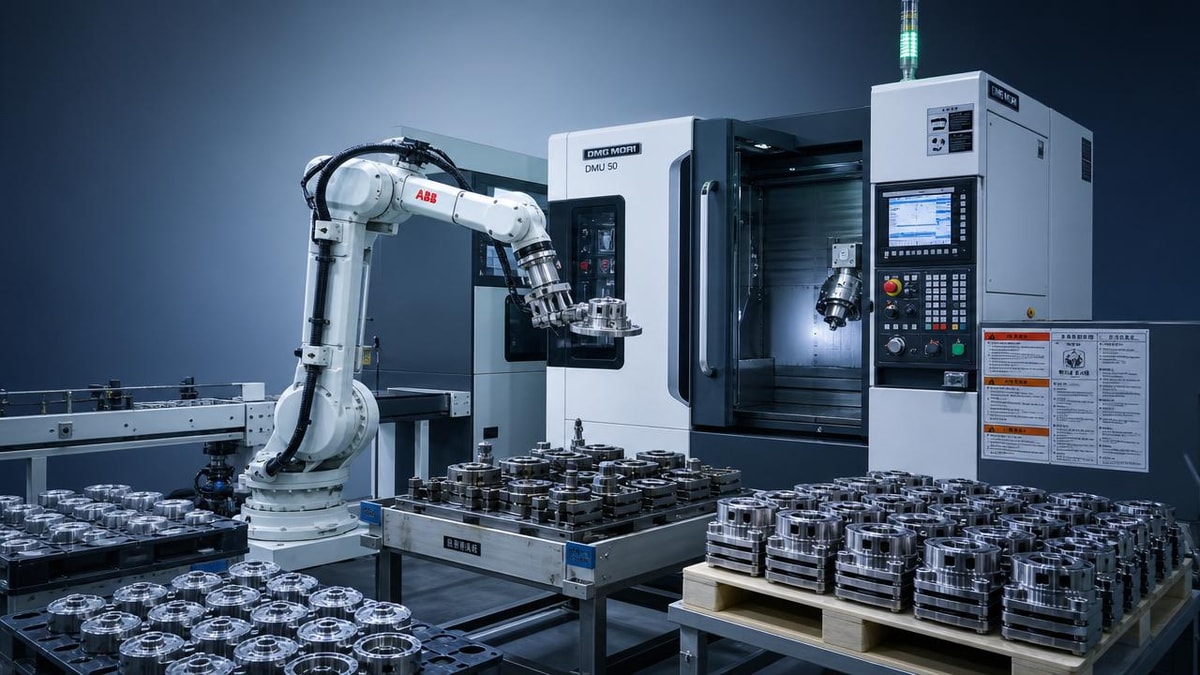
Another split is emerging between greenfield and brownfield spending. Greenfield projects face more scrutiny because they require broad capital commitment. Brownfield improvement projects, however, can still move forward if they boost output from existing facilities. For this reason, the Machine Tool Market may see better relative performance in retrofits, controls upgrades, tooling optimization, spindle monitoring, fixture redesign, robot loading systems, and production line balancing.
Signals business evaluators should track through 2026
For business evaluators, the key task is not merely to observe whether the Machine Tool Market is slowing, but to determine how deep, broad, and durable the slowdown becomes. Several signals are especially useful. Watch order lead times: when buyers expect weak demand, they avoid booking too far ahead. Track the ratio between new machine inquiries and retrofit requests: a rising share of retrofit interest often points to defensive capital behavior. Monitor tooling consumption and fixture upgrades as well, because these can reveal whether factories are trying to squeeze more value from installed assets rather than expand capacity.
It is also important to observe sector-specific production trends. Automotive transition strategies, electronics inventory recovery, aerospace backlog execution, and energy equipment investment plans can all alter demand patterns inside the Machine Tool Market. A broad industrial slowdown may coexist with isolated pockets of strength. Evaluators should therefore avoid relying on a single headline interpretation.
Practical indicators to review
Useful indicators include dealer discount behavior, changes in machine financing terms, backlog quality, service revenue share, spindle-hour utilization at customer plants, labor availability, and the balance between domestic and export-oriented customer orders. None of these indicators alone defines market direction, but together they help identify whether the slowdown is cyclical, structural, or mainly limited to selected manufacturing chains.
What companies should do when the Machine Tool Market loses speed
A slower Machine Tool Market requires sharper judgment rather than simple cost cutting. For equipment suppliers, the priority is to shift the sales conversation from machine specification to operating impact. Customers are more likely to approve purchases when proposals include cycle-time improvement, scrap reduction, labor substitution, digital monitoring value, and realistic payback scenarios. Financing flexibility and application engineering support can become decisive.
For manufacturers considering equipment purchases, the better question is not whether to invest at all, but where investment carries the strongest defensive and strategic value. A machine that unlocks skilled labor bottlenecks, supports multi-process flexibility, improves first-pass yield, or enables entry into higher-value components may still be justified in a slower cycle. On the other hand, equipment acquired mainly for speculative capacity expansion deserves closer review.
Distributors, integrators, and component suppliers should also adapt. In a softer Machine Tool Market, customers often prefer modular projects. Bundling machines with tooling, workholding, robot tending, software, and service can better match buyer expectations than offering stand-alone hardware. The market may reward those who solve process problems, not just those who ship equipment.
How to judge whether the slowdown is temporary or more structural
The answer depends on whether weakness is mainly linked to cyclical hesitation or to a deeper reset in manufacturing priorities. If demand improves once inventories normalize and export visibility stabilizes, then the Machine Tool Market could recover with stronger emphasis on efficient, connected, and automated systems. But if manufacturers continue redirecting spending away from broad capacity additions toward selective productivity tools, then some traditional machine categories may face longer-term pressure.
That is why evaluators should separate demand recovery from demand transformation. Recovery means buyers eventually resume purchasing the same categories in similar ways. Transformation means they return with different requirements: more automation compatibility, lower labor dependence, better data integration, lower energy waste, and shorter implementation risk. For many segments of the Machine Tool Market, 2026 looks less like a sudden downturn and more like a filter that rewards stronger value propositions.
Final business judgment for 2026
The Machine Tool Market is slowing in places where demand was most exposed to cyclical capital spending, export uncertainty, and standard capacity expansion. Yet the broader story is not simply weakness. It is a re-sorting of priorities across CNC manufacturing, precision machining, and automated production. Buyers are becoming stricter, projects are becoming more selective, and the winning offers are increasingly tied to measurable production outcomes.
If companies want to judge how this trend affects their own business, they should confirm five questions: which customer sectors are reducing capital urgency, which machine categories are being delayed versus upgraded, whether financing conditions are changing buyer behavior, where retrofit demand is replacing new installations, and how much digital productivity value now matters in purchase approval. Those answers will provide a clearer view of where the Machine Tool Market is merely slowing and where it is structurally changing.
PREVIOUS ARTICLE
NEXT ARTICLE
Recommended for You
 Industrial Robotics payback depends on one hidden variableManufacturing Market Research Center
 Shaft Parts machining problems linked to concentricity lossCNC Machining Technology Center
 Production Process changes that quietly raise defect ratesCNC Machining Technology Center
 Industrial Automation projects stall without process mappingCNC Machining Technology Center
 CNC metal cutting heat issues behind poor surface finishCNC Machining Technology Center
 High precision lathe claims that deserve a closer lookMachine Tool Industry Editorial Team



Aris Katos
Future of Carbide Coatings
15+ years in precision manufacturing systems. Specialized in high-speed milling and aerospace grade alloy processing.
▶
Where the Machine Tool Market is slowing in 2026Manufacturing Market Research Center▶
Machine Tool Market Signals Worth Watching This YearManufacturing Market Research Center▶
How to Read Machine Tool Price Quotes Without OverpayingManufacturing Market Research Center▶
How to Compare Machine Tool Wholesaler Pricing FairlyManufacturing Market Research Center▶
5 Key Factors When Choosing a CNC Manufacturing WholesalerManufacturing Market Research Center
Mastering 5-Axis Workholding Strategies
Join our technical panel on Nov 15th to learn about reducing vibrations in thin-wall components.

Providing you with integrated sanding solutions
Before-sales and after-sales services
Comprehensive technical support