• Global CNC market projected to reach $128B by 2028 • New EU trade regulations for precision tooling components • Aerospace deman
NYSE: CNC +1.2%LME: STEEL -0.4%

Global Manufacturing in 2026 may favor regional over distant supply
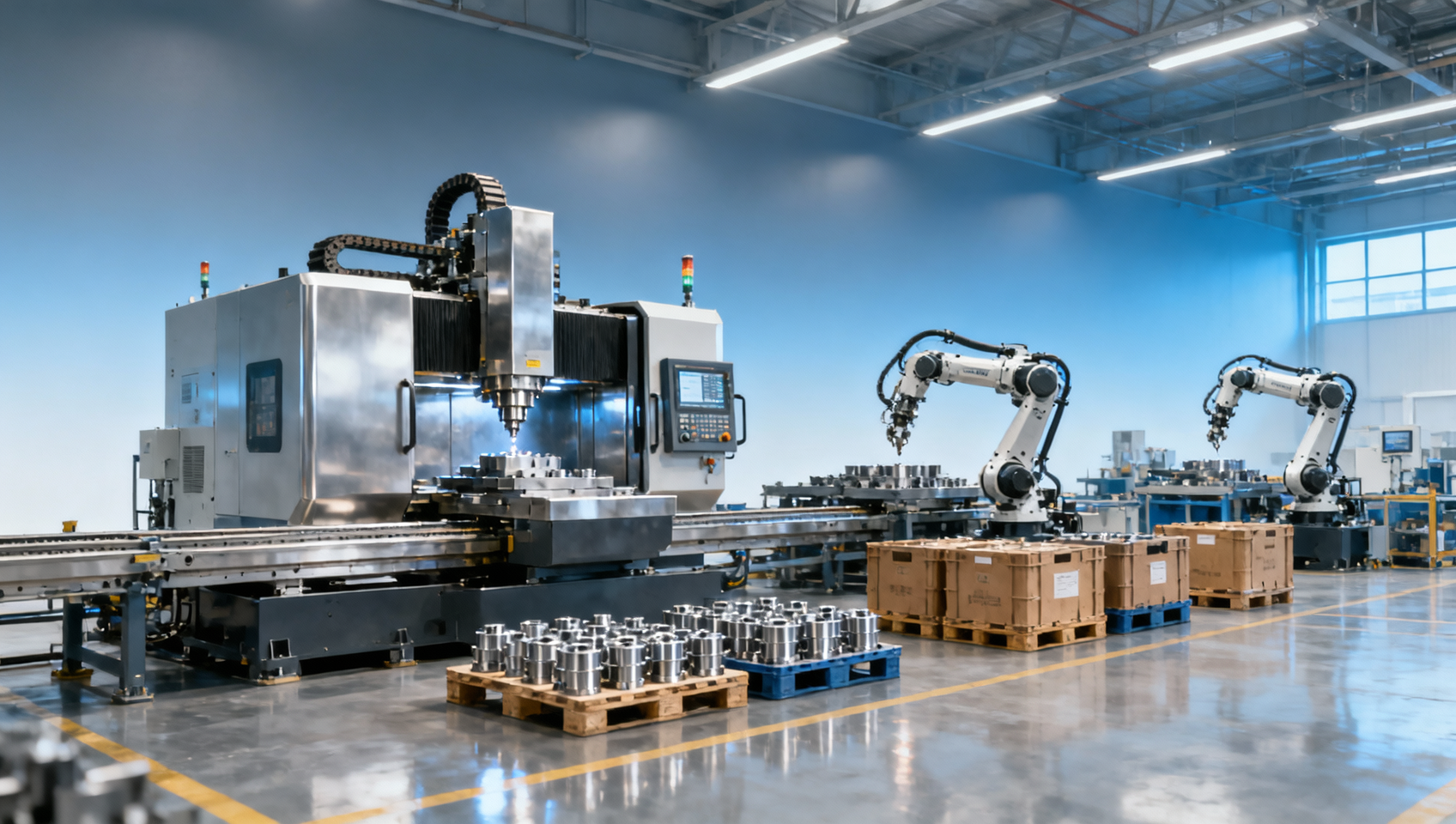
As Global Manufacturing enters 2026, the Manufacturing Industry may increasingly prioritize regional supply networks over distant sourcing to improve resilience, speed, and cost control. For buyers, operators, and decision-makers in industrial CNC, metal machining, CNC milling, and automated production, this shift is reshaping the Machine Tool Market, investment strategies, and the future of Industrial Automation across key production hubs.
For the CNC machine tool industry, this is not simply a logistics adjustment. It affects sourcing cycles for castings, spindles, controls, ball screws, cutting tools, fixtures, and automation modules. It also changes how factories plan capacity, how procurement teams assess supplier risk, and how executives decide between global cost advantages and regional supply security.
In sectors such as automotive, aerospace, energy equipment, and electronics, machine uptime, dimensional consistency, and delivery predictability often matter as much as unit price. A delay of 2–6 weeks in one imported component can disrupt an entire machining cell, especially when multi-axis machining centers, robotic loading systems, and automated inspection units are integrated into one production line.
This article examines why regional supply networks may gain ground in 2026, what the shift means for CNC buyers and operators, how procurement priorities are changing, and what practical actions manufacturers can take to balance resilience, quality, and cost.
Why Regional Supply Is Becoming a Strategic Manufacturing Priority
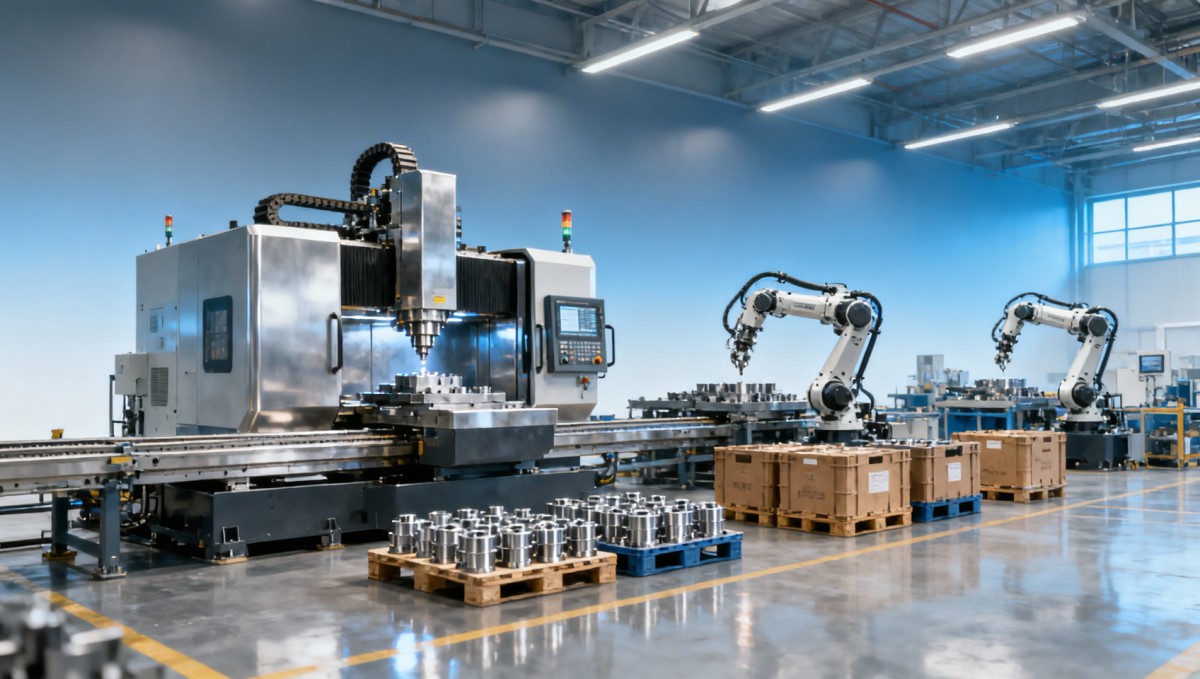
The move toward regional supply is driven by a combination of lead-time pressure, geopolitical uncertainty, freight variability, and the rising cost of production interruptions. In machine tool manufacturing, even a single late shipment of a spindle cartridge, servo drive, or precision bearing can delay assembly, testing, and installation. For many factories, the cost of one stopped line over 48–72 hours can outweigh the savings gained from sourcing a component from a distant low-cost supplier.
Regional sourcing does not mean abandoning international trade. Instead, it means reducing overdependence on supply chains that stretch across multiple borders, ports, and handoff points. In practical terms, many manufacturers are now evaluating a 3-layer supply structure: local suppliers for urgent parts, regional partners for stable volume orders, and global suppliers for specialized or cost-sensitive categories.
For the machine tool market, this shift aligns with the broader trend toward smart manufacturing. Digitally connected plants need faster replenishment cycles, more predictable service windows, and closer collaboration between design, purchasing, and production teams. When a supplier is in the same region, engineering changes, quality audits, and after-sales support can often be handled in days rather than weeks.
Another reason is inventory economics. During periods of uncertainty, factories often carry 15%–30% more safety stock for imported components. That ties up cash and floor space. Regional supply can reduce the need for excessive buffer inventory, especially for repeat-use parts such as toolholders, clamps, hydraulic units, sensors, and sheet metal enclosures.
Core Drivers Behind the Shift
- Lead-time compression: regional suppliers may deliver in 7–21 days, while distant sourcing can require 6–12 weeks depending on transport mode and customs.
- Service responsiveness: field support, spare parts replacement, and commissioning support are easier when travel and shipping distances are shorter.
- Risk diversification: relying on 2–3 regional sources can reduce exposure to port congestion, trade policy changes, or single-country disruptions.
- Collaboration speed: prototype changes, tolerance adjustments, and fixture redesigns move faster when supplier engineering teams are geographically closer.
The following comparison shows why many procurement teams are reassessing the balance between distant and regional sourcing for CNC and precision manufacturing operations.
The main conclusion is not that one model always wins. Rather, manufacturers are increasingly measuring total supply cost, response speed, and continuity risk together. In 2026, that broader calculation is likely to favor regional supply in more categories than before.
What This Means for CNC Machine Tools, Precision Components, and Automation Lines
The CNC machine tool industry depends on tightly coordinated upstream and downstream flows. A machining center may involve castings, guideways, spindle assemblies, servo systems, CNC controls, lubrication systems, tool magazines, sheet metal guards, and electrical cabinets. When supply becomes unstable, machine builders face delays not only in assembly but also in calibration, trial cutting, and final acceptance.
Regional supply can improve continuity for high-frequency and medium-complexity categories. Examples include structural castings, machine covers, fixtures, chip conveyors, coolant systems, standard electrical assemblies, and common automation peripherals. These items typically benefit from shorter transport routes, easier inspections, and faster replacement cycles.
However, not every component can be regionalized immediately. Certain high-end controls, specialty bearings, precision measuring systems, and advanced cutting solutions may still come from global specialists. The practical approach is segmentation: determine which parts require global sourcing for technology reasons and which can shift regionally for speed and resilience.
For operators and plant managers, regional supply also influences maintenance planning. If a critical spare part can be replenished within 24–72 hours rather than 10–20 days, preventive maintenance schedules become easier to maintain. Downtime risk falls, and production planning becomes more realistic, especially in multi-shift environments operating 16–24 hours per day.
Supply Categories Most Affected in 2026
High-priority for regional supply
- Machine structure components with repeat demand and high shipping weight.
- Common electrical panels, pneumatics, lubrication units, and guarding systems.
- Standard tooling accessories, fixtures, and workholding parts with rapid replacement needs.
Likely to remain global or dual-sourced
- Advanced CNC controllers, high-precision feedback systems, and specialty spindle technologies.
- Complex multi-axis modules where supplier qualification takes 6–12 months.
- Proprietary automation or inspection hardware with limited certified sources.
A useful rule for procurement teams is to classify components by three filters: business criticality, technical uniqueness, and replacement urgency. If a part is critical, not highly unique, and needs fast replacement, regional supply deserves strong consideration. This framework helps avoid oversimplified decisions based only on unit cost.
How Procurement Teams Should Reevaluate Cost, Lead Time, and Risk
Many purchasing teams still compare suppliers mainly on quoted price, minimum order quantity, and nominal delivery date. In 2026, that will be too narrow for industrial CNC and automated production projects. Buyers need a broader scorecard that includes risk-adjusted lead time, quality stability, spare parts availability, engineering support, and the cost of delayed output.
A lower-priced imported component may appear attractive until freight volatility, customs delay, or packaging damage adds unplanned cost. In machine tool assembly, delays often cascade. If one missing subsystem prevents FAT testing, installation and customer acceptance can slip by 1–4 weeks. That impacts revenue recognition, labor scheduling, and customer trust.
Regional sourcing also enables better supplier development. Procurement teams can conduct on-site audits more easily, verify process control, and confirm whether a supplier can hold tolerances, material certifications, and repeatability standards. For precision manufacturing, supplier capability matters more than brochure claims.
The decision framework below helps buyers compare sourcing options more realistically across machine tool, CNC milling, and automated production line projects.
The table highlights a simple reality: the cheapest quote is not always the lowest operating cost. In high-value machining and automation environments, response speed and stable quality can create more commercial value than a modest price reduction on paper.
A Practical 5-Step Procurement Review
- Map all critical parts by failure impact and replenishment urgency.
- Separate globally unique components from regionally substitutable items.
- Calculate total landed cost over 12 months, not just purchase price.
- Audit supplier responsiveness, documentation quality, and process control.
- Build dual-source coverage for the top 20% of components that drive 80% of downtime exposure.
This approach is especially useful for companies that build or operate CNC lathes, machining centers, robotic cells, and flexible production lines where a small part shortage can affect the throughput of an entire system.
Implementation Strategies for Manufacturers, Operators, and Decision-Makers
Regionalization works best when it is executed as an operating model, not just a purchasing slogan. Manufacturers should start with a structured review of their bill of materials, service parts demand, and supplier concentration. In many machine tool businesses, 10–15 component groups account for the majority of schedule disruption risk. Those categories should be prioritized first.
Cross-functional coordination is essential. Procurement may identify a regional supplier, but engineering must validate process capability, operations must test consistency in real production, and after-sales teams must confirm spare parts support. Without that alignment, companies may shift supply geographically but still fail to improve performance.
For operators, implementation should include maintenance planning and parts visibility. A regional supply strategy is more effective when linked to preventive maintenance intervals, digital inventory records, and minimum stock triggers. For example, high-turn consumables and medium-risk spare parts may require 2–4 weeks of stock, while critical, long-validation parts may still need 6–10 weeks of coverage.
For executives, the key is balanced investment. Building resilience does not require moving every part to a local source. It requires identifying where regional supply improves delivery confidence, customer service, and asset utilization enough to justify the shift. In many cases, a mixed regional-global model is the most realistic path through 2026.
Recommended Implementation Roadmap
Phase 1: Supply mapping
- List all A-class components by cost, downtime impact, and lead time.
- Identify which items have only 1 supplier and which have 2 or more qualified options.
- Highlight components with average replenishment above 30 days.
Phase 2: Regional qualification
- Run pilot orders for 3–5 critical categories.
- Check dimensional capability, packaging quality, and documentation accuracy.
- Review response time for technical clarification and corrective action.
Phase 3: Operational integration
- Connect supplier replenishment plans with production scheduling.
- Set reorder points based on actual machine utilization and service history.
- Review performance every 90 days using delivery, quality, and support metrics.
If implemented well, regional supply can strengthen not only procurement resilience but also installation support, field service readiness, and customer satisfaction for machine tool builders and end users alike.
Common Risks, Selection Mistakes, and FAQs for 2026 Supply Planning
The biggest mistake is assuming that regional supply automatically means better quality or lower total cost. Some regional suppliers may be faster but not yet ready for precision requirements such as surface finish control, thermal stability, repeatable alignment, or documentation discipline. Supplier selection must still be based on capability verification.
Another common issue is incomplete cost modeling. Teams sometimes compare only purchase price and transport cost, while ignoring inventory carrying cost, line stoppage exposure, and requalification effort. For CNC and precision manufacturing, these hidden costs can materially affect profitability over a 6–12 month period.
There is also a risk of overregionalization. If companies move highly specialized technologies too quickly, they may compromise machine performance or reliability. The better strategy is selective regionalization, supported by dual sourcing, pilot validation, and staged implementation.
The FAQ below addresses practical questions often raised by buyers, operators, and decision-makers evaluating the future of global manufacturing and the machine tool market.
How should buyers decide which components to regionalize first?
Start with parts that combine 3 features: high downtime impact, repeat demand, and manageable technical complexity. Typical candidates include guarding, coolant systems, fixtures, standard electrical cabinets, conveyors, and common service parts. If lead time exceeds 4–6 weeks and the part is not proprietary, it is usually a strong review candidate.
What delivery cycle is realistic for regional machine tool supply?
For standard industrial components, 7–21 days is often realistic, depending on inventory and fabrication complexity. For custom fabricated assemblies or qualified precision parts, 3–6 weeks may be more typical. Buyers should ask not only for quoted lead time but also for confirmed capacity and expediting options.
Can regional supply reduce maintenance downtime for CNC users?
Yes, especially when spare parts support is integrated into the sourcing model. If critical replacement items can be delivered within 24–72 hours, maintenance teams can reduce emergency workarounds and improve adherence to planned service intervals. This is particularly valuable for high-utilization plants running 2 or 3 shifts.
What are the main supplier checks before switching?
At minimum, review 4 areas: process capability, material traceability, delivery consistency, and technical communication. For precision parts, it is also wise to confirm measurement methods, packaging control, and corrective action turnaround. A pilot run of 20–50 units can reveal problems before large-scale transition.
As 2026 approaches, global manufacturing is likely to remain interconnected, but the logic of supply will become more regional, more selective, and more risk-aware. For CNC machine tool builders, precision manufacturers, procurement teams, and factory operators, the winning strategy is not isolation. It is a smarter balance between regional responsiveness and global specialization.
Companies that map critical components, evaluate total landed cost, validate supplier capability, and align sourcing with maintenance and production planning will be in a stronger position to protect uptime and serve customers more reliably. If you are reviewing sourcing options for CNC machines, precision components, or automated production lines, now is the time to assess your supply structure in detail.
To explore tailored sourcing strategies, component selection guidance, or precision manufacturing solutions for your operation, contact us today, request a customized plan, or learn more about practical options for resilient industrial supply in 2026.
PREVIOUS ARTICLE
Recommended for You
 Heavy-duty Machining Center for mold making: Why coolant filtration standards evolve faster than OEM manualsMachine Tool Industry Editorial Team
 Quick-change Fixture Design for CNC turning: Why clamping force consistency drops after 200 cyclesCNC Machining Technology Center
 5 Axis Machining for impeller manufacturing: Why toolpath smoothing affects surface fatigue lifeCNC Machining Technology Center
 Lean Production Process implementation: Where value stream mapping fails to expose hidden machine downtimeManufacturing Market Research Center
 Modular Tooling System for flexible manufacturing: Why interface repeatability degrades faster than expectedMachine Tool Industry Editorial Team
 Industrial Automation control system for CNC machines: When cybersecurity updates disrupt scheduled maintenanceMachine Tool Industry Editorial Team


Aris Katos
Future of Carbide Coatings
15+ years in precision manufacturing systems. Specialized in high-speed milling and aerospace grade alloy processing.
▶
Digital Manufacturing Technology for smart factory: Where data latency breaks real-time control loopsManufacturing Market Research Center▶
Industrial Robotics Adoption Is Rising Beyond Automotive PlantsManufacturing Market Research Center▶
Automated Production Needs Flexibility More Than Speed NowManufacturing Market Research Center▶
Global Manufacturing in 2026 may favor regional over distant supplyManufacturing Market Research Center▶
What is pushing the Manufacturing Industry toward flexible output?Manufacturing Market Research Center
Mastering 5-Axis Workholding Strategies
Join our technical panel on Nov 15th to learn about reducing vibrations in thin-wall components.

Providing you with integrated sanding solutions
Before-sales and after-sales services
Comprehensive technical support