• Global CNC market projected to reach $128B by 2028 • New EU trade regulations for precision tooling components • Aerospace deman
NYSE: CNC +1.2%LME: STEEL -0.4%

Industrial Robotics Adoption Is Rising Beyond Automotive Plants
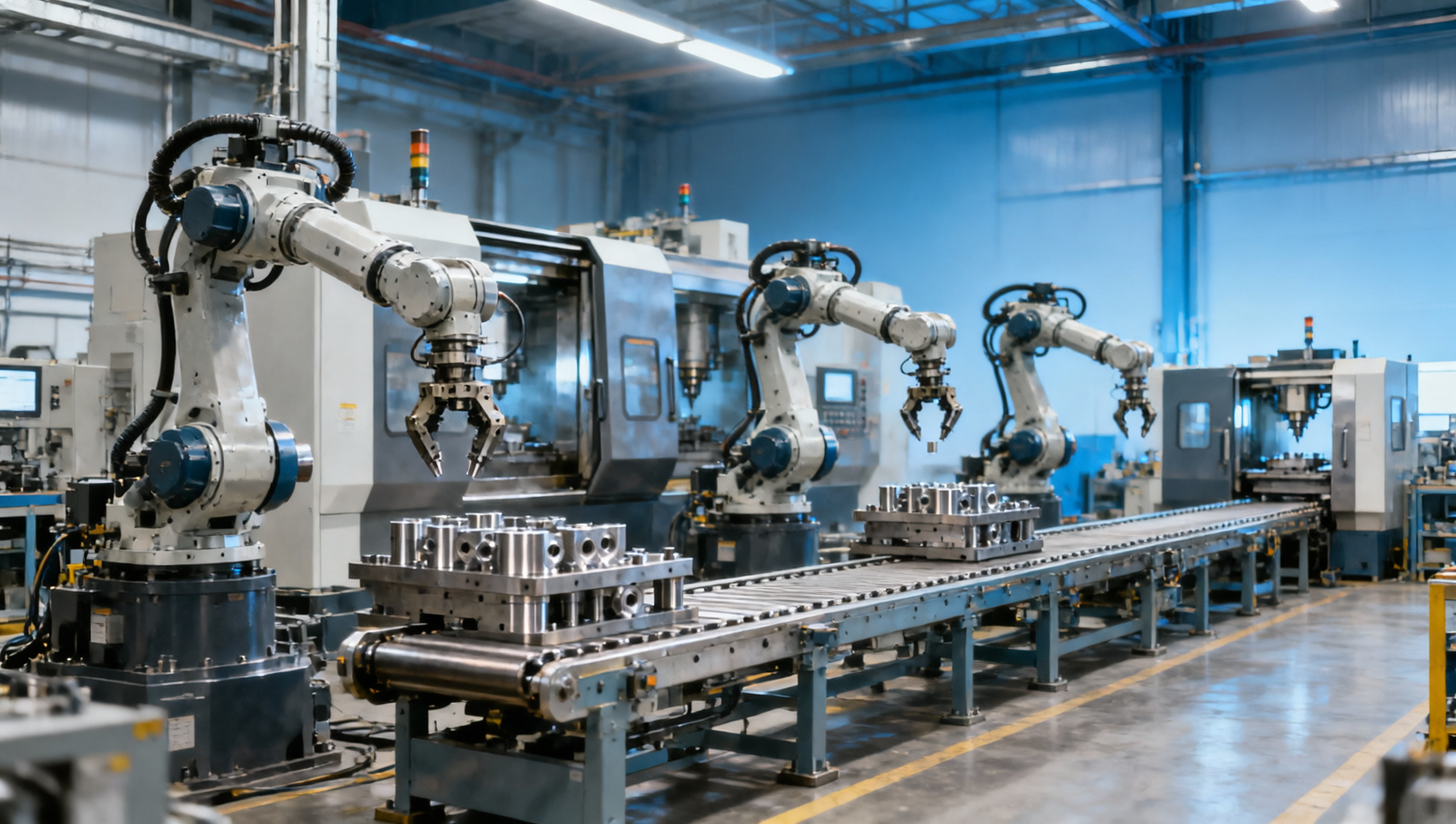
Industrial Robotics is reshaping the Global Manufacturing landscape far beyond automotive plants, driving smarter automated production across metal machining, industrial CNC, and CNC production environments. From automated lathe systems and CNC milling to integrated Automated Production Line solutions, the Manufacturing Industry is adopting Industrial Automation to improve precision, flexibility, and production process efficiency.
Why industrial robotics is expanding beyond automotive manufacturing
For many years, automotive plants were the most visible users of industrial robotics because they needed repeatable welding, painting, and assembly at very high volumes. That is changing quickly. Today, industrial robots are moving into general manufacturing, CNC machining workshops, electronics production, metal fabrication, energy equipment, and aerospace supply chains. The shift is driven by three practical needs: tighter tolerance control, labor efficiency, and more flexible production for mixed batches.
In the CNC machine tool industry, the pressure is especially clear. Manufacturers are expected to process complex shaft parts, precision discs, housings, and structural components with shorter lead times and fewer manual interventions. A robot linked to a CNC lathe, machining center, or multi-axis machining system can handle loading, unloading, part transfer, sorting, deburring, or palletizing in cycles measured in seconds or minutes. In many facilities, one operator can supervise 2-4 connected machines instead of standing at a single station.
This broader adoption is also tied to digital integration. Industrial robotics is no longer treated as a standalone machine. It is increasingly part of an Automated Production Line that connects industrial CNC equipment, vision systems, fixtures, conveyors, sensors, and production software. For decision-makers, this means the value of robotics is no longer limited to labor substitution. It now includes traceability, machine utilization, production process stability, and easier scaling from small batch to medium-volume output.
Another reason for growth is the evolution of robot-friendly machine tool ecosystems. CNC lathes, machining centers, and automated tool management systems are more compatible with robotic interfaces than they were 5-10 years ago. Standard communication protocols, safer guarding concepts, and modular cell design have made implementation more practical for companies that are not large automotive OEMs. This lowers the entry barrier for small and mid-sized manufacturers that need automation but cannot afford long shutdown periods.
What makes adoption faster in non-automotive sectors?
- Demand for stable quality in precision manufacturing, especially for parts requiring repeatability across 2 shifts or 3 shifts.
- Shortage of skilled operators for repetitive loading, unloading, and material handling tasks in CNC production.
- Need to reduce idle machine time, which often occurs during manual changeover or inconsistent part flow.
- Growth of flexible manufacturing cells that can switch between small batch, medium batch, and mixed-model production.
For information researchers, this trend means robotics should be evaluated as part of the whole production system, not just as a single capital purchase. For operators, it means understanding robot interaction, gripper logic, workholding consistency, and safety zones. For procurement teams, it means comparing integration depth, support scope, and lead time. For executives, it means calculating whether robotics helps reduce bottlenecks across 12-24 months rather than focusing only on the initial equipment cost.
Which manufacturing scenarios benefit most from industrial robotics?
Not every process needs the same level of automation. The strongest use cases appear where repetitive handling meets strict quality demands or where machine utilization is limited by manual intervention. In industrial CNC environments, the most common scenarios include robot-assisted loading and unloading, automatic part turning, in-line gauging support, tool-side material transfer, and coordinated operation with conveyors or pallet systems. These are practical applications that directly improve output rhythm and reduce handling errors.
Metal machining is one of the clearest examples. Parts with stable geometry, repeated cycles, and predictable clamping logic are well suited for robotic tending. This includes shaft components, valve bodies, flanges, pump parts, bearing housings, and medium-size aluminum or steel workpieces. Where takt times fall in the 30-second to 180-second range, robot loading often creates a measurable improvement in spindle utilization because the machine spends less time waiting for the next part.
Outside pure machining, industrial robotics is also entering finishing and assembly processes. It supports deburring, polishing, screwdriving, adhesive dispensing, welding support, and packaging. In electronics and precision assembly, robots can be useful where parts are lightweight, repetitive, and require careful orientation. In energy equipment and aerospace support manufacturing, the value often comes from repeatability, documented process steps, and safe handling of heavier or awkward components.
The table below compares typical application scenarios for industrial robotics across broader manufacturing settings. It can help buyers and technical teams decide whether a robot cell, a semi-automatic station, or a more integrated Automated Production Line is the better fit.
The key insight is that successful industrial robotics adoption depends less on industry label and more on process characteristics. If the part flow is stable, the fixtures are repeatable, and the quality target is sensitive to human variability, robotics usually deserves serious evaluation. If the product mix changes every few hours and fixturing is inconsistent, a phased or semi-automatic approach may be better in the first 3-6 months.
Questions that reveal a good application fit
Operational screening checklist
- Does the machine wait more than a few seconds for manual loading between cycles?
- Can the part family be grouped into 3-5 repeatable sizes or fixture patterns?
- Is there a need for 8-hour, 16-hour, or lights-out production continuity?
- Do scrap, handling marks, or orientation errors appear repeatedly in manual operation?
If the answer is yes to at least 2-3 of these questions, a robot-supported production process is usually worth a technical and commercial review.
How to compare robot automation options in CNC and precision manufacturing
One common purchasing mistake is comparing robots by payload or brand name alone. In actual manufacturing, the better comparison starts with application architecture. A stand-alone robot arm, a machine-tending cell, and a full Automated Production Line solve different problems. The right choice depends on part variety, floor space, fixture design, shift pattern, and desired integration level with industrial CNC machines and quality systems.
For example, a compact tending cell may be sufficient for one CNC lathe or one vertical machining center where part geometry is stable and operators only need help with repetitive loading. A more integrated line becomes valuable when several process steps must be connected, such as machining, washing, marking, gauging, and palletizing. In that case, the robot is just one node in a broader manufacturing workflow, and line balance matters more than the robot specification by itself.
Collaborative robots are often discussed as an easier entry point, but they are not automatically the best choice for every metal machining environment. In some cases, traditional industrial robots are more suitable because they offer better speed, payload margin, reach, or resistance to chips and coolant. The decision should be based on guarding requirements, cycle time, payload, part access, and the working envelope around the CNC equipment.
The comparison below helps procurement teams and production managers identify which option aligns with their production volume, implementation expectations, and technical risk level.
The best option is not always the most automated one. In many factories, a staged path works better: phase 1 covers machine tending, phase 2 adds part buffering or vision inspection, and phase 3 links several machines into one coordinated Automated Production Line. This reduces disruption and gives users time to validate fixture repeatability, staff training needs, and maintenance routines over the first 8-12 weeks of operation.
Three comparison criteria that matter most
- Production match: cycle time, batch size, shift pattern, and machine idle tolerance.
- Integration depth: interfaces with CNC controls, fixtures, conveyors, sensors, and quality checkpoints.
- Operating practicality: maintenance access, operator training, changeover time, and spare-part support.
For procurement, this framework is more useful than focusing on headline specifications alone. It helps compare complete automation solutions rather than isolated robot hardware.
What should buyers check before investing in industrial robotics?
Buyers often ask whether industrial robotics will deliver a fast return. The more useful question is whether the production process is ready for robotics. A robot can only perform as well as the upstream material presentation, fixture repeatability, and downstream process stability allow. Before requesting quotations, companies should define part dimensions, payload range, cycle target, machine interface requirements, and expected unattended running time. Even a basic 4-step review can prevent expensive redesign later.
For CNC and precision manufacturing, at least five selection points deserve close attention. First, verify whether chips, coolant, oil mist, or dust affect gripper choice and robot protection. Second, confirm how many part variants must be handled in one week or one month. Third, review machine door opening, chuck access, and loading orientation. Fourth, assess whether in-process inspection or marking must be added. Fifth, confirm the staffing model, including who handles recovery after alarms and who changes recipes during shift transitions.
Lead time and commissioning should also be discussed early. In many standard projects, equipment build and integration can span 6-12 weeks, while more complex line-level solutions may require longer planning because fixtures, guarding, conveyors, and software logic must be coordinated. For buyers with urgent delivery needs, a modular cell can reduce implementation time, but only if process boundaries are clearly defined from the start.
The table below summarizes a practical procurement checklist for industrial robotics in metal machining and automated production environments.
A good procurement process should combine engineering review with commercial comparison. Price alone does not reveal the full cost of guards, grippers, fixtures, training, software changes, or downtime during installation. Buyers should ask for a scope breakdown that separates robot hardware, integration, application tooling, safety components, and commissioning support. This makes supplier comparison much clearer.
A 4-step buying process that reduces risk
- Document the process: collect part drawings, cycle time, machine layout, and current pain points.
- Define the target: labor reduction, machine utilization improvement, traceability, or mixed-batch flexibility.
- Compare solution scope: stand-alone cell, flexible station, or full Automated Production Line.
- Validate implementation: review acceptance points, operator training, spare-part planning, and support response.
This approach helps decision-makers control both cost and operational risk, especially when robotics is being introduced for the first time.
Implementation, compliance, and the mistakes companies often make
Even a technically suitable robot project can underperform if implementation is rushed. In precision manufacturing, the most common weak points are inconsistent part presentation, unstable fixtures, unclear alarm recovery steps, and unrealistic assumptions about unattended running. Operators and maintenance teams should be involved before installation, not after. A practical rollout usually includes process review, design confirmation, factory testing, onsite commissioning, and training over several stages rather than one compressed handover.
Safety and compliance also deserve early attention. Depending on the market and equipment design, companies may need to consider machine safety assessment, guarding, emergency stop logic, interlocks, electrical conformity, and documentation for operating procedures. If a robot cell interacts with CNC doors, conveyors, or manual access points, the risk assessment should cover the full working area, not only the robot arm. This is especially important in high-mix workshops where setup staff enter the cell more frequently.
Another frequent mistake is assuming that robot programming alone will solve variation in raw material, fixture wear, or machine accuracy drift. Robotics improves consistency, but it does not replace process discipline. If chucking force varies, coolant splashes onto gripping surfaces, or incoming blanks differ beyond the accepted range, the automation cell may stop more often than expected. That is why successful projects usually define 3-6 acceptance conditions for part quality and feeding consistency before ramp-up.
Companies also need realistic training plans. A user team should know how to change grippers, recover from common alarms, inspect wear parts, and restart the production process after short stops. In many cases, 1-2 days of basic operator training are not enough if the line includes vision, gauging, or multiple CNC stations. A better plan includes role-based training for operators, maintenance personnel, and production supervisors.
Common misconceptions in industrial robotics projects
Misunderstandings that affect ROI
- “Any repetitive job should be automated.” In reality, unstable product variation can make a simple manual station more practical at first.
- “The cheapest robot cell will pay back fastest.” Incomplete integration often creates hidden labor, scrap, or downtime costs.
- “Once installed, the line runs unattended for long periods.” Real performance depends on feeding logic, tooling condition, and alarm recovery readiness.
- “Compliance is only about the robot.” The full cell, including CNC machine interfaces and guarding access points, must be considered.
A realistic implementation strategy protects investment value. It also helps operators gain confidence, which is essential when moving from manual loading to a more integrated Industrial Automation environment.
FAQ and next steps for manufacturers evaluating industrial robotics
How do I know if my CNC production line is ready for industrial robotics?
Start with process stability. If your parts can be grouped into repeatable families, machine cycle times are reasonably predictable, and loading or unloading consumes valuable operator time, the process is a strong candidate. A useful first review covers 4 points: part variation, fixture consistency, machine interface signals, and expected output per shift. If these items are still unclear, a pilot cell is often better than a full line rollout.
What delivery and commissioning timeline is typical?
For standard robot tending cells, many projects fall within a 6-12 week window from design confirmation to commissioning, although exact timing depends on grippers, guarding, and machine interfaces. More integrated Automated Production Line projects generally need additional engineering and testing time. Buyers should ask for milestone visibility, such as design freeze, factory acceptance, site installation, and trial production support.
What should procurement focus on besides equipment price?
Focus on total project scope. That includes end-of-arm tooling, fixtures, safety components, controls integration, operator training, spare parts, and post-installation support. A low quoted price may exclude critical items that later increase total cost or delay production. Procurement should compare at least 5 dimensions: technical fit, integration depth, implementation lead time, validation scope, and service support.
Can industrial robotics work for mixed batches and not only mass production?
Yes, but the solution design matters. Flexible grippers, tray systems, recipe switching, and smart fixturing can support mixed production better than a rigid dedicated cell. However, if changeovers happen every hour and raw material variation is high, the process should be reviewed carefully. In many facilities, the best path is to automate the most repetitive 20% to 30% of jobs first, then expand once setup logic is proven.
Why work with a platform focused on CNC machining and precision manufacturing?
Because robotics in general manufacturing is most effective when it is matched to real machine tool conditions. A platform rooted in CNC machining, precision machine tools, automated production lines, and international manufacturing trade can help users compare not only robot options, but also machining workflow requirements, part handling constraints, tooling logic, and practical sourcing considerations across global supply chains.
Why choose us for industrial robotics and CNC automation discussions?
We focus on the global CNC machining and precision manufacturing industry, where industrial robotics must work with real production conditions rather than generic automation assumptions. If you are evaluating robot tending for CNC lathes, machining centers, flexible manufacturing cells, or a broader Automated Production Line, we can help you review application fit, integration boundaries, and sourcing priorities in a more practical way.
You can contact us for specific support on parameter confirmation, product selection, layout discussion, delivery cycle planning, custom automation concepts, machine interface questions, and common compliance considerations. If you are comparing suppliers, we can also help structure the quotation review around technical scope, commissioning content, spare-part planning, and operational risk points so your team can make a more informed B2B purchasing decision.
For manufacturers facing labor pressure, fluctuating batch sizes, or stricter quality targets, now is the right time to evaluate where Industrial Automation can create measurable value. A focused consultation can clarify whether a single robot cell, a flexible CNC automation unit, or a larger integrated production solution is the best next step for your factory.
PREVIOUS ARTICLE
NEXT ARTICLE
Recommended for You
 Global Manufacturing Lead Times Improve but Not EverywhereGlobal Machine Tool Trade Research Center
 Machine Tool Market Inventory Pressure Is Building AgainGlobal Machine Tool Trade Research Center
 Metal Lathe vs CNC Milling for Low Volume Round PartsCNC Machining Technology Center
 CNC Cutting Gas Choice Affects More Than Edge FinishCNC Machining Technology Center
 CNC Metalworking Shops Face New Pressure on TraceabilityManufacturing Policy Research Center
 Automated Lathe Cycle Time Gains Can Hide Quality LossesCNC Machining Technology Center

Aris Katos
Future of Carbide Coatings
15+ years in precision manufacturing systems. Specialized in high-speed milling and aerospace grade alloy processing.
▶
Industrial Robotics Adoption Is Rising Beyond Automotive PlantsManufacturing Market Research Center▶
Automated Production Needs Flexibility More Than Speed NowManufacturing Market Research Center▶
Global Manufacturing in 2026 may favor regional over distant supplyManufacturing Market Research Center▶
What is pushing the Manufacturing Industry toward flexible output?Manufacturing Market Research Center▶
Global Manufacturing is rebalancing around shorter supply routesManufacturing Market Research Center
Mastering 5-Axis Workholding Strategies
Join our technical panel on Nov 15th to learn about reducing vibrations in thin-wall components.

Providing you with integrated sanding solutions
Before-sales and after-sales services
Comprehensive technical support