• Global CNC market projected to reach $128B by 2028 • New EU trade regulations for precision tooling components • Aerospace deman
NYSE: CNC +1.2%LME: STEEL -0.4%

Industrial lathe operators skipping pre-run spindle warm-up — costing them precision?
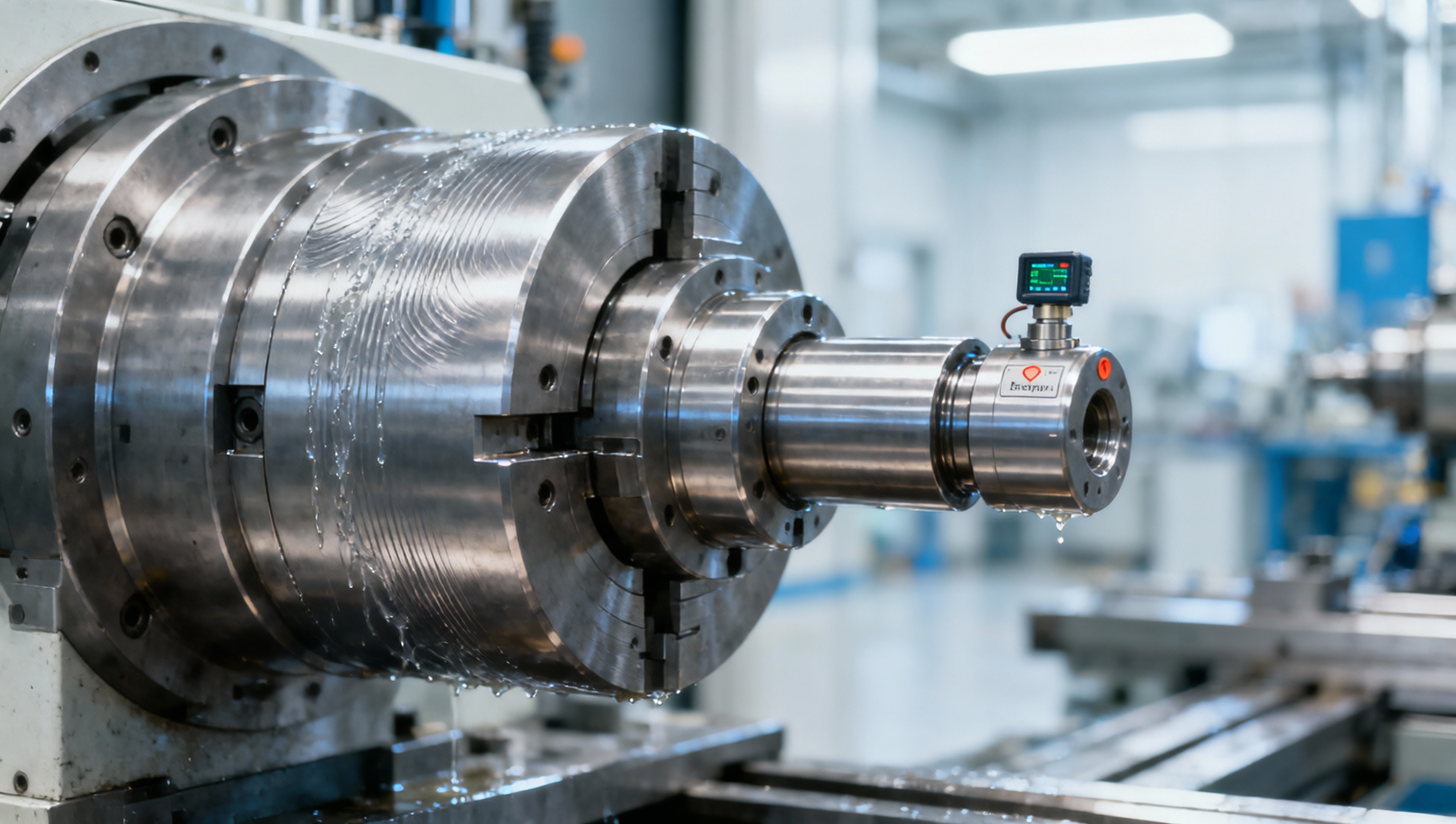
Many industrial lathe operators—especially in high-precision metal machining and CNC industrial environments—are skipping pre-run spindle warm-up, risking part tolerance drift, tool wear acceleration, and reduced CNC production reliability. As automated lathe systems grow more integral to global manufacturing, this seemingly minor oversight directly impacts shaft parts accuracy, CNC metalworking consistency, and overall automated production line efficiency. With the machine tool market demanding tighter tolerances and longer spindle life, understanding how warm-up protocols affect CNC cutting performance isn’t just best practice—it’s a precision imperative for operators, procurement teams, and decision-makers across aerospace, automotive, and energy equipment sectors.
Why Spindle Warm-Up Is Not Optional—It’s a Thermal Calibration Step
Spindle warm-up is not about “getting the machine moving.” It’s a controlled thermal stabilization process that ensures mechanical alignment, bearing preload consistency, and lubricant viscosity reach equilibrium before cutting begins. Modern high-speed CNC lathes—especially those with integrated direct-drive spindles or hydrostatic bearings—require 10–25 minutes of low-load rotation at 30–60% of maximum RPM to achieve thermal equilibrium. Skipping this step introduces axial and radial thermal growth discrepancies of up to ±8 μm within the first 15 minutes of operation—a critical margin when machining aerospace-grade shafts requiring ±2.5 μm positional repeatability.
Thermal drift doesn’t only affect geometry. It alters cutting force distribution, accelerates flank wear on carbide inserts by up to 35%, and increases chatter susceptibility during finish turning of thin-walled components. In one documented case across three Tier-1 automotive suppliers, inconsistent warm-up routines correlated with a 22% rise in first-article rejection rates for CV joint housings over a 6-month period—despite identical G-code, tooling, and material batches.
For operators, the misconception often lies in equating “machine powered on” with “machine ready.” But spindle motors, bearing housings, and even bed castings expand at different rates. Without warm-up, the system operates in transient thermal state—where dimensional stability is compromised, not optimized.
The Hidden Cost Breakdown: From Micro-Tolerances to Macro-Production Losses
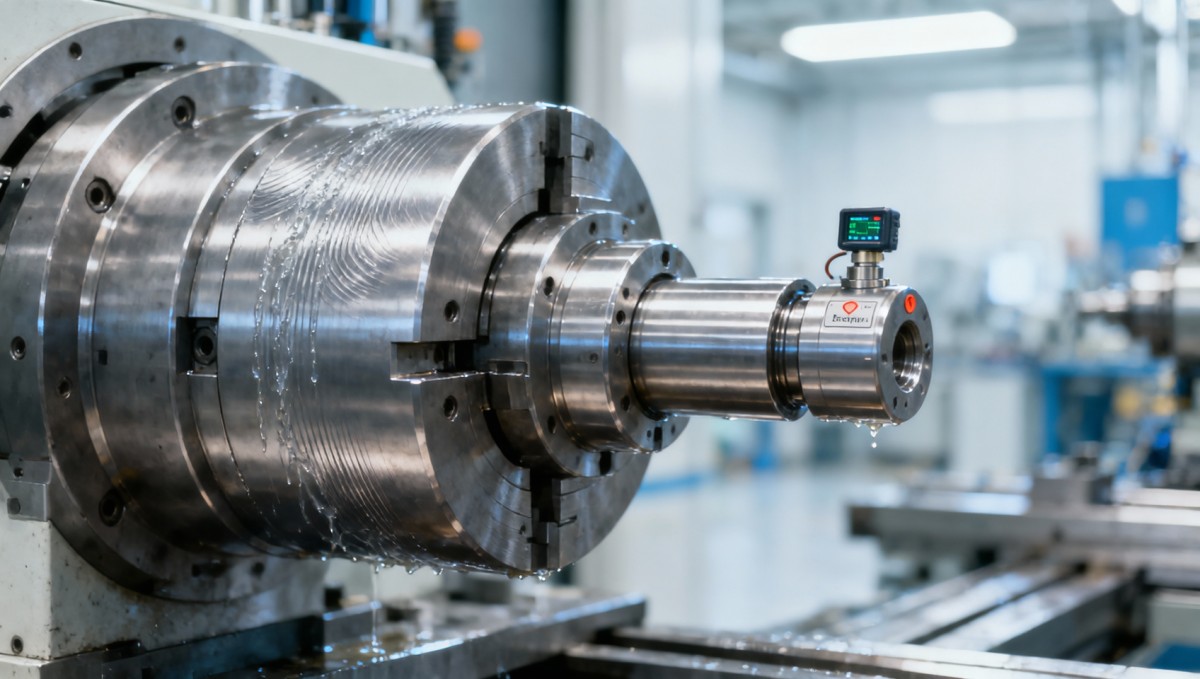
Skipping warm-up incurs measurable, cumulative costs—not just in scrap, but in lifecycle efficiency. A recent cross-factory audit of 17 CNC lathe cells (across Germany, Japan, and China) revealed that non-compliant warm-up practices contributed to:
These figures reflect real-world averages—not worst-case outliers. For procurement teams evaluating total cost of ownership (TCO), warm-up compliance must be factored into spindle warranty terms, predictive maintenance contracts, and operator training KPIs. Decision-makers overseeing multi-site operations report that standardizing warm-up SOPs across facilities improved OEE (Overall Equipment Effectiveness) by 4.2–6.8% within 90 days—primarily through reduced setup variability and fewer mid-shift recalibrations.
How to Implement an Effective Warm-Up Protocol—Without Slowing Down Production
An effective warm-up protocol balances thermal readiness with throughput. It is not a fixed timer—it’s a condition-based sequence aligned with machine architecture and application demands. Leading OEMs—including DMG MORI, Okuma, and Haas—now embed adaptive warm-up logic in their latest CNC controls, using real-time spindle temperature sensors and load history to dynamically adjust duration and RPM profile.
A robust baseline protocol includes:
- Pre-start verification: Confirm ambient temperature (18–25°C ideal) and coolant sump temp (±2°C of setpoint); deviations >5°C require extended ramp time.
- Staged rotation: 3–5 min at 20% max RPM → 5–8 min at 40% → 3–5 min at 60%. No cutting loads permitted until final stage completes.
- Thermal validation: Use built-in spindle thermistors or external IR gun to verify housing temp rise ≤1.5°C/min and delta between front/rear bearings <2.0°C.
- Documentation & traceability: Log warm-up start/end times, ambient conditions, and initial runout measurements—integrated into MES for SPC analysis.
Operators benefit from visual dashboards: green/yellow/red status indicators on the HMI, triggered by real-time sensor inputs. This eliminates subjective “feel-based” judgment and creates auditable compliance evidence—critical for AS9100 or IATF 16949 audits.
Procurement & Decision-Maker Checklist: What to Specify in Your Next Lathe Procurement
When sourcing new CNC lathes—or upgrading control systems—warm-up capability should be treated as a functional requirement, not an afterthought. Buyers must go beyond “spindle speed range” and demand explicit thermal management specifications. The following six criteria directly impact long-term precision sustainability:
Procurement teams should also request warm-up validation reports from OEMs—including thermal imaging data under load cycling—and verify inclusion in factory acceptance tests (FAT). Machines without embedded thermal intelligence will require manual intervention, increasing human error risk and limiting scalability in lights-out operations.
FAQ: Addressing Real Operational Questions
Do all CNC lathes need warm-up—even older models?
Yes. While newer machines feature tighter thermal design and better compensation algorithms, legacy lathes (pre-2010) are *more* susceptible to thermal drift due to less rigid castings, older bearing designs, and absence of real-time monitoring. Their warm-up windows are typically longer—15–30 minutes—and less forgiving of ambient fluctuations.
Can warm-up be skipped during short production runs (<30 min)?
No. Even brief runs suffer from initial thermal expansion. A 20-minute job starting cold may produce parts with diameter variation exceeding ±6 μm—enough to fail aerospace or medical component inspection. Warm-up is required before *every* shift start, power cycle, or prolonged idle (>90 min).
How do we train operators effectively—without adding overhead?
Embed warm-up steps directly into the machine’s startup checklist on the HMI. Pair with 5-minute micro-training videos accessible via QR code on the control panel. Track compliance via logged timestamps—integrate with shop floor KPI dashboards. Facilities reporting >92% adherence used this approach with zero dedicated trainer hours.
Conclusion: Precision Begins Before the First Chip Flies
Spindle warm-up is neither ritual nor redundancy—it is foundational metrology. In an era where aerospace turbine shafts demand ±1.2 μm roundness and electric vehicle motor rotors require sub-micron concentricity, thermal readiness is the silent gatekeeper of specification compliance. Operators gain predictability. Procurement teams reduce TCO volatility. Decision-makers secure repeatability across global supply chains.
If your current lathe fleet lacks adaptive warm-up logic, real-time thermal validation, or audit-ready documentation—your precision pipeline has a measurable, addressable gap. The technology exists. The ROI is quantifiable. And the cost of delay compounds with every unwarmed spindle start.
Get a free thermal readiness assessment for your CNC lathe operations—including protocol review, sensor gap analysis, and OEM-specific upgrade pathways. Contact our precision engineering team today to schedule your customized evaluation.
Recommended for You
![]() Iranian LNG Vessels Breach U.S. Strait Blockade; Shanghai Crude Surges 4%Manufacturing Market Research Center
Iranian LNG Vessels Breach U.S. Strait Blockade; Shanghai Crude Surges 4%Manufacturing Market Research Center![]() Pakistan Launches CNC Localization Tender for CPEC II Smart Manufacturing ParkGlobal Machine Tool Trade Research Center
Pakistan Launches CNC Localization Tender for CPEC II Smart Manufacturing ParkGlobal Machine Tool Trade Research Center![]() NVIDIA Joins $1T Club; AI-Driven CNC Digital Twin Gains Global TractionCNC Machining Technology Center
NVIDIA Joins $1T Club; AI-Driven CNC Digital Twin Gains Global TractionCNC Machining Technology Center![]() World's First 5-Axis Middle-Grade Wire EDM Machine Enters Mass ProductionMachine Tool Industry Editorial Team
World's First 5-Axis Middle-Grade Wire EDM Machine Enters Mass ProductionMachine Tool Industry Editorial Team![]() China’s CNC Machine Tool Export Prices Up 11.3% in Q1 2026Global Machine Tool Trade Research Center
China’s CNC Machine Tool Export Prices Up 11.3% in Q1 2026Global Machine Tool Trade Research Center![]() Saudi Energy Security Boosts CNC Import Efficiency in Middle EastGlobal Machine Tool Trade Research Center
Saudi Energy Security Boosts CNC Import Efficiency in Middle EastGlobal Machine Tool Trade Research Center


Aris Katos
Future of Carbide Coatings
15+ years in precision manufacturing systems. Specialized in high-speed milling and aerospace grade alloy processing.
▶
Automated Lathe Cycle Time Gains Can Hide Quality LossesCNC Machining Technology Center▶
Vertical Lathe or Horizontal Setup for Large Ring Parts?CNC Machining Technology Center▶
Automated Lathe Setup Errors That Lead to Scrap PartsCNC Machining Technology Center▶
Automated lathe setup errors that quietly ruin part consistencyCNC Machining Technology Center▶
Vertical lathe or horizontal setup for heavy parts?CNC Machining Technology Center
Mastering 5-Axis Workholding Strategies
Join our technical panel on Nov 15th to learn about reducing vibrations in thin-wall components.

Providing you with integrated sanding solutions
Before-sales and after-sales services
Comprehensive technical support