• Global CNC market projected to reach $128B by 2028 • New EU trade regulations for precision tooling components • Aerospace deman
NYSE: CNC +1.2%LME: STEEL -0.4%

Vertical lathe or horizontal setup for heavy parts?
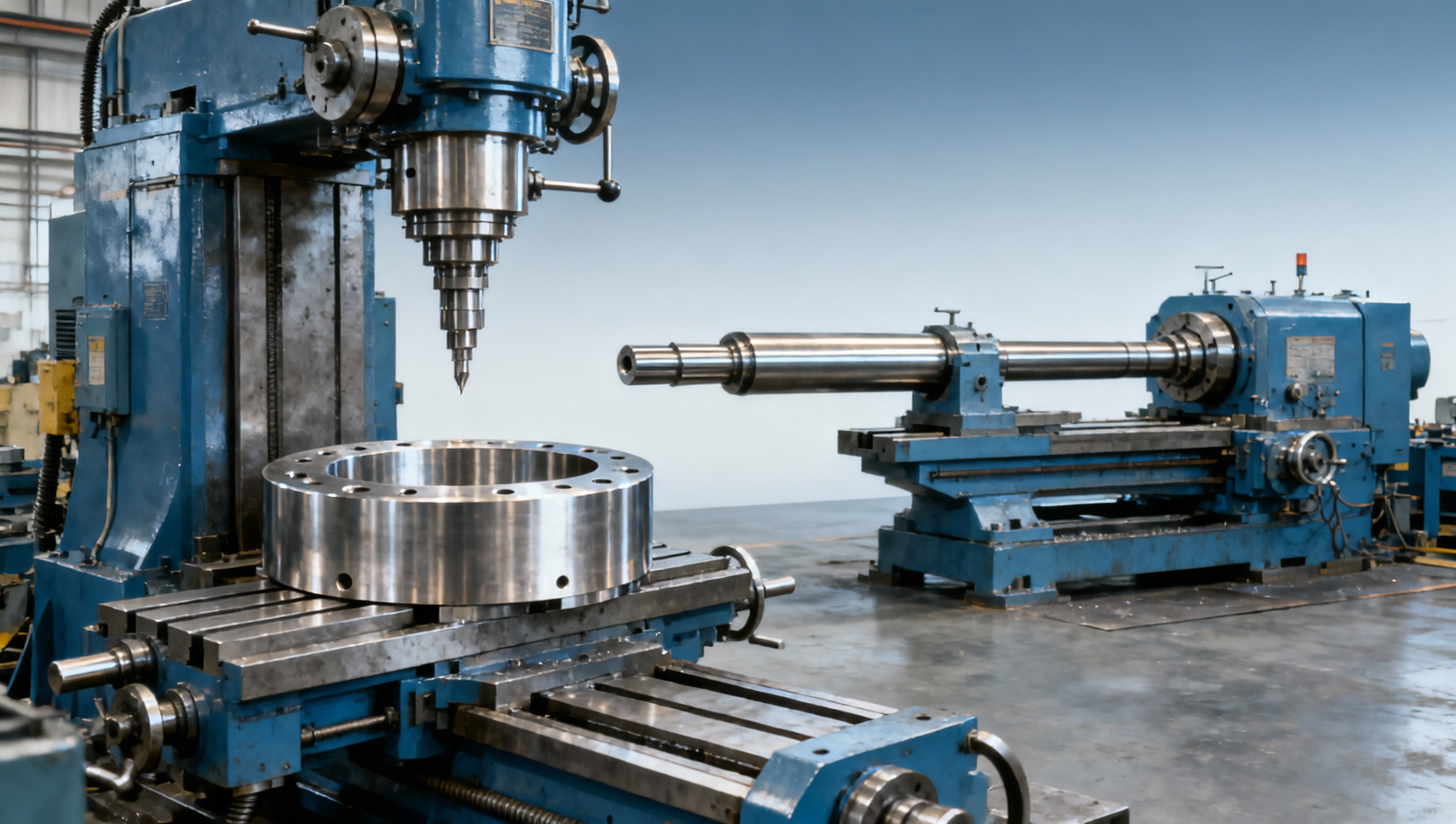
Choosing between a vertical lathe and a horizontal setup for heavy parts can directly affect precision, stability, and overall production efficiency. In today’s metal machining and industrial CNC environment, manufacturers must balance load capacity, floor space, CNC cutting performance, and automated production goals. This guide helps buyers, operators, and decision-makers compare vertical lathe and industrial lathe solutions for demanding CNC metalworking applications.
For manufacturers machining large rings, turbine casings, flanges, wheel hubs, shafts, and energy equipment components, the machine layout is not a minor workshop detail. It influences part handling time, fixturing complexity, spindle loading, tool access, chip evacuation, and even the long-term economics of the line. A poor match between machine orientation and part geometry can create avoidable vibration, longer setup cycles, and higher scrap risk.
In B2B purchasing and plant planning, the question is rarely just “vertical or horizontal.” The better question is which setup delivers the required accuracy, throughput, and operating safety for your specific heavy-part mix over the next 3–7 years. That includes not only machine capacity, but also crane access, operator skill level, automation compatibility, maintenance intervals, and the total cost per machined component.
How machine orientation changes performance for heavy parts
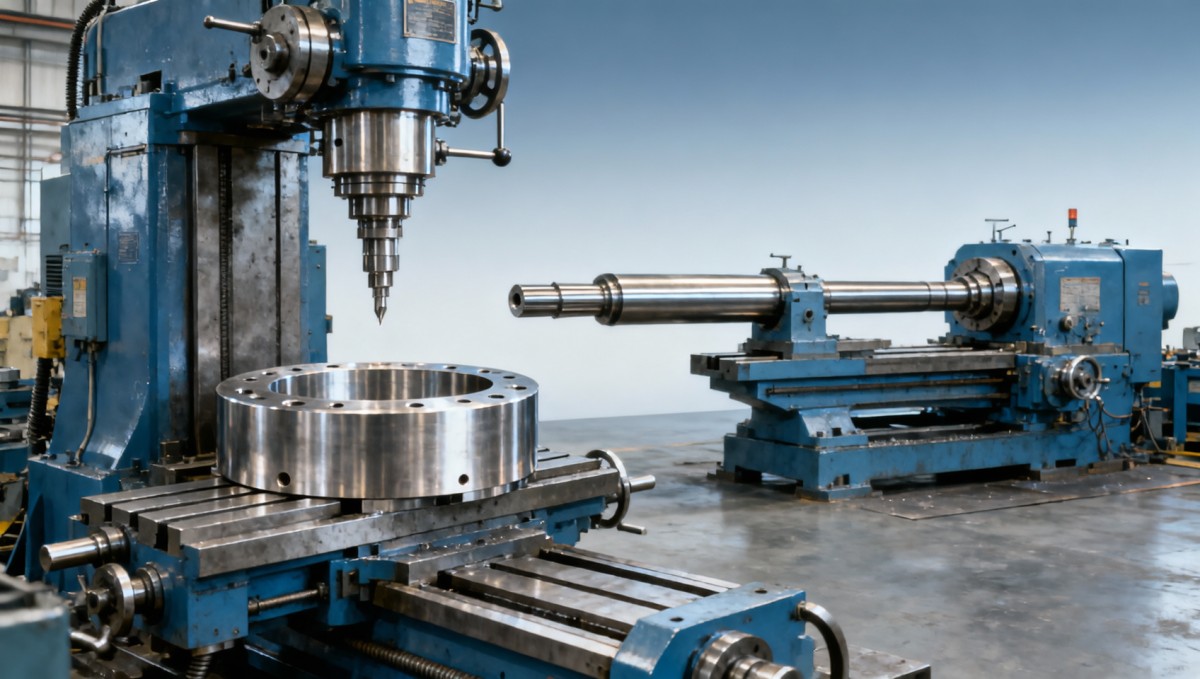
A vertical lathe supports the workpiece on a horizontal table, so gravity helps seat the part during clamping. This is a major benefit when machining large-diameter, heavy, and relatively short components such as bearing rings, brake discs, valve bodies, and energy flanges. In many shops, once part weight rises above 1 ton and diameter becomes more critical than length, a vertical lathe often becomes the more stable and safer choice.
A horizontal setup, by contrast, rotates the part around a horizontal spindle. This layout is often preferred for long shafts, rollers, axles, and tubular components. It supports continuous turning along length and can be highly productive when the length-to-diameter ratio exceeds 3:1 or 4:1. However, as part mass increases, sagging, tailstock pressure, and support requirements become more important, especially for thin-wall or long unsupported sections.
In practical CNC metalworking, the decision depends on more than workpiece weight alone. Diameter, height, wall thickness, balance condition, stock allowance, and cut type all matter. Heavy interrupted cuts, for example, may behave differently on a vertical lathe than on a horizontal lathe because load direction, machine rigidity, and chip fall pattern are not the same.
Typical geometry fit
A simple way to assess machine fit is to compare diameter, length, and lifting method. If the part is wide and squat, such as a forged ring with a diameter of 1,200–2,500 mm, vertical loading usually reduces fixture complexity. If the part is long and cylindrical, such as a 2,000–6,000 mm shaft, a horizontal setup usually provides better access for roughing, finishing, and support with steady rests.
Quick evaluation points
- If part diameter is larger than part height, vertical turning often improves stability and loading safety.
- If part length is more than 3 times the diameter, a horizontal lathe generally offers better process continuity.
- If lifting and centering take more than 15–20 minutes per part, machine orientation may be reducing productivity.
- If chips accumulate in pockets or bores, machine layout can directly affect thermal stability and surface finish.
The comparison below helps clarify where each arrangement usually performs best in heavy-part machining.
The key conclusion is straightforward: vertical lathes usually favor heavy, large-diameter parts, while horizontal setups usually favor long rotational parts. Yet in mixed-production environments, overlap exists, so buyers should validate with real drawings, stock condition, and target cycle times before specifying the final machine type.
Precision, rigidity, and process stability under heavy cutting loads
When shops process heavy forgings or castings, rigidity is often more important than theoretical spindle speed. A machine may look capable on paper, but if the structure cannot handle roughing cuts of 4–8 mm depth with stable torque delivery, production results will suffer. In heavy-part CNC turning, repeatability, vibration control, and thermal behavior determine whether the machine can hold tolerance over a 6-hour or 10-hour cycle.
Vertical lathes often have a structural advantage for large face-turning operations because the work mass sits closer to the base support. This can reduce spindle bearing stress and simplify balance management on oversized parts. For applications such as wind power flanges, bearing races, and pump casings, that arrangement can help maintain roundness and face flatness within process targets, provided the chucking and table condition are properly maintained.
Horizontal setups, however, remain highly effective when machining long parts that require support along the axis. With the correct tailstock, follow rest, or steady rest, a horizontal industrial lathe can deliver strong results on shafts and rollers. The challenge is that each support point adds another variable. Alignment errors of even a few tenths of a millimeter can affect taper, chatter, and tool life.
What operators should monitor during heavy-part turning
- Spindle load trend over the first 10–15 minutes, especially during roughing entry and interrupted cutting.
- Tool wear consistency across 2–3 consecutive parts rather than a single test cut.
- Temperature drift near the spindle area, hydraulic unit, and guideways over longer shifts.
- Part seating and runout after clamping, especially on rough surfaces or flame-cut blanks.
For procurement teams, this means machine orientation should be reviewed together with bed structure, spindle torque band, ram or turret rigidity, and workholding design. A heavy part weighing 3 tons may still machine poorly if the fixture is weak, the center of gravity is offset, or the machine foundation is insufficient for the cut dynamics.
Common tolerance-related risks
Three recurring risks appear in heavy-part turning projects. First, underestimating unbalance in rough stock can force conservative cutting parameters. Second, poor chip evacuation can raise heat and damage surface quality. Third, an oversized machine without the right tooling package may still underperform. In many factories, process stability improves more from correct support and clamping than from adding spindle power alone.
As a practical benchmark, if the process requires roundness within 0.02–0.05 mm on large diameters or stable roughing on cast parts above 2 tons, engineers should request trial conditions that reflect actual workpiece weight, overhang, and interrupted surfaces. Simple no-load demonstrations are not enough for heavy-part investment decisions.
Capacity, floor space, and automation planning
Machine selection for heavy parts is also a factory layout question. A vertical lathe can save practical handling effort because heavy workpieces are lowered directly onto the table from above. In facilities with overhead cranes rated at 5–20 tons, this often simplifies loading and reduces repositioning steps. For some plants, that can save 5–12 minutes per part compared with more complex horizontal handling sequences.
Horizontal lathes may occupy a longer footprint, especially when tailstocks, chip conveyors, loading zones, and support devices are included. Even so, they can integrate efficiently into shaft production cells and bar or blank feeding systems. If the factory already runs shaft families across multiple stations, a horizontal setup may match the process flow better despite requiring more linear floor space.
Automation goals matter as well. In smart manufacturing environments, buyers increasingly evaluate not only cutting performance but also how easily the machine supports robot loading, pallet transfer, tool life monitoring, in-process probing, and digital production tracking. For medium-volume heavy parts, automation may not mean lights-out production; it may mean reducing manual handling steps from 6 to 3 and standardizing setup routines across shifts.
Comparing layout and production planning factors
The table below highlights practical planning differences that often affect return on investment more than catalog specifications do.
In many purchasing reviews, floor space is treated as a simple cost issue, but it is really a throughput issue. If the machine arrangement creates repeated crane waiting time, awkward loading angles, or congested chip handling, the hidden productivity loss can exceed the apparent savings from choosing a lower-cost machine configuration.
Implementation checklist for decision-makers
- Map 12 months of actual part families by diameter, length, and weight range.
- Measure handling time from crane pickup to first cut, not just cutting cycle time.
- Review future automation needs over a 24–36 month horizon.
- Confirm foundation, ceiling clearance, and chip/coolant management before final approval.
A machine that fits today’s flagship part but blocks tomorrow’s automation strategy can become an expensive constraint. For that reason, many enterprise buyers now evaluate machine orientation alongside digital integration, operator safety, and cell expansion potential rather than in isolation.
How buyers should compare cost, risk, and procurement criteria
A heavy-part machine purchase should be judged on total manufacturing impact, not purchase price alone. The real cost includes fixturing, foundation preparation, installation time, tooling package, operator training, spare parts access, and the scrap risk during ramp-up. For many heavy-duty applications, the first 8–12 weeks after installation reveal whether the chosen setup truly matches the process.
Procurement teams should also separate “maximum capacity” from “usable production capacity.” A catalog may show a large swing or table diameter, but if the realistic workpiece loading limit, clamping stability, or torque performance under roughing is lower than expected, the machine may only meet part of the planned workload. That is especially important for industries such as aerospace subcontracting, energy equipment, rail, and large automotive components.
Vendor evaluation should include process support, not just machine hardware. For heavy parts, practical support with chucking schemes, steady rest selection, toolpath optimization, and acceptance test planning can reduce ramp-up time by 20–30% compared with a machine-only delivery approach. Buyers should ask how the supplier handles trial cuts, installation milestones, and operator training across multiple shifts.
Recommended procurement comparison points
- Workpiece range: minimum and maximum diameter, length, and verified loading weight.
- Cutting capability: roughing torque, spindle speed band, turret or ram strength, and chip control.
- Accuracy support: thermal management, probing, alignment method, and repeatability under load.
- Service readiness: spare parts lead time, remote diagnostics, and on-site response window such as 24–72 hours.
- Integration fit: robot readiness, data interface, and compatibility with MES or shop-floor monitoring.
The matrix below can help buyers compare suppliers and machine formats using practical scoring criteria rather than impression-based discussions.
For decision-makers, the most reliable purchase path is to compare machine orientation against actual production economics: setup time, scrap sensitivity, tooling life, labor intensity, and expansion potential. In heavy-part machining, those factors often determine profitability more strongly than the initial equipment quote.
FAQ and practical selection advice for operators and managers
Even after technical comparison, many teams still face practical questions during machine selection. The answers below reflect common shop-floor and procurement concerns in CNC turning for heavy parts.
How do I know when a vertical lathe is the safer option?
If the workpiece is heavy, large in diameter, difficult to balance, and loaded mainly by overhead crane, a vertical lathe is often the safer option. This is especially true for components above roughly 1–2 tons where gravity-assisted seating reduces clamping uncertainty. It is also preferred when part geometry makes horizontal support awkward or when face-turning dominates the process.
When is a horizontal setup still the better choice for heavy work?
A horizontal setup is still the better choice when the component is long, shaft-like, or requires extensive machining along the axis. If the part length is several times its diameter and can be supported correctly with a tailstock or steady rest, a horizontal lathe often delivers better accessibility and process continuity. It also fits existing shaft production lines more naturally.
What are the most common mistakes during selection?
Three common mistakes are choosing by maximum size only, ignoring handling time, and underestimating fixturing complexity. Another frequent issue is failing to test real stock conditions. A forged blank with scale, imbalance, and interrupted surfaces behaves very differently from a clean demo part. Heavy-part buyers should request process verification on representative material whenever possible.
How long does implementation usually take?
A typical project can involve 2–4 weeks of site preparation, followed by machine delivery timing that may range from 8–20 weeks depending on configuration. Installation, alignment, and trial production may take another 1–3 weeks. For automated cells, planning time is often longer because robot interface, safety validation, and process sequencing must be tested together.
Final decision framework
- Choose a vertical lathe when diameter, mass, and loading safety are the dominant constraints.
- Choose a horizontal setup when length, shaft geometry, and axial process flow are the dominant constraints.
- Prioritize realistic trials, fixture planning, and handling analysis before final purchase approval.
- Align the machine decision with automation, maintenance, and future product mix changes.
For most manufacturers, the best answer is not universal. It depends on the real mix of heavy parts, the desired production model, and the level of process control the plant is ready to maintain. If you are comparing vertical lathe and horizontal industrial lathe options for CNC metalworking, the smartest next step is to review your drawings, handling route, and tolerance targets as one complete system.
If you need help evaluating heavy-part machining layouts, selecting the right CNC turning solution, or comparing machine configurations for future automation, contact us to discuss your application. You can request a tailored recommendation, review key capacity factors, and explore more solutions for precision manufacturing and industrial CNC production.
Recommended for You
 Heavy-duty Machining Center for mold making: Why coolant filtration standards evolve faster than OEM manualsMachine Tool Industry Editorial Team
 Quick-change Fixture Design for CNC turning: Why clamping force consistency drops after 200 cyclesCNC Machining Technology Center
 5 Axis Machining for impeller manufacturing: Why toolpath smoothing affects surface fatigue lifeCNC Machining Technology Center
 Lean Production Process implementation: Where value stream mapping fails to expose hidden machine downtimeManufacturing Market Research Center
 Modular Tooling System for flexible manufacturing: Why interface repeatability degrades faster than expectedMachine Tool Industry Editorial Team
 Industrial Automation control system for CNC machines: When cybersecurity updates disrupt scheduled maintenanceMachine Tool Industry Editorial Team


Aris Katos
Future of Carbide Coatings
15+ years in precision manufacturing systems. Specialized in high-speed milling and aerospace grade alloy processing.
▶
Automated Lathe Cycle Time Gains Can Hide Quality LossesCNC Machining Technology Center▶
Automated lathe setup errors that quietly ruin part consistencyCNC Machining Technology Center▶
Vertical lathe or horizontal setup for heavy parts?CNC Machining Technology Center▶
Metal lathe taper problems often trace back to one setup issueCNC Machining Technology Center▶
Vertical lathe or horizontal setup for oversized ring partsCNC Machining Technology Center
Mastering 5-Axis Workholding Strategies
Join our technical panel on Nov 15th to learn about reducing vibrations in thin-wall components.

Providing you with integrated sanding solutions
Before-sales and after-sales services
Comprehensive technical support