• Global CNC market projected to reach $128B by 2028 • New EU trade regulations for precision tooling components • Aerospace deman
NYSE: CNC +1.2%LME: STEEL -0.4%

Automated lathe setup errors that quietly ruin part consistency
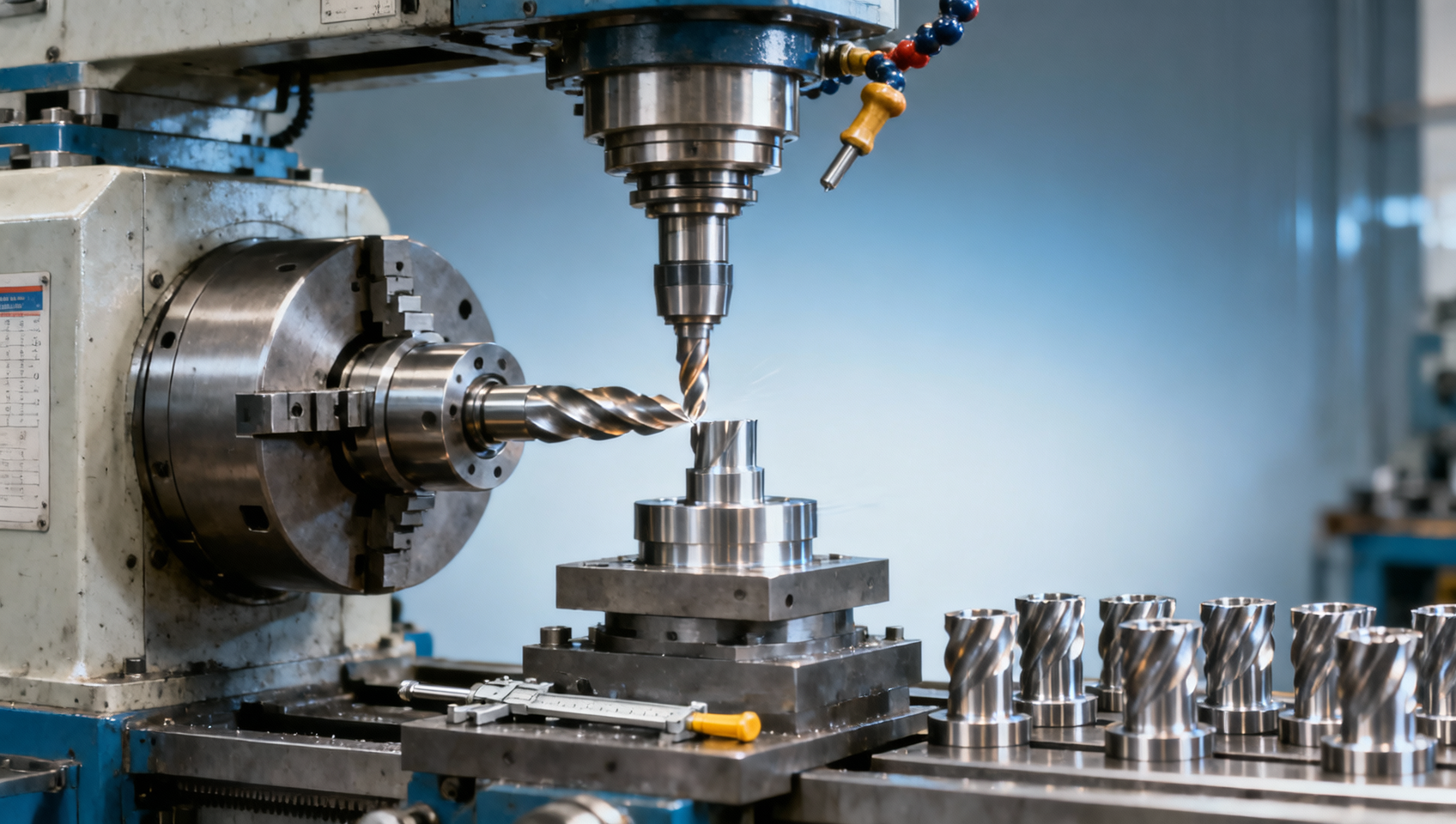
In automated lathe operations, small setup mistakes can quietly undermine part consistency, surface finish, and yield long before alarms appear. For teams in metal machining and industrial CNC production, understanding how tooling offsets, clamping, thermal drift, and CNC Programming errors affect the production process is essential. This article explains the hidden causes behind unstable results in CNC metalworking and automated production, helping operators, buyers, and decision-makers improve quality with confidence.
In many CNC turning environments, the first visible defect often appears only after 30, 50, or even 200 parts have already been produced. By that point, the problem is no longer a single setup error; it becomes a batch-level quality risk that affects scrap rate, rework hours, inspection workload, and delivery reliability. This is why automated lathe setup deserves the same level of control as programming, tooling strategy, and preventive maintenance.
For operators, the challenge is keeping offsets, chuck pressure, tool wear, and cycle repeatability stable across shifts. For procurement teams, the concern is whether a machine, chucking system, or automation package can hold tolerance consistently at the required output volume. For plant managers and business leaders, the issue is broader: setup variation directly influences OEE, customer complaints, and total cost per part.
Why automated lathe setup errors are harder to detect than obvious machine faults
A spindle alarm, servo overload, or coolant failure is easy to notice. Setup errors are different because the machine keeps running while quality slowly drifts. A tool offset that is wrong by 0.02 mm may still produce parts that look acceptable at first glance, especially when the feature is internal or when in-process inspection is infrequent.
This hidden nature is common in automated production cells that run unattended for 20–60 minutes at a time or through night shifts. If the first article approval focuses only on 5 or 6 dimensions while surface finish, concentricity, and tool pressure effects are not checked, the process can pass startup and still fail statistically over the next batch.
Another reason these errors are hard to detect is that they often overlap. A small workholding misalignment may combine with gradual thermal growth and a conservative tool life setting. None of these factors alone causes a major defect, but together they push the process outside a tolerance band such as ±0.01 mm, especially on long shafts, thin-wall rings, or precision threaded components.
In high-mix production, setup mistakes also hide behind frequent changeovers. A shop switching between 8–15 part families per week may reuse jaws, holders, or offset libraries. That saves time, but it also increases the chance of carrying over a wrong Z reference, incorrect nose radius compensation, or a clamp setting that was suitable for aluminum but not for alloy steel.
Typical signs that consistency is declining
- Dimensional spread increases from a stable 0.006 mm range to 0.018–0.025 mm without any alarm.
- Surface roughness shifts from Ra 1.6 to Ra 3.2 on the same program and material lot.
- Burr formation becomes inconsistent after 80–120 pieces.
- Tool life varies widely between shifts, for example 220 parts on one shift versus 140 on another.
- Runout or concentricity failures appear only at final inspection rather than at machine-side checks.
Where the hidden costs appear
Even a 2% increase in scrap can significantly affect margins when parts are made from stainless steel, heat-resistant alloy, or customer-supplied material. If an automated lathe cell outputs 1,000 parts per day, a subtle setup problem may affect 20–50 parts before anyone reacts. Add reinspection, machine stoppage, and expedited delivery, and the real cost is often far above the raw material loss.
For buyers evaluating CNC turning suppliers or machine investments, this is an important point: consistency is not only about nominal machine accuracy. It depends on setup discipline, process verification, and how the system responds to small deviations over 2 shifts, 3 shifts, or lights-out operation.
The four setup mistakes that most often damage part consistency
Most recurring quality problems in automated lathe operations come back to four setup categories: tool offset errors, unstable workholding, thermal drift, and program-reference mismatch. These do not always produce catastrophic failure. More often, they produce variation that is just large enough to create customer risk.
The table below summarizes how these issues typically show up in CNC metalworking environments and what teams should monitor during startup, first article approval, and batch production.
The key lesson is that part inconsistency rarely comes from one dramatic error. More often, it begins with a process that is technically capable but not repeatable enough. Shops that treat setup as a controlled process rather than a routine task usually see better Cpk performance, fewer line interruptions, and more predictable tool consumption.
H4-level checks for offsets and tool data
Offset entry control
A practical standard is to require two confirmations for any geometry offset affecting a critical dimension under ±0.02 mm. This can be done through operator plus team leader verification, or operator plus digital setup sheet validation. The extra 60–90 seconds is usually cheaper than sorting 100 pieces later.
Tool life and nose radius consistency
Different insert batches, worn pockets, or the wrong nose radius input can change finish and corner size. If a program assumes 0.4 mm nose radius and the actual loaded insert is 0.8 mm, profile error and blend mismatch may appear even when the machine is otherwise stable.
H4-level checks for clamping and part support
Workholding force must match part geometry
Excessive clamping force may distort thin-wall parts by several hundredths of a millimeter, while too little force increases slip risk during roughing. On long shafts, tailstock pressure and center condition can also influence taper and roundness. A standardized pressure window for each part family is more reliable than operator judgment alone.
How to build a repeatable setup process for stable automated turning
The most effective way to reduce hidden setup errors is to make setup repeatable, measurable, and auditable. This does not always require expensive new equipment. In many shops, gains come from setup sheets that include clamp values, jaw numbers, offset references, warm-up time, and first-piece inspection points instead of relying on tribal knowledge.
A reliable process usually includes 5 stages: machine warm-up, workholding verification, tool and offset confirmation, first article inspection, and monitored ramp-up. Skipping any one of these stages may save 5 minutes, but it often creates 2–3 hours of downstream disruption if the process drifts later.
For automated lathe cells with bar feeders, gantry loading, or robotic part handling, setup repeatability must also include automation-side references. A perfect turning program can still fail if the loader orientation is off by a few degrees, if raw bar straightness is inconsistent, or if a part-present sensor is not calibrated after maintenance.
Many plants improve consistency by creating machine-family standards rather than one generic procedure. A twin-spindle lathe, a Swiss-type machine, and a 2-axis turning center each have different sensitivity points. Standardization works best when the checklist reflects actual machine architecture and the tolerance class of the part being produced.
A practical 5-step setup control sequence
- Run a warm-up cycle for 15–30 minutes, especially after long idle periods or cold starts below 18°C shop temperature.
- Verify chuck or collet condition, jaw contact pattern, hydraulic pressure, and tailstock or sub-spindle alignment.
- Confirm tool numbers, insert grade, nose radius, offset values, and tool life counters before cycle release.
- Inspect at least 3 consecutive parts for critical dimensions, runout, finish, and burr condition, not just one part.
- Monitor the first 20–50 production pieces with shorter sampling intervals before switching to normal SPC frequency.
Process controls that are worth formalizing
Simple controls can prevent high-cost drift. Examples include a locked setup checklist, revision-controlled CNC programs, red-tagging worn jaws, and mandatory photos of fixture orientation. These are low-cost actions, but they create traceability across operators and shifts. In B2B manufacturing environments where customer PPAP, first article approval, or lot traceability matters, setup traceability supports both quality and customer confidence.
A useful target for many precision turning shops is to keep startup scrap below 1–2% and achieve dimensional stabilization within the first 10 parts for standard geometries. More demanding parts may need longer prove-out, but the principle remains the same: consistency should be engineered into setup, not inspected in after the fact.
What buyers and decision-makers should evaluate when selecting machines, tooling, and automation
For procurement teams and plant leaders, preventing setup-related inconsistency starts before the machine arrives on the floor. Machine selection, tooling interfaces, workholding design, and support capability all determine how vulnerable a process will be to hidden errors. A lower purchase price may not be cost-effective if setup repeatability is weak or if service response takes 5–7 days during a production issue.
Instead of focusing only on spindle power, axis travel, or catalog accuracy, evaluate how the system supports real production conditions: frequent changeovers, mixed materials, operator turnover, and 2-shift or 3-shift operation. Repeatability under practical use is often more important than isolated machine specifications measured in ideal conditions.
The following comparison framework is useful when assessing CNC lathes, automated loading systems, and related process packages for precision manufacturing projects.
This table highlights a common procurement mistake: buying a capable machine without equally capable setup infrastructure. In precision manufacturing, the value of automation depends on how well the entire process can be repeated by different people, on different days, under different production loads.
Decision criteria that deserve extra weight
- Changeover frequency: if the line changes parts more than 4 times per week, setup simplicity becomes a major productivity factor.
- Tolerance class: parts held to ±0.01 mm or tighter need stronger thermal and offset control than general-purpose work.
- Operator experience mix: if new operators are common, visual setup guidance and digital validation are highly valuable.
- Inspection capability: in-process probing or rapid gauging can reduce the detection delay that turns a small mistake into a batch problem.
Common setup misconceptions, FAQ, and action steps for better quality control
Many teams assume that if the first piece passes inspection, the setup is good. In reality, first-piece approval is only one checkpoint. A process can pass one measurement and still fail after thermal expansion, insert wear, chip buildup, or workholding relaxation changes the conditions 25 minutes later. Stable automated turning requires process behavior to be checked over time, not only at startup.
Another misconception is that setup inconsistency is mainly an operator issue. Operator skill matters, but recurring problems usually indicate a system gap: unclear setup sheets, incomplete proving routines, weak training, poor jaw maintenance, or no defined clamp and offset standards. When management treats variation as a process design issue rather than a personal fault, improvement becomes much faster.
The FAQ below addresses frequent questions from production teams, sourcing specialists, and manufacturing managers who need practical guidance when improving CNC lathe consistency.
How often should critical dimensions be checked after setup?
For a new setup or part changeover, checking the first 3 consecutive parts is a strong minimum. During the first 20–50 pieces, many shops shorten the inspection interval to every 5–10 parts for critical dimensions. Once the process is stable, the interval can be adjusted based on tolerance, historical capability, and customer requirements.
Can thermal drift really matter in a modern CNC lathe?
Yes. Even with a modern machine, thermal growth can affect dimensions during startup and long cycles. The risk is higher when the shop temperature changes by more than 5°C across the day, when spindle loads vary sharply, or when the machine sits idle and then immediately starts precision work. A controlled warm-up routine remains a practical requirement.
What is the fastest low-cost improvement for shops with frequent setup variation?
Start with a standardized setup sheet tied to the latest CNC program revision. Include tool numbers, insert specification, jaw orientation, clamp pressure range, critical dimensions, and first-piece inspection points. This single document often reduces setup confusion more effectively than ad hoc verbal instruction.
When should a buyer request a more integrated solution?
If your production requires unattended operation, tight tolerance turning, or more than 2 changeovers per shift, an integrated package is often justified. That may include workholding guidance, setup training, automation integration support, and program management procedures. These features are not extras; they directly affect yield and delivery reliability.
Immediate action checklist
- Review the last 3 months of scrap and sort issues by setup, tooling, clamping, program, and thermal causes.
- Document clamp pressure, jaw sets, and offset references for the top 10 repeat parts.
- Require 3-part validation after every major setup change.
- Introduce warm-up standards for machines that run precision parts under ±0.02 mm tolerance.
- Audit program revision control and ensure setup sheets match the released program version.
Automated lathe setup errors do not always announce themselves with alarms, but they can quietly erode consistency, throughput, and customer confidence. By tightening control over offsets, clamping, thermal behavior, and program references, manufacturers can reduce hidden variation and make automated turning more predictable across shifts and product families. If you are evaluating CNC machine tools, process upgrades, or precision manufacturing solutions, now is the right time to review your setup control strategy. Contact us to discuss your production goals, request a tailored solution, or explore more ways to improve part consistency in automated CNC machining.
PREVIOUS ARTICLE
Recommended for You
 Heavy-duty Machining Center for mold making: Why coolant filtration standards evolve faster than OEM manualsMachine Tool Industry Editorial Team
 Quick-change Fixture Design for CNC turning: Why clamping force consistency drops after 200 cyclesCNC Machining Technology Center
 5 Axis Machining for impeller manufacturing: Why toolpath smoothing affects surface fatigue lifeCNC Machining Technology Center
 Lean Production Process implementation: Where value stream mapping fails to expose hidden machine downtimeManufacturing Market Research Center
 Modular Tooling System for flexible manufacturing: Why interface repeatability degrades faster than expectedMachine Tool Industry Editorial Team
 Industrial Automation control system for CNC machines: When cybersecurity updates disrupt scheduled maintenanceMachine Tool Industry Editorial Team

Aris Katos
Future of Carbide Coatings
15+ years in precision manufacturing systems. Specialized in high-speed milling and aerospace grade alloy processing.
▶
Automated Lathe Cycle Time Gains Can Hide Quality LossesCNC Machining Technology Center▶
Automated lathe setup errors that quietly ruin part consistencyCNC Machining Technology Center▶
Vertical lathe or horizontal setup for heavy parts?CNC Machining Technology Center▶
Metal lathe taper problems often trace back to one setup issueCNC Machining Technology Center▶
Vertical lathe or horizontal setup for oversized ring partsCNC Machining Technology Center
Mastering 5-Axis Workholding Strategies
Join our technical panel on Nov 15th to learn about reducing vibrations in thin-wall components.

Providing you with integrated sanding solutions
Before-sales and after-sales services
Comprehensive technical support