• Global CNC market projected to reach $128B by 2028 • New EU trade regulations for precision tooling components • Aerospace deman
NYSE: CNC +1.2%LME: STEEL -0.4%

Automated Lathe Setup Errors That Lead to Scrap Parts
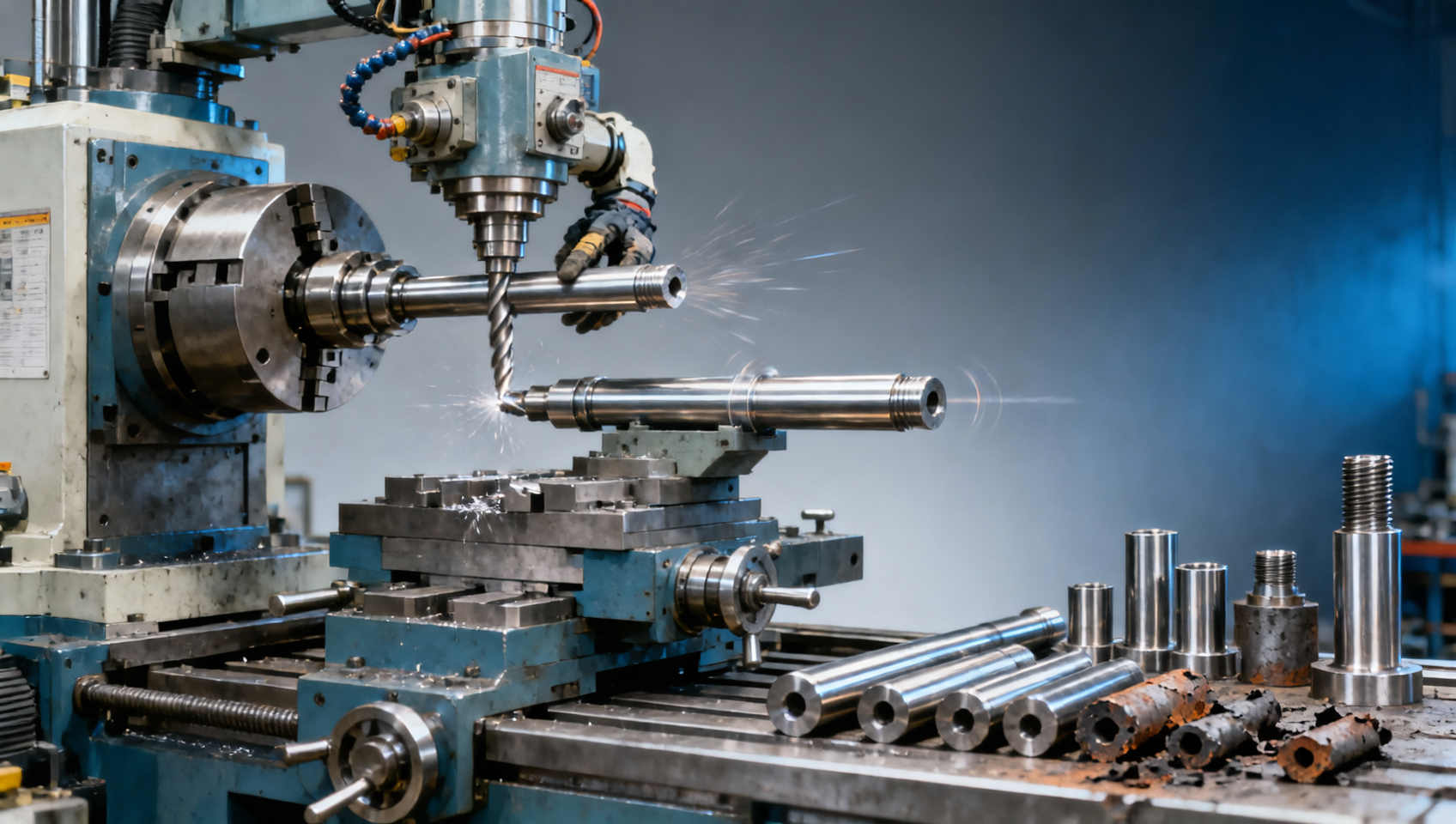
In automated lathe and industrial CNC environments, even small setup mistakes can disrupt the production process and turn precision metal machining into costly scrap. From CNC programming offsets to tooling, fixturing, and automated production line errors, this article explores the most common causes of defective shaft parts and shows how CNC metalworking teams can improve accuracy, reduce waste, and strengthen CNC production efficiency.
Why automated lathe setup errors create scrap so quickly
Automated lathe setup errors are dangerous because they multiply fast. In a manual process, one operator may stop after 1 or 2 bad parts. In an automated CNC line, the same wrong offset, tool number, or clamp position can repeat across 20, 50, or 200 pieces before inspection catches the issue. For shaft parts, even a small deviation in diameter, concentricity, or shoulder length can make the batch unusable for automotive, energy equipment, electronics, or aerospace supply chains.
This risk is growing as CNC lathes, bar feeders, robotic loading systems, and in-process measurement become more integrated. Higher automation improves throughput, but it also means setup quality must be more disciplined. A mismatch between the NC program and the actual machine condition can produce defects in less than 10 minutes of runtime. On high-volume work, that can translate directly into material waste, spindle time loss, and delivery pressure.
For operators, the pain point is usually unstable production and frequent alarms. For procurement teams, the concern is vendor reliability, scrap cost, and machine utilization. For decision-makers, the issue is larger: every scrap part affects OEE, delivery confidence, and margin. In modern CNC production efficiency planning, setup discipline is not a narrow shop-floor topic. It is a management issue tied to quality systems, process capability, and customer retention.
Most scrap events are not caused by one dramatic failure. They come from routine mistakes: wrong tool offset entry, unverified workholding, incorrect datum transfer, overlooked thermal growth, or a rushed first-article release. The good news is that many of these problems can be controlled through 3 layers: standardized setup procedures, verification before automatic cycling, and feedback from actual machining results.
Where scrap usually starts in automated turning cells
In most CNC metalworking cells, scrap starts at the interface between digital instructions and physical setup. The program may be correct, but the actual insert, holder, jaw pressure, tailstock alignment, or bar stock size may differ from assumptions. Automated production lines increase this exposure because several connected devices must agree on position, sequence, and part orientation within a narrow tolerance window, often in the range of ±0.01 mm to ±0.05 mm depending on the part feature.
- Program-to-machine mismatch: offsets, tool geometry, spindle direction, and sequence conflicts.
- Machine-to-fixture mismatch: incorrect jaw setup, poor runout control, or unstable clamping force.
- Part-to-process mismatch: stock variation, burrs, inconsistent material hardness, or unsupported slender shafts.
- Process-to-inspection mismatch: missing first-piece approval, weak SPC rules, or delayed nonconformance response.
When teams understand these interfaces, they can reduce scrap before changing equipment. In many cases, a 15-minute setup verification routine prevents hours of rework, machine downtime, and customer complaints.
The most common automated lathe setup mistakes behind defective shaft parts
The most frequent setup errors in automated lathe environments are not mysterious. They are repeatable, observable, and often preventable. Defective shaft parts usually show a pattern: diameter drift, taper, chatter marks, burr formation, thread mismatch, or incorrect overall length. Each symptom points to a setup category that should be reviewed before the next production run.
The table below summarizes high-risk setup mistakes seen in CNC turning, especially in batch production, robotic loading, and bar-fed operations. These issues are relevant for contract manufacturers, OEM component suppliers, and factories upgrading toward smarter automated production lines.
A key lesson is that scrap usually begins before cutting starts. If the clamping length is too short by 2 mm to 4 mm, or if bar protrusion changes cycle to cycle, the machine may still run but part quality will drift. This is why experienced shops treat setup verification as part of production, not as an administrative step.
Programming and offset mistakes that look small but cost a lot
CNC programming offsets are among the fastest ways to generate scrap. A decimal point error, wrong wear compensation sign, or failure to reset geometry after replacing an insert can ruin a full batch. On precision shaft work, especially when bearing fits or seal diameters are involved, a deviation of 0.02 mm may already exceed the drawing requirement. In automated runs, this can continue unnoticed until the next scheduled inspection interval.
The problem is not only the NC code. It is also version control. Shops often reuse proven programs across different machines, yet turret positions, tool stick-out, sub-spindle timing, or probing sequences can differ. When setup sheets are outdated by even one revision, the risk of scrap rises sharply. A robust practice is to lock the release process into 3 checks: program revision, tool list match, and offset confirmation at the machine.
Tooling and fixturing mistakes that distort process stability
Tooling errors are often blamed on insert quality, but the real issue is setup consistency. If tool overhang is too long, if the holder is seated with chips underneath, or if the insert nose radius does not match the programmed compensation, the result may be chatter, size drift, or poor surface finish. On long shafts, support method matters as much as cutting data. Tailstock pressure, steady rest timing, and center condition must match the part geometry.
Fixturing problems are equally serious. A jaw bored for one diameter range may not securely clamp another. Soft jaws that are not re-cut after maintenance can introduce radial error. Collets may deliver better concentricity for some high-volume jobs, but only if stock size variation stays within the intended range. These choices affect not just quality but also cycle repeatability over 8-hour, 16-hour, or lights-out production periods.
How to diagnose scrap causes before they damage cost and delivery
When scrap appears, many teams react by changing cutting speed or replacing inserts first. That can help in some cases, but it often treats the symptom rather than the setup cause. A better approach is to trace the defect through a short diagnostic path: what changed, when it changed, and whether the defect is constant, progressive, or intermittent. This can usually narrow the root cause within 3 stages of review.
For example, a constant size error often indicates a wrong offset or datum. A progressive drift after 20 to 30 parts may suggest thermal growth, insert wear, or chip buildup. An intermittent defect may point to robot placement, bar feeder instability, or inconsistent clamping. In automated lathe troubleshooting, the pattern of failure is often more useful than the first visible symptom.
The table below can help operators, process engineers, and production managers connect defect patterns to likely setup faults. It also supports cross-functional communication between shop-floor teams and procurement staff who must assess whether the issue comes from process control, machine condition, or purchased components such as tooling and workholding.
This diagnostic method reduces wasted time. Instead of checking everything at once, teams can focus on the most probable source within the first 30 minutes of investigation. That matters when delivery windows are tight and a delayed line restart affects downstream grinding, assembly, plating, or customer shipment.
A practical 6-point setup verification checklist
Many scrap events can be prevented with a short but disciplined setup checklist. The value is not the document itself. The value is forcing alignment between operator, programmer, quality staff, and automation equipment before the machine enters unattended mode.
- Confirm the latest NC program revision, setup sheet, and drawing issue level.
- Verify each tool station, insert grade, nose radius, and measured offset entry.
- Inspect chuck, collet, soft jaws, and gripping length for the current stock diameter range.
- Run a dry cycle or reduced-speed trial, especially after tooling changes or crash recovery.
- Approve the first article against 5 to 8 critical dimensions before automatic release.
- Set inspection frequency, such as every 15 parts, every 30 minutes, or by control plan.
For high-mix manufacturing, digital checklists linked to MES or machine monitoring platforms are increasingly useful. They help capture setup variation across shifts and reduce dependence on memory-based practices.
What buyers and production leaders should evaluate before choosing equipment or suppliers
Scrap prevention is not only an operator training topic. It starts earlier, during machine selection, automation planning, tooling standardization, and supplier evaluation. Buyers often focus on spindle speed, axis travel, and quoted cycle time. Those matter, but they do not reveal how reliably a system holds setup integrity across repeated jobs, shift changes, and unattended operation.
For procurement teams and plant managers, the smarter question is this: how easily can the equipment, process package, and service support reduce automated lathe setup errors in real production? A machine with advanced functions but weak setup discipline support may generate more scrap than a less complex line with better standardization. This is especially important in sectors with batch traceability, dimensional audits, and strict delivery windows.
The table below highlights practical buying criteria for CNC turning systems, automation cells, and external machining suppliers. It is useful when comparing quotations from different regions or when reviewing whether an existing supplier can support higher-volume shaft part production with lower scrap exposure.
Buyers should also compare total operating risk, not only purchase price. A lower-cost option may appear attractive, but if setup changeovers are slow, spare part support is weak, or process documentation is inconsistent, scrap and downtime can erase the savings. In B2B manufacturing, cost per acceptable part is usually a better decision metric than machine price alone.
How to compare internal production and outsourced machining
Some companies face a strategic choice: invest in automated CNC turning capacity or outsource shaft parts to a specialist supplier. The answer depends on volume, tolerance, delivery urgency, and internal engineering strength. If annual demand is stable and setup knowledge can be standardized, internal production may deliver better schedule control. If part mix changes frequently and tolerances are demanding, a specialized supplier may reduce the learning curve and scrap risk during ramp-up.
A useful comparison covers 4 factors: changeover frequency, quality assurance capability, lead time flexibility, and cost of failure. For many firms, the hidden issue is not machining itself but the ability to control setup variation repeatedly across different operators, machines, and shifts.
How to reduce setup-related scrap in smart manufacturing environments
As machine tool production becomes more digital, the best scrap-reduction strategies combine process discipline with data visibility. Smart manufacturing does not remove the need for careful setup. It makes setup performance easier to track, compare, and improve. Shops that connect CNC machines, tool life management, inspection feedback, and maintenance records can identify recurring setup errors much faster than teams working from isolated paper records.
A practical improvement path usually has 3 stages. First, stabilize setup documentation and first-article approval. Second, connect recurring defects to specific machines, tools, or shifts. Third, standardize corrective action across similar part families such as stepped shafts, threaded shafts, or precision turned pins. This approach is realistic for both medium-size workshops and larger automated production lines.
It is also wise to align process control with general quality frameworks used in manufacturing. Even when a company does not disclose customer-specific requirements, common disciplines such as calibration control, traceable inspection records, maintenance planning, and controlled document revision help lower setup-related scrap. The key is consistency over time, not one-time troubleshooting.
In real operations, teams often gain quick results from a few focused changes: standard tool presetting, controlled jaw maintenance intervals, bar stock incoming checks, and mandatory verification after any program or insert change. These measures are not expensive compared with repeated scrap, especially when materials are alloy steel, stainless steel, or high-value engineering metals.
Common misconceptions that keep scrap rates high
One common misconception is that a stable machine automatically means a stable process. In reality, many scrap parts come from incorrect setup on perfectly capable equipment. Another misconception is that first-piece approval is enough. On automated lathe cells, process conditions can change after 30 minutes, after tool indexing, or after a material lot switch. That is why inspection frequency and trend monitoring matter.
A third misconception is that scrap is mainly a quality department problem. It is not. Scrap tied to setup errors connects engineering, purchasing, maintenance, automation, and operator training. Companies that treat scrap only as an inspection issue often miss the stronger solution: designing setup robustness into the entire production system.
FAQ for research, operations, and purchasing teams
The questions below reflect common search intent around CNC turning scrap, automated lathe setup, and production risk control.
How often should setup verification be repeated during automated runs?
There is no single interval for all parts. A common practice is to verify the first piece, then recheck after 5 to 10 parts, and later shift to a control-plan rhythm such as every 30 minutes or every 20 to 50 parts. Critical bearing fits, threads, or sealing surfaces may require tighter checks, especially during the first production shift or after a tooling change.
What setup issue is most often overlooked on shaft parts?
Support and clamping are often overlooked. Teams may focus on speed and feed, while the real issue is jaw contact, unsupported length, tailstock condition, or bar feed stability. On slender parts, a small support error can create taper, chatter, or concentricity failure even when the program is correct.
Can in-process measurement eliminate scrap completely?
No. In-process measurement helps detect drift earlier, but it cannot correct every wrong setup condition. If the wrong tool is loaded, if clamping is unstable, or if the robot loads the part incorrectly, measurement alone will not prevent all defective parts. It works best as one layer inside a broader setup control system.
What should buyers ask when evaluating a machining supplier for low-scrap production?
Ask about first-article approval, in-process inspection frequency, setup sheet control, tooling traceability, machine maintenance discipline, and how nonconforming parts are contained. Also ask how long new part industrialization usually takes, such as 1 to 3 weeks for simple turned parts or longer for complex multi-operation components.
Why choose us for CNC machining insight and production decision support
In global CNC machining and precision manufacturing, setup-related scrap is not a minor workshop issue. It affects quality cost, machine utilization, delivery reliability, and supplier selection. Our platform focuses on the practical side of this industry: CNC lathes, machining centers, multi-axis systems, tooling, fixtures, automated production lines, and international manufacturing trends that matter to real production teams.
If you are researching automated lathe setup errors, comparing CNC production solutions, or evaluating suppliers for precision shaft parts, we can help you narrow the decision faster. You can consult on process parameters, production route selection, machine and tooling matching, typical lead time ranges, batch suitability, and risk points in automated CNC metalworking projects.
For buyers and decision-makers, we can also support quotation comparison, manufacturing capability review, and communication around drawing requirements, tolerances, inspection checkpoints, and sample planning. For operators and engineers, the discussion can focus on setup logic, recurring scrap causes, fixture choices, and practical ways to improve CNC production efficiency without overcomplicating the process.
Contact us if you need support with parameter confirmation, product selection, delivery cycle evaluation, custom machining solutions, process feasibility review, certification-related questions, sample support, or quotation communication. A clear technical discussion at the start often prevents costly scrap later and helps turn automated production into reliable output instead of repeated trial and error.
PREVIOUS ARTICLE
Recommended for You
 Heavy-duty Machining Center for mold making: Why coolant filtration standards evolve faster than OEM manualsMachine Tool Industry Editorial Team
 Quick-change Fixture Design for CNC turning: Why clamping force consistency drops after 200 cyclesCNC Machining Technology Center
 5 Axis Machining for impeller manufacturing: Why toolpath smoothing affects surface fatigue lifeCNC Machining Technology Center
 Lean Production Process implementation: Where value stream mapping fails to expose hidden machine downtimeManufacturing Market Research Center
 Modular Tooling System for flexible manufacturing: Why interface repeatability degrades faster than expectedMachine Tool Industry Editorial Team
 Industrial Automation control system for CNC machines: When cybersecurity updates disrupt scheduled maintenanceMachine Tool Industry Editorial Team

Aris Katos
Future of Carbide Coatings
15+ years in precision manufacturing systems. Specialized in high-speed milling and aerospace grade alloy processing.
▶
Automated Lathe Cycle Time Gains Can Hide Quality LossesCNC Machining Technology Center▶
Automated Lathe Setup Errors That Lead to Scrap PartsCNC Machining Technology Center▶
Automated lathe setup errors that quietly ruin part consistencyCNC Machining Technology Center▶
Vertical lathe or horizontal setup for heavy parts?CNC Machining Technology Center▶
Shaft Parts machining gets expensive when runout is ignoredCNC Machining Technology Center
Mastering 5-Axis Workholding Strategies
Join our technical panel on Nov 15th to learn about reducing vibrations in thin-wall components.

Providing you with integrated sanding solutions
Before-sales and after-sales services
Comprehensive technical support