• Global CNC market projected to reach $128B by 2028 • New EU trade regulations for precision tooling components • Aerospace deman
NYSE: CNC +1.2%LME: STEEL -0.4%

Vertical Lathe or Horizontal Setup for Large Ring Parts?
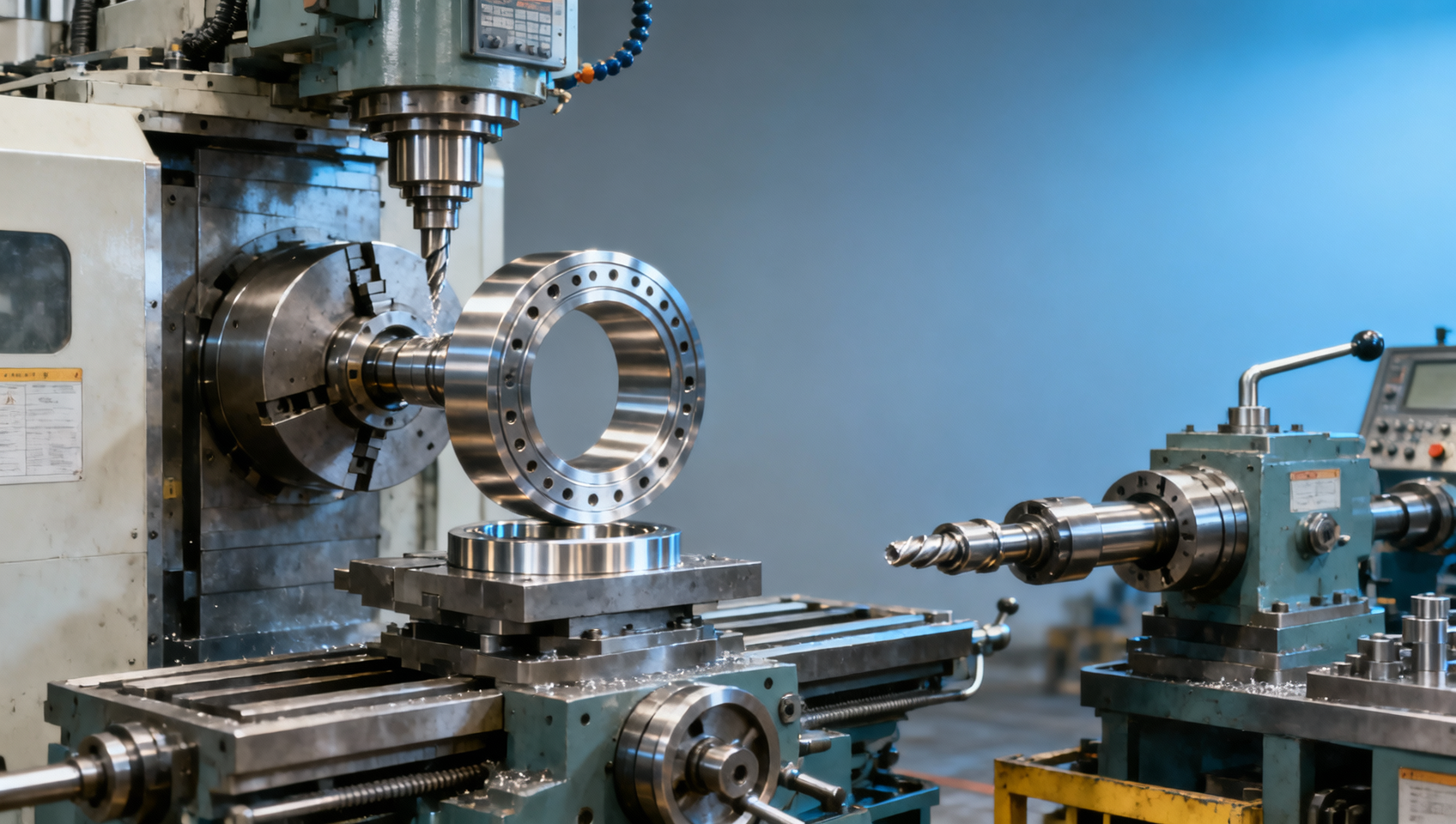
Choosing between a vertical lathe and a horizontal setup for large ring parts directly affects metal machining accuracy, stability, and overall production process efficiency. In today’s industrial CNC environment, manufacturers must balance CNC cutting performance, automated production needs, and cost control. This article explores how vertical lathe and industrial lathe configurations support CNC metalworking applications in the Global Manufacturing and Machine Tool Market.
Why the machine layout matters for large ring machining
Large ring parts create a very different machining challenge from standard shafts or compact discs. Their wide diameter, relatively thin wall sections, and sensitivity to clamping distortion mean that setup strategy can decide whether the part stays within roundness, flatness, and concentricity targets. In many CNC turning projects, the first decision is not only tooling or spindle power, but whether a vertical lathe or a horizontal setup will control gravity, runout, and chip evacuation more effectively.
For operators, the issue is practical. A ring measuring 800 mm, 1,500 mm, or even above 2,500 mm in diameter behaves differently during loading, clamping, and cutting. For procurement teams, the same choice influences machine footprint, fixture cost, and maintenance planning over a 5–10 year investment cycle. For decision-makers, the selected configuration must fit current production volume while still supporting smart manufacturing upgrades, automation interfaces, and traceable process control.
In the global CNC machine tool sector, vertical turning solutions are often favored for heavy discs, bearing rings, flanges, and large annular components. Horizontal setups still remain valuable where the ring geometry is moderate, where existing horizontal lathes are already installed, or where mixed-part flexibility matters more than dedicated large-diameter capacity. The right answer depends less on abstract preference and more on workpiece behavior during the full machining cycle.
- Large ring machining usually involves 4 core risk points: deformation under clamping, vibration during interrupted cutting, poor chip control, and difficult loading alignment.
- Typical evaluation should cover at least 3 process stages: workholding, rough turning, and finish turning or in-process inspection.
- When batch frequency moves from occasional jobs to weekly or daily production, machine layout becomes a strategic capacity decision rather than a simple setup preference.
What makes ring parts different from standard rotational components?
Unlike solid shafts, large ring parts often have a high diameter-to-thickness ratio. That means material removal can quickly release internal stress or amplify deflection. Even if the nominal tolerance is only moderate, for example within ±0.02 mm to ±0.10 mm on critical surfaces, holding that range becomes difficult when the part is unsupported or clamped unevenly. A setup that looks acceptable for roughing may fail during finishing.
This is why vertical lathe discussions often center on gravity-assisted seating. On a vertical table, the ring rests naturally, which can reduce sagging effects seen in a horizontal chucking arrangement. However, not every ring automatically belongs on a vertical turning machine. Material type, blank condition, wall thickness, and secondary operations all influence the final choice.
Vertical lathe vs horizontal setup: where each solution performs better
A vertical lathe is generally stronger when the ring is large in diameter, heavy in mass, or sensitive to deformation during clamping. A horizontal setup can still perform well for medium-size rings, especially when the shop already has capable CNC lathes, custom soft jaws, and stable support devices. The comparison should focus on actual machining behavior, not only on machine category names.
The table below summarizes the most relevant differences for large ring parts in industrial lathe applications. It is intended for buyers, process engineers, and plant managers comparing turning solutions for bearing rings, gear blanks, wind power flanges, sealing rings, and structural annular components.
The key reading is simple: as ring diameter, weight, and distortion sensitivity rise, the vertical lathe usually becomes more favorable. The horizontal setup gains advantage when flexibility, installed machine base, and lower initial adaptation cost are more important than absolute support stability for oversized parts.
When a vertical lathe is usually the safer choice
Choose a vertical turning machine when the ring is heavy enough that lifting and centering on a horizontal spindle becomes inefficient or risky. This often starts around several hundred kilograms, but the exact threshold depends on part width, material, and fixture design. For forged rings, cast rings, and rough blanks with uneven stock allowance, a vertical layout also helps reduce setup complexity because the workpiece can be seated and indicated more naturally.
Vertical lathes also support better process consistency for low-speed heavy cuts. If the roughing stage uses high torque and deep cuts on large diameter faces, the machine structure often handles the load path more predictably. This becomes important in sectors such as energy equipment, heavy bearings, marine components, and aerospace support structures where surface integrity and geometric control must remain stable across repeated batches.
When a horizontal setup still makes sense
A horizontal setup remains practical when ring parts are not extremely large and when the workshop needs multi-purpose CNC turning more than dedicated large-ring capacity. Many suppliers machine sealing rings, medium gear rings, and process flanges on horizontal lathes with custom jaws, tailstock assistance, steady rests, or modular support tooling. If lot sizes are small and changeovers happen every 1–3 days, this flexibility can protect utilization rates.
Another reason is capital efficiency. If a manufacturer already owns stable horizontal CNC lathes and only occasionally handles ring parts, adding a specialized vertical lathe may not be justified. In such cases, the better path may be fixture optimization, process validation, and selective outsourcing for diameters above the internal limit.
A quick decision rule
- If ring diameter is large and wall thickness is relatively low, favor a vertical lathe.
- If the ring is medium-size and part mix is wide, evaluate whether a horizontal setup can reach tolerance with proper fixturing.
- If the part requires frequent crane handling and low-risk seating, vertical loading often reduces operator difficulty.
Which technical parameters should buyers and engineers verify first?
Machine selection should start with process-relevant parameters rather than marketing labels. For large ring parts, the most useful checks are swing or table diameter, maximum turning height, spindle torque at low speed, chuck or table load capacity, axis travel, fixture accessibility, and in-process measurement compatibility. These items affect both machining capability and long-term process repeatability.
In practical procurement, three categories matter most. First, part envelope: diameter, height, weight, and balance condition. Second, machining demand: roughing allowance, finish tolerance, surface roughness target, and material machinability. Third, production plan: batch size, shift pattern, and automation level. A machine that meets the diameter but fails on low-speed torque or fixture access can still become a poor investment.
The table below provides a structured parameter checklist that can support RFQ discussions between equipment suppliers, manufacturing engineers, and purchasing teams.
A useful rule for procurement is to request sample part analysis before final approval. Ask suppliers to review at least 3 items: drawing tolerance, material grade, and process route from blank to final inspection. This step often reveals whether the machine needs special jaws, custom fixtures, dual-tool roughing, or optional probing functions.
Tolerance and stability considerations
Large ring machining often combines relatively simple geometry with demanding stability requirements. Flatness, axial runout, and inner-to-outer diameter concentricity can be more difficult than profile generation itself. If target surface roughness falls in a common industrial range such as Ra 1.6–3.2 for functional turning, thermal drift and vibration control become as important as nominal machine accuracy.
For this reason, engineers should examine not only the machine brochure but also the process environment. Floor vibration, coolant cleanliness, lifting rhythm, and temperature variation across a 2-shift or 3-shift schedule all influence real machining performance. A vertical lathe may improve part support, but poor fixture repeatability can still reduce final quality.
Five checks before approving a machine configuration
- Confirm the maximum and minimum ring dimensions planned over the next 24–36 months, not only the current project.
- Review whether rough blanks are forged, rolled, flame-cut, or cast, because stock variability changes fixture and power demand.
- Match machine torque and rigidity to the actual metal removal rate rather than to spindle speed alone.
- Evaluate loading time, indicating time, and setup repeatability as part of total cycle time.
- Check if the machine can support future automation, barcode traceability, or probe-based compensation.
How to compare cost, productivity, and implementation risk
Cost comparison should go beyond the purchase price of a vertical lathe versus a horizontal lathe. For large ring parts, total cost includes fixtures, crane time, setup labor, floor planning, downtime risk, tool life behavior, and inspection effort. A lower-cost machine can become expensive if every batch requires extended indicating, manual support adjustment, or post-machining correction.
Implementation risk also differs by setup. Horizontal machining may seem economical in an existing line, but distortion-related scrap on high-value rings can offset that advantage quickly. Vertical turning may require a higher initial equipment budget, yet it can reduce handling risk and improve first-pass yield when part size and weight rise. This is especially relevant in aerospace support manufacturing, energy equipment, and large bearing supply chains where each workpiece carries significant material and schedule value.
The following comparison helps purchasing teams evaluate which configuration aligns better with volume, capital planning, and operational risk.
The practical message is that cost should be measured over the whole production route. If annual volume is low, adaptation on a horizontal setup may be valid. If demand is stable over 6–12 months and part sizes are consistently large, a vertical lathe often delivers better predictability and lower hidden process cost.
A simple procurement path for B2B buyers
A disciplined procurement path helps avoid buying too much machine or too little process capacity. Start with a part-family review. Group ring components by diameter range, wall thickness, material, and annual quantity. Then identify whether 70%–80% of expected work falls into a size range that clearly favors vertical turning. If not, a hybrid strategy may be more efficient.
Next, compare delivery constraints. A standard machine may fit a 8–16 week planning window in some markets, while heavily customized fixtures, automation units, or special inspection packages can extend implementation further. Procurement should therefore check not only machine lead time but also fixture engineering, installation conditions, and operator training schedules.
Application scenarios, common mistakes, and selection FAQs
Different industries use large ring parts in very different ways. Automotive and electronics may focus on high repeatability for medium-size rings, while energy, marine, and heavy equipment often require machining of larger diameters with lower batch frequency but higher single-part value. In flexible manufacturing environments, the machine layout must support both current jobs and future part diversification.
One common mistake is treating ring parts as ordinary turning work because the geometry looks simple. Another is selecting purely on maximum diameter without reviewing deformation risk, loading safety, and fixture repeatability. In many failed projects, the machine itself was not the main problem. The real issue was mismatch between part family, setup method, and expected production rhythm.
The short FAQ below addresses the questions most frequently raised by researchers, operators, and procurement teams when comparing vertical lathe and horizontal setup options.
How do I choose if my ring size is near the overlap range?
If your ring falls around the overlap range of roughly 800–1,200 mm, do not decide by diameter alone. Compare weight, wall thickness, rough stock condition, and finish tolerance. A thick, rigid ring in that range may run well on a horizontal setup. A thin-wall ring with uneven forging stock may be safer on a vertical lathe, even if the nominal size still looks manageable horizontally.
What should operators pay attention to during machining?
Operators should focus on 4 areas: seating stability, clamp balance, vibration during roughing, and chip behavior near the inner diameter. For long cycles, it is also useful to monitor temperature influence and verify that tool wear does not gradually affect face runout or diameter consistency. In-process probing or scheduled checks every few parts can reduce rework risk.
Is a vertical lathe always better for large ring parts?
No. A vertical lathe is often better for heavy or deformation-sensitive rings, but it is not automatically the right answer in every plant. If annual demand is low, available floor height is limited, or existing horizontal CNC assets already meet tolerance with stable fixturing, a horizontal solution may still offer the better business case. The correct decision balances technical stability with total ownership cost.
What standards or compliance topics are relevant?
Requirements vary by region and industry, but buyers commonly review machine safety documentation, electrical conformity for the target market, process traceability expectations, and inspection method compatibility. For export-oriented production, it is also important to confirm documentation format, spare parts planning, and service response procedures before purchase approval.
Why work with a platform focused on global CNC machining and precision manufacturing
Selecting between a vertical lathe and a horizontal setup for large ring parts is rarely a one-variable decision. It affects machine investment, fixture design, production scheduling, and the path toward smarter manufacturing. A platform dedicated to CNC machining and precision manufacturing can help buyers and engineers compare machine tool options with a broader view of market availability, process capability, and international supply conditions.
This is especially valuable when your project involves cross-border sourcing, multi-site production, or a transition from manual setup to automated production lines. In these cases, technical evaluation must connect with supplier communication, delivery planning, documentation review, and long-term service considerations. A strong decision process usually includes 3 layers: machine capability, process fit, and supply reliability.
If you are comparing vertical turning solutions, industrial lathe configurations, or CNC metalworking options for large ring parts, you can use our platform to discuss parameter confirmation, machine selection logic, expected delivery cycles, customization routes, and application-specific process questions. We can also help structure RFQ discussions around ring dimensions, workpiece weight, tolerance priorities, automation needs, and fixture requirements so your team can move from general research to actionable procurement decisions.
Contact us to review your drawings, clarify target part ranges, compare vertical lathe and horizontal setup options, and identify a practical path for quotation, sample evaluation, or custom solution planning. Whether you need support for one urgent project or a longer equipment roadmap, the goal is the same: lower selection risk, clearer technical alignment, and better production readiness.
PREVIOUS ARTICLE
Recommended for You
 Heavy-duty Machining Center for mold making: Why coolant filtration standards evolve faster than OEM manualsMachine Tool Industry Editorial Team
 Quick-change Fixture Design for CNC turning: Why clamping force consistency drops after 200 cyclesCNC Machining Technology Center
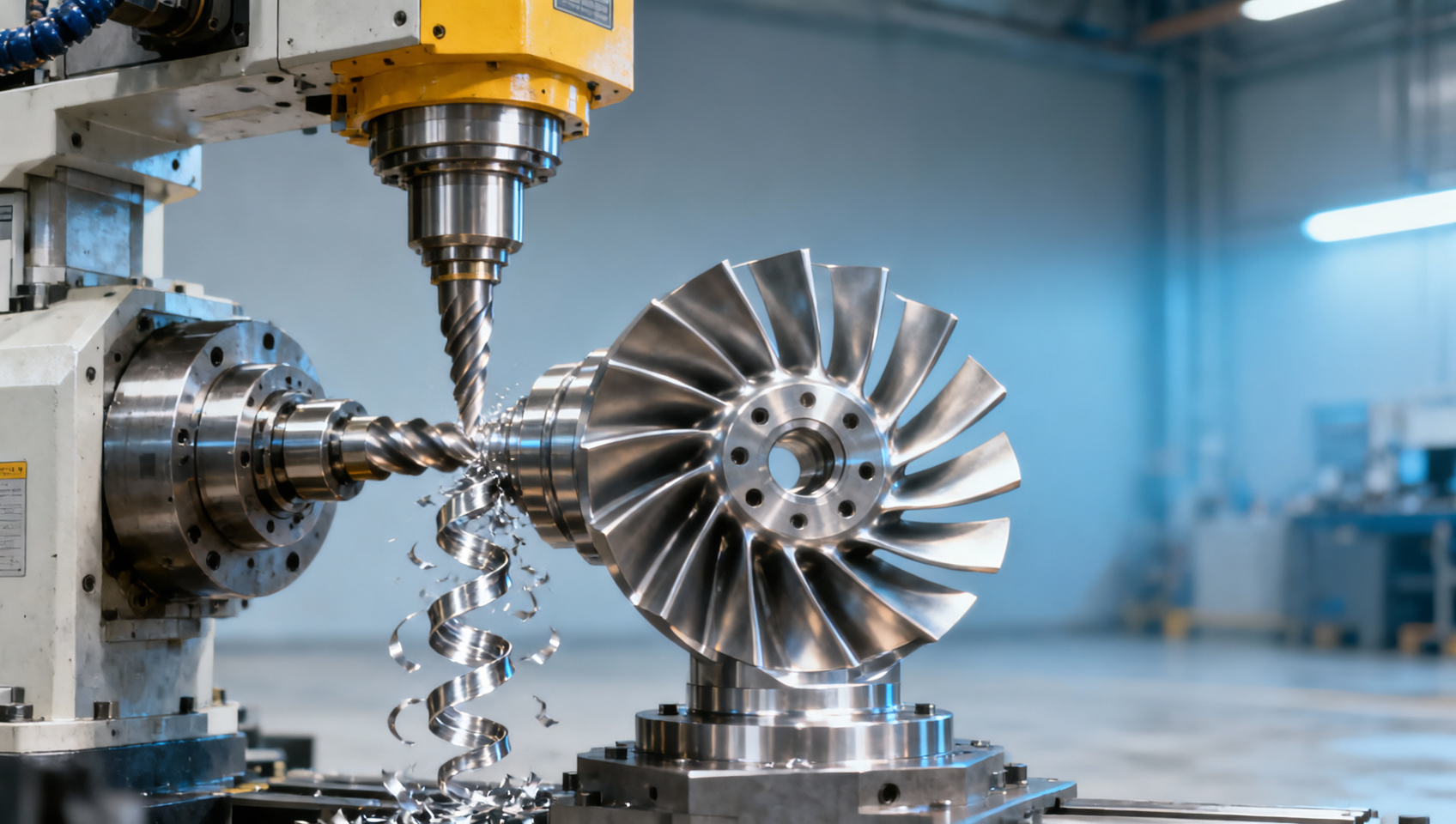
 5 Axis Machining for impeller manufacturing: Why toolpath smoothing affects surface fatigue lifeCNC Machining Technology Center
 Lean Production Process implementation: Where value stream mapping fails to expose hidden machine downtimeManufacturing Market Research Center
 Modular Tooling System for flexible manufacturing: Why interface repeatability degrades faster than expectedMachine Tool Industry Editorial Team
 Industrial Automation control system for CNC machines: When cybersecurity updates disrupt scheduled maintenanceMachine Tool Industry Editorial Team


Aris Katos
Future of Carbide Coatings
15+ years in precision manufacturing systems. Specialized in high-speed milling and aerospace grade alloy processing.
▶
Automated Lathe Cycle Time Gains Can Hide Quality LossesCNC Machining Technology Center▶
Vertical Lathe or Horizontal Setup for Large Ring Parts?CNC Machining Technology Center▶
Automated Lathe Setup Errors That Lead to Scrap PartsCNC Machining Technology Center▶
Automated lathe setup errors that quietly ruin part consistencyCNC Machining Technology Center▶
Vertical lathe or horizontal setup for heavy parts?CNC Machining Technology Center
Mastering 5-Axis Workholding Strategies
Join our technical panel on Nov 15th to learn about reducing vibrations in thin-wall components.

Providing you with integrated sanding solutions
Before-sales and after-sales services
Comprehensive technical support