• Global CNC market projected to reach $128B by 2028 • New EU trade regulations for precision tooling components • Aerospace deman
NYSE: CNC +1.2%LME: STEEL -0.4%

CNC cutting tool wear looks normal until edge failure starts
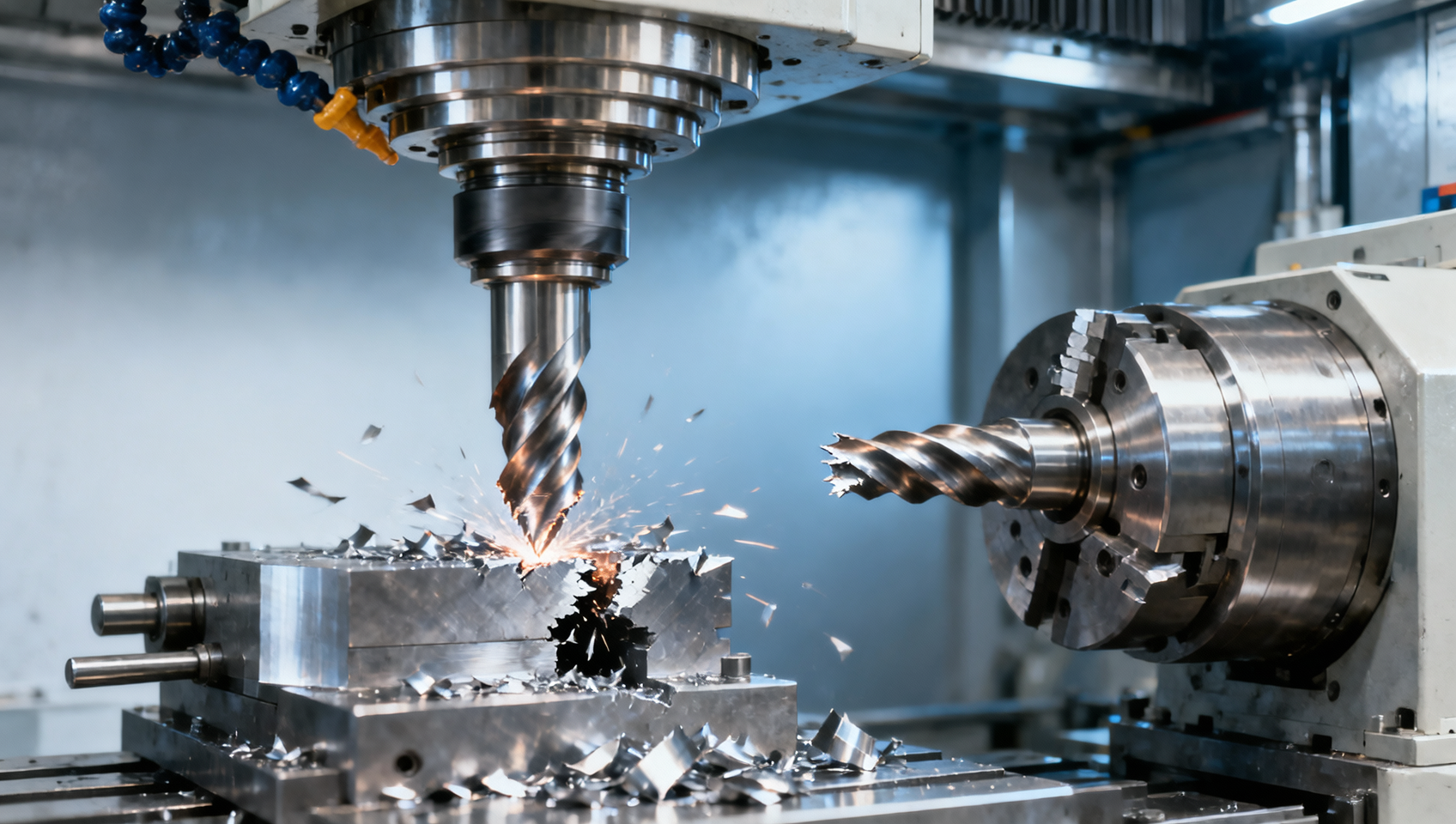
In metal machining, CNC cutting tool wear can look routine right up to the moment edge failure begins, disrupting CNC production, part quality, and the entire production process. For professionals in industrial CNC and CNC metalworking, understanding these early warning signs is essential to improving tool life, stabilizing automated production, and reducing costly downtime across the Manufacturing Industry.
In high-volume machining, the difference between controlled tool wear and sudden edge failure is often only a few minutes of spindle time, yet that gap can decide whether a plant hits its delivery schedule or scrapes a batch of critical parts. This matters to machine operators watching surface finish, process engineers balancing cycle time, buyers evaluating tooling cost per part, and decision-makers trying to reduce unplanned stoppages across CNC lines.
Across automotive, aerospace, electronics, energy equipment, and general precision manufacturing, cutting tools are expected to maintain dimensional accuracy, repeatability, and productivity under increasingly demanding conditions. When wear looks normal, teams may delay insert indexing or replacement too long. Once edge failure starts, the result can be chatter, burrs, thermal damage, spindle overload, fixture instability, or even machine crashes.
This article explains how to distinguish normal wear from the start of failure, what signals to monitor on the machine and on the part, how material and cutting parameters influence risk, and what practical actions manufacturers can take to extend tool life while protecting throughput and quality.
Why CNC tool wear appears stable before failure accelerates
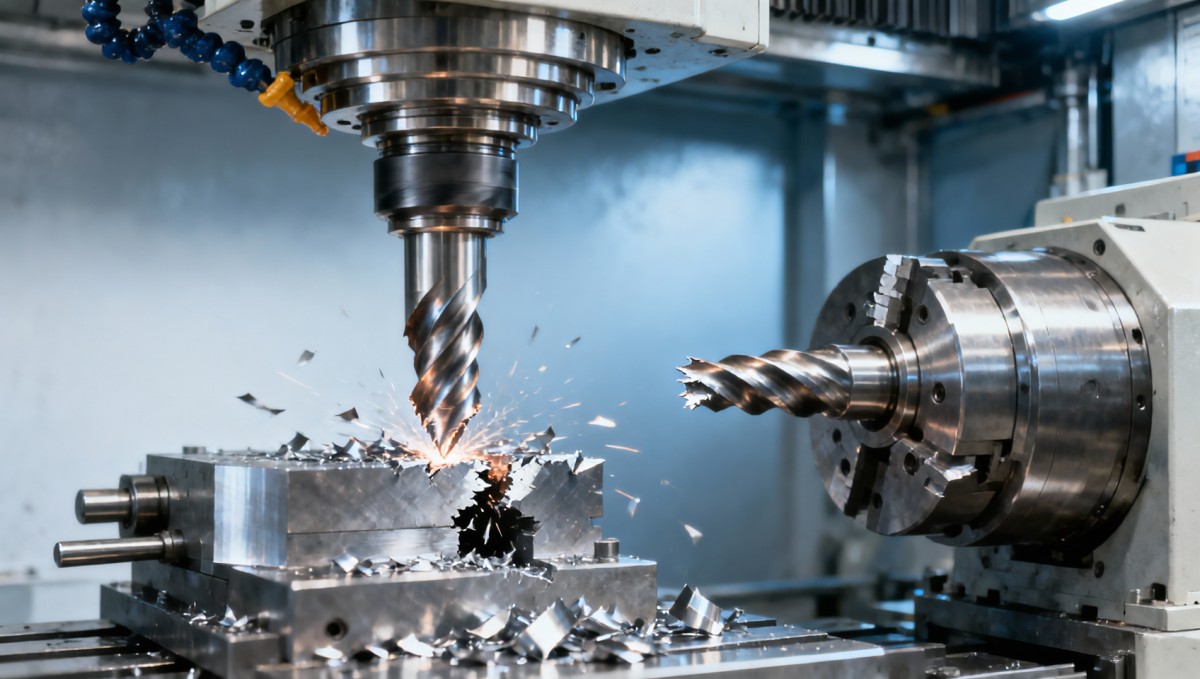
Most cutting tools do not fail in a smooth, linear way. In many CNC machining applications, wear progresses through 3 recognizable stages: initial break-in, relatively stable wear, and rapid failure. During the stable stage, flank wear may increase slowly over dozens of parts, giving operators the impression that the tool still has a comfortable safety margin. The problem is that once micro-chipping begins on the cutting edge, the transition to severe damage can happen within 5 to 20 parts, or even within a single production cycle in hard materials.
This pattern is especially common in machining stainless steel, high-strength alloy steel, cast iron with interrupted cuts, and heat-resistant materials used in aerospace and energy sectors. In these applications, heat concentration, work hardening, and impact loading combine to create a wear profile that looks acceptable until the edge loses local support. At that point, crater wear, notch wear, or edge chipping no longer remain cosmetic issues; they become failure triggers.
A common mistake in automated production is to judge tool condition only by elapsed cutting time. A tool may survive 40 minutes under one setup but fail after 22 minutes when feed increases by 15%, coolant flow drops, or raw material hardness shifts from 28 HRC to 34 HRC. Stable wear is not only about time; it is about load consistency, thermal control, workpiece material, and machine rigidity.
For buyers and production managers, this means tool life should be measured as a process window, not as a single number. A realistic specification should define acceptable wear limits, part count per edge, surface finish threshold, dimensional drift tolerance, and the point at which indexing must occur before catastrophic failure starts.
The wear mechanisms that usually come first
Before edge failure becomes visible, several wear mechanisms often develop together. These mechanisms do not always appear in isolation, and the combination can shorten the safe operating window more than expected.
- Flank wear gradually enlarges the contact area between tool and machined surface, often causing dimensional drift of 0.01 mm to 0.05 mm in finishing operations.
- Crater wear forms on the rake face due to heat and chip flow, weakening edge support and increasing the likelihood of local collapse.
- Built-up edge may temporarily mask wear, then break away suddenly, damaging both the insert edge and part surface.
- Notch wear appears near the depth-of-cut line, particularly in abrasive or work-hardening materials, creating a sharp stress concentration point.
Typical visual progression from normal wear to edge failure
The following comparison helps production teams separate acceptable wear from conditions that require immediate intervention.
The key conclusion is that the middle state, early edge distress, is where the most value can be captured. If teams learn to identify it consistently, they can replace or index tools before a low-cost wear event becomes a high-cost production interruption.
Early warning signs operators and engineers should track
The first signs of edge failure rarely come from a broken insert alone. They usually appear as small changes in the process: spindle load rises by 5% to 12%, chip color shifts from silver to dark blue, surface roughness worsens from Ra 0.8 to Ra 1.6, or the machine sound becomes sharper during entry and exit. When these signals appear together, the probability of edge distress increases significantly.
Operators on CNC lathes and machining centers often notice part symptoms before they see tool symptoms. Burr formation at one corner, taper drift on repeated shafts, poor shoulder finish, localized chatter marks, or inconsistent chip breakage can all indicate that the cutting edge has lost stability. In unattended or lights-out machining, these signals should be connected to inspection intervals or machine monitoring thresholds rather than left to operator intuition alone.
For production planners, one practical rule is to review tool condition after every 20 to 50 parts in unstable materials, and after every 80 to 150 parts in more predictable finishing operations. The exact interval depends on insert grade, workpiece hardness, depth of cut, coolant strategy, and whether the cut is continuous or interrupted. A fixed interval is less important than consistent verification against actual part quality and machine load data.
Purchasing teams should also understand that the cheapest insert price does not always translate into the lowest cost per part. If a lower-cost insert produces failure variation of plus or minus 30% in actual life, planning becomes difficult and scrap exposure rises. A more stable tool may reduce total cost by lowering inspection frequency, rework, emergency stoppages, and operator intervention.
Signals worth monitoring in daily production
The table below organizes practical warning signs by source, making it easier to assign responsibility across operations, quality, and engineering teams.
Monitoring only one indicator can be misleading. A stable spindle load does not guarantee a healthy edge if built-up edge is temporarily masking the damage. Combining at least 3 checkpoints, such as machine load, part finish, and chip shape, gives a more reliable basis for intervention.
A simple 4-step shop floor inspection routine
- Record a baseline at the start of a fresh edge, including spindle load, chip shape, and measured surface finish.
- Inspect the insert under magnification after a defined part count, such as every 30 or 50 pieces in critical runs.
- Compare wear pattern location with part defects to identify whether the issue is heat, impact, or chip control related.
- Trigger tool indexing before visible macro-chipping appears, especially in unattended production windows.
What causes edge failure to start earlier than expected
Premature edge failure is rarely caused by the insert alone. In most CNC production environments, it is the result of interaction between 4 major factors: cutting parameters, workpiece material behavior, setup rigidity, and thermal control. If one of these factors drifts outside a safe range, the cutting edge may move from acceptable wear to fracture even when the tool grade is technically suitable.
Cutting speed is often the first suspect, but feed rate and engagement stability can be equally important. For example, reducing speed by 10% may lower heat, yet if feed per tooth or feed per revolution remains too low, rubbing can increase and built-up edge becomes more likely. On the other hand, increasing feed by 20% in a rigid setup may improve chip formation but can overload a weak edge preparation in interrupted cuts. Process optimization should therefore look at the full cutting window rather than a single parameter.
Machine condition also matters more than many teams expect. Tool overhang, holder runout, poor clamping, worn spindle bearings, or fixture instability can create cyclic impact on the edge. Even runout in the range of 0.01 mm to 0.02 mm may shorten life noticeably in small-diameter milling or high-precision finishing. In multi-axis machining systems, toolpath entry angle and step-over consistency can further influence localized edge loading.
Coolant strategy is another frequent source of hidden failure. In some materials, flood coolant improves heat removal and chip evacuation. In others, interrupted coolant contact can create thermal shock, especially in milling or interrupted turning. Dry cutting, MQL, high-pressure coolant, and conventional flood all have valid applications, but each requires matching the insert grade and geometry to the process.
Frequent root causes in production lines
- Improper insert geometry for the cut type, such as a sharp finishing edge used in a heavy interrupted cut.
- Unstable workholding that allows vibration amplitudes to rise during entry or shoulder transitions.
- Material inconsistency between batches, including hardness shifts of 3–6 HRC or scale variations on forged stock.
- Chip evacuation problems that recut hot chips into the same edge zone for multiple cycles.
- Toolpath programming that creates repeated impact at the same corner or depth-of-cut line.
Parameter and setup factors compared
The matrix below helps teams identify whether the main risk is thermal wear, mechanical shock, or process instability.
The most effective corrective action is usually not a dramatic parameter change. In many cases, a package of smaller improvements, such as 8% lower speed, better chip control, shorter overhang, and a more suitable edge preparation, delivers a more stable result than replacing the tool grade alone.
How to build a preventive tool life strategy for quality and cost control
A preventive strategy starts with defining what tool life means in your operation. For a finishing line, tool life may end when size drift exceeds ±0.01 mm or roughness moves beyond Ra 1.2. In roughing, the real limit may be spindle load, chip control, or edge security rather than appearance. Without a clear endpoint, shops often run tools too long because the edge still seems usable.
The next step is to establish a replacement window instead of a single replacement point. If a turning insert shows failure between 180 and 220 parts, the operational rule should not be “change at 220.” A safer and more productive rule may be “inspect at 170 and replace by 190 unless verified otherwise.” That approach protects automated production and reduces scrap risk, especially in unmanned night shifts.
For procurement and plant management, cost control should focus on cost per qualified part, not only insert unit price. A tool that costs 12% more but extends predictable life by 25% may reduce labor interruptions, offset inspection demand, and improve machine utilization. In high-mix production, stability often carries more value than absolute peak life because scheduling depends on repeatable performance.
Digital monitoring can strengthen this strategy. Many CNC shops already collect spindle load, cycle time, alarm history, and in-process measurement data. Even without advanced AI systems, a simple dashboard that tracks load drift, part count per edge, and scrap events can reveal where edge failure begins earlier than expected. Over 4 to 8 weeks, those trends often provide enough evidence to revise cutting data or standardize a stronger insert grade.
Practical implementation framework
- Define the wear limit and part quality limit for each key operation.
- Set inspection frequency by risk level, such as every 25 parts for unstable cuts and every 100 parts for stable finishing.
- Record at least 3 production variables: part count, wear pattern, and machine load trend.
- Create a replacement window and train operators not to chase maximum life at the expense of process security.
- Review results monthly with operations, quality, purchasing, and process engineering together.
Selection criteria for buyers and decision-makers
When evaluating tooling suppliers or cutting solutions, buyers should compare more than catalog performance. The following points matter in real production:
- Life consistency across batches, not only best-case performance in trials.
- Technical support speed, especially if process adjustment is needed within 24 to 72 hours.
- Availability of matching grades, geometries, holders, and coolant-compatible solutions.
- Application guidance for difficult materials, interrupted cuts, and automated lines.
- Total process impact, including inspection labor, downtime, and scrap exposure.
In global CNC and precision manufacturing environments, this broader evaluation is increasingly important. As production lines become more automated and integrated, sudden edge failure affects not just one machine but the rhythm of upstream loading, downstream inspection, and overall delivery reliability.
Common questions about normal wear and sudden edge failure
Many shops face the same challenge: the tool looks acceptable during routine checks, but failure still arrives sooner than expected. The questions below address common search and procurement concerns from users, engineers, and managers in CNC machining.
How often should CNC cutting tools be inspected?
There is no single interval for every process. For unstable materials, interrupted cuts, or tight-tolerance parts, inspection every 20 to 50 pieces is often reasonable. For stable finishing operations with proven life consistency, intervals may extend to 80 to 150 pieces. The better rule is to tie inspection frequency to risk, not habit. If one failure can scrap a high-value aerospace or automotive component, shorter intervals are justified.
Is edge chipping always caused by excessive cutting speed?
No. High speed can contribute to thermal wear, but chipping is also caused by vibration, interrupted cuts, poor workholding, chip recutting, material scale, and unsuitable edge geometry. In many cases, a shop lowers speed and sees little improvement because the real cause is mechanical shock or unstable chip evacuation.
What should purchasing teams ask tooling suppliers?
Purchasers should request performance ranges rather than ideal numbers. Ask for expected life window, recommended speed and feed range, suitable materials, coolant requirements, and the support process if wear becomes unstable. Also ask how fast replacement stock and technical assistance can be provided. In many plants, a 2-day response can protect production better than a marginally lower insert price.
Can monitoring software really reduce sudden tool failure?
Yes, if it is linked to practical action. Monitoring alone does not stop failure, but it can reveal repeatable warning patterns such as load increase, cycle time variation, or rising quality defects. Even a basic setup that flags a 10% load increase or abnormal cycle extension can help teams intervene before the edge collapses. The benefit is highest in automated cells and multi-machine operations where one operator cannot manually inspect every tool in time.
CNC cutting tool wear often appears manageable until edge failure begins, but the cost of waiting too long is rarely limited to one insert. It can affect dimensional control, surface integrity, machine utilization, batch quality, and delivery performance across the production line. The most effective approach is to recognize the transition zone early, define measurable wear limits, and standardize inspection and replacement rules around real process data.
For information researchers, operators, buyers, and manufacturing leaders, the priority is the same: build a tool management strategy that combines wear recognition, parameter control, stable procurement, and preventive intervention. If you want to improve tool life, reduce unexpected stoppages, or evaluate more reliable CNC cutting solutions for your application, contact us to discuss your process, get a tailored recommendation, or learn more about practical solutions for precision manufacturing.
Recommended for You
 What causes chatter in metal machining and how to stop itCNC Machining Technology Center
 Industrial CNC lead times are shifting in 2026Manufacturing Market Research Center
 When CNC industrial upgrades cut output instead of raising itMachine Tool Industry Editorial Team
 Automated lathe errors that often start with bar feedingMachine Tool Industry Editorial Team
 Why CNC metalworking scrap rates rise on thin wall partsCNC Machining Technology Center
 CNC cutting speed or finish quality: where losses beginCNC Machining Technology Center

Aris Katos
Future of Carbide Coatings
15+ years in precision manufacturing systems. Specialized in high-speed milling and aerospace grade alloy processing.
▶
CNC cutting speed or finish quality: where losses beginCNC Machining Technology Center▶
CNC cutting tool wear looks normal until edge failure startsCNC Machining Technology Center▶
Does CNC cutting performance drop more with worn inserts or misaligned fixtures?CNC Machining Technology Center▶
How much does cutting speed drop when using coated inserts for CNC cutting of hardened steels?CNC Machining Technology Center▶
CNC metal cutting tools wear faster than specs claim—real-world data from Tier-1 aerospace linesCNC Machining Technology Center
Mastering 5-Axis Workholding Strategies
Join our technical panel on Nov 15th to learn about reducing vibrations in thin-wall components.

Providing you with integrated sanding solutions
Before-sales and after-sales services
Comprehensive technical support