• Global CNC market projected to reach $128B by 2028 • New EU trade regulations for precision tooling components • Aerospace deman
NYSE: CNC +1.2%LME: STEEL -0.4%

CNC Cutting Edge Wear Patterns That Change Part Accuracy
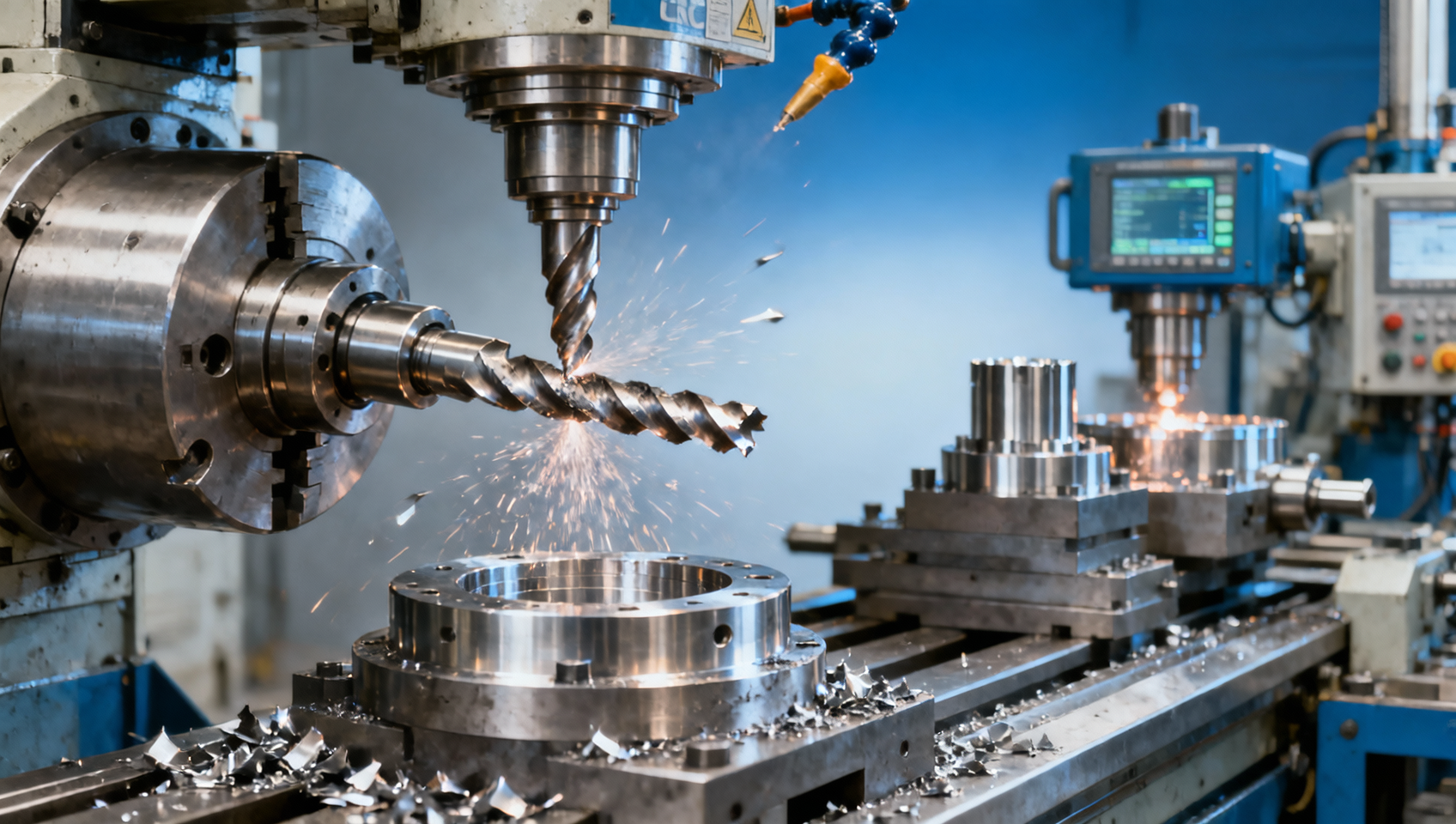
In industrial CNC and CNC metalworking, cutting edge wear is more than a tool issue—it directly affects part accuracy, surface finish, and production consistency. From CNC milling and automated lathe operations to high-volume automated production lines, understanding wear patterns helps operators, buyers, and manufacturing leaders reduce errors, improve CNC cutting performance, and strengthen the overall production process in today’s Global Manufacturing environment.
Why cutting edge wear changes CNC part accuracy faster than many teams expect
In CNC machining, tool wear rarely starts as a dramatic failure. It usually begins as a small change at the cutting edge, then expands into measurable variation in size, geometry, burr formation, and surface finish. On a machining center or CNC lathe, even a wear land developing over several production hours can shift part dimensions from stable tolerance control to repeated offset correction.
This matters across automotive, aerospace, energy equipment, and electronics production because many parts are held within tolerance bands such as ±0.01 mm, ±0.02 mm, or tighter depending on the process stage. Once wear changes cutting forces, the spindle load, heat generation, and chip flow also change. That creates a chain reaction: tool deflection rises, the machine compensates more often, and downstream inspection rejects increase.
For operators, the pain point is unstable machining and frequent adjustments. For procurement teams, the concern is whether a lower-cost insert really reduces total cost per part. For decision-makers, the bigger issue is hidden process loss: scrap, unplanned downtime, rework, and delayed delivery windows of 3–7 days or more when urgent tool replacement is needed.
In smart manufacturing environments, tool wear must be treated as a process variable, not only a tooling expense. The most effective CNC cutting strategies link wear monitoring with machine condition, material type, coolant control, and batch size. This is especially important in medium- to high-volume production, where the same wear pattern can affect 50, 500, or 5,000 parts before anyone sees the full quality impact.
What usually changes first when the cutting edge wears
- Dimensional drift appears in diameters, shoulder positions, and bore sizes, often before catastrophic insert failure.
- Surface roughness becomes inconsistent as the worn edge rubs more and cuts less efficiently.
- Burrs and edge breakout increase, especially in finishing passes and thin-wall components.
- Cycle stability declines because offsets, feed adjustments, and extra inspections are added to keep output acceptable.
Which wear patterns are most common in CNC milling and turning operations?
Not every wear pattern affects part accuracy in the same way. Some patterns mainly reduce tool life, while others quickly distort dimensions or damage the surface. In CNC metalworking, the most common wear modes include flank wear, crater wear, notch wear, built-up edge, edge chipping, and thermal cracking. Each one signals a different imbalance among material, cutting data, tooling grade, rigidity, and coolant application.
Flank wear is often the first pattern quality teams monitor because it directly changes the effective geometry of the cutting edge. In turning, this can gradually enlarge or shrink a diameter depending on tool position and compensation logic. In milling, especially on multi-axis machining systems, flank wear can change contact conditions and affect wall straightness, corner accuracy, and flatness over runs lasting 2–6 hours.
Built-up edge is different. It appears when workpiece material welds temporarily to the cutting edge, then breaks away unpredictably. This is common in ductile materials and can create unstable dimensions, torn surfaces, and irregular chip formation. Procurement teams sometimes misread this as an insert quality issue alone, when the root cause may also include speed, feed, coolant concentration, or edge preparation mismatch.
Edge chipping and thermal cracking are more severe because they can alter geometry suddenly rather than gradually. These patterns are especially risky in interrupted cuts, hard materials, or automated production lines where one damaged edge may continue cutting several parts before alarms are triggered. That is why wear pattern recognition should be built into first-piece checks, in-process inspection, and scheduled tool change intervals.
Quick comparison of wear patterns and their impact on accuracy
The table below helps operators, buyers, and manufacturing managers connect common cutting edge wear patterns with likely part quality risks and practical process actions.
A useful decision point is whether wear is gradual or sudden. Gradual wear usually supports scheduled replacement after a defined batch count or spindle time. Sudden wear demands immediate review of rigidity, workholding, cutting path, and insert toughness because part accuracy can collapse within 1–3 cycles instead of over a longer production window.
Three signs that wear is becoming a process-control issue
- Offset corrections are needed more than once per shift on a stable material and setup.
- Surface finish passes inspection at the start of the batch but degrades before the planned tool change.
- Different machines produce different results using the same program and nominal tool specification.
How should operators and engineers link wear patterns to root causes?
A cutting edge does not wear in isolation. The wear pattern usually reflects a combination of material hardness range, spindle power, tool overhang, coolant delivery, machine rigidity, and workholding quality. In practical CNC cutting, root cause analysis is most effective when teams evaluate at least 5 key inputs together: workpiece material, insert grade, geometry, cutting parameters, and setup stability.
For example, if a CNC lathe repeatedly shows flank wear earlier than expected, the answer is not always a harder insert. The issue may come from excessive surface speed, a long tool nose engagement, or weak coolant penetration at the chip-tool interface. In milling, thermal cracks often point to cyclic heat stress caused by interrupted cutting with inconsistent coolant contact rather than simply “bad tooling.”
Teams in automated production lines should also distinguish between wear caused by normal consumption and wear caused by process instability. If insert life varies widely—say 25 minutes on one station and 60 minutes on another with the same nominal recipe—there may be differences in spindle runout, clamping repeatability, or fixture position. Without identifying that source, changing tool brands alone may not restore part accuracy.
The best practice is to create a short diagnostic loop. Start with the wear image, connect it to the quality symptom, then verify process data and machine condition. This 3-step sequence reduces guesswork and helps procurement teams avoid buying new tooling grades for problems that are really caused by setup or application mismatch.
A practical troubleshooting checklist for CNC wear diagnosis
- Check whether wear appears after a consistent number of parts, such as every 80–120 pieces, or at random intervals.
- Compare tool wear from roughing and finishing separately, because the root causes may differ even on the same component.
- Review coolant type, concentration range, and nozzle direction, especially for difficult alloys and deep cavities.
- Measure holder runout and tool overhang, since small mechanical instability can amplify wear and accuracy loss.
- Record spindle load and vibration changes over 1 shift or 1 batch to identify process drift before scrap rises.
Typical root-cause relationships in CNC metalworking
The table below is useful when teams need a faster judgment path between visible wear and corrective action, especially during sample runs, first article approval, or volume ramp-up.
This kind of structured review is especially valuable in global manufacturing organizations where tooling, materials, and machine platforms may differ by region. A standard troubleshooting matrix makes cross-site communication faster and helps reduce repeated trial-and-error during new program introduction.
What should buyers and decision-makers evaluate before selecting tooling for accuracy-critical parts?
For procurement and operations leadership, the wrong question is “Which insert is cheapest?” The better question is “Which tooling setup gives stable part accuracy across the required batch size, material range, and delivery schedule?” In B2B CNC machining, tool cost is only one line item. The larger cost drivers often include machine time, scrap rate, inspection frequency, setup changes, and late shipment penalties.
A practical purchasing review should cover at least 4 dimensions: accuracy stability, predictable tool life, compatibility with current holders and machines, and support for process optimization. If a tool performs well only under narrow ideal conditions, it may not fit a factory running mixed materials, varying lot sizes, or unattended shifts of 6–10 hours.
Buyers should also compare whether the supplier can support application analysis, sample testing, and parameter confirmation. In precision manufacturing, a tool recommendation without guidance on speed, feed, depth of cut, coolant strategy, and wear criteria is incomplete. That gap often shifts risk back to the plant and slows the ramp-up of new orders.
For decision-makers managing international sourcing, consistency matters as much as price. If the same tooling family is used across multiple plants, standardization can simplify training, reduce emergency substitutions, and make wear data more comparable. This becomes important when factories need to stabilize output across automotive, aerospace, energy, and electronics component lines.
A procurement guide for wear-sensitive CNC applications
Use the following framework when evaluating tooling or process support for CNC cutting where part accuracy, surface finish, and uptime are all critical purchase criteria.
This purchasing logic helps avoid a common mistake: selecting tools based only on nominal life while ignoring how wear affects the last 10%–20% of that life. In many precision parts, the final portion of tool life is where part accuracy becomes unstable. A slightly shorter but more predictable wear curve can be more economical than a longer but erratic one.
Five questions worth asking before placing an order
- What wear pattern is most likely in the target material and operation: turning, milling, grooving, or boring?
- What is the recommended tool change point: by part count, spindle time, or wear measurement?
- Can the supplier support sample validation within a typical 7–15 day decision window?
- Will the tooling family remain available for repeat orders and cross-plant standardization?
- What backup solution exists if the original grade does not stabilize the required tolerance band?
Implementation, common mistakes, and FAQ for wear control in CNC production
A strong wear-control plan should fit both trial production and scale production. In practice, most manufacturers do best with a simple implementation path: define the target tolerance and finish, record baseline parameters, inspect tool wear at set intervals, and lock a replacement rule before volume output starts. This is more reliable than waiting for visible damage or depending only on operator judgment.
A typical implementation can be organized into 4 steps over 1–2 weeks for a stable process. First, identify the critical quality features. Second, run controlled tests with 2–3 parameter windows. Third, document the wear pattern and the acceptable replacement point. Fourth, connect the plan to inspection and purchasing so tools are changed and reordered before accuracy declines.
One frequent mistake is using one wear limit for every operation. Roughing, semi-finishing, and finishing often require different replacement criteria because their impact on part accuracy is not equal. Another mistake is treating all machines as identical. Even on the same production line, holder condition, spindle behavior, and workholding can shift actual wear outcomes enough to justify separate validation.
Factories moving toward digital integration can go further by linking wear observations to machine data, inspection records, and maintenance logs. That does not require a complex smart factory project on day one. Even a simple batch log that tracks part count, insert edge used, reject reason, and tool life range can improve decision quality for both operators and management.
Common misconceptions that lead to accuracy loss
- “If the insert is not broken, it is still fine.” In reality, dimensional drift often starts well before visible failure.
- “Longer tool life always means lower cost.” If the last phase of life causes scrap or extra inspection, total cost per part may rise.
- “A new coating alone will solve the issue.” Wear pattern control usually depends on grade, geometry, parameters, coolant, and rigidity together.
- “One successful trial on one machine proves the whole line is ready.” Multi-machine validation is still needed in automated production.
FAQ: practical questions from CNC users and buyers
How often should cutting edge wear be checked in production?
There is no single rule for every process, but many plants review wear by first-piece validation, scheduled in-process checks, and end-of-batch confirmation. For new jobs, checking after the first 5–10 parts, then at a stable interval such as every 30–50 parts or every 20–40 minutes, is a practical starting point. The interval should be tightened for finishing operations and loosened only after the wear pattern is predictable.
Which wear pattern is most dangerous for sudden part rejection?
Edge chipping and thermal cracking usually create the fastest quality collapse because they change the cutting edge abruptly. These patterns are especially risky on interrupted cuts, brittle grades, or unstable setups. If a line runs unattended for several hours, the process should include alarm thresholds, part-count limits, or tool-life rules that prevent a damaged edge from continuing too long.
Can lower-cost tooling still be a good choice for precision manufacturing?
It can be, but only if the wear behavior is consistent enough to protect part accuracy. A lower unit price does not help if the tool causes more offset changes, more inspection time, or a wider reject rate. The right comparison is cost per qualified part, not only tool price. Buyers should ask for application guidance and trial data before making a switch on critical components.
What should be documented during a tool wear trial?
At minimum, record material grade, operation type, insert specification, cutting speed, feed, depth of cut, coolant condition, batch size, and the exact quality symptom. Add part count to wear onset and replacement point. This creates a usable history for future sourcing, troubleshooting, and production transfer between plants or lines.
Why work with us when you need clearer wear analysis and better CNC process decisions
For companies involved in CNC machining, precision manufacturing, machine tools, and automated production, wear analysis should support more than maintenance decisions. It should improve quoting accuracy, process planning, tooling selection, and delivery confidence. That is why our platform focuses on practical industry insight for the global CNC machining and machine tool sector, not generic commentary.
We help information researchers, operators, purchasing teams, and business decision-makers assess wear-related process risk from multiple angles: machining application, tooling suitability, production scale, and sourcing logic. This is especially useful when your team is comparing alternative tooling strategies, evaluating new CNC projects, or preparing for cross-border equipment and component procurement.
You can contact us for concrete discussion points such as parameter confirmation, tooling selection logic, batch-life expectations, delivery cycle planning, alternative solution comparison, certification-related documentation needs, sample support coordination, and quotation communication for CNC machining or precision manufacturing projects. If your issue involves automated lines, multi-axis systems, or tolerance-sensitive components, sharing the material, process type, and target quality level will make the conversation faster and more useful.
When wear patterns start changing part accuracy, the fastest improvement rarely comes from guesswork. It comes from linking tool behavior to process data, purchasing decisions, and production goals. If you want a clearer path for CNC cutting performance, supplier evaluation, or process optimization, reach out with your current application details and expected production range so the next step can be matched to your real manufacturing conditions.
PREVIOUS ARTICLE
NEXT ARTICLE
Recommended for You
 Global Manufacturing Lead Times Improve but Not EverywhereGlobal Machine Tool Trade Research Center
 Machine Tool Market Inventory Pressure Is Building AgainGlobal Machine Tool Trade Research Center
 Metal Lathe vs CNC Milling for Low Volume Round PartsCNC Machining Technology Center
 CNC Cutting Gas Choice Affects More Than Edge FinishCNC Machining Technology Center
 CNC Metalworking Shops Face New Pressure on TraceabilityManufacturing Policy Research Center
 Automated Lathe Cycle Time Gains Can Hide Quality LossesCNC Machining Technology Center


Aris Katos
Future of Carbide Coatings
15+ years in precision manufacturing systems. Specialized in high-speed milling and aerospace grade alloy processing.
▶
CNC Cutting Gas Choice Affects More Than Edge FinishCNC Machining Technology Center▶
CNC Cutting Edge Wear Patterns That Change Part AccuracyCNC Machining Technology Center▶
Metal Machining Costs Rise Fast With Poor Chip ControlCNC Machining Technology Center▶
CNC cutting quality drops fast when tool wear goes unnoticedCNC Machining Technology Center▶
CNC cutting speed or finish quality: where losses beginCNC Machining Technology Center
Mastering 5-Axis Workholding Strategies
Join our technical panel on Nov 15th to learn about reducing vibrations in thin-wall components.

Providing you with integrated sanding solutions
Before-sales and after-sales services
Comprehensive technical support