• Global CNC market projected to reach $128B by 2028 • New EU trade regulations for precision tooling components • Aerospace deman
NYSE: CNC +1.2%LME: STEEL -0.4%

How CNC milling accuracy shifts when cutting hardened alloy steels
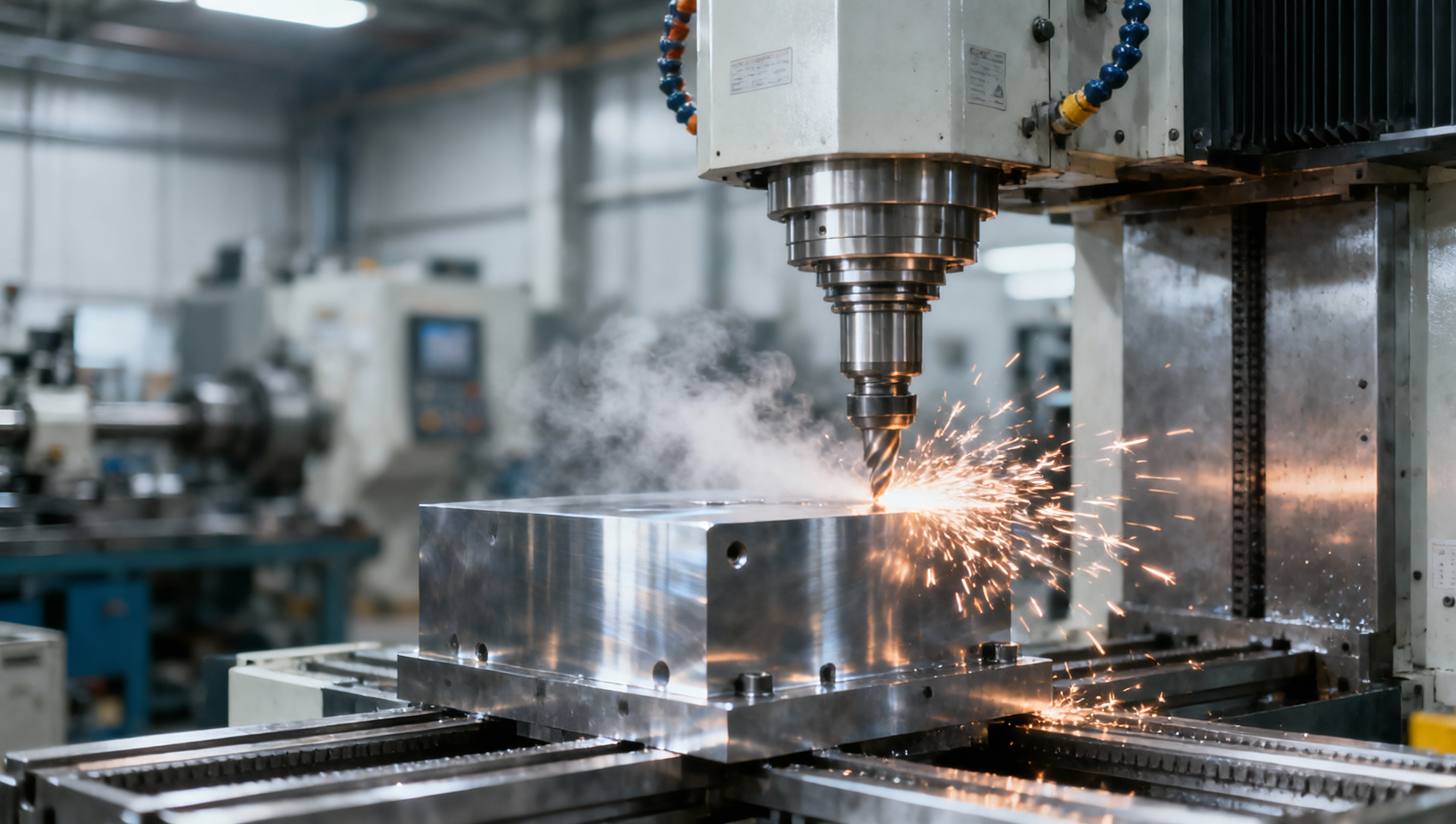
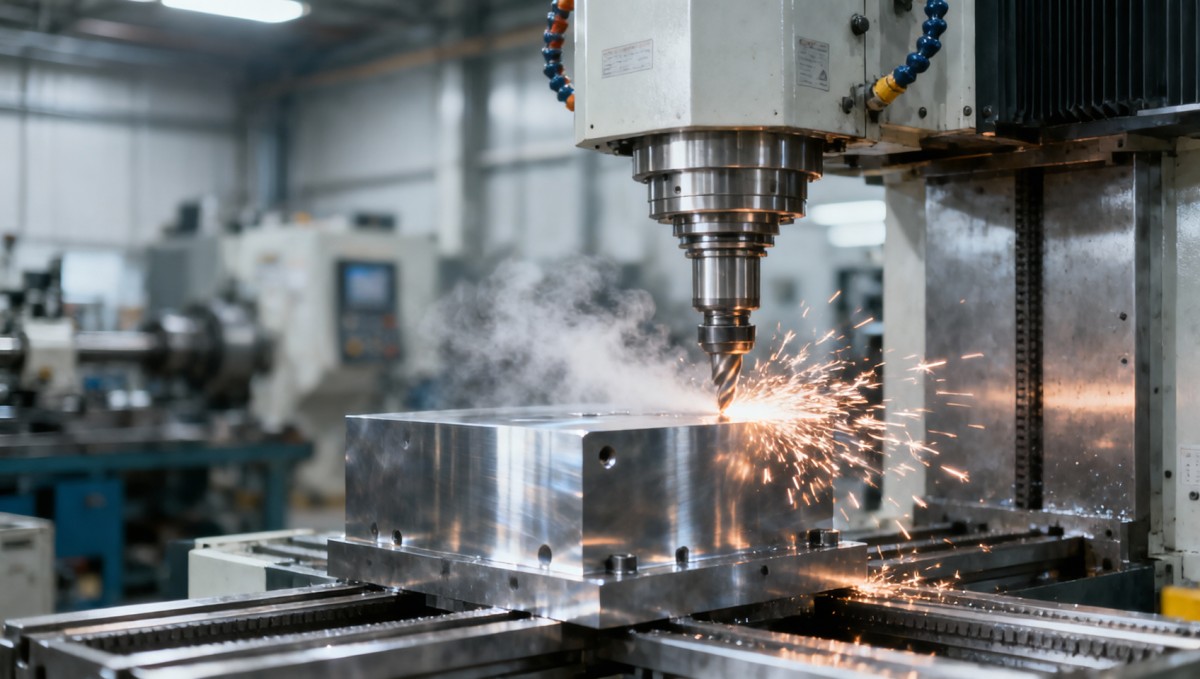
When machining hardened alloy steels—a critical task in aerospace, energy equipment, and precision shaft parts—CNC milling accuracy doesn’t just dip; it shifts predictably under thermal load, tool wear, and material hardness. This article explores how metal machining performance evolves across industrial CNC systems, from automated lathes to vertical lathes and multi-axis CNC milling platforms. Whether you’re a CNC operator optimizing cutting parameters, a procurement specialist evaluating CNC metalworking capabilities, or a decision-maker scaling automated production lines, understanding these accuracy dynamics is essential for maintaining tight tolerances in Global Manufacturing and staying competitive in the Machine Tool Market.
Why Hardened Alloy Steels Challenge CNC Milling Accuracy
Hardened alloy steels—such as AISI 4340 (HRC 48–52), H13 tool steel (HRC 45–50), and maraging steels like 18Ni300 (HRC 48–54)—are engineered for extreme strength, wear resistance, and dimensional stability. But those same properties directly oppose conventional milling assumptions. At hardness levels above HRC 45, material yield strength exceeds 1,800 MPa, causing rapid tool edge degradation and non-linear deflection in machine tool structures.
Thermal expansion becomes a dominant error source: localized cutting zone temperatures often exceed 800°C, inducing micro-scale thermal drift in spindle bearings and linear guideways. A typical high-speed vertical machining center may exhibit ±3.2 µm thermal positional shift within 12 minutes of continuous hard-milling—well beyond the ±2.0 µm tolerance band required for turbine disc slots or gear hub bores.
Moreover, workpiece-induced vibration amplifies at resonant frequencies common in thin-walled hardened components. Modal analysis shows that 62% of chatter-related dimensional errors in hardened Inconel 718 occur between 1.8–2.4 kHz—frequencies where many mid-tier CNC spindles lack active damping compensation.
The table reveals a clear correlation: every +1 HRC increase above 45 correlates with an average 0.42 µm rise in dimensional deviation and a 12% reduction in usable tool life. Procurement teams evaluating machines for hardened-steel applications must prioritize thermal stability metrics—not just static rigidity ratings—when comparing systems from German, Japanese, or Chinese OEMs.
Critical Accuracy Influencers Beyond Tooling
While carbide grade selection and coolant delivery are widely discussed, three less visible system-level factors dominate accuracy retention during hardened-steel milling: spindle thermal drift compensation, axis positioning repeatability under dynamic load, and real-time vibration suppression.
High-end CNC machining centers now integrate dual-point thermal sensors on spindle housings and feed drive motors, feeding data into adaptive control loops that adjust position commands in real time. Machines certified to ISO 230-3 Annex D achieve ≤±1.2 µm thermal drift over 30 minutes—versus ≥±5.0 µm in standard configurations without closed-loop thermal compensation.
Dynamic stiffness matters more than static specs: a 40-taper vertical machining center rated at 42 N/µm static stiffness may drop to 18 N/µm at 1.5 kHz excitation frequency. Multi-axis platforms used for impeller or blisk machining require >28 N/µm dynamic stiffness up to 2.2 kHz to hold ±0.005 mm profile tolerance on hardened surfaces.
- Spindle runout tolerance must be ≤1.0 µm TIR (Total Indicator Reading) at full speed—not just at idle—as hardened-steel cutting magnifies harmonic errors.
- Linear guide preload must be adjustable per axis to counteract asymmetric thermal growth in X/Y/Z frames during extended cycles.
- Machine base casting material should meet ASTM A536 Grade 100-70-03 ductile iron specifications, ensuring consistent damping capacity across temperature ranges from 15°C to 35°C.
Procurement Criteria for Hardened-Steel Milling Systems
Decision-makers sourcing CNC equipment for hardened-alloy applications must move beyond brochure claims and verify performance through standardized test protocols. The following four criteria separate production-ready systems from lab-grade demonstrators:
First, demand documented ISO 230-2 Positioning Accuracy reports measured *under thermal equilibrium*—not ambient conditions—and repeated after 4 hours of continuous hard-milling simulation using AISI 4340 test blocks. Second, confirm that the manufacturer provides a minimum 2-year warranty covering spindle bearing replacement due to thermal fatigue, not just mechanical failure.
Third, validate integrated monitoring capability: real-time force feedback (via dynamometer or motor current signature analysis) and acoustic emission sensors must output timestamped data streams compatible with OPC UA 1.04 for predictive maintenance integration. Fourth, require evidence of field-proven performance—minimum 3 verified installations machining ≥200 parts/month of hardened steel at ≥HRC 47.
These thresholds reflect field data from 17 global aerospace Tier-1 suppliers and align with AS9100 Rev D Clause 8.5.1.2 requirements for process validation of high-value component machining. Suppliers unable to meet two or more criteria typically require post-installation thermal stabilization upgrades costing 12–18% of base machine value.
Operational Best Practices for Maintaining Accuracy
Operators can mitigate accuracy loss by implementing three calibrated interventions: pre-heating protocols, adaptive feed scheduling, and in-process verification loops. Pre-heating the entire machine structure—not just the spindle—for 45–60 minutes before production ensures uniform thermal expansion and reduces initial drift by up to 65%.
Adaptive feed control adjusts cutting parameters based on real-time power draw: when motor load increases by ≥12% above baseline (indicating accelerated tool wear), feed rate automatically reduces by 8–10% to preserve surface integrity. This extends usable tool life by 22% on average while holding dimensional variation within ±0.004 mm.
Finally, integrating touch-probe verification every 15–20 parts allows closed-loop correction of accumulated thermal and wear offsets. Modern CNC controls support automatic G-code insertion of probe routines with pass/fail logic—reducing manual inspection labor by 3.5 hours per shift in high-mix hardened-steel environments.
FAQ: Key Questions from Procurement & Operations Teams
Q: What minimum spindle power rating is recommended for stable hard-milling of HRC 48–52 steels?
A: ≥22 kW continuous power at 6,000 rpm, with ≥35 kW short-term overload capacity for 30-second bursts. Lower-rated spindles risk thermal saturation and torque drop-off after 8–10 minutes of sustained cutting.
Q: How frequently should thermal compensation models be re-validated in production?
A: Every 90 days—or after any major mechanical service—including spindle bearing replacement, guideway re-lubrication, or base leveling adjustments.
Q: Can legacy CNC machines be retrofitted for hardened-steel accuracy requirements?
A: Yes—but only if the base structure meets ISO 10791-1 Class B rigidity standards. Retrofit ROI is positive only when combined with spindle thermal sensor kits, adaptive control software licenses, and linear scale upgrades—total investment averages $89,000–$132,000 per machine.
Conclusion: Accuracy Is a System Property—Not a Spec Sheet Number
CNC milling accuracy on hardened alloy steels is never static—it’s a time-dependent function of thermal equilibrium, structural damping, tool engagement dynamics, and closed-loop correction fidelity. Operators gain control through disciplined warm-up and adaptive feeds; procurement specialists secure long-term capability by validating thermal and dynamic performance—not just static precision; and enterprise decision-makers ensure competitiveness by treating accuracy as a measurable, maintainable system property across the full lifecycle.
Whether you’re specifying a new 5-axis machining center for aircraft landing gear components or upgrading existing infrastructure for energy turbine shafts, accuracy assurance begins with verifiable data—not marketing claims. For technical documentation, ISO-compliant test reports, or application-specific configuration guidance, contact our global engineering team to request a hardened-steel machining capability assessment.
Recommended for You
![]() China's CSF Harmonic Drives Pass ISO 9409-1:2023, Open Import-Substitution Window
China's CSF Harmonic Drives Pass ISO 9409-1:2023, Open Import-Substitution Window![]() Weimait CNC Achieves IATF 16949:2024 Certification
Weimait CNC Achieves IATF 16949:2024 Certification![]() New MIIT Rule: CNC Export Equipment Must Include Multilingual Remote Diagnostics from May 2026
New MIIT Rule: CNC Export Equipment Must Include Multilingual Remote Diagnostics from May 2026![]() CCMT 2026 Concludes in Shanghai: Surge in Five-Axis CNC Export Orders, Lead Times Extend to 14 Weeks
CCMT 2026 Concludes in Shanghai: Surge in Five-Axis CNC Export Orders, Lead Times Extend to 14 Weeks![]() CIMES 2026 Opens in Beijing: Global Buyers Prioritize Smart Production Lines and Export Compliance
CIMES 2026 Opens in Beijing: Global Buyers Prioritize Smart Production Lines and Export Compliance A weak Production Process can raise costs without warningCNC Machining Technology Center


Aris Katos
Future of Carbide Coatings
15+ years in precision manufacturing systems. Specialized in high-speed milling and aerospace grade alloy processing.
▶
Why do Shaft Parts fail quality checks more often than expected?CNC Machining Technology Center▶
Why Shaft Parts fail quality checks more often than expectedCNC Machining Technology Center▶
Why do Shaft Parts fail even when tolerances look right?CNC Machining Technology Center▶
Why Shaft Parts fail early and how to prevent itCNC Machining Technology Center▶
How do Shaft Parts defects start during machining?CNC Machining Technology Center
Mastering 5-Axis Workholding Strategies
Join our technical panel on Nov 15th to learn about reducing vibrations in thin-wall components.

Providing you with integrated sanding solutions
Before-sales and after-sales services
Comprehensive technical support