• Global CNC market projected to reach $128B by 2028 • New EU trade regulations for precision tooling components • Aerospace deman
NYSE: CNC +1.2%LME: STEEL -0.4%

Shaft Parts machining changes once length to diameter ratio rises
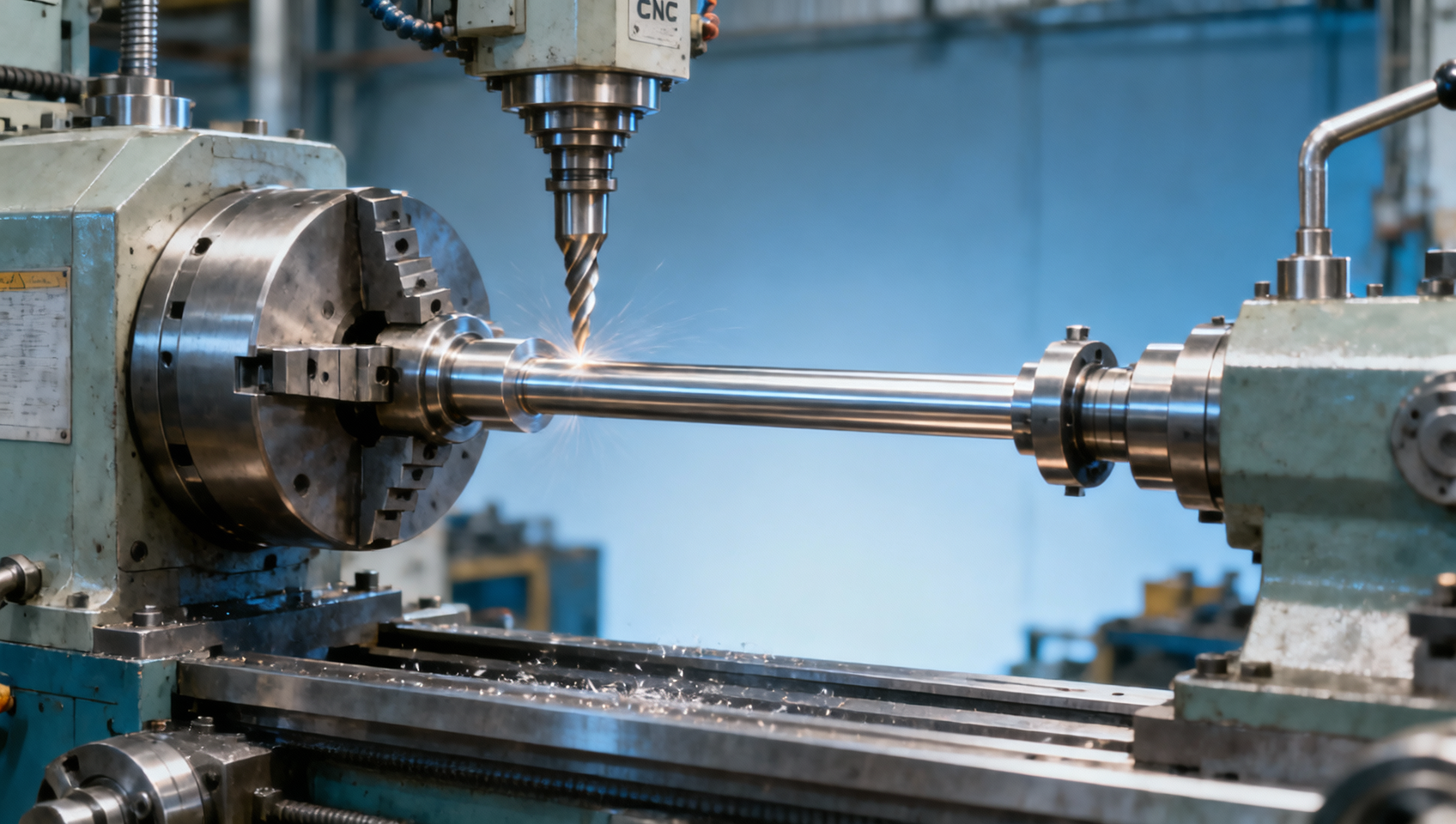
As Shaft Parts become longer relative to their diameter, metal machining challenges increase sharply across industrial CNC and CNC production environments. From automated lathe stability to CNC cutting accuracy, manufacturers must rethink tooling, support methods, and production process control. This article explores how changing aspect ratios affect CNC metalworking, industrial automation, and quality performance in the Global Manufacturing landscape.
For researchers, machine operators, buyers, and manufacturing decision-makers, the issue is not theoretical. Once the length-to-diameter ratio rises beyond common shop-floor thresholds, shaft machining can shift from routine turning into a high-risk process involving deflection, chatter, taper variation, unstable surface finish, and lower throughput. In sectors such as automotive drivetrains, aerospace actuators, energy equipment, pumps, and industrial automation systems, these risks directly affect cost, lead time, and product reliability.
In global CNC machining and precision manufacturing, long shaft parts are increasingly required for lightweight structures, integrated designs, and multi-function assemblies. That trend creates a strong need for practical guidance: when does the machining strategy need to change, what support systems are most effective, how should procurement teams evaluate machine capability, and which process controls reduce scrap before production scales up?
Why shaft machining changes when the aspect ratio increases
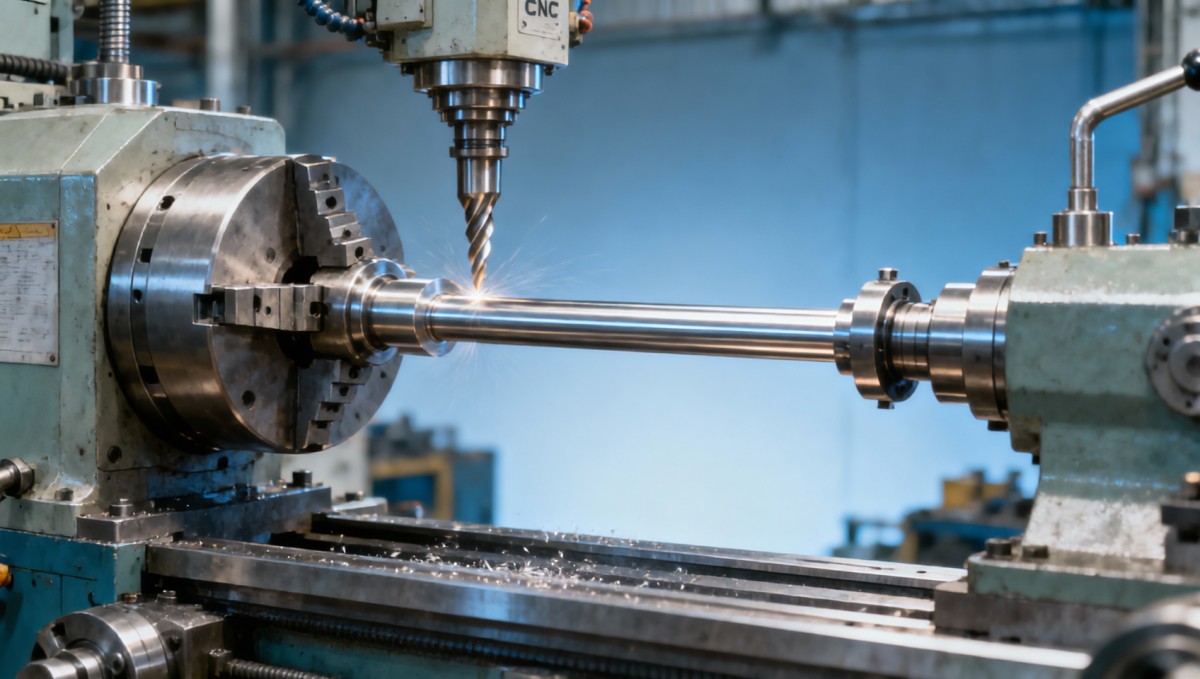
In CNC turning, the length-to-diameter ratio is one of the most important indicators of machining difficulty. A shaft with a ratio of 3:1 or 5:1 is usually manageable on a standard CNC lathe with proper chucking. Once the ratio approaches 8:1, 10:1, or higher, stiffness drops quickly and the workpiece behaves less like a rigid cylinder and more like an elastic component under cutting load.
This change affects several variables at the same time. Radial cutting force can bend the part during roughing, rotational imbalance can amplify vibration, and thermal growth over a long slender profile can distort size consistency. Even when the machine tool itself is accurate within microns, the dynamic behavior of the shaft may produce roundness error, taper, or inconsistent concentricity between journals and shoulders.
For operators, the first visible warning is often chatter. For quality teams, the warning appears as unstable cylindricity or runout. For procurement managers, the problem often emerges later, when a nominally capable machine cannot maintain tolerance at required cycle times. In many workshops, a shaft above 12:1 ratio may require additional support, segmented cutting, or even a redesigned routing plan rather than a simple parameter adjustment.
The table below shows how machining behavior typically changes as shaft geometry becomes more slender. These are practical industry ranges rather than fixed rules, because material grade, wall thickness, clamping method, and tolerance level all influence the real process window.
The practical conclusion is clear: as shaft parts become longer relative to diameter, machining strategy must change before quality problems become visible. Shops that treat a 12:1 shaft like a 4:1 shaft often lose time through repeated offset correction, rework, and inconsistent batch performance.
Main physical reasons behind instability
The core problem is lower structural rigidity. A slender shaft bends more under the same cutting force, and that bending changes the real chip load at the tool tip. When the tool pushes away the workpiece by even 0.02 mm to 0.10 mm during turning, the process may alternate between rubbing and cutting, which drives chatter and poor finish.
Rotational speed can worsen the issue if critical speed is approached. In some long shaft applications, increasing spindle speed to improve productivity actually raises vibration amplitude. This is why stable machining depends on matching spindle speed, support position, and tool nose geometry rather than selecting a speed from a generic material chart alone.
Key machining risks in long shaft production
Long shaft machining creates a chain reaction across process quality. A small setup weakness in the first operation can affect every downstream step, including turning, milling, grinding, balancing, and final assembly. In precision manufacturing, especially for motor shafts, transmission shafts, and spindle-like parts, the cost of an unnoticed setup error may only become visible after heat treatment or after the part reaches a customer inspection line.
One major risk is dimensional inconsistency along the axis. Operators may hold diameter tolerance near the chuck but lose control 200 mm, 500 mm, or 800 mm away from the clamping point. Another risk is surface waviness that remains hidden under rough visual inspection but causes seal wear, bearing noise, or reduced fatigue life in service. In critical sectors, even Ra variation from 0.8 µm to 1.6 µm can matter.
Process interruption is another issue. Slender parts often require slower roughing, additional support resets, and more in-process checks. If a standard shaft cycle is 6 minutes, a longer high-ratio part may need 9 to 14 minutes depending on support method, tolerance, and material. That difference changes machine loading, labor planning, and the economics of batch production.
The list below summarizes the most frequent operational problems seen in CNC production of high aspect ratio shafts:
- Center hole wear or poor center alignment causing runout growth during repeated cycles.
- Tailstock force set too high, leading to local deformation, or too low, leading to insufficient support.
- Depth of cut and feed selected for rigid parts, creating chatter on long slender geometries.
- Improper steady rest position, which introduces marks or fails to support the true bending zone.
- Thermal variation during long cycles, especially in stainless steel or alloy steel shafts.
Quality indicators that deserve closer monitoring
For buyers and production managers, it is not enough to ask whether a supplier can machine long shafts. The better question is which quality indicators they routinely monitor. At minimum, high-ratio shaft projects should review straightness, total runout, cylindricity, surface roughness, and journal-to-journal concentricity. Depending on the application, tolerance control may need to stay within ±0.01 mm, ±0.02 mm, or tighter across several functional diameters.
Typical tolerance-sensitive checkpoints
In practical shop-floor control, checkpoints are usually placed at 3 to 5 axial positions instead of only at the two ends. This is especially important for shafts longer than 400 mm, because maximum deflection often appears near the middle section. A supplier that measures only endpoint diameters may miss the real shape error driving assembly problems.
Process solutions: tooling, support, and parameter strategy
Once the shaft aspect ratio rises, the first process adjustment usually involves support strategy. A tailstock center is often enough for medium-length shafts, but longer components may need one or two steady rests, a follow rest, or specialized support tooling matched to the turning sequence. The support system should be planned together with the roughing and finishing route, not added later as a correction measure.
Tooling also changes. Positive rake geometries can reduce cutting force, but the insert must still maintain edge stability. In many cases, reducing radial engagement and using multiple lighter passes gives better total efficiency than one aggressive pass followed by rework. Typical roughing depth of cut may drop from 2.0 mm to 0.8–1.2 mm on unstable shafts, while finishing feed may need to stay within 0.05–0.15 mm/rev to protect roundness and surface finish.
Machine condition matters just as much as cutting data. A CNC lathe with spindle accuracy in good condition, stable turret repeatability, and properly maintained tailstock alignment will outperform a nominally larger machine with worn mechanical elements. For automated production lines, the repeatability of workholding and center loading can decide whether Cp and Cpk remain acceptable over 100 pieces or drift after the first 20.
The following table compares common support and process methods used in shaft parts machining when length-to-diameter ratio rises.
For most shops, the best result comes from combining at least 3 elements: mechanical support, lower cutting force, and stable process sequencing. If only one variable is corrected, such as reducing spindle speed, the process may still remain unstable and inefficient.
A practical 5-step setup approach
- Verify blank straightness before loading; excessive raw material bend can invalidate later adjustments.
- Confirm chuck grip length and tailstock alignment before first cut, especially on shafts over 300 mm.
- Select conservative roughing data for the first trial and monitor vibration by section.
- Introduce steady rest or follow rest at the actual deflection zone, not by rule of thumb alone.
- Measure at multiple axial points after roughing and again after finishing to separate elastic error from final size error.
This step-by-step method helps operators stabilize new jobs faster and gives process engineers measurable checkpoints before moving to batch production.
How buyers and decision-makers should evaluate machining capability
When sourcing long shaft parts, many buyers compare quotation, machine list, and nominal tolerance, but those items alone do not reveal real machining capability. A stronger evaluation should include process engineering depth, inspection method, support tooling availability, and batch consistency planning. This matters most when shafts are used in rotating systems, load-bearing assemblies, or automated equipment where geometric stability influences service life.
A capable supplier should be able to explain the production route in detail. That includes blank preparation, center drilling or reference generation, rough turning, stress relief if required, semi-finishing, finishing, and final inspection. If the supplier cannot describe where deformation is expected and how it will be controlled at 2 or 3 different stages, the project may rely too heavily on trial-and-error production.
Lead time also deserves realistic review. A standard shaft order might ship in 2 to 3 weeks, but high aspect ratio parts with first-article validation, custom fixtures, and tighter inspection routines may require 3 to 6 weeks depending on volume and material. Buyers who align engineering review with procurement early can reduce later schedule compression and emergency rework.
The table below provides a practical sourcing checklist for procurement teams evaluating CNC machining suppliers for long shaft production.
This kind of procurement review is especially useful for global buyers working across China, Germany, Japan, South Korea, and other machine tool clusters. International sourcing is no longer only about capacity. It is about whether the supplier’s process discipline matches the functional risk of the part.
Four selection priorities for B2B projects
- Match supplier capability to shaft geometry, not just material and diameter.
- Confirm measurement method for straightness and runout before order release.
- Review whether automation fixtures maintain repeatability across 50, 100, or more pieces.
- Ask for process risk points and mitigation steps, not only a final tolerance promise.
Implementation, inspection, and long-term production control
A stable long shaft project depends on more than a successful first sample. Real value comes when the process remains controlled over repeated batches, changing operators, and different raw material lots. In industrial CNC production, that requires an implementation plan covering setup validation, in-process inspection frequency, maintenance of support devices, and traceable adjustment rules.
For example, during early production, inspections may be performed every 3 to 5 pieces until trend stability is confirmed. In mature production, the interval may shift to every 10 or 20 pieces depending on process capability and part criticality. Shops producing shafts for bearings, gear systems, or sealing surfaces often keep tighter monitoring because a small geometric drift can create larger assembly losses downstream.
Preventive maintenance is equally important. A worn center, damaged steady rest contact point, or inaccurate tailstock alignment can degrade performance gradually rather than suddenly. That is why many precision workshops set maintenance checks by operating hours, such as every 200 to 500 machine hours, instead of waiting for visible defects. Digital production systems increasingly help by logging spindle load variation, cycle time drift, and inspection trends in real time.
For companies planning to scale long shaft production, a disciplined launch process reduces both quality risk and commercial risk. A practical implementation sequence often includes:
- Process review of drawing, material, aspect ratio, and critical functional surfaces.
- Fixture and support validation with one pilot setup and multiple measurement points.
- First-article approval based on dimensional, geometric, and surface requirements.
- Small-batch verification of repeatability, cycle time, and tool life behavior.
- Full production release with documented inspection intervals and maintenance checkpoints.
FAQ for long shaft CNC machining
How do I know when a shaft needs special support?
A common practical threshold is around 5:1 to 8:1, where tailstock support becomes more important. Above 8:1, many jobs need a steady rest, follow rest, or a segmented machining route. The exact point depends on material stiffness, diameter variation, and required tolerance.
Which industries are most sensitive to long shaft machining quality?
Automotive transmission systems, aerospace actuators, energy equipment, pumps, electric motors, and automation machinery are all sensitive because runout, surface finish, and concentricity directly affect rotation, sealing, vibration, and service life.
What should a buyer request during quotation?
Request the planned support method, key tolerance checkpoints, expected lead time, first-article process, and in-process inspection frequency. For critical shafts, also ask whether roughing and finishing are separated and whether thermal or stress-related distortion is considered.
Can automation improve long shaft machining?
Yes, but only if automation includes repeatable loading, stable referencing, and monitored support conditions. Automated loading without controlled centering may repeat the same error faster. Smart production lines work best when machine accuracy, fixture repeatability, and inspection feedback are integrated.
As shaft parts become longer relative to their diameter, machining is no longer a simple extension of standard turning practice. It becomes a precision engineering task that requires aligned decisions in machine capability, support tooling, cutting parameters, inspection planning, and production management. For operators, this means better stability and less rework. For buyers, it means more reliable sourcing decisions. For business leaders, it means stronger cost control and more predictable delivery in a competitive global manufacturing environment.
If you are evaluating CNC machining solutions for long shaft parts, now is the right time to review your process window, supplier capability, and inspection standards in detail. Contact us to discuss your shaft machining requirements, get a tailored production recommendation, or learn more about precision CNC solutions for complex industrial components.
PREVIOUS ARTICLE
Recommended for You
![]() Iranian LNG Vessels Breach U.S. Strait Blockade; Shanghai Crude Surges 4%Manufacturing Market Research Center
Iranian LNG Vessels Breach U.S. Strait Blockade; Shanghai Crude Surges 4%Manufacturing Market Research Center![]() Pakistan Launches CNC Localization Tender for CPEC II Smart Manufacturing ParkGlobal Machine Tool Trade Research Center
Pakistan Launches CNC Localization Tender for CPEC II Smart Manufacturing ParkGlobal Machine Tool Trade Research Center![]() NVIDIA Joins $1T Club; AI-Driven CNC Digital Twin Gains Global TractionCNC Machining Technology Center
NVIDIA Joins $1T Club; AI-Driven CNC Digital Twin Gains Global TractionCNC Machining Technology Center![]() World's First 5-Axis Middle-Grade Wire EDM Machine Enters Mass ProductionMachine Tool Industry Editorial Team
World's First 5-Axis Middle-Grade Wire EDM Machine Enters Mass ProductionMachine Tool Industry Editorial Team![]() China’s CNC Machine Tool Export Prices Up 11.3% in Q1 2026Global Machine Tool Trade Research Center
China’s CNC Machine Tool Export Prices Up 11.3% in Q1 2026Global Machine Tool Trade Research Center![]() Saudi Energy Security Boosts CNC Import Efficiency in Middle EastGlobal Machine Tool Trade Research Center
Saudi Energy Security Boosts CNC Import Efficiency in Middle EastGlobal Machine Tool Trade Research Center


Aris Katos
Future of Carbide Coatings
15+ years in precision manufacturing systems. Specialized in high-speed milling and aerospace grade alloy processing.
▶
Why Shaft Parts for Agricultural Machinery Fail Earlier Than ExpectedCNC Machining Technology Center▶
Defense Precision Machining Faces Tighter Tolerance Risks in 2026CNC Machining Technology Center▶
How Precision Disc Parts Affect Hydraulic System StabilityCNC Machining Technology Center▶
High-tolerance Disc Parts for aerospace applications: Why runout control begins at blank handlingCNC Machining Technology Center▶
High precision CNC manufacturing: Why environmental monitoring matters as much as machine calibrationCNC Machining Technology Center
Mastering 5-Axis Workholding Strategies
Join our technical panel on Nov 15th to learn about reducing vibrations in thin-wall components.

Providing you with integrated sanding solutions
Before-sales and after-sales services
Comprehensive technical support