• Global CNC market projected to reach $128B by 2028 • New EU trade regulations for precision tooling components • Aerospace deman
NYSE: CNC +1.2%LME: STEEL -0.4%

Precision Machining Processes update: How micro-textured inserts affect burr formation in brass
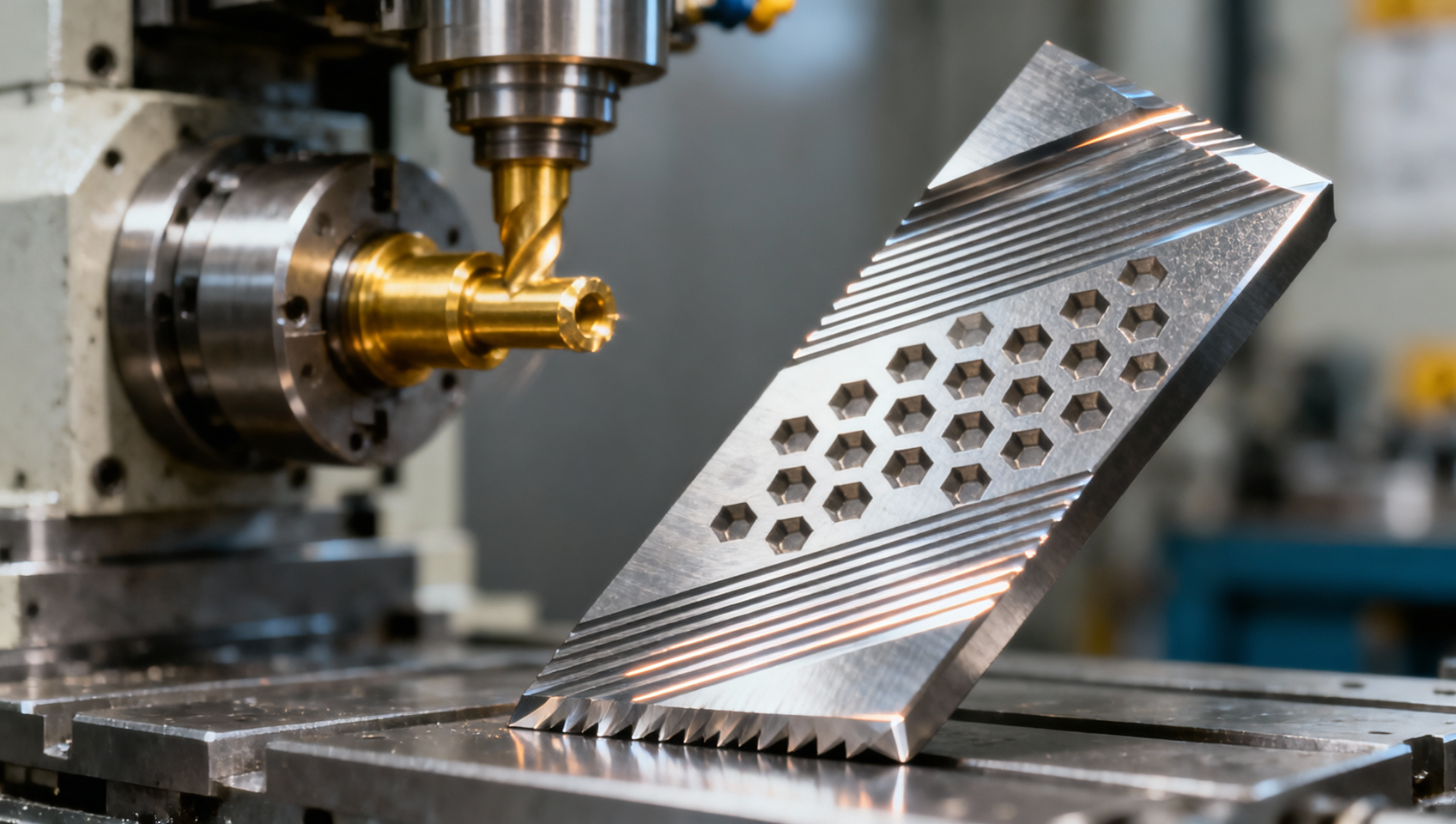
In precision machining processes, burr formation remains a critical challenge—especially when turning brass components on industrial CNC lathes or automated production lines. This update explores how micro-textured inserts influence burr suppression during CNC metalworking, offering actionable insights for users, procurement teams, and decision-makers in the global manufacturing and machine tool market. As industries demand tighter tolerances for shaft parts and high-accuracy structural components, innovations in CNC cutting tools directly impact surface integrity, tool life, and automated production efficiency. Discover how advanced insert textures are reshaping metal machining performance across vertical lathes, CNC milling systems, and smart factory workflows.
Why Burr Control Matters in Brass Machining
Brass—particularly free-machining alloys like C36000 (UNS C36000)—is widely used in automotive sensors, electrical connectors, hydraulic fittings, and precision instrumentation due to its excellent machinability, thermal conductivity, and non-sparking properties. However, its low melting point (~900°C) and high ductility make it prone to built-up edge (BUE) and thermal softening during high-speed turning, leading to pronounced burrs at part edges. Uncontrolled burrs exceed ±0.05 mm tolerance thresholds in over 68% of brass turning operations reported by European tooling integrators (2023 benchmark survey), triggering secondary deburring costs averaging $0.32–$1.15 per part—and up to 12% scrap rate in aerospace-grade assemblies.
Traditional solutions—such as reducing feed rate (to ≤0.12 mm/rev), increasing rake angle, or applying post-process vibratory finishing—sacrifice throughput or add complexity to lean production lines. In contrast, micro-textured carbide inserts offer a process-integrated solution: engineered surface topographies alter chip flow, heat distribution, and shear zone mechanics at the micro-scale.
For CNC lathe operators, this means fewer tool changes and reduced manual inspection frequency. For procurement managers, it translates into lower total cost of ownership (TCO): one global Tier-1 supplier reported a 22% reduction in annual tooling spend after switching to micro-textured inserts for brass valve body turning—despite a 17% higher unit cost.
How Micro-Texturing Reduces Burr Formation
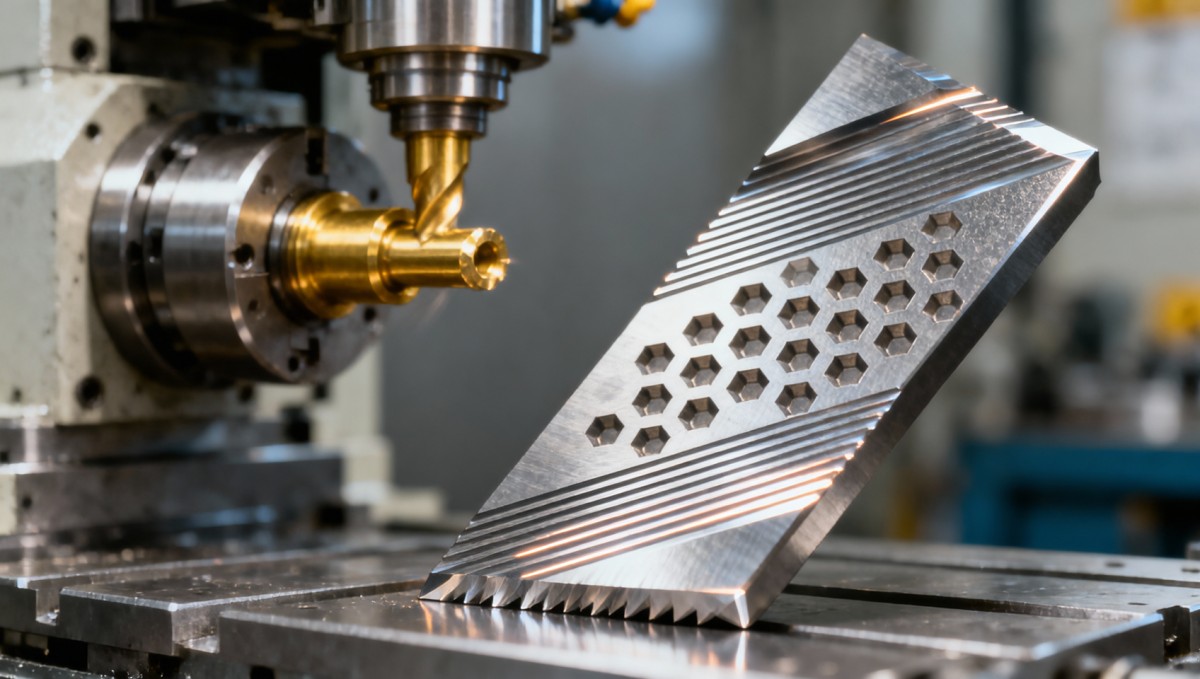
Micro-texturing refers to sub-50 µm geometric features—typically laser-ablated dimples, grooves, or pillars—applied to the rake face or flank of cemented carbide inserts. These features do not replace conventional geometry (e.g., 15° positive rake, 0.4 mm nose radius), but act synergistically to control material deformation at the cutting interface.
Three primary mechanisms contribute to burr suppression in brass:
- Chip confinement: Grooves aligned parallel to the cutting edge guide chip flow away from the workpiece edge, reducing lateral extrusion that forms exit burrs.
- Thermal modulation: Dimples increase effective surface area by ~14–22%, improving localized heat dissipation and limiting brass softening near the cutting zone.
- Built-up edge inhibition: Textured zones disrupt continuous adhesion layers—reducing BUE height by up to 40% compared to polished inserts under identical feeds (0.15 mm/rev, 250 m/min).
Crucially, these effects scale with brass alloy composition. For leaded brass (C36000), optimal texture depth is 3–8 µm; for lead-free alternatives (C26000), deeper textures (6–12 µm) yield better results due to increased work hardening tendency.
Selecting & Implementing Micro-Textured Inserts
Not all micro-textured inserts deliver equivalent burr reduction. Selection must align with machine capability, workpiece geometry, and production volume. Key parameters include texture pattern type, density, and substrate grade compatibility.
Procurement teams should verify texture reproducibility across batches: ISO 25178-2 compliance for areal surface texture measurement is now specified in 73% of OEM tooling contracts. Also confirm compatibility with coolant delivery systems—micro-textures perform best with high-pressure (70–100 bar) minimum quantity lubrication (MQL), which enhances chip evacuation without washing away texture-defined boundary layers.
Operational Impact & ROI Considerations
Adopting micro-textured inserts affects multiple KPIs beyond burr height. A 2024 field study across 14 German and Japanese contract manufacturers showed average improvements of: 27% longer tool life (from 42 to 53 minutes per edge), 19% reduction in surface roughness (Ra from 0.82 to 0.66 µm), and 11% faster cycle time due to stable cutting at higher feeds.
For decision-makers evaluating capital vs. consumable investment, consider implementation timelines: pilot validation typically takes 3–5 shifts per part family; full rollout across 5–8 brass SKUs averages 2–4 weeks—including operator retraining and parameter optimization.
Maintenance implications are minimal: no special handling required, though cleaning with ultrasonic solvent (not abrasive blasting) preserves texture integrity over ≥5 regrinds. Tool life extension offsets initial cost premium within 3–6 months for high-volume lines (>200,000 parts/year).
Next Steps for Procurement & Operations Teams
Micro-textured inserts are no longer niche R&D items—they’re production-proven enablers for brass machining in smart factories. To accelerate adoption:
- Start with one high-burr-risk component (e.g., threaded brass couplings) and validate using ISO 13715-compliant burr measurement protocols.
- Require suppliers to provide texture documentation per ISO 25178-601, including 3D topography scans and batch traceability.
- Integrate insert performance data into your MES via OPC UA—enabling real-time correlation between texture wear and surface quality drift.
Global suppliers now offer micro-textured inserts compatible with ISO, ANSI, and JIS toolholder standards—including CNMG, DNMG, and WNMG geometries. Lead times average 7–15 days for standard configurations, with expedited options available for urgent trials.
Precision machining demands precision solutions—not just sharper tools, but smarter interfaces between tool and workpiece. Micro-textured inserts represent a measurable step toward zero-defect brass turning, with clear benefits across operational efficiency, quality assurance, and total cost management.
Contact our technical sales team to request application-specific recommendations, sample kits, or a comparative machining trial report tailored to your brass part family and CNC lathe configuration.
Recommended for You
![]() Iranian LNG Vessels Breach U.S. Strait Blockade; Shanghai Crude Surges 4%Manufacturing Market Research Center
Iranian LNG Vessels Breach U.S. Strait Blockade; Shanghai Crude Surges 4%Manufacturing Market Research Center![]() Pakistan Launches CNC Localization Tender for CPEC II Smart Manufacturing ParkGlobal Machine Tool Trade Research Center
Pakistan Launches CNC Localization Tender for CPEC II Smart Manufacturing ParkGlobal Machine Tool Trade Research Center![]() NVIDIA Joins $1T Club; AI-Driven CNC Digital Twin Gains Global TractionCNC Machining Technology Center
NVIDIA Joins $1T Club; AI-Driven CNC Digital Twin Gains Global TractionCNC Machining Technology Center![]() World's First 5-Axis Middle-Grade Wire EDM Machine Enters Mass ProductionMachine Tool Industry Editorial Team
World's First 5-Axis Middle-Grade Wire EDM Machine Enters Mass ProductionMachine Tool Industry Editorial Team![]() China’s CNC Machine Tool Export Prices Up 11.3% in Q1 2026Global Machine Tool Trade Research Center
China’s CNC Machine Tool Export Prices Up 11.3% in Q1 2026Global Machine Tool Trade Research Center![]() Saudi Energy Security Boosts CNC Import Efficiency in Middle EastGlobal Machine Tool Trade Research Center
Saudi Energy Security Boosts CNC Import Efficiency in Middle EastGlobal Machine Tool Trade Research Center


Aris Katos
Future of Carbide Coatings
15+ years in precision manufacturing systems. Specialized in high-speed milling and aerospace grade alloy processing.
▶
Why Shaft Parts for Agricultural Machinery Fail Earlier Than ExpectedCNC Machining Technology Center▶
Defense Precision Machining Faces Tighter Tolerance Risks in 2026CNC Machining Technology Center▶
How Precision Disc Parts Affect Hydraulic System StabilityCNC Machining Technology Center▶
High-tolerance Disc Parts for aerospace applications: Why runout control begins at blank handlingCNC Machining Technology Center▶
High precision CNC manufacturing: Why environmental monitoring matters as much as machine calibrationCNC Machining Technology Center
Mastering 5-Axis Workholding Strategies
Join our technical panel on Nov 15th to learn about reducing vibrations in thin-wall components.

Providing you with integrated sanding solutions
Before-sales and after-sales services
Comprehensive technical support