• Global CNC market projected to reach $128B by 2028 • New EU trade regulations for precision tooling components • Aerospace deman
NYSE: CNC +1.2%LME: STEEL -0.4%

How to Choose a Shaft Parts Manufacturer in Japan?
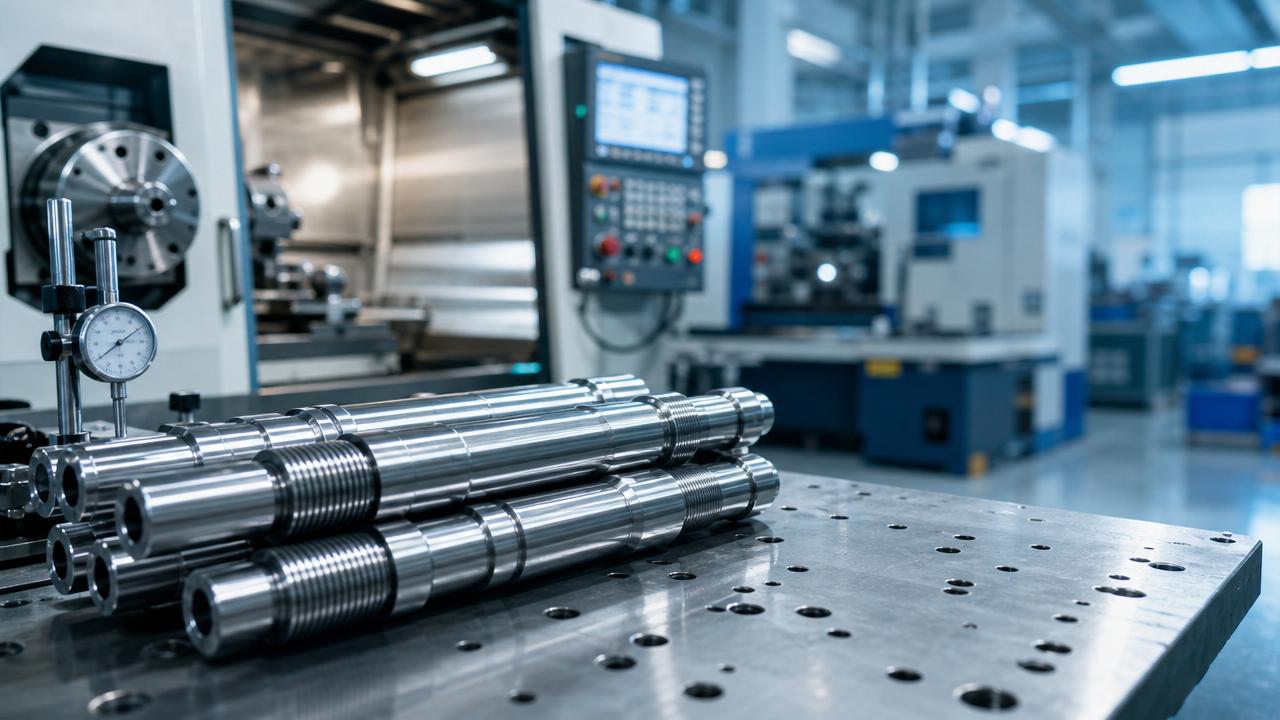
How to Choose a Shaft Parts Manufacturer in Japan?
Choosing the right Shaft Parts Manufacturer in Japan is essential for stable quality, tight tolerances, and dependable delivery in precision manufacturing.
Japan has deep strengths in CNC machining, automation, materials engineering, and high-accuracy component production.
A reliable partner should be evaluated beyond unit price, especially when shaft parts support automotive, aerospace, machinery, and industrial equipment systems.
Basic Understanding of Shaft Parts Manufacturing
Shaft parts are rotational components used to transmit torque, support motion, or connect mechanical assemblies.
They may include motor shafts, gear shafts, spindle shafts, pump shafts, drive shafts, and precision guide shafts.
A Shaft Parts Manufacturer in Japan often combines CNC turning, grinding, milling, heat treatment coordination, and surface finishing.
The production process must control roundness, concentricity, straightness, surface roughness, and dimensional stability.
For high-speed machinery, even small geometric deviations can create vibration, noise, wear, or premature failure.
Therefore, shaft manufacturing is not only metal cutting. It is a complete precision control system.
Industry Context and Current Selection Priorities
The global CNC machine tool industry is shifting toward higher accuracy, digital production, and shorter delivery cycles.
Japan remains influential because of its machine tool brands, process discipline, and long experience in precision component supply.
When selecting a Shaft Parts Manufacturer in Japan, several market signals deserve close attention.
These factors help separate a basic machining supplier from a dependable precision shaft partner.
Technical Capability and Process Depth
A qualified Shaft Parts Manufacturer in Japan should demonstrate strong capability across turning, grinding, drilling, keyway cutting, and thread machining.
Multi-axis machining centers and CNC lathes improve consistency when parts include steps, grooves, flats, holes, or complex end features.
For precision shafts, finishing processes are especially important. Cylindrical grinding and centerless grinding can achieve tighter geometry.
Surface treatments may include hard chrome plating, black oxide, nickel plating, nitriding, carburizing, or passivation.
The manufacturer should explain how each process affects hardness, corrosion resistance, fatigue life, and final dimensions.
Key technical checkpoints
- Available turning diameter and maximum shaft length.
- Tolerance capability for diameter, runout, straightness, and concentricity.
- Grinding capacity for high-precision or hardened shafts.
- Support for heat treatment and controlled distortion correction.
- Experience with low-volume prototypes and repeat production.
A detailed technical review often reveals whether the supplier can handle demanding shaft projects consistently.
Quality Control and Measurement Systems
Quality control is one of the strongest reasons to choose a Shaft Parts Manufacturer in Japan.
However, reputation alone is not enough. Actual inspection systems must be verified through documents and production evidence.
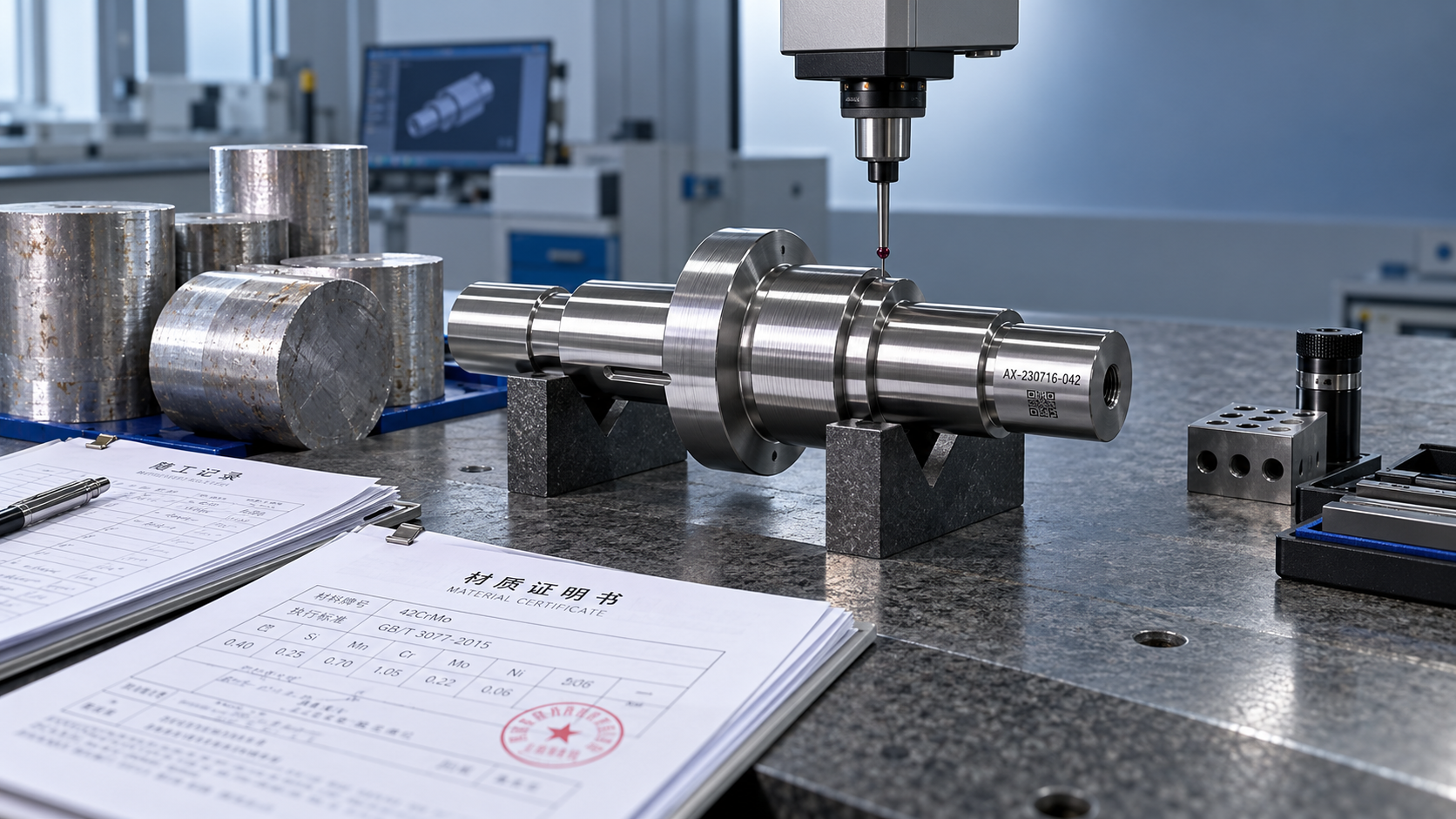
Important records include inspection reports, material certificates, heat treatment certificates, process control sheets, and calibration documents.
For critical parts, first article inspection helps confirm that drawings, tolerances, materials, and finishing requirements are correctly understood.
Statistical process control may also be useful when large batches require stable dimensions over time.
A strong quality system should be practical, documented, and directly connected to product performance.
Material Expertise and Application Matching
Material selection affects machinability, strength, corrosion resistance, cost, and service life.
A capable Shaft Parts Manufacturer in Japan should recommend materials according to load, speed, environment, and assembly requirements.
Common choices include S45C, SCM440, SUS304, SUS316, SKD series steels, aluminum alloys, and engineered stainless grades.
For heavy-duty shafts, alloy steel with heat treatment may provide higher fatigue resistance and wear performance.
For clean equipment or corrosive environments, stainless steel and passivated surfaces are often more suitable.
Material substitution should never happen without approval, because even similar grades may behave differently during machining or operation.
Typical Applications and Component Categories
Shaft parts are used across many industrial systems where rotation, positioning, or power transmission is required.
A Shaft Parts Manufacturer in Japan may serve multiple sectors through customized drawings and specification-based production.
Matching application requirements with factory strengths improves both reliability and cost efficiency.
Commercial Factors Beyond Unit Price
Price comparison is important, but shaft components often carry hidden costs when quality is unstable.
A lower quote may become expensive if it causes rework, delayed assembly, inspection failure, or field downtime.
A dependable Shaft Parts Manufacturer in Japan should provide transparent quotation details and realistic lead times.
The quotation should identify material grade, process route, surface treatment, inspection scope, packaging, and shipping terms.
For repeat business, lead time stability can be as important as the first sample quality.
Packaging also deserves attention. Long shafts can bend, corrode, or suffer surface damage during international transport.
Practical Evaluation Checklist
Before confirming a Shaft Parts Manufacturer in Japan, use a structured checklist to reduce technical and commercial risk.
- Review similar shaft cases, especially materials, tolerances, and production volumes.
- Confirm CNC equipment, grinding capacity, and available measuring instruments.
- Request sample inspection reports and material traceability documents.
- Check whether drawing revisions are controlled clearly and promptly.
- Evaluate communication speed, technical clarity, and problem-solving behavior.
- Clarify packaging methods for precision surfaces and long components.
- Compare total value instead of focusing only on the lowest unit price.
This evaluation process supports better decisions when drawings are complex or delivery commitments are strict.
Common Risks and Prevention Measures
Several risks appear repeatedly in shaft parts sourcing, even when working with experienced suppliers.
The first risk is unclear tolerance interpretation. Drawings should define datum references, critical dimensions, and inspection methods.
The second risk is heat treatment distortion. Long or slender shafts may require straightening and final grinding.
The third risk is surface damage. Protective packaging should match the finish level and transport distance.
The fourth risk is incomplete documentation. Missing certificates can delay acceptance in regulated or international projects.
A professional Shaft Parts Manufacturer in Japan should discuss these risks before mass production begins.
Action Steps for Supplier Shortlisting
Start with a complete technical package, including drawings, quantities, material standards, surface treatment, and inspection requirements.
Then request a process proposal, not just a price. The proposal should explain machining, finishing, inspection, and delivery planning.
For critical parts, begin with prototype production or first article approval before moving into larger batches.
Maintain clear revision control and confirm all changes in writing before production starts.
A well-selected Shaft Parts Manufacturer in Japan can support precision, reliability, and smoother international supply coordination.
Use technical evidence, inspection discipline, and application fit as the main basis for final selection.
This approach helps build a stable sourcing path for high-quality shaft parts in modern manufacturing.
Recommended for You
![]() Mitsubishi Electric Announces Physical AI System Linking Humanoid Robots and CNC MachinesMachine Tool Industry Editorial Team
Mitsubishi Electric Announces Physical AI System Linking Humanoid Robots and CNC MachinesMachine Tool Industry Editorial Team Precision Machining for Defense: Supplier Quality and Traceability ChecksManufacturing Market Research Center
![]() Nidec Machine Tool Launches MVR-5X Five-Axis Gantry MachineMachine Tool Industry Editorial Team
Nidec Machine Tool Launches MVR-5X Five-Axis Gantry MachineMachine Tool Industry Editorial Team Choosing a Precision Disc Parts Manufacturer in China: Tolerances and Quality ChecksManufacturing Market Research Center
![]() Siemens Executive Says AI Could Raise Factory Automation to 80%Manufacturing Market Research Center
Siemens Executive Says AI Could Raise Factory Automation to 80%Manufacturing Market Research Center Choosing Automated Machine Tools for High-Mix, Low-Volume ProductionMachine Tool Industry Editorial Team


Aris Katos
Future of Carbide Coatings
15+ years in precision manufacturing systems. Specialized in high-speed milling and aerospace grade alloy processing.
▶
How to Evaluate a Machine Tool Factory Before Sourcing CNC EquipmentGlobal Machine Tool Trade Research Center▶
How to Evaluate a CNC Machine Tool Manufacturer for Precision and Service SupportGlobal Machine Tool Trade Research Center▶
What Affects Cost-Effective CNC Manufacturing? Key Drivers Behind Part Price and Lead TimeGlobal Machine Tool Trade Research Center▶
How to Evaluate a CNC Tooling System Supplier in Germany for Quality, Lead Time, and CostGlobal Machine Tool Trade Research Center▶
How to Evaluate a CNC Tooling System Supplier in Germany for Quality, Lead Time, and SupportGlobal Machine Tool Trade Research Center
▶
Mastering 5-Axis Workholding Strategies
Join our technical panel on Nov 15th to learn about reducing vibrations in thin-wall components.

Providing you with integrated sanding solutions
Before-sales and after-sales services
Comprehensive technical support