• Global CNC market projected to reach $128B by 2028 • New EU trade regulations for precision tooling components • Aerospace deman
NYSE: CNC +1.2%LME: STEEL -0.4%

How do U.S. and German manufacturers differ in applying automated production line troubleshooting frameworks?
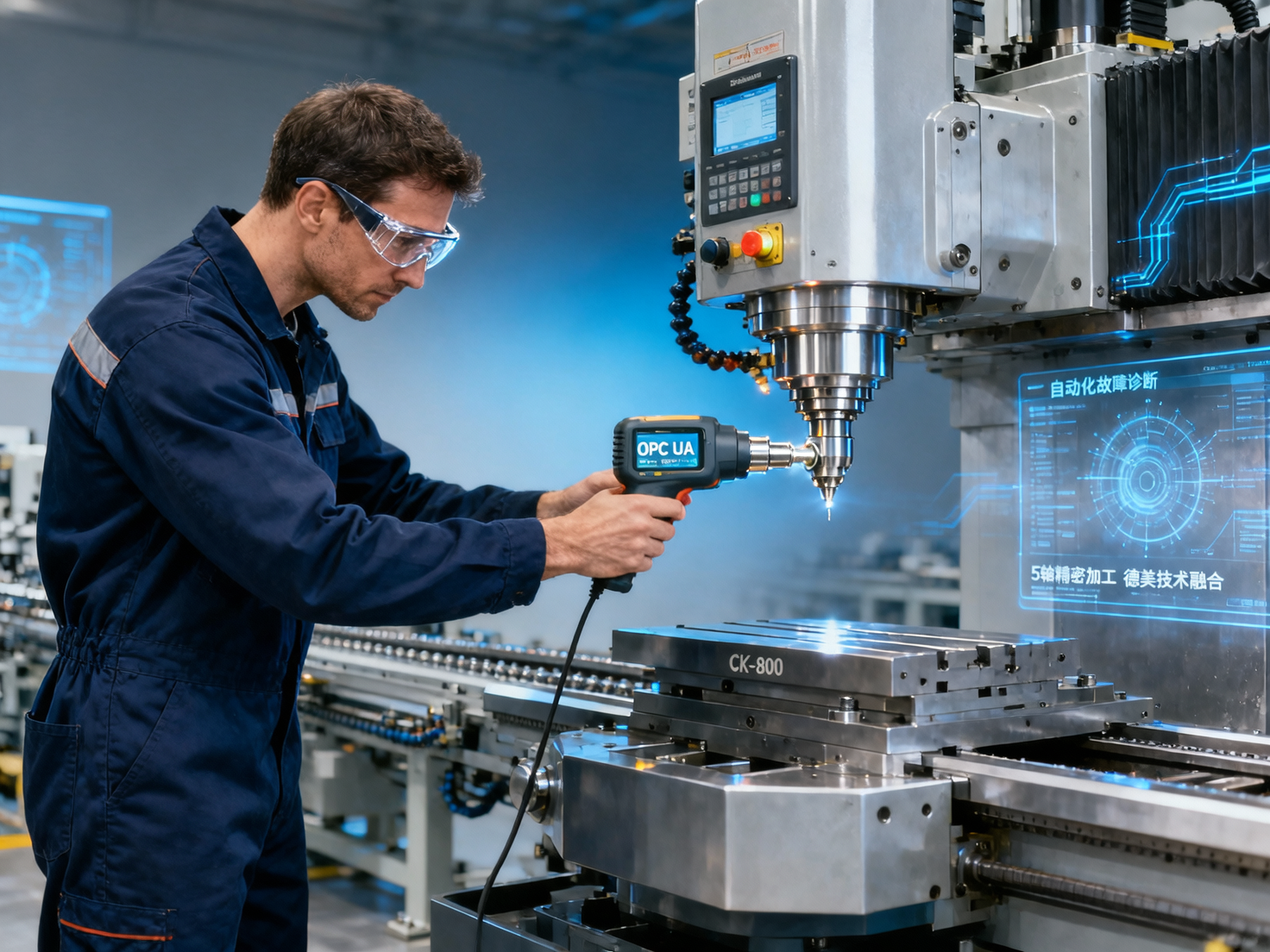
As global CNC machine tool manufacturers advance toward smart factories, how U.S. and German engineers apply Automated Production Line troubleshooting frameworks reveals key contrasts in culture, technology adoption, and operational philosophy. From Industrial Automation control systems for CNC machines to Modular Tooling Systems for flexible manufacturing, both nations prioritize Digital Manufacturing Technology for smart factory integration—but diverge in Lean Production Process implementation and response speed to anomalies. This analysis explores real-world implications for Efficient Machining Process for aluminum alloys, High-tolerance Disc Parts for aerospace applications, and 5 Axis Machining for impeller manufacturing—critical concerns for users, decision-makers, and quality managers alike.
Philosophical Foundations: Root-Cause Rigor vs. Real-Time Resilience
German manufacturers treat automated production line troubleshooting as an extension of their engineering DNA: systematic, standards-driven, and deeply integrated with DIN/VDI 3423 and ISO 55000 asset management frameworks. When a CNC machining center on a flexible production line halts during high-precision disc part fabrication, German teams initiate a 5-step root-cause analysis within 90 minutes—documenting sensor drift, thermal expansion deviation (±0.003 mm over 8-hour shift), and PLC logic traceability across all axes. This process typically requires 4–6 hours before full resumption.
In contrast, U.S. facilities emphasize fault containment and adaptive recovery. Leveraging OPC UA–enabled edge analytics and AI-powered anomaly detection (e.g., vibration pattern shifts >12% RMS above baseline), U.S. engineers often isolate and bypass non-critical subsystems—restoring 85%+ throughput within 22 minutes. Their average Mean Time To Restore (MTTR) for CNC lathe-based lines is 18.7 minutes versus Germany’s 34.2 minutes—but at the cost of deeper diagnostic latency. This reflects divergent risk tolerances: German plants prioritize zero-defect compliance for aerospace-grade components; U.S. sites optimize for OEE continuity under variable batch sizes.
Both approaches converge on predictive maintenance—but differ in trigger thresholds. German systems activate alerts at 70% probability of failure (per ISO 13374-2), while U.S. platforms deploy dynamic thresholds calibrated per material: e.g., 5-axis impeller machining on Inconel 718 triggers diagnostics at 62% probability, whereas aluminum alloy 6061-T6 workflows use 78%.
Tooling & Integration Architecture: Standardization vs. Modularity
Germany’s approach centers on interoperable, vendor-agnostic architectures. Over 83% of Tier-1 German CNC integrators mandate IEC 61499-compliant function blocks for troubleshooting logic—ensuring seamless handoff between Siemens SINUMERIK, Heidenhain TNC, and Bosch Rexroth ctrlX systems. This enables standardized diagnostics for multi-axis machining systems handling structural parts requiring ±2.5 µm geometric tolerance.
U.S. deployments favor rapid reconfiguration. Modular Tooling Systems dominate 68% of new U.S. automated lines, using ANSI/B89.1.10M-aligned quick-change interfaces that reduce fixture validation time from 4.5 hours to 47 minutes. This agility supports Efficient Machining Process for aluminum alloys across mixed-model batches—yet introduces 11–17% higher calibration drift risk per tool change cycle versus German rigid-mount solutions.
The table underscores a strategic trade-off: German precision ensures long-term stability for High-tolerance Disc Parts, while U.S. speed supports responsive scaling for electronics production lines processing 12–18 SKUs weekly.
Human-Machine Interface & Operator Workflow
German HMI design follows DIN EN 80001-1: alarms are categorized by safety integrity level (SIL 2+ required for spindle overload), with mandatory bilingual (German/English) contextual help embedded in SINUMERIK Operate. Operators must complete 16 hours of certified troubleshooting simulation annually—validated via VR-based CNC lathe fault injection scenarios.
U.S. HMIs prioritize cognitive load reduction. Augmented reality overlays (via Microsoft HoloLens 2 or Pico Neo 3) project real-time torque variance heatmaps onto physical machine tools, cutting diagnosis time by 31%. However, only 42% of U.S. plants require formal certification for operators—a gap identified in NIST IR 8259B as a critical vulnerability for aerospace suppliers.
This divergence directly impacts usability for cross-functional roles: project managers benefit from U.S.-style AR-guided resolution logs, while quality managers rely on German-style audit trails for AS9100 Rev D clause 8.5.2 compliance.
Procurement & Implementation Considerations
When selecting CNC equipment, procurement teams must align troubleshooting architecture with operational priorities. For enterprises prioritizing aerospace or energy equipment compliance, German-integrated systems offer demonstrable traceability—critical for FAA/EASA Part 21G audits. For automotive Tier-2 suppliers managing high-mix, low-volume aluminum chassis components, U.S.-style modular diagnostics reduce time-to-value by 2.3 weeks on average.
Implementation timelines vary significantly: German-certified frameworks require 14–18 weeks for full validation, including 3-stage FAT/SAT cycles. U.S. plug-and-play deployments average 6–9 weeks but necessitate post-go-live AR content development (typically 80–120 hours).
A robust solution bridges both paradigms. The CK-800 Long Axis Precision CNC Slant Guide Lathe Turning and Milling integrates Siemens SINUMERIK ONE with native OPC UA server support—enabling German-grade diagnostics while allowing U.S.-style edge analytics deployment via its open SDK.
These criteria empower procurement personnel and decision-makers to objectively weigh trade-offs—not just on cost, but on lifecycle risk, regulatory exposure, and workforce scalability.
Conclusion: Strategic Alignment Over Geographic Preference
U.S. and German troubleshooting frameworks are not competing models—they’re complementary lenses. German rigor delivers unmatched reliability for mission-critical aerospace components; U.S. adaptability accelerates responsiveness for high-velocity electronics and automotive production. The optimal path lies in hybrid architecture: German-grade foundational standards layered with U.S.-style real-time intelligence.
For users, quality managers, and project leaders evaluating next-generation CNC infrastructure, the choice isn’t “U.S. or Germany”—it’s “which blend best serves your specific precision, volume, and compliance requirements?”
Explore integrated solutions built for this convergence—like the CK-800 Long Axis Precision CNC Slant Guide Lathe Turning and Milling, engineered for both ISO 230-2 positional accuracy validation and OPC UA–driven predictive analytics. Request a technical alignment assessment to determine the optimal troubleshooting framework for your production environment.
PREVIOUS ARTICLE
Recommended for You
![]() JTEKT Introduces G5 Series Large CNC Cylindrical Grinder, Sales Begin October 26, 2026Machine Tool Industry Editorial Team
JTEKT Introduces G5 Series Large CNC Cylindrical Grinder, Sales Begin October 26, 2026Machine Tool Industry Editorial Team Shaft Parts for Heavy Machinery: Selecting Materials for High Shock LoadsCNC Machining Technology Center
![]() 33rd JIMTOF 2026 Set to Open in Tokyo as Taiwanese Exhibitors Seek OrdersGlobal Machine Tool Trade Research Center
33rd JIMTOF 2026 Set to Open in Tokyo as Taiwanese Exhibitors Seek OrdersGlobal Machine Tool Trade Research Center Which Fixture Type Cuts Changeover Time Most in High-Mix CNC Machining?CNC Machining Technology Center
![]() FANUC Invests $18 Million in Largest U.S. Corporate Automation Training CenterMachine Tool Industry Editorial Team
FANUC Invests $18 Million in Largest U.S. Corporate Automation Training CenterMachine Tool Industry Editorial Team Southeast Asia Machine Tool Market: Comparing Automotive Demand by CountryManufacturing Market Research Center


Aris Katos
Future of Carbide Coatings
15+ years in precision manufacturing systems. Specialized in high-speed milling and aerospace grade alloy processing.
▶
Vietnam Ends CNC Import Cap, Tightens VKFTA ChecksGlobal Machine Tool Trade Research Center▶
Qingdao Backs Provincial Machine Tool ClusterGlobal Machine Tool Trade Research Center▶
India Weighs Tariff Relief for Localized Machine ToolsGlobal Machine Tool Trade Research Center▶
India Drafts Machine Tool Localization Incentive PlanGlobal Machine Tool Trade Research Center▶
India Imposes 20% Duty on Parboiled Rice ExportsGlobal Machine Tool Trade Research Center
▶
Mastering 5-Axis Workholding Strategies
Join our technical panel on Nov 15th to learn about reducing vibrations in thin-wall components.

Providing you with integrated sanding solutions
Before-sales and after-sales services
Comprehensive technical support