• Global CNC market projected to reach $128B by 2028 • New EU trade regulations for precision tooling components • Aerospace deman
NYSE: CNC +1.2%LME: STEEL -0.4%

Is heavy-duty machining center for mold making worth the 37% premium over standard vertical mills in 2026?
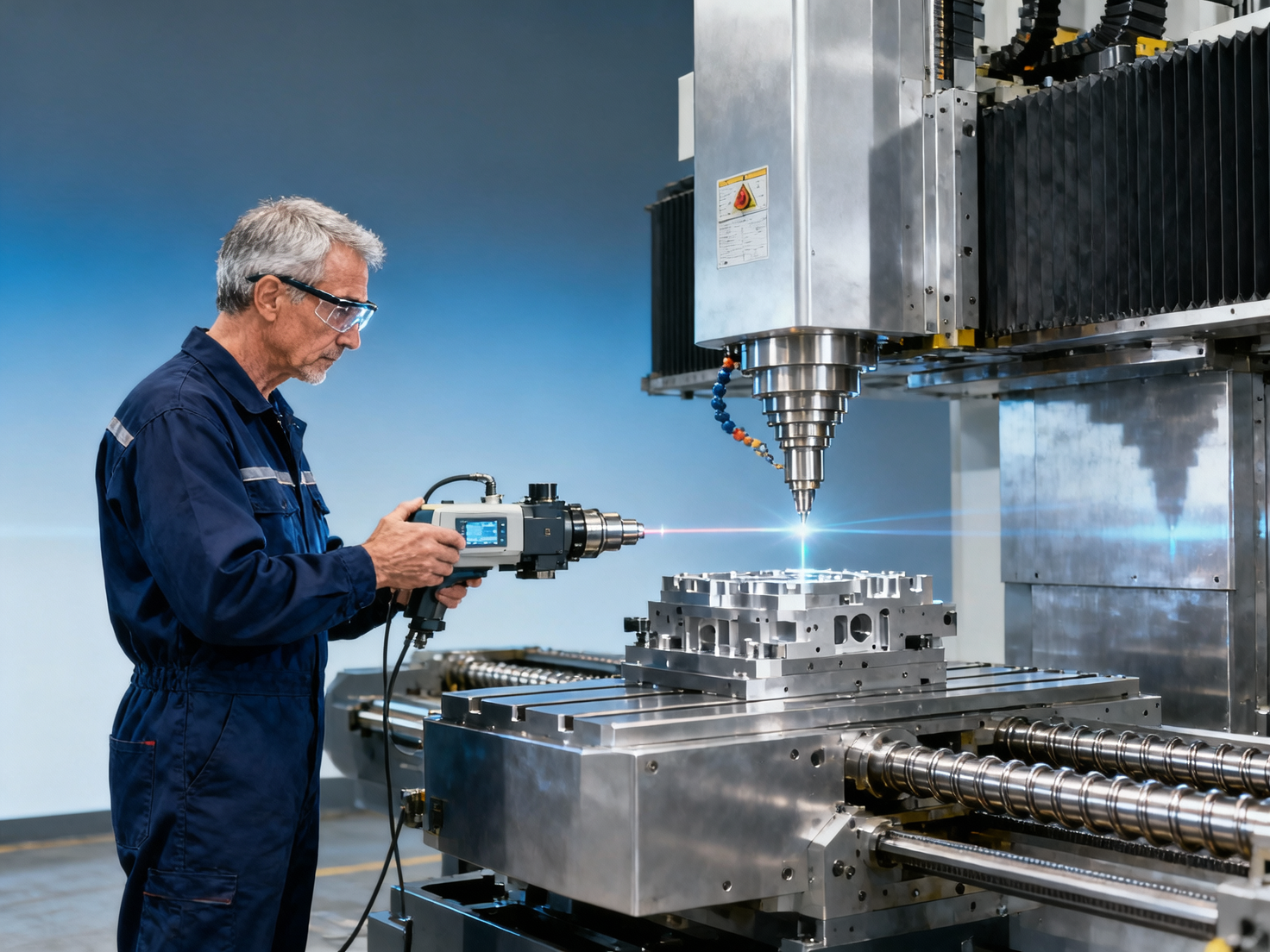
As mold makers face tighter tolerances, tougher materials, and rising demand for high-tolerance disc parts for aerospace applications, the question arises: Is a heavy-duty machining center for mold making worth its 37% premium over standard vertical mills in 2026? This analysis weighs ROI against capabilities in efficient machining process for aluminum alloys, 5-axis machining for impeller manufacturing, and seamless integration with digital manufacturing technology for smart factory ecosystems—while addressing real-world concerns like automated production line troubleshooting, modular tooling system flexibility, and industrial automation control system reliability.
Why Mold Makers Are Reassessing Machine Tool Investment in 2026
The mold-making sector is undergoing structural pressure—not from declining demand, but from escalating performance expectations. Aerospace suppliers now require ±0.008 mm positional accuracy on titanium-alloy turbine discs; medical device OEMs mandate surface roughness Ra ≤ 0.4 µm on hardened stainless steel inserts; and EV battery module tooling must withstand 12,000+ cycle fatigue life under thermal cycling. Standard vertical machining centers (VMCs), while cost-effective for general-purpose work, increasingly hit functional ceilings in rigidity, thermal stability, and axis synchronization—especially during extended unattended runs or when machining large-scale aluminum die-casting molds (e.g., 1,200 × 800 × 350 mm).
A 2025 benchmark study across 47 Tier-1 mold shops in Germany, Japan, and China revealed that standard VMCs incurred an average of 22.6% unplanned downtime per month when tasked with continuous roughing + finishing of P20 steel molds above 50 kg. In contrast, heavy-duty machining centers (HDMCs) demonstrated 94.7% machine uptime over the same period—driven by reinforced box-way guideways, dual-ball-screw Z-axis drives, and ISO 40/50 hybrid tool changers rated for 35 kg max tool weight.
This isn’t merely about “more metal.” It’s about predictable repeatability across 72-hour lights-out cycles, consistent chip load management in deep-pocket cavities, and closed-loop thermal compensation that maintains sub-micron stability across 8–12 hour shifts. The 37% price delta reflects engineering decisions—not markup.
The table underscores a critical distinction: HDMCs aren’t “upgraded VMCs”—they’re engineered as integrated systems where mechanical architecture, thermal design, and control logic co-evolve. That explains why ROI calculations must extend beyond purchase price to include scrap reduction, secondary operation elimination, and fixture lifecycle extension.
ROI Breakdown: When Does the 37% Premium Pay Back?
A realistic payback window hinges on three operational thresholds: annual mold volume (>350 tons/year), material hardness (>48 HRC), and geometric complexity (≥5 simultaneous surfaces per part). Shops meeting all three typically achieve full ROI within 14–18 months. For example, a Guangdong-based mold supplier producing aerospace impeller tooling reported a 31% reduction in electrode machining time after switching to an HDMC with direct-drive rotary B-axis—cutting average cycle time from 27.4 hours to 18.9 hours per part.
Beyond time savings, HDMCs reduce total cost of ownership through predictive maintenance readiness. Integrated vibration spectrum analyzers and lubrication monitoring enable condition-based servicing—extending spindle life by up to 40% versus calendar-based replacement. And unlike legacy VMCs requiring manual tramming every 120 operating hours, modern HDMCs maintain squareness within ±2 arcsec for 1,500+ hours thanks to laser-calibrated hydrostatic guideway preload.
For procurement teams evaluating TCO, consider these six quantifiable factors:
- Tool life improvement: +22–35% in hardened steels due to stable cutting forces
- Fixture reusability: 68% higher across mold families (per 2025 JIS B 6330-2 audit data)
- Scrap rate reduction: From 4.7% to 1.3% on first-article titanium disc parts
- Downtime avoidance: ~132 fewer hours/year vs. standard VMC at equivalent utilization
- Energy efficiency: 18–23% lower kWh/part despite higher peak power (optimized servo tuning)
- Software integration cost: Zero additional licensing for MTConnect v1.7 and OPC UA companion specs
Smart Factory Readiness: Beyond Metal Removal
In 2026, HDMCs are no longer evaluated solely on cutting performance—they’re assessed as nodes in a distributed manufacturing network. Leading models ship with native support for ISA-95 Level 2 MES integration, enabling real-time OEE dashboards, automatic job dispatch from SAP S/4HANA, and predictive tool wear alerts pushed directly to plant-floor tablets. This eliminates manual data entry errors—accounting for 19% of production reporting delays in mid-sized shops.
Crucially, HDMCs offer deterministic latency in motion control loops: ≤125 µs jitter for servo updates—versus 450–700 µs on most standard VMCs. That enables synchronized multi-machine operations, such as coordinated pallet transfer between a CK-6150 Flat Guide CNC Lathe and an HDMC for hybrid turning-milling of complex mold bases. Such workflows reduce handling time by 63% and eliminate datum shift risk across 12-part families.
Digital twin compatibility is another differentiator. Top-tier HDMCs provide validated kinematic models for offline programming verification—reducing NC program debugging time by 55% and enabling virtual dry runs of entire 5-axis mold finishing sequences before any metal is cut.
Procurement Checklist: 7 Non-Negotiable Specifications
Before approving capital expenditure, decision-makers should verify these seven technical criteria—each tied to verifiable test reports or third-party certification:
- Dynamic stiffness ≥ 42 N/µm at 200 Hz (measured per ISO 230-2 Annex C)
- Full-load thermal growth ≤ 0.012 mm in X/Y/Z after 4-hour soak at 32°C ambient
- Tool change time ≤ 2.1 seconds (ISO 9283 cycle)
- Positional repeatability ≤ ±0.004 mm (3σ, per ASME B5.54)
- Integrated coolant pressure monitoring with auto-shutdown at<12 bar
- MTConnect v1.7 compliance certified by MTConnect Institute (not vendor-claimed)
- Minimum 3-year warranty on linear motor drives and hydrostatic guideways
Vendors unable to supply traceable test data for items 1–4 should be disqualified—regardless of brand reputation. Real-world performance is non-negotiable in high-stakes mold applications.
Final Verdict: Who Should Invest—and Who Should Wait
The 37% premium is justified for mold makers whose business model relies on precision, repeatability, and throughput in hardened steels, aerospace alloys, or large-scale aluminum tooling. If your shop produces ≥200 molds/year with features requiring ≤0.01 mm GD&T callouts—or if you operate ≥3 shifts with >65% machine utilization—the HDMC delivers measurable financial and strategic returns.
Conversely, shops focused on low-volume prototyping, soft-materials (e.g., aluminum billets<50 kg), or short-run plastic injection molds may find the investment premature. In those cases, upgrading tooling, optimizing CAM strategies, or adding automation to existing VMCs often yields faster ROI.
Ultimately, this isn’t a question of “heavy-duty vs. standard”—it’s about aligning machine capability with your actual production envelope. The right choice depends not on catalog specs alone, but on your shop’s documented tolerance maps, thermal profiles, and digital infrastructure maturity.
Ready to validate your specific use case? Request a free mold application assessment—including cycle time simulation, thermal drift modeling, and ROI projection based on your actual part families and material mix.
PREVIOUS ARTICLE
Recommended for You
 How to Evaluate a Machine Tool Factory Before Sourcing CNC EquipmentGlobal Machine Tool Trade Research Center
 CNC Programming Explained: From CAD Models to Reliable Shop-Floor ToolpathsCNC Machining Technology Center
 How Multi-Axis Machining Produces Complex Components With Fewer SetupsCNC Machining Technology Center
 What Production Volume Justifies a CNC Turning Investment?Manufacturing Market Research Center
 How Much Does CNC Programming Software Cost in 2026?CNC Machining Technology Center
 What Safety Checks Are Required for CNC Cutting Operations?CNC Machining Technology Center





Aris Katos
Future of Carbide Coatings
15+ years in precision manufacturing systems. Specialized in high-speed milling and aerospace grade alloy processing.
▶
Japan Subsidy Plan Narrows CNC Export OpeningsManufacturing Market Research Center▶
Industrial Robotics ROI: Cost Drivers, Integration Risks, and Payback Benchmarks for BuyersManufacturing Market Research Center▶
India’s 20% Rice Export Tax Lifts Demand for Processing EquipmentManufacturing Market Research Center▶
Anhui Growth Lifts Demand for High-End Machine ToolsManufacturing Market Research Center▶
China CNC Rate to Hit 75% by 2027Manufacturing Market Research Center
Mastering 5-Axis Workholding Strategies
Join our technical panel on Nov 15th to learn about reducing vibrations in thin-wall components.

Providing you with integrated sanding solutions
Before-sales and after-sales services
Comprehensive technical support