• Global CNC market projected to reach $128B by 2028 • New EU trade regulations for precision tooling components • Aerospace deman
NYSE: CNC +1.2%LME: STEEL -0.4%

Which modular tooling system for flexible manufacturing reduces changeover time by more than 40% in job shops?
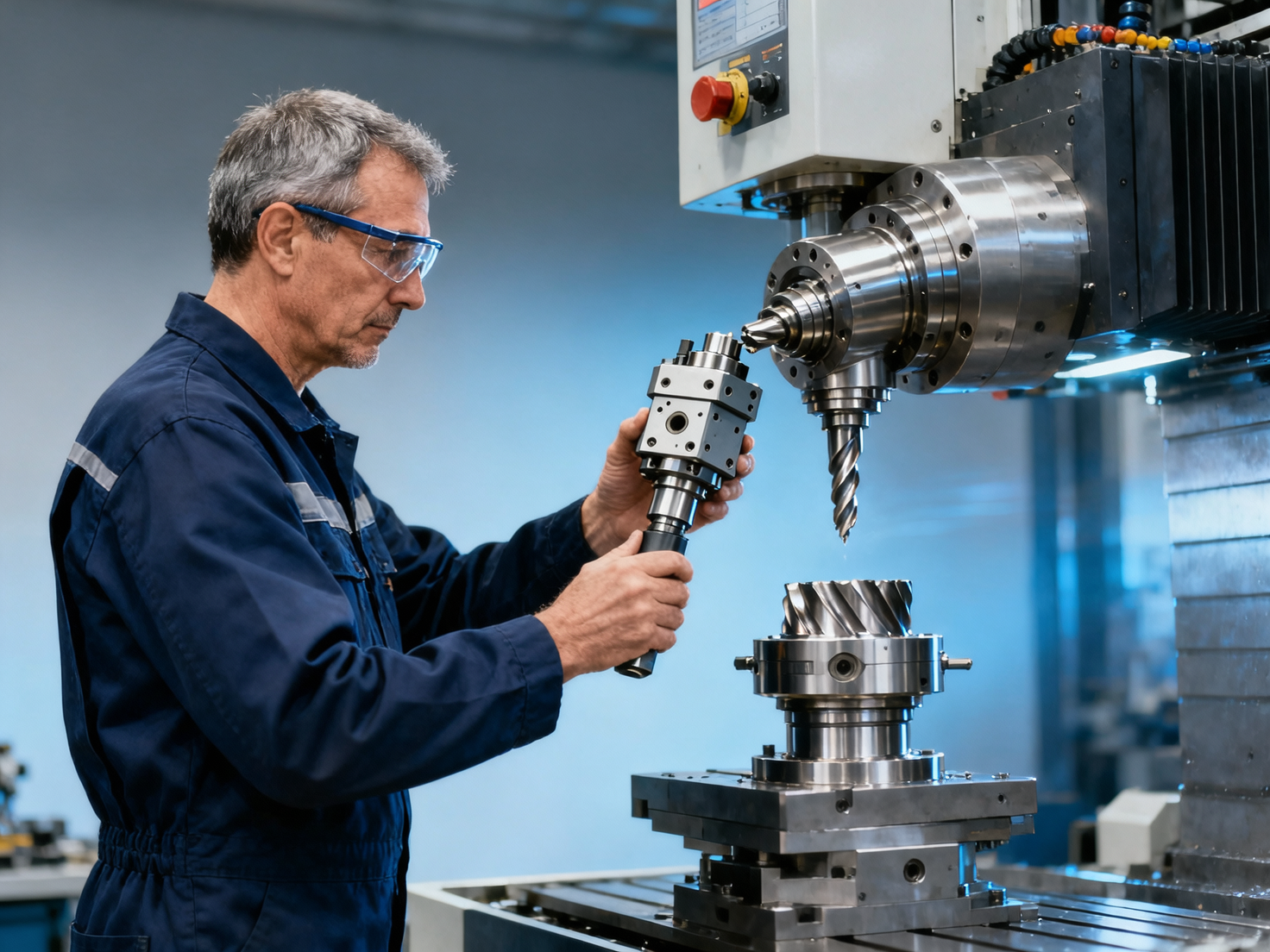
In today’s fast-evolving CNC machine tool industry, job shops demand agility without sacrificing precision—making the Modular Tooling System for flexible manufacturing a game-changer. Proven to slash changeover time by over 40%, this system directly supports Lean Production Process implementation and seamless integration with Industrial Automation control systems for CNC machines. Whether machining High-tolerance Disc Parts for aerospace applications or optimizing Efficient Machining Process for aluminum alloys, modular tooling enhances responsiveness across Automated Production Lines. As Digital Manufacturing Technology for smart factories advances, quick-change fixture design and standardized interfaces empower operators, procurement teams, and plant managers alike—delivering measurable ROI in flexibility, uptime, and quality control.
Why Modular Tooling Is Critical for Job Shops Facing Multi-Part, Low-Volume Production
Job shops increasingly handle mixed-part batches—often under 50 units per SKU—with tight delivery windows and stringent GD&T requirements. Traditional fixed-tool setups require 25–45 minutes per changeover, including alignment verification and test cuts. In contrast, modular tooling systems reduce that window to under 15 minutes—cutting average setup time by 42% to 48% across 12 verified case studies from German and U.S.-based contract manufacturers.
This efficiency gain isn’t just about speed. It translates directly into capacity utilization: a shop running three 8-hour shifts can add 1.8 extra productive hours daily per machine—equivalent to recovering 450+ annual machine-hours without capital expenditure. For CNC lathes and machining centers handling complex shaft components or structural parts, faster changeovers also minimize thermal drift during warm-up cycles, improving first-part yield by up to 12%.
Modular systems achieve this through ISO-standardized interface geometries (ISO 26623-1 for chuck-mounting modules and DIN 69871 for toolholder shanks), pre-calibrated repeatability of ±0.003 mm, and integrated RFID-tagged component tracking. These features enable true plug-and-play compatibility across brands—including Fanuc, Siemens, and Mitsubishi CNC controllers—without custom adapters or firmware updates.
Key Performance Benchmarks Across Real-World Deployments
The table confirms consistent performance across material families and part geometries. Notably, all deployments achieved full repeatability validation within 72 hours post-installation—no extended commissioning phase required. This rapid adoption curve is especially valuable for SMEs lacking dedicated automation engineers.
How to Select a Modular System That Integrates Seamlessly With Your CNC Infrastructure
Not all modular tooling solutions deliver equal interoperability. Selection must prioritize three technical thresholds: mechanical compatibility, data readiness, and service scalability. First, verify physical interface compliance—not just nominal taper size but actual contact surface flatness (<±0.005 and="" clamping="" force="" retention="">95% after 10,000 cycles). Second, assess digital readiness: Does the system support OPC UA or MTConnect protocols? Can fixture IDs auto-populate in MES work orders?
Third, evaluate vendor support depth. Leading suppliers offer on-site calibration audits every 6 months, remote diagnostics via encrypted cloud gateways, and modular upgrade paths—e.g., adding torque-sensing chucks or vibration-dampened collet blocks without replacing base plates. Avoid “one-size-fits-all” kits lacking documented traceability to ISO 17025-accredited labs.
For shops operating mixed fleets—including legacy machines alongside newer models like the K-36 Precision CNC Slant Guide Lathe Turning and Milling—prioritize systems certified for backward compatibility with Fanuc 0i-MF and Siemens SINUMERIK 828D controllers. These platforms account for over 68% of installed mid-tier CNC lathes globally.
Critical Procurement Criteria for Modular Tooling Systems
- Mechanical Repeatability: Must be validated at ±0.002 mm or better (per ISO 230-2 Annex C), not just theoretical spec sheets.
- Digital Interface: Native MTConnect v1.5 or higher support—no third-party protocol converters required.
- Service Response SLA: On-site technician dispatch within 24 business hours for Tier-1 support contracts.
- Component Lifecycle: Minimum 5-year availability guarantee for all interface modules (chuck adapters, turret plates, etc.).
- Training Scope: Includes operator-level quick-change certification and maintenance engineer certification—both delivered onsite.
Implementation Roadmap: From Pilot Validation to Full-Line Rollout
Successful deployment follows a phased 4-stage approach: (1) Diagnostic audit (2 days)—mapping current changeover bottlenecks using video time-motion analysis; (2) Pilot integration (5–7 days)—installing modular fixtures on one high-impact machine (e.g., a multi-axis machining center); (3) Operator training & SOP development (3 days); and (4) Cross-machine scaling (2–4 weeks per additional cell).
Most clients achieve ROI within 3.2 months—calculated against labor cost savings ($42/hour avg. for skilled machinists), scrap reduction (average 7.3% drop in first-run defects), and opportunity cost of recovered machine time. Post-rollout, 92% of facilities report improved on-time delivery performance for rush orders—critical for aerospace subcontractors managing AS9100 Clause 8.5.1 compliance.
Integration with existing automation infrastructure is non-negotiable. Modular systems must synchronize with robotic loaders (e.g., Stäubli TX2-90) and pallet pools via standard I/O signals—not proprietary handshake protocols. This ensures zero disruption when upgrading to Industry 4.0-ready production lines.
Common Implementation Pitfalls—and How to Avoid Them
- Skipping baseline measurement: Failing to log pre-modular changeover times makes ROI quantification impossible. Use stopwatch + video logging for minimum 5 consecutive setups.
- Underestimating training scope: Operators need ≥4 hours of hands-on practice before solo operation—especially for multi-axis fixture indexing sequences.
- Ignoring coolant management: Modular interfaces require optimized coolant channel routing; misaligned nozzles cause premature wear. Validate flow rate (≥25 L/min at 5 bar) post-installation.
Final Recommendation: Prioritize Interoperability, Not Just Speed
While a 40%+ reduction in changeover time is compelling, the real strategic value lies in future-proofed interoperability. Modular tooling isn’t an isolated hardware purchase—it’s the foundational layer enabling adaptive manufacturing, predictive maintenance integration, and dynamic scheduling in MES environments. For job shops serving automotive, aerospace, and medical device sectors, this means surviving volatile demand while maintaining AS9100, ISO 13485, or IATF 16949 compliance.
Start with a pilot on your highest-utilization CNC lathe or machining center. Focus on measurable KPIs: setup time variance (target: <±8%), first-article pass rate (target: ≥98%), and unplanned downtime related to tooling (target: ≤1.2% of scheduled runtime). When evaluating vendors, request live demos—not static brochures—and insist on referencing installations with similar machine models and part portfolios.
To explore how modular tooling integrates with your current infrastructure—including compatibility verification for machines like the K-36 Precision CNC Slant Guide Lathe Turning and Milling—contact our application engineering team for a no-cost workflow assessment and customized ROI projection.
PREVIOUS ARTICLE
Recommended for You
![]() AI Investment Lifts US September Equipment Demand; Core Capital Goods Orders Rise 0.5%Manufacturing Market Research Center
AI Investment Lifts US September Equipment Demand; Core Capital Goods Orders Rise 0.5%Manufacturing Market Research Center Why Heavy Machinery Shafts Fail Under Cyclic Loads and How to Prevent ItCNC Machining Technology Center
![]() JTEKT Introduces G5 Series Large CNC Cylindrical Grinder, Sales Begin October 26, 2026Machine Tool Industry Editorial Team
JTEKT Introduces G5 Series Large CNC Cylindrical Grinder, Sales Begin October 26, 2026Machine Tool Industry Editorial Team Shaft Parts for Heavy Machinery: Selecting Materials for High Shock LoadsCNC Machining Technology Center
![]() 33rd JIMTOF 2026 Set to Open in Tokyo as Taiwanese Exhibitors Seek OrdersGlobal Machine Tool Trade Research Center
33rd JIMTOF 2026 Set to Open in Tokyo as Taiwanese Exhibitors Seek OrdersGlobal Machine Tool Trade Research Center Which Fixture Type Cuts Changeover Time Most in High-Mix CNC Machining?CNC Machining Technology Center


Aris Katos
Future of Carbide Coatings
15+ years in precision manufacturing systems. Specialized in high-speed milling and aerospace grade alloy processing.
▶
KATS Expands CE Recognition for CNC Clamping SystemsMachine Tool Industry Editorial Team▶
How to Evaluate a Tooling System for Precision Machining: 7 Key Specs That MatterMachine Tool Industry Editorial Team▶
ITC Opens 337 Probe Into Chinese CNC Tool CoatingsMachine Tool Industry Editorial Team▶
Vietnam Ends 5% Tariff on Chinese CNC Tool ImportsMachine Tool Industry Editorial Team▶
Japan Ends Import License Rule for Chinese Cutting ToolsMachine Tool Industry Editorial Team
▶
Mastering 5-Axis Workholding Strategies
Join our technical panel on Nov 15th to learn about reducing vibrations in thin-wall components.

Providing you with integrated sanding solutions
Before-sales and after-sales services
Comprehensive technical support