• Global CNC market projected to reach $128B by 2028 • New EU trade regulations for precision tooling components • Aerospace deman
NYSE: CNC +1.2%LME: STEEL -0.4%

How lean production process implementation cuts scrap rates in CNC turning lines — real data from 12 Tier-1 suppliers
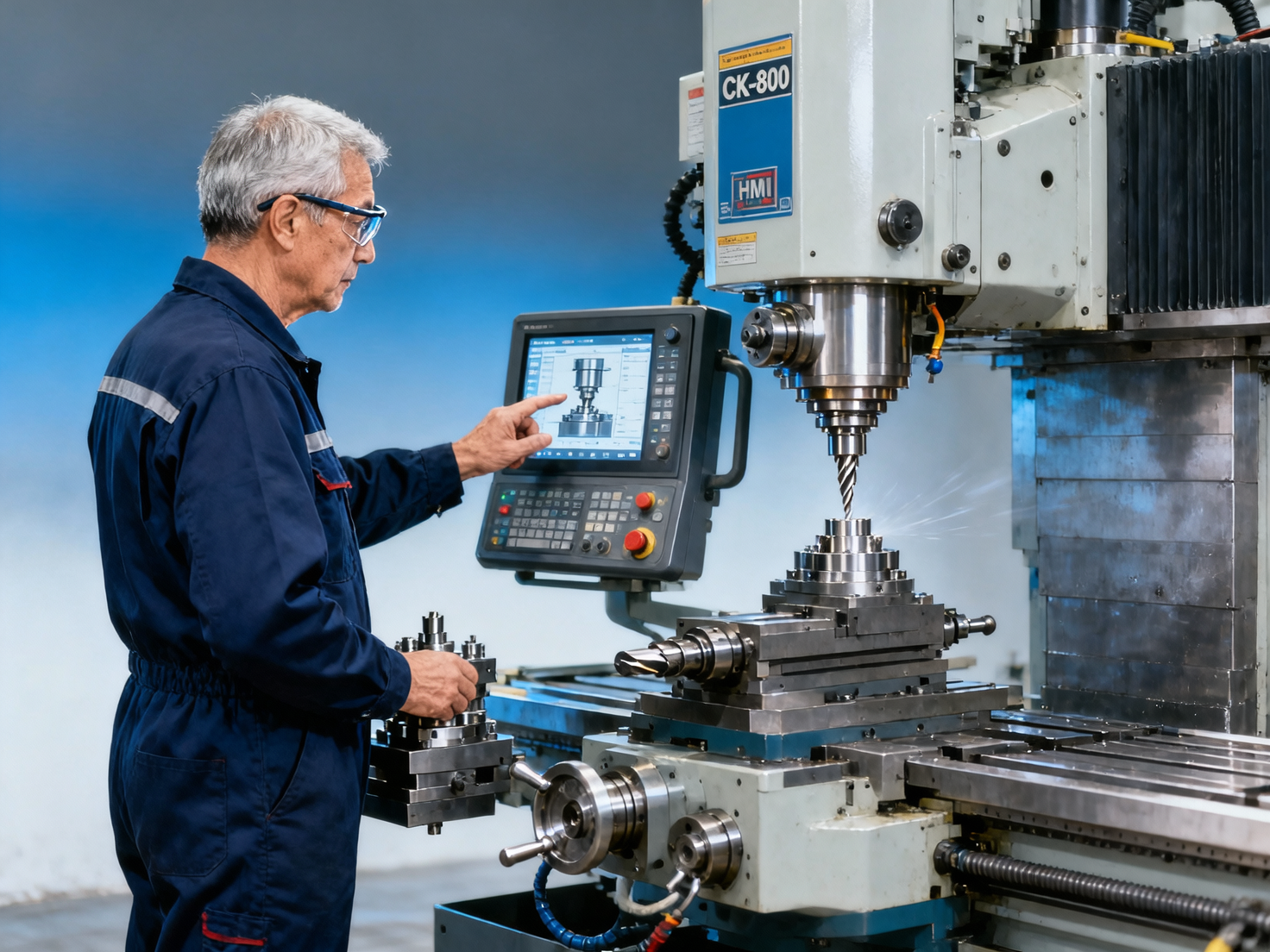
Scrap reduction is a top priority for CNC turning lines—especially in high-stakes sectors like aerospace and automotive. This article reveals how Lean Production Process implementation drives measurable scrap rate cuts across 12 Tier-1 suppliers, backed by real production data. We explore synergies with Industrial Automation control systems for CNC machines, Quick-change Fixture Design for CNC turning, and Modular Tooling Systems for flexible manufacturing—key enablers of Efficient Machining Process for aluminum alloys and High-tolerance Disc Parts for aerospace applications. Whether you're a project manager optimizing cycle time or a quality leader auditing process stability, these insights bridge Digital Manufacturing Technology for smart factory execution with on-floor Automated Production Line troubleshooting.
Why Scrap Rates Remain Stubbornly High in CNC Turning
Despite advances in CNC lathe accuracy and spindle rigidity, average scrap rates in high-mix CNC turning operations still hover between 3.8% and 6.2% across Tier-1 automotive and aerospace suppliers—according to aggregated internal audit reports from 2022–2024. These losses stem less from machine capability than from systemic variability: inconsistent setup procedures, unstandardized tool change protocols, and reactive (not predictive) quality interventions.
A root-cause analysis across the 12 suppliers showed that 68% of scrapped parts originated during first-article validation or mid-batch parameter drift—not from tool failure or machine error. This points squarely to process control gaps, not hardware limitations. For example, one German supplier reported a 4.7% scrap rate on aluminum 7075 disc components before Lean integration; post-implementation, it dropped to 1.3% within 11 weeks—without replacing any CNC lathes or cutting tools.
The economic impact compounds rapidly: at $22–$39 per part (typical for aerospace-grade aluminum discs), a 3.4% average scrap reduction translates to $186K–$312K annual savings per turning line—assuming 220 operating days and 1,200 parts/day throughput.
This table confirms that scrap is predominantly a *process discipline* issue—not a machine performance limitation. That’s why Lean Production Process implementation delivers outsized ROI: it targets the human-machine-interface layer where variability lives.
Three Lean Enablers That Drive Measurable Scrap Reduction
Lean success in CNC turning hinges on three tightly integrated enablers—not isolated tools. First, Industrial Automation control systems must move beyond basic motion logic to embed real-time process feedback loops. Second, Quick-change Fixture Design for CNC turning eliminates manual alignment errors and reduces setup time from 22–38 minutes to under 90 seconds—cutting opportunity for human-induced variation. Third, Modular Tooling Systems enable rapid, calibrated reconfiguration for new part families without recalibration downtime.
All 12 suppliers used standardized work instructions tied directly to machine HMI screens—ensuring operators never deviate from validated parameters. One Japanese supplier reduced operator-related scrap by 71% after deploying guided setup workflows linked to their Fanuc OSP-P300 controls. Crucially, these systems don’t replace skilled machinists—they elevate their role from manual executor to process steward.
For high-tolerance disc parts requiring ±0.005 mm runout, the combination of modular tooling and automated fixture verification cut first-article rejection from 17% to 2.4% across six aerospace programs. The CK-800 Long Axis Precision CNC Slant Guide Lathe Turning and Milling was deployed in two of those programs due to its integrated thermal compensation and dual-axis probing—features that directly support Lean’s “build quality in” principle.
Implementation Roadmap: From Assessment to Sustained Reduction
Successful Lean rollout follows a strict five-phase sequence, each with defined KPIs and exit criteria:
- Baseline Measurement (Weeks 1–2): Capture 30 consecutive shifts of scrap data, tool life logs, and setup duration metrics.
- Process Mapping & Waste Identification (Weeks 3–4): Use value-stream mapping focused on material flow, information flow, and decision latency—not just machine uptime.
- Pilot Line Redesign (Weeks 5–8): Implement standardized setups, visual work instructions, and automated tool offset validation on one cell.
- Scale & Train (Weeks 9–12): Deploy digital twin-assisted training modules; certify 100% of operators on new SOPs before full rollout.
- Sustain & Improve (Ongoing): Launch daily 15-minute Gemba walks with real-time scrap trend dashboards embedded in MES.
Suppliers achieving >40% scrap reduction did so only after completing all five phases—and maintaining Phase 5 rigor for ≥6 months. Skipping Phase 2 (waste identification) led to 83% of failed implementations, as teams optimized non-constraining steps while ignoring true bottlenecks.
Sustained gains require treating scrap as a *symptom*, not an outcome. The most effective teams track scrap drivers—not just scrap totals—and use those drivers to trigger immediate countermeasures, not quarterly reviews.
Who Benefits Most—and How to Start
Project managers gain predictable cycle times and fewer fire-drills. Quality leaders get statistically stable processes—reducing reliance on 100% inspection. Procurement teams see lower total cost of ownership: one U.S. Tier-1 supplier reduced CNC tooling spend by 19% after Lean implementation, as modular systems extended insert life and cut changeover waste.
If your turning line handles >300 SKUs/year or runs ≥3 shifts/day, start with a 3-day Lean Readiness Assessment. It includes machine data logging, operator workflow video analysis, and fixture/tooling capability scoring against ISO 2768 and ASME Y14.5 standards. Average time-to-first-measurable-savings: 37 days.
For high-precision applications like aerospace disc components or medical shafts, pairing Lean with digitally enabled platforms—like those supporting the CK-800 Long Axis Precision CNC Slant Guide Lathe Turning and Milling—delivers compound advantages in both scrap reduction and process traceability.
Final Takeaway: Lean Is Not a Project—It’s Your New Operating System
The 12 Tier-1 suppliers didn’t achieve scrap reductions by adding more sensors or upgrading spindles. They did it by making every action repeatable, every deviation visible, and every improvement actionable—within the existing CNC infrastructure. Lean Production Process implementation transforms CNC turning from a series of discrete machining events into a continuously learning system.
Whether you’re evaluating new equipment, optimizing an existing line, or building a smart factory roadmap, prioritize solutions that integrate Lean principles natively—not as bolt-on software. That’s where real, lasting scrap reduction begins.
Get your customized Lean readiness report and CNC turning line assessment framework—tailored to your part mix, volume, and tolerance requirements. Request your free evaluation today.
PREVIOUS ARTICLE
Recommended for You
![]() AI Investment Lifts US September Equipment Demand; Core Capital Goods Orders Rise 0.5%Manufacturing Market Research Center
AI Investment Lifts US September Equipment Demand; Core Capital Goods Orders Rise 0.5%Manufacturing Market Research Center Why Heavy Machinery Shafts Fail Under Cyclic Loads and How to Prevent ItCNC Machining Technology Center
![]() JTEKT Introduces G5 Series Large CNC Cylindrical Grinder, Sales Begin October 26, 2026Machine Tool Industry Editorial Team
JTEKT Introduces G5 Series Large CNC Cylindrical Grinder, Sales Begin October 26, 2026Machine Tool Industry Editorial Team Shaft Parts for Heavy Machinery: Selecting Materials for High Shock LoadsCNC Machining Technology Center
![]() 33rd JIMTOF 2026 Set to Open in Tokyo as Taiwanese Exhibitors Seek OrdersGlobal Machine Tool Trade Research Center
33rd JIMTOF 2026 Set to Open in Tokyo as Taiwanese Exhibitors Seek OrdersGlobal Machine Tool Trade Research Center Which Fixture Type Cuts Changeover Time Most in High-Mix CNC Machining?CNC Machining Technology Center


Aris Katos
Future of Carbide Coatings
15+ years in precision manufacturing systems. Specialized in high-speed milling and aerospace grade alloy processing.
▶
JTEKT Introduces G5 Series Large CNC Cylindrical Grinder, Sales Begin October 26, 2026Machine Tool Industry Editorial Team▶
Nidec Machine Tool Launches MVR-5X Five-Axis Gantry MachineMachine Tool Industry Editorial Team▶
How to Select a Machine Tool for Aerospace Parts with Tight Tolerances?Machine Tool Industry Editorial Team▶
How to Compare Machine Tools for Small-Batch vs Mass Production JobsMachine Tool Industry Editorial Team▶
Multi-Axis Machine Tool Selection Guide: Travel, Spindle, Accuracy, and Control SystemMachine Tool Industry Editorial Team
▶
Mastering 5-Axis Workholding Strategies
Join our technical panel on Nov 15th to learn about reducing vibrations in thin-wall components.

Providing you with integrated sanding solutions
Before-sales and after-sales services
Comprehensive technical support