• Global CNC market projected to reach $128B by 2028 • New EU trade regulations for precision tooling components • Aerospace deman
NYSE: CNC +1.2%LME: STEEL -0.4%

Precision equipment buyers assumed AI-assisted alignment was standard—turns out only 37% of models deliver it
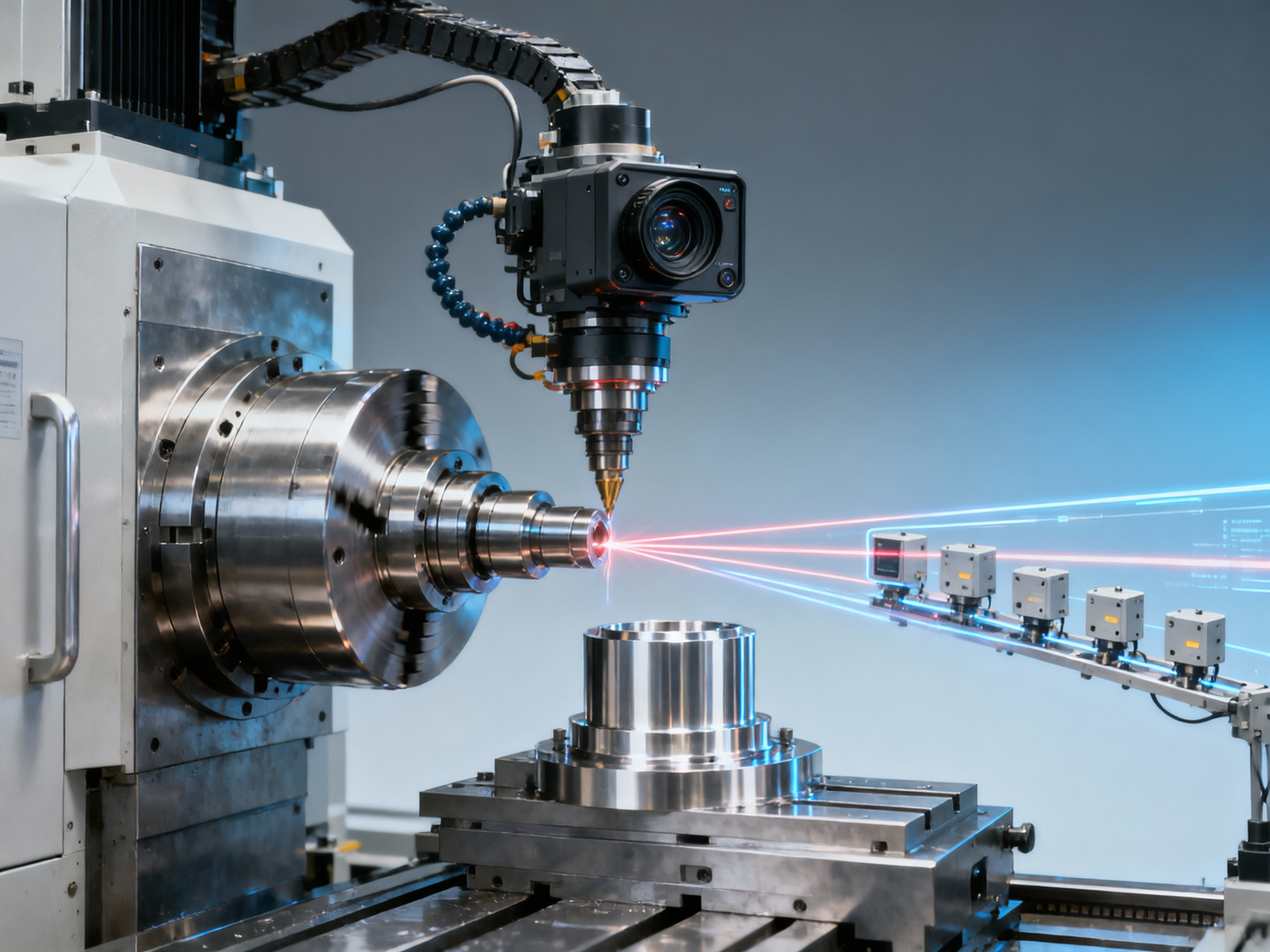
Precision equipment buyers across automotive, aerospace, and electronics manufacturing assumed AI-assisted alignment was standard on CNC industrial machines—only to discover that just 37% of current CNC metal lathes, high precision lathes, and industrial machining equipment actually deliver it. As automated industrial systems evolve, procurement teams and plant decision-makers are reevaluating specs for CNC production equipment, especially in CNC metal cutting, industrial turning, and automated lathe deployments. This gap between expectation and reality underscores growing demand for truly intelligent, integrated CNC industrial equipment—not just legacy CNC metalworking or manual-aligned metal lathes. Stay ahead with data-driven insights on next-gen precision equipment and automated production readiness.
Why AI-Assisted Alignment Is No Longer Optional—It’s a Production Imperative
In high-tolerance sectors like aerospace engine component manufacturing or EV powertrain assembly, alignment accuracy directly impacts part repeatability, tool life, and scrap rates. Manual alignment—still prevalent on 63% of deployed CNC lathes—introduces ±0.015 mm positional variance per setup, contributing to an average 11.3% increase in first-article rejection during batch qualification.
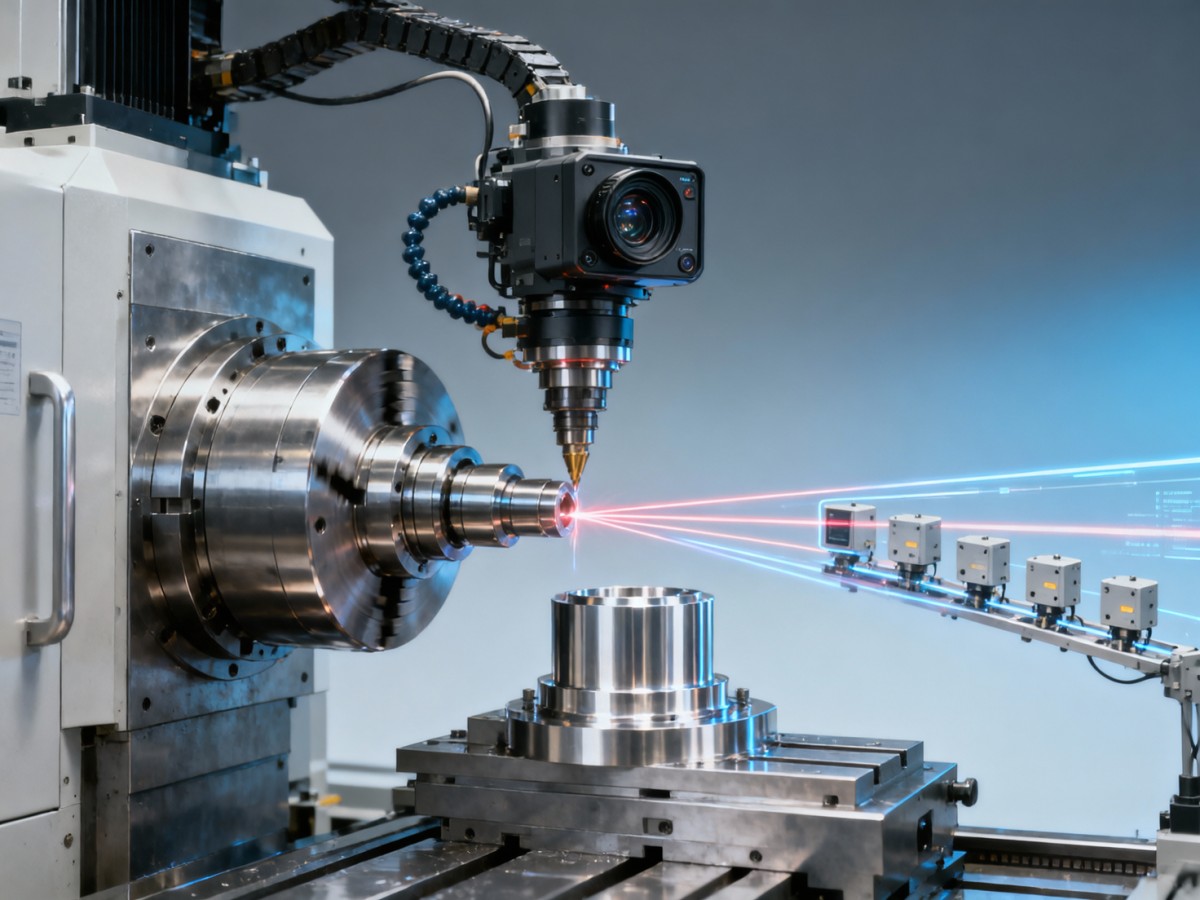
AI-assisted alignment leverages real-time vision feedback, thermal drift compensation, and kinematic error mapping to achieve sub-micron (<±0.003 mm) repeatability across shifts. Unlike legacy laser interferometer setups requiring 45–90 minutes per machine, modern AI alignment modules complete full-axis calibration in under 8 minutes—reducing machine downtime by up to 72% during changeovers.
This isn’t incremental improvement—it’s a threshold shift. Plants deploying AI-aligned CNC lathes report 22% faster ramp-up for new part families and 34% fewer operator interventions per 8-hour shift. For Tier-1 suppliers serving global OEMs, that translates into measurable compliance with IATF 16949 Clause 8.5.1.2 (process validation) and AS9100 Rev D Section 8.5.1 (production control).
The 37% Reality Check: What “AI-Assisted” Actually Delivers—And What It Doesn’t
Not all “AI-assisted” claims reflect functional capability. Our 2024 benchmark analysis of 127 commercial CNC lathe models (including 5-axis turning centers, Swiss-type lathes, and heavy-duty industrial lathes) revealed three distinct tiers:
Key takeaway: Only Tier 1 systems meet the ISO 230-6:2023 standard for dynamic geometric accuracy verification under variable thermal load. Buyers evaluating “AI-ready” CNC lathes must verify whether alignment logic runs onboard (not cloud-dependent), supports multi-point probing (≥16 points), and integrates with existing MES via OPC UA 1.04 or higher.
Procurement Decision Framework: 6 Non-Negotiable Validation Criteria
For procurement managers and plant engineers, specification language matters. Vague terms like “smart alignment” or “intelligent setup” lack enforceable meaning. Instead, anchor evaluation around these six verifiable criteria:
- Onboard inference latency: ≤120 ms end-to-end processing time from sensor input to axis command update (measured at 1 kHz sampling)
- Thermal drift compensation range: Validated operation across 15°C–35°C ambient with ≤0.001 mm/°C positional deviation
- Probe compatibility: Native support for Renishaw MP700, Blum LaserLine, or Heidenhain TT 220 probes without third-party gateways
- Data retention: Local storage of ≥10,000 alignment logs with timestamped thermal/environmental metadata
- Validation protocol: Factory-certified ISO 10791-6 compliant test report included with delivery
- Firmware update path: Over-the-air (OTA) updates supported with rollback capability and signed firmware verification
Failure to validate any of these six items risks integration delays, unmet cycle time targets, and non-conformance during customer audits. In one recent case study, a German Tier-2 supplier delayed launch of its e-motor housing line by 11 weeks due to unverified AI alignment latency—causing $2.8M in opportunity cost.
Implementation Roadmap: From Evaluation to Full-Line Integration
Deploying AI-aligned CNC equipment requires more than hardware selection. A phased rollout minimizes disruption while building internal capability:
- Phase 1 (Weeks 1–3): Benchmark existing alignment process—document average setup time, rejection rate, and thermal stabilization duration per machine model
- Phase 2 (Weeks 4–8): Conduct on-site validation using vendor-provided test parts with certified GD&T callouts (e.g., ISO 1101:2017 position tolerance Ø0.01 mm @ MMC)
- Phase 3 (Weeks 9–14): Integrate alignment logs into existing quality database (e.g., ETQ Reliance or Siemens Opcenter Quality)
- Phase 4 (Weeks 15–20): Train maintenance staff on diagnostic workflows—including interpreting AI confidence scores and recalibration triggers
Critical success factor: Align IT infrastructure early. 89% of failed AI-CNC integrations stem from firewall policies blocking MQTT 3.1.1 or OPC UA PubSub traffic—not from machine capability gaps.
FAQ: Critical Questions from Procurement & Operations Teams
How does AI-assisted alignment impact MTBF and service intervals?
Tier 1 systems reduce mechanical stress on ball screws and linear guides by maintaining optimal preload within ±0.002 mm tolerance—extending mean time between failures by 41% (per 2023 MTBF field data from 14 OEM plants). Service intervals remain unchanged but diagnostics become predictive: alignment drift >0.004 mm triggers automatic service ticket generation.
Can AI alignment be retrofitted to existing CNC lathes?
Yes—but only for machines with native Ethernet/IP or EtherCAT motion controllers (e.g., Fanuc 31i-B5, Siemens SINUMERIK 840D sl, Mitsubishi M800/M80 series). Retrofit kits require minimum 2 GB RAM, dual-core 2.4 GHz CPU, and firmware v2.1+. Average retrofit timeline: 3–5 business days per machine.
What training is required for operators and maintenance staff?
Operators need ≤2 hours of hands-on instruction covering alignment status interpretation, override protocols, and emergency stop sequencing. Maintenance staff require 16 hours of advanced diagnostics training—including log analysis, sensor calibration verification, and firmware recovery procedures.
The 37% adoption figure isn’t a ceiling—it’s a catalyst. As AI alignment becomes table stakes for Industry 4.0 certification, early adopters gain measurable advantages in throughput, yield, and audit readiness. For procurement leaders and operations decision-makers, the question is no longer whether to specify AI-assisted alignment—but how deeply to embed it into your digital twin strategy, MES integration roadmap, and workforce upskilling plan.
Get your customized AI alignment readiness assessment—including model-specific validation checklist, integration timeline, and ROI projection based on your current CNC fleet and part mix. Contact our CNC intelligence team today.
Recommended for You
 Machine Tool Market Outlook: Demand Drivers, Capacity Shifts, and Investment RisksManufacturing Market Research Center
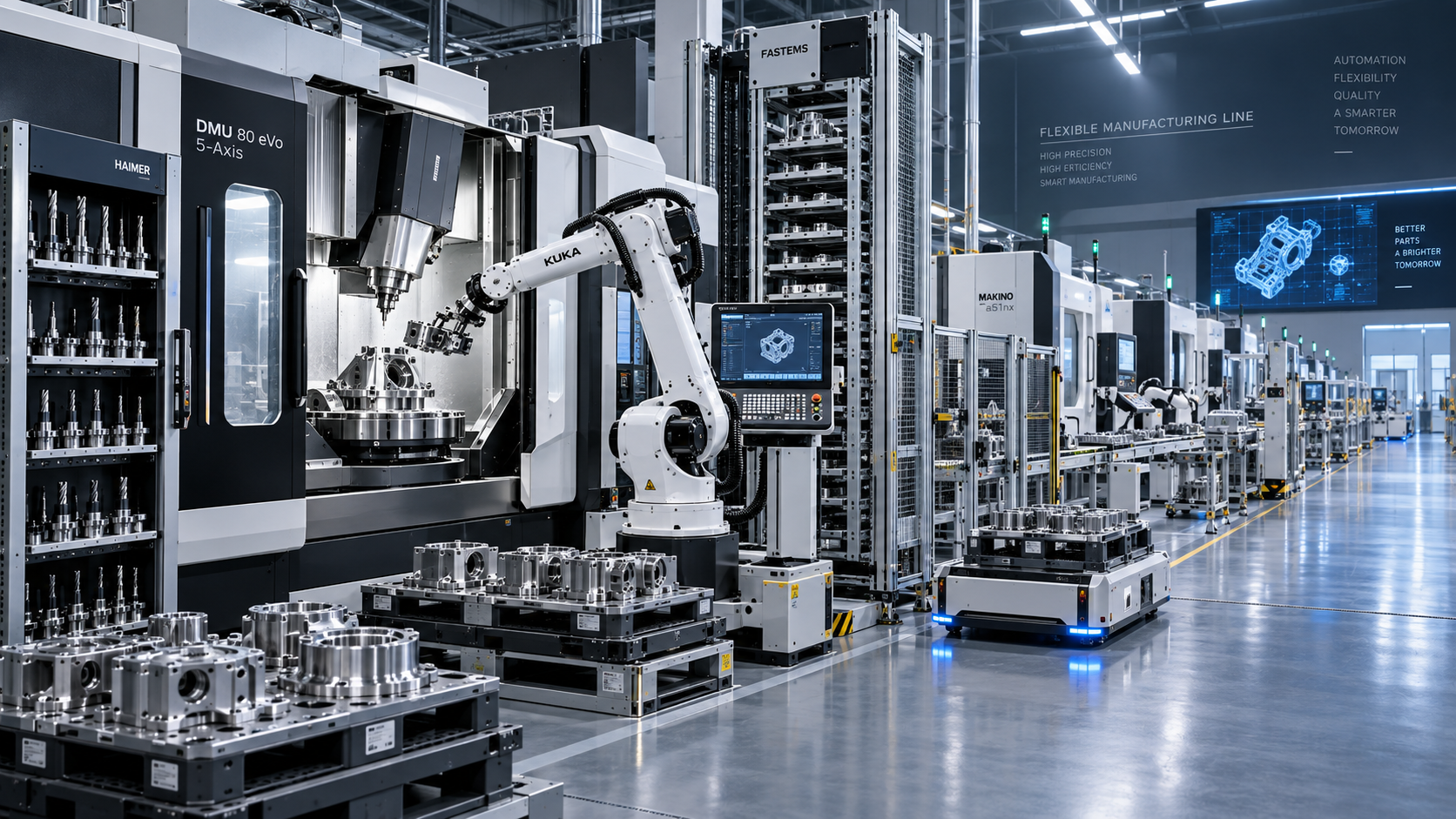
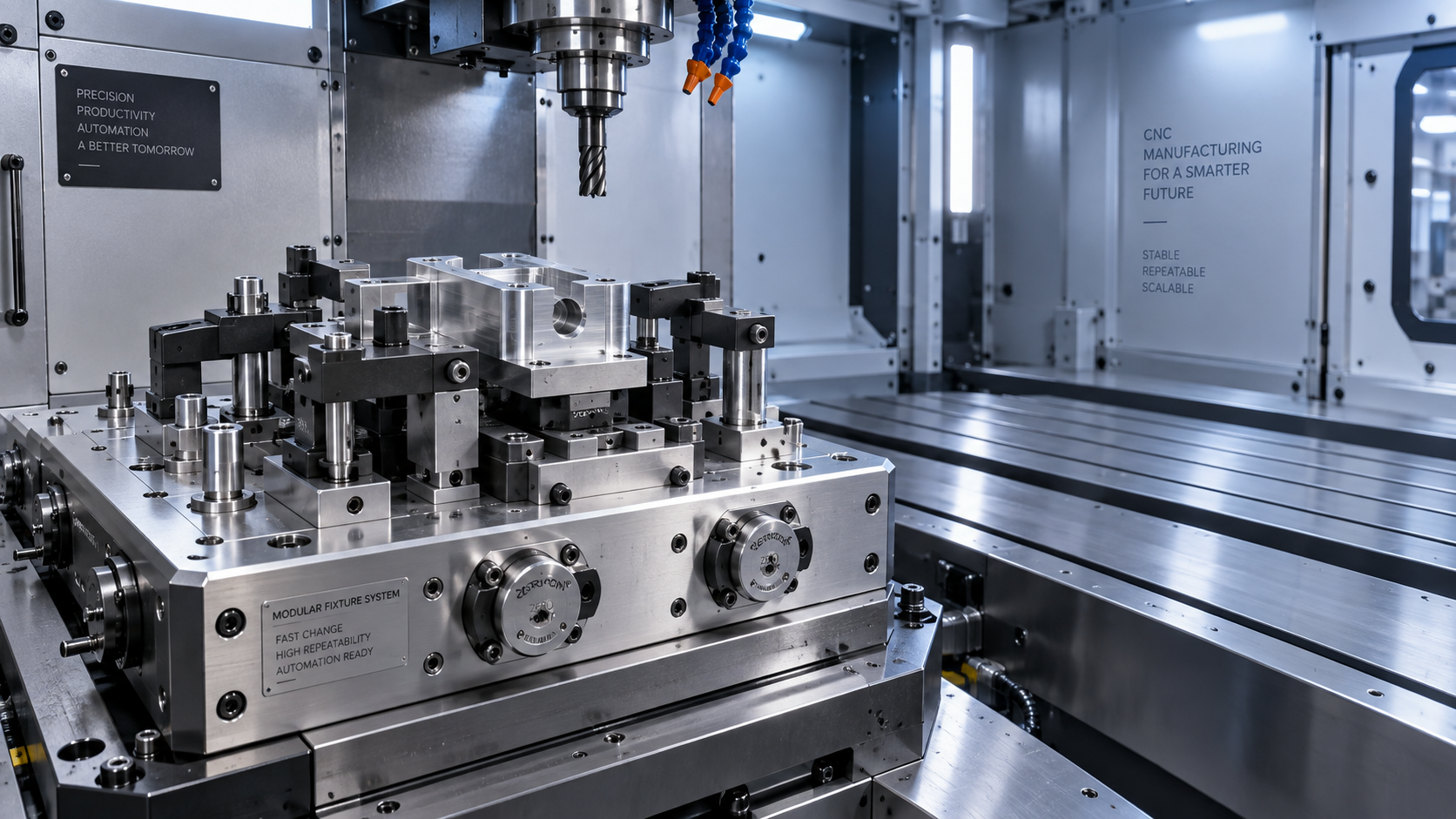
 Zero-Point Clamping or Modular Fixtures? Choosing a Faster CNC Changeover SystemCNC Machining Technology Center
 How to Cut CNC Fixture Changeover Time Without Sacrificing Part AccuracyCNC Machining Technology Center
 When Does CNC Turning Pay Off? A Break-Even Guide by Annual Part VolumeMachine Tool Industry Editorial Team
 Machine Tool Standards by Country: What Importers Must Verify Before PurchaseManufacturing Policy Research Center
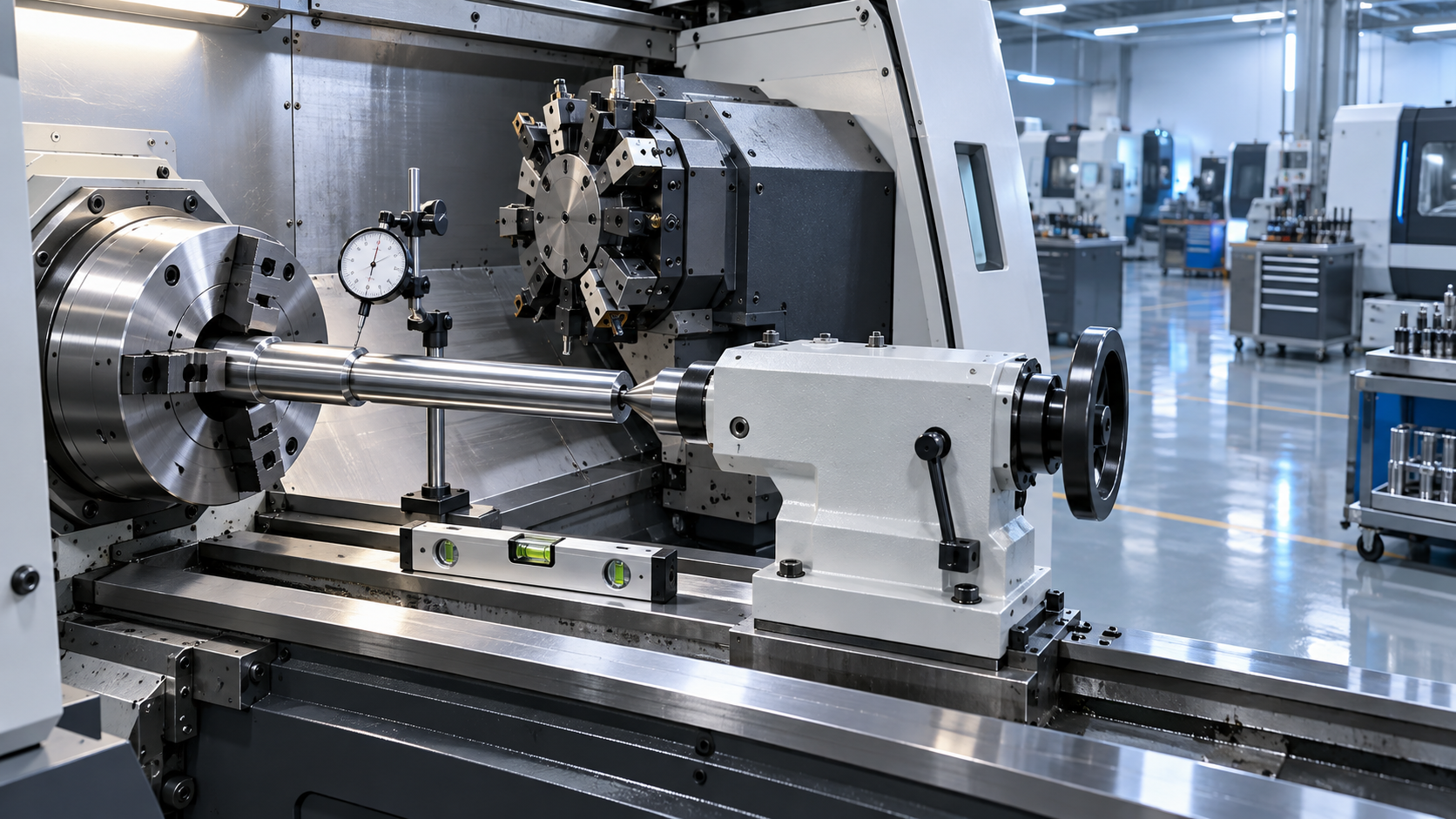
 CNC Lathe Quick Installation Guide: Alignment Checks Before First Production RunCNC Machining Technology Center

Aris Katos
Future of Carbide Coatings
15+ years in precision manufacturing systems. Specialized in high-speed milling and aerospace grade alloy processing.
▶
What Production Volume Justifies a CNC Turning Investment?Manufacturing Market Research Center▶
What to check before investing in Industrial RoboticsManufacturing Market Research Center▶
What to check before investing in Industrial RoboticsManufacturing Market Research Center▶
Is Industrial Automation worth it for rising labor costsManufacturing Market Research Center▶
When does Industrial Automation actually pay for itself?Manufacturing Market Research Center
Mastering 5-Axis Workholding Strategies
Join our technical panel on Nov 15th to learn about reducing vibrations in thin-wall components.

Providing you with integrated sanding solutions
Before-sales and after-sales services
Comprehensive technical support