• Global CNC market projected to reach $128B by 2028 • New EU trade regulations for precision tooling components • Aerospace deman
NYSE: CNC +1.2%LME: STEEL -0.4%

Manufacturing Industry Cost Drivers in 2025: Labor, Energy, Freight, and Sourcing Risks
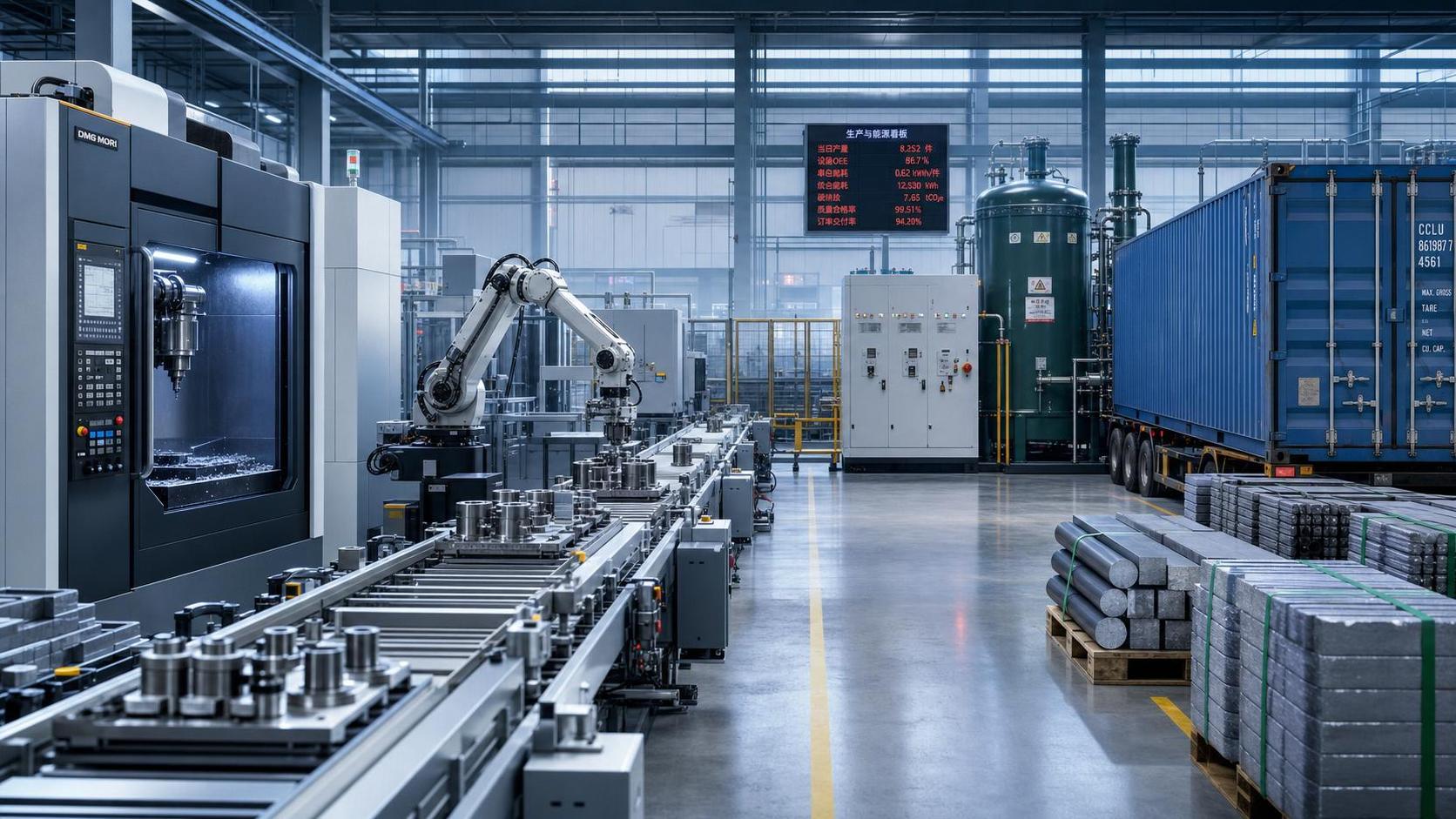
In 2025, the Manufacturing Industry is operating under tighter cost pressure than many planning models assumed a year ago.
Margins are being tested by labor scarcity, unstable energy pricing, higher freight volatility, and sourcing risks that now reach deep into production schedules.
For CNC machining, precision machine tools, and automated production lines, these factors are not abstract market signals.
They directly affect cycle cost, delivery reliability, capacity utilization, and the timing of capital decisions across global manufacturing networks.
Why cost pressure looks different in 2025
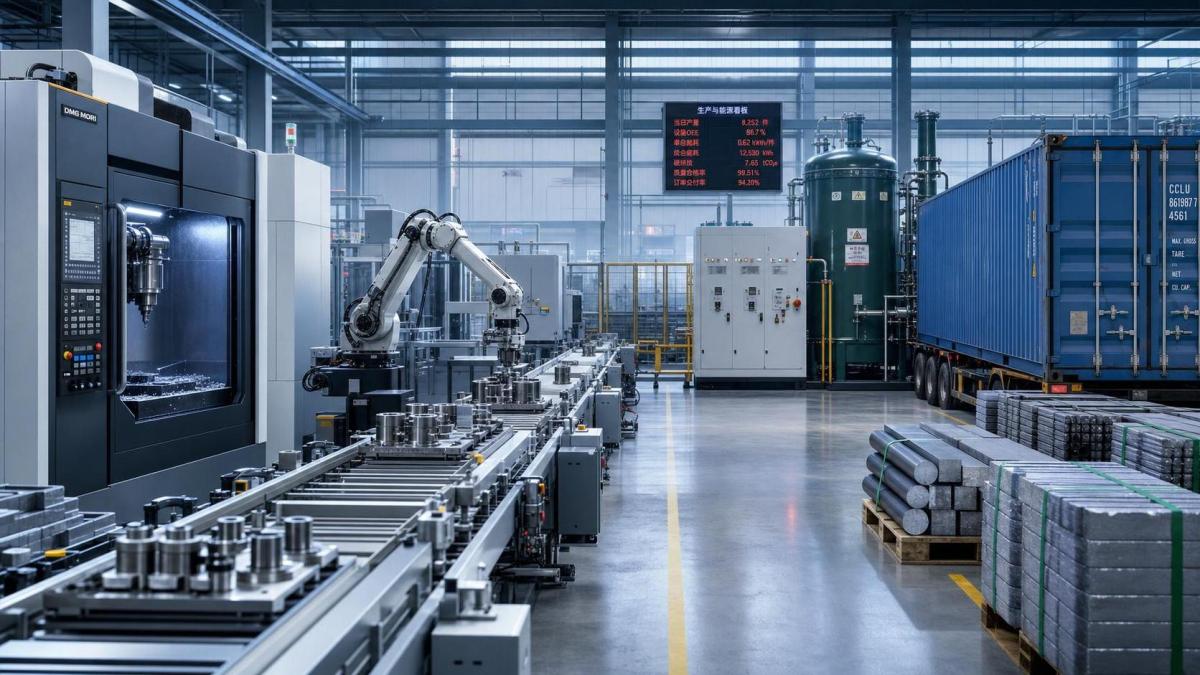
The Manufacturing Industry has always managed swings in wages, utilities, and transport.
What makes 2025 different is the overlap of several variables at once, combined with faster customer expectations and stricter performance targets.
High-precision sectors feel this more sharply.
Automotive, aerospace, energy equipment, and electronics production depend on machine uptime, repeatable tolerances, and predictable part flow.
When one cost driver moves, the impact spreads through tooling, fixtures, material planning, subcontracting, and outbound commitments.
This is especially relevant in CNC ecosystems built around lathes, machining centers, and multi-axis systems.
These operations often run complex part mixes where even small disruptions create expensive idle time or rescheduling losses.
Labor remains the most visible constraint
Labor cost is no longer just about hourly wage inflation.
In the Manufacturing Industry, the harder issue is the shortage of skilled operators, programmers, maintenance staff, and process technicians.
That shortage raises total operating cost in several ways.
- Longer setup times on CNC equipment reduce available spindle hours.
- Training cycles delay productivity gains from new machines or software.
- Higher turnover increases scrap risk, rework, and maintenance mistakes.
- Overtime and temporary staffing make labor budgets less predictable.
In practice, automation helps, but it does not remove the labor issue entirely.
Smart factories still need people who can optimize programs, validate parts, manage tool life, and respond when a flexible line drifts off target.
A useful question is not whether labor can be reduced.
It is whether labor dependency can be shifted toward higher-value tasks while routine actions are standardized or automated.
Where the hidden labor cost sits
The hidden cost often sits outside direct machining.
It appears in quality checks, tool presetting, material handling, changeovers, and manual data entry between production systems.
That is why digital integration matters.
When machine tools, robots, and planning systems share usable data, labor productivity improves without forcing unrealistic headcount assumptions.
Energy is now a strategic production variable
Energy pricing has become more uneven across regions, and that reshapes competitiveness inside the Manufacturing Industry.
Power-intensive operations such as machining, heat treatment, coolant management, compressed air, and climate control can materially change unit economics.
In high-precision environments, energy also affects process stability.
Temperature variation, unplanned shutdowns, and power quality issues can undermine tolerance control and surface finish consistency.
The stronger facilities are looking beyond monthly utility bills.
They track energy by machine group, shift pattern, and part family.
This creates a clearer view of which products remain profitable when electricity or gas prices spike.
Freight costs now shape planning, not just logistics
Freight is often treated as a downstream issue.
In 2025, that view is too narrow.
For the Manufacturing Industry, freight volatility can change sourcing logic, inventory policy, and customer service levels.
Ocean rates, inland transport constraints, port congestion, and route disruption all affect landed cost.
The challenge is larger for machine tool supply chains.
Heavy equipment, precision components, castings, spindle systems, drives, and control modules do not move as easily as commodity goods.
Expedited freight can protect delivery dates, but it can also erase margin on contracts that looked healthy at order entry.
That is why freight should be linked to sales and operations planning rather than reviewed after shipment.
What stronger planners are doing
- Separating critical parts from routine parts in transport strategy.
- Modeling total landed cost instead of supplier price alone.
- Using regional buffers for components with long replenishment cycles.
- Revising customer lead-time promises when freight risk increases.
Sourcing risk is wider than supplier concentration
Sourcing risk in the Manufacturing Industry is no longer limited to single-source exposure.
It now includes geopolitical shifts, trade policy changes, component traceability demands, and uneven supplier financial health.
This matters in CNC and precision manufacturing because production depends on specialized materials and qualified components.
A delayed spindle bearing, controller board, servo system, or cutting tool insert can slow output far beyond its purchase value.
Global clusters in China, Germany, Japan, and South Korea remain central to machine tool production.
Yet global reach also means higher exposure to regional policy, currency movement, and localized production interruptions.
The best response is not blanket reshoring or blind diversification.
It is disciplined segmentation of what truly needs dual sourcing, local stocking, or long-term supply agreements.
How these pressures interact on the shop floor
The most important point is that these cost drivers rarely act alone.
A labor gap may reduce throughput.
Reduced throughput raises overhead absorption pressure.
At the same time, energy spikes can increase the cost of reruns, while freight delays force emergency purchases from secondary channels.
In automated plants, this interaction can be even sharper.
Flexible production lines, robots, and digital systems improve efficiency, but only when data quality, maintenance discipline, and supplier reliability stay aligned.
Otherwise, technology amplifies disruption instead of reducing it.
Practical ways to read cost risk more accurately
A useful response starts with better visibility, not just more cost cutting.
The Manufacturing Industry benefits when cost review moves from static budgets to operating signals that can be updated quickly.
- Track margin by part family, not only by plant or customer.
- Measure machine utilization against staffing availability and setup intensity.
- Connect energy data to process steps with high power demand.
- Review freight exposure by supplier location and shipment criticality.
- Classify purchased items by substitution difficulty, not only annual spend.
This approach helps separate noise from structural risk.
It also supports better capital decisions around machine upgrades, automation cells, software integration, and regional supply alternatives.
What deserves attention next
The Manufacturing Industry in 2025 is not defined by one dominant cost shock.
It is defined by compounding pressure across labor, energy, freight, and sourcing.
That is why cost control now depends on operating discipline, supplier insight, and better use of production data.
For companies tied to CNC machining, machine tools, and precision manufacturing, the next step is to review where cost sensitivity is actually highest.
Start with the products, processes, and suppliers that would cause the most disruption if conditions tighten further.
From there, compare automation priorities, energy exposure, freight dependency, and sourcing resilience against real operating data.
That gives a more reliable basis for action than chasing the lowest visible price in a market that remains structurally uncertain.
Recommended for You
 Zero-Point Clamping or Modular Fixtures? Choosing a Faster CNC Changeover SystemCNC Machining Technology Center
 How to Cut CNC Fixture Changeover Time Without Sacrificing Part AccuracyCNC Machining Technology Center
 When Does CNC Turning Pay Off? A Break-Even Guide by Annual Part VolumeMachine Tool Industry Editorial Team
 Machine Tool Standards by Country: What Importers Must Verify Before PurchaseManufacturing Policy Research Center
 CNC Lathe Quick Installation Guide: Alignment Checks Before First Production RunCNC Machining Technology Center
 How to Select a CNC Lathe for Small Parts Without Sacrificing Accuracy or Cycle TimeCNC Machining Technology Center

Aris Katos
Future of Carbide Coatings
15+ years in precision manufacturing systems. Specialized in high-speed milling and aerospace grade alloy processing.
▶
Global Machine Tool Backlog Falls 12% as Automation Shifts DemandManufacturing Market Research Center▶
What Drives Machine Tool Price: 7 Cost Factors Buyers Should Compare Before OrderingManufacturing Market Research Center▶
Manufacturing Industry Cost Drivers in 2025: Labor, Energy, Freight, and Sourcing RisksManufacturing Market Research Center▶
CCMT2026 Ends With 40.2% Rise in Five-Axis Export PricesManufacturing Market Research Center▶
China CNC Localization Tops 50%, Pressuring FANUCManufacturing Market Research Center
Mastering 5-Axis Workholding Strategies
Join our technical panel on Nov 15th to learn about reducing vibrations in thin-wall components.

Providing you with integrated sanding solutions
Before-sales and after-sales services
Comprehensive technical support