• Global CNC market projected to reach $128B by 2028 • New EU trade regulations for precision tooling components • Aerospace deman
NYSE: CNC +1.2%LME: STEEL -0.4%

Is Smart Manufacturing Technology for Industry 4.0 Worth It?
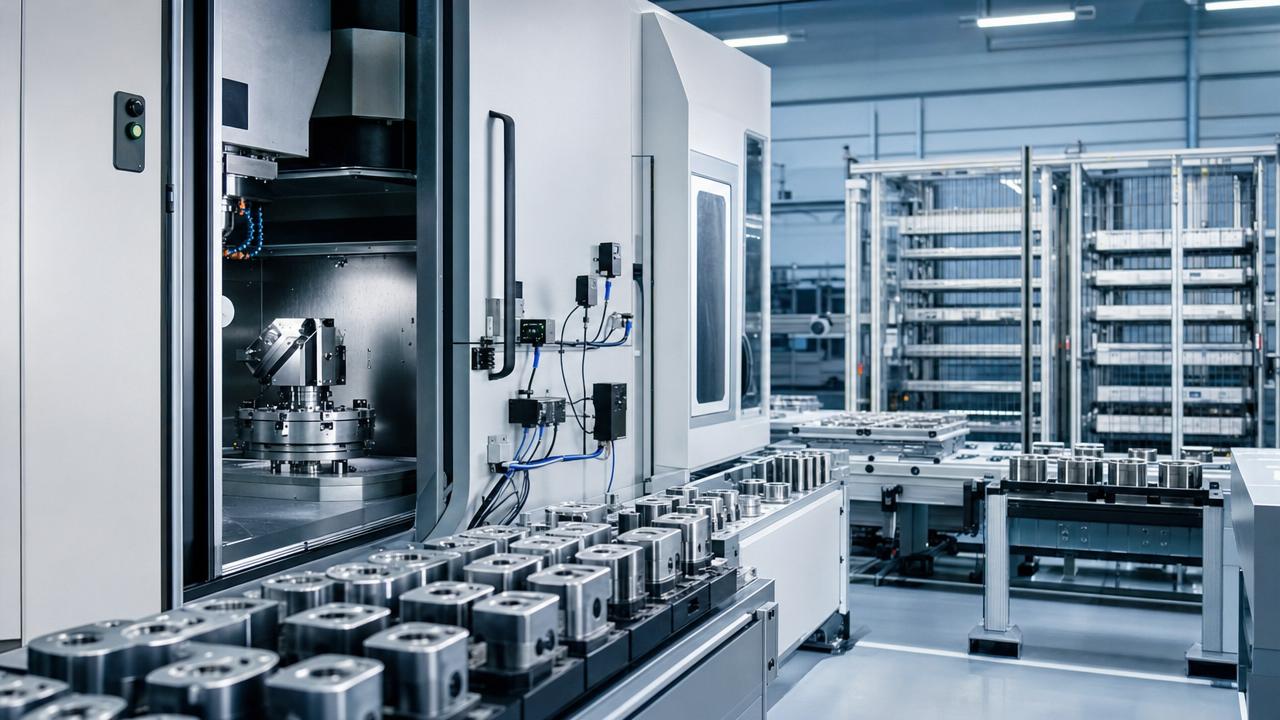
Is Smart Manufacturing Technology for Industry 4.0 Worth It?
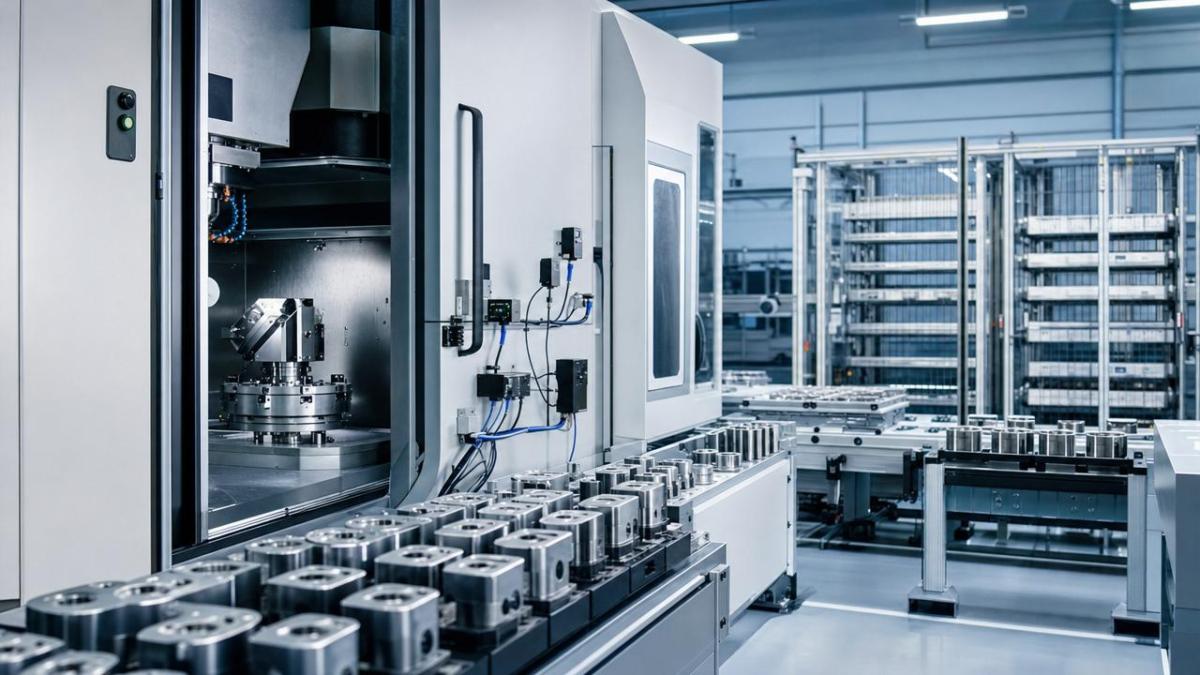
Capital approval depends on measurable value, not digital fashion. Smart Manufacturing Technology for Industry 4.0 must improve cost, output, quality, and resilience.
In CNC machining and precision manufacturing, the value often appears through higher spindle utilization, fewer defects, faster scheduling, and better traceability.
The investment also includes sensors, software, integration, cybersecurity, training, and process redesign. Therefore, the right question is scenario-based.
Smart Manufacturing Technology for Industry 4.0 is worth it when the operating environment can convert data into decisions, and decisions into financial gains.
Scenario Background: Why the Same Technology Creates Different Returns
A CNC workshop with unstable orders has different priorities from an automotive line running thousands of similar parts daily.
An aerospace component producer may value traceability more than speed. An electronics supplier may value quick changeovers and defect prevention.
Smart Manufacturing Technology for Industry 4.0 should be judged against bottlenecks, not against competitors’ marketing claims.
The strongest business cases usually appear where machines are expensive, quality risks are high, and production visibility is weak.
For CNC lathes, machining centers, and automated cells, digital value begins with reliable machine data and standard operating definitions.
Scenario 1: High-Mix CNC Machining With Frequent Changeovers
High-mix CNC machining often suffers from setup delays, tool confusion, program version errors, and uneven operator practices.
Smart Manufacturing Technology for Industry 4.0 can connect CNC programs, tool data, fixtures, inspection plans, and work instructions.
The core judgment point is whether changeover time and first-piece approval delays are large enough to justify integration.
If setups consume many productive hours weekly, digital work instructions and tool presetting data can deliver visible returns.
In this scenario, the value of Smart Manufacturing Technology for Industry 4.0 is flexibility, not only automation.
Scenario 2: Mass Production Lines Needing Stable Output
In large-volume production, small losses accumulate quickly. Five minutes of unplanned downtime can affect daily delivery performance.
Smart Manufacturing Technology for Industry 4.0 helps monitor cycle time, OEE, tool wear, vibration, alarms, and line balance.
The core judgment point is whether recurring downtime, micro-stops, and bottleneck shifts are clearly measured today.
When manual reports are late or inconsistent, real-time dashboards can improve production control and maintenance timing.
For automotive parts, energy components, or standard shafts, Smart Manufacturing Technology for Industry 4.0 often pays through throughput gains.
Scenario 3: Precision Parts Where Quality Costs Are High
Precision parts create financial risk when defects are discovered late. Scrap, rework, warranty claims, and delivery delays rise together.
Smart Manufacturing Technology for Industry 4.0 can link machining parameters, inspection results, tool life, and material batches.
The core judgment point is whether quality data can identify causes before defects spread across many parts.
Closed-loop inspection, SPC analysis, and process traceability are especially useful for aerospace, medical, and high-accuracy structural components.
Here, Smart Manufacturing Technology for Industry 4.0 is worth it when prevention is cheaper than detection after production.
Scenario 4: Labor-Intensive Cells Facing Skill Shortages
Many CNC operations still rely on experienced operators for setup, inspection judgment, maintenance response, and production coordination.
When skilled labor is scarce, Smart Manufacturing Technology for Industry 4.0 can standardize knowledge and reduce dependency on individuals.
Digital checklists, guided maintenance, machine alerts, and visual scheduling help less experienced teams execute stable routines.
The judgment point is not whether labor disappears. It is whether each person can supervise more reliable output.
In this scenario, Smart Manufacturing Technology for Industry 4.0 supports productivity by improving consistency and decision speed.
Scenario 5: Multi-Site Manufacturing Requiring Visibility
Global CNC suppliers often operate across plants, countries, and subcontracting networks. Visibility becomes difficult when data formats differ.
Smart Manufacturing Technology for Industry 4.0 can standardize KPIs, equipment status, production progress, and quality reporting across locations.
The core judgment point is whether centralized visibility can reduce expediting, inventory buffers, and late corrective actions.
For international trade and complex supply chains, reliable production data improves customer communication and risk management.
Different Scenario Needs: Where the Business Case Changes
This comparison shows why Smart Manufacturing Technology for Industry 4.0 should not be purchased as a generic package.
The strongest plan connects one urgent production scenario with one measurable financial outcome.
Cost and ROI: What Must Be Counted Before Approval
The purchase price is only one part of the total cost. Integration and adoption often decide the real return.
Smart Manufacturing Technology for Industry 4.0 may require machine connectivity, PLC access, MES integration, data cleaning, and cybersecurity controls.
Training must also be funded. A dashboard that people distrust or ignore has little operational value.
Useful ROI models should include reduced downtime, lower scrap, fewer overtime hours, faster delivery, and improved equipment utilization.
For CNC machining centers, even a small utilization increase can be meaningful when equipment cost and demand are high.
Smart Manufacturing Technology for Industry 4.0 becomes easier to justify when baseline losses are measured before implementation.
Scenario Adaptation: Practical Recommendations Before Scaling
- Start with one production bottleneck, not a full smart factory vision.
- Measure current downtime, scrap, changeover time, and labor hours first.
- Select machines where connectivity and process stability are already reasonable.
- Define decision rules before collecting large amounts of machine data.
- Connect quality, maintenance, and scheduling data only when ownership is clear.
- Review cybersecurity, vendor support, and future expansion before signing.
These steps keep Smart Manufacturing Technology for Industry 4.0 focused on operational proof rather than abstract transformation.
A pilot should show whether the selected scenario can produce repeatable savings within a defined period.
Common Misjudgments That Reduce Smart Manufacturing Value
Mistake 1: Automating an Unstable Process
If tooling, fixtures, programs, or inspection methods are unstable, digital systems may only reveal existing disorder faster.
Smart Manufacturing Technology for Industry 4.0 works best when basic process discipline already exists.
Mistake 2: Treating Data Collection as Improvement
More data does not automatically improve output. Value appears when data changes maintenance, scheduling, quality, or operator action.
Every data point should support a decision, alarm, prediction, or root-cause analysis.
Mistake 3: Ignoring Legacy Equipment Reality
Many workshops operate mixed machine brands, controller generations, and communication protocols.
Smart Manufacturing Technology for Industry 4.0 needs realistic integration planning for older CNC machines and peripheral systems.
Mistake 4: Underestimating People and Governance
Digital manufacturing changes responsibilities. Alarm response, data ownership, and workflow approval must be clearly assigned.
Without governance, Smart Manufacturing Technology for Industry 4.0 can create dashboards without accountability.
When the Investment Is Clearly Worth It
The investment is attractive when machine downtime is frequent, quality costs are visible, and production decisions are delayed.
It is also compelling when CNC assets are expensive and capacity expansion would require major capital spending.
In such cases, Smart Manufacturing Technology for Industry 4.0 can unlock hidden capacity before new equipment is purchased.
The investment is weaker when production volume is low, processes change randomly, or baseline data is unavailable.
It may still be useful, but the project should begin with process standardization and simple visibility tools.
Action Guide: How to Decide the Next Step
- Choose one scenario with a measurable pain point.
- Record the current baseline for at least several production cycles.
- Estimate savings from downtime, scrap, labor, and delivery improvement.
- Compare savings with software, hardware, integration, and training costs.
- Run a controlled pilot on selected CNC machines or production cells.
- Scale only after results are repeatable and responsibilities are clear.
Smart Manufacturing Technology for Industry 4.0 is worth it when it solves a specific manufacturing constraint with measurable economic impact.
For CNC machining and precision manufacturing, the best path is selective, data-driven, and tied to operational discipline.
Begin with the scenario where lost capacity, quality risk, or delayed decisions are already costing money.
That focused approach turns Smart Manufacturing Technology for Industry 4.0 from a trend into a practical competitiveness tool.
PREVIOUS ARTICLE
NEXT ARTICLE
Recommended for You
![]() Mitsubishi Electric Announces Physical AI System Linking Humanoid Robots and CNC MachinesMachine Tool Industry Editorial Team
Mitsubishi Electric Announces Physical AI System Linking Humanoid Robots and CNC MachinesMachine Tool Industry Editorial Team Precision Machining for Defense: Supplier Quality and Traceability ChecksManufacturing Market Research Center
![]() Nidec Machine Tool Launches MVR-5X Five-Axis Gantry MachineMachine Tool Industry Editorial Team
Nidec Machine Tool Launches MVR-5X Five-Axis Gantry MachineMachine Tool Industry Editorial Team Choosing a Precision Disc Parts Manufacturer in China: Tolerances and Quality ChecksManufacturing Market Research Center
![]() Siemens Executive Says AI Could Raise Factory Automation to 80%Manufacturing Market Research Center
Siemens Executive Says AI Could Raise Factory Automation to 80%Manufacturing Market Research Center Choosing Automated Machine Tools for High-Mix, Low-Volume ProductionMachine Tool Industry Editorial Team


Aris Katos
Future of Carbide Coatings
15+ years in precision manufacturing systems. Specialized in high-speed milling and aerospace grade alloy processing.
▶
Siemens Executive Says AI Could Raise Factory Automation to 80%Manufacturing Market Research Center▶
Manufacturing Technology Trends That Improve Throughput and Quality ControlManufacturing Market Research Center▶
Global Manufacturing Trends: How Supply Chains and Regional Shifts Affect SourcingManufacturing Market Research Center▶
Small-Batch Production and Smart Manufacturing for Small Businesses: Where to Start FirstManufacturing Market Research Center▶
What Smart Manufacturing Technology for Industry 4.0 Means for Mid-Sized FactoriesManufacturing Market Research Center
▶
Mastering 5-Axis Workholding Strategies
Join our technical panel on Nov 15th to learn about reducing vibrations in thin-wall components.

Providing you with integrated sanding solutions
Before-sales and after-sales services
Comprehensive technical support