• Global CNC market projected to reach $128B by 2028 • New EU trade regulations for precision tooling components • Aerospace deman
NYSE: CNC +1.2%LME: STEEL -0.4%

How to Choose a CNC Manufacturing Wholesaler for Quality, Lead Time, and Cost
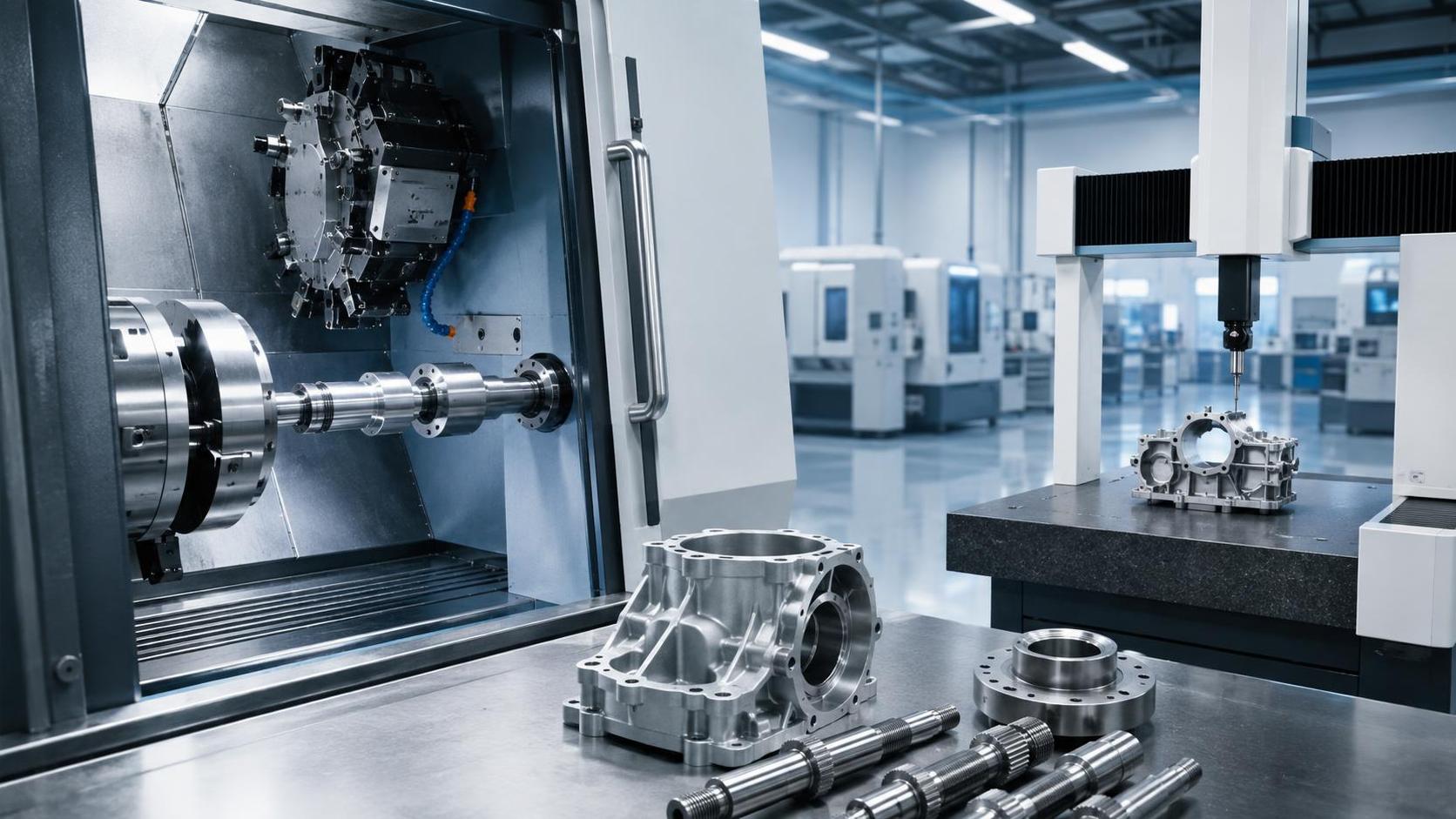
A late delivery of a machined part rarely stays contained within the purchasing department. It can hold up assembly, force expediting, create difficult conversations with customers, and leave a production team waiting beside an incomplete line. A dimensional issue can be even more costly: parts may look acceptable on arrival but fail during fitting, testing, or field use.
That is why choosing a CNC manufacturing wholesaler should not be treated as a simple price comparison exercise. Buyers need a supplier that can translate drawings into repeatable production, protect critical tolerances, communicate honestly about capacity, and deliver within a schedule that supports the wider business. Unit price matters, but it is only one component of the real procurement cost.
For purchasers sourcing turned parts, milled housings, precision shafts, disc components, brackets, or multi-axis machined assemblies, the decision becomes more important as volumes grow. This guide offers a practical way to evaluate CNC suppliers through the three questions that matter most: Can they make the parts correctly? Can they deliver when promised? And is their quoted cost truly sustainable?
Start with the part, not the supplier brochure
Many sourcing mistakes begin when a buyer sends out an incomplete request for quotation and compares the responses as if every supplier has priced the same job. In CNC machining, small differences in assumptions can produce very different quotations, lead times, and quality outcomes.
Before approaching a CNC manufacturing wholesaler, prepare a sourcing package that gives suppliers enough information to assess manufacturability. At a minimum, include current 2D drawings with tolerances, 3D CAD files where available, material grades, surface finish requirements, thread specifications, heat treatment or coating needs, expected annual volume, batch size, and required delivery date.
It also helps to identify what is truly critical. Not every dimension deserves the same inspection effort. Mark the features that affect fit, sealing, motion, safety, or downstream assembly. A supplier who understands these priorities can propose a more efficient process. Without that clarity, they may either over-engineer the part and inflate the price, or underestimate the risk and create quality problems later.
For example, a precision aluminum enclosure may require tight positional tolerances around connector openings, while less visible exterior surfaces can accept normal machining variation. A steel shaft may need strict control over bearing seats and concentricity, but not necessarily across every non-functional diameter. Good procurement begins with this distinction.
Quality is a system, not a final inspection report
Buyers often ask whether a supplier has inspection equipment, and that is a sensible question. Coordinate measuring machines, optical systems, height gauges, roughness testers, thread gauges, and material verification tools all matter. Yet equipment alone does not prove that a factory can produce consistent parts.
The more revealing question is how the supplier manages quality from material receipt through machining, inspection, packing, and shipment.
A capable CNC manufacturing wholesaler should be able to explain its process in practical terms. Ask how incoming material is identified and controlled. Ask whether first-article inspection is performed before a full run begins. Find out how machine operators verify in-process dimensions, how nonconforming parts are separated, and how revisions to drawings are communicated across production and quality teams.
For repeat orders, process control matters more than a one-time sample. A supplier may produce an excellent prototype through intensive manual attention, then struggle to hold the same result across hundreds or thousands of parts. Look for evidence that fixtures, tools, cutting parameters, inspection points, and work instructions are documented for repeat production.
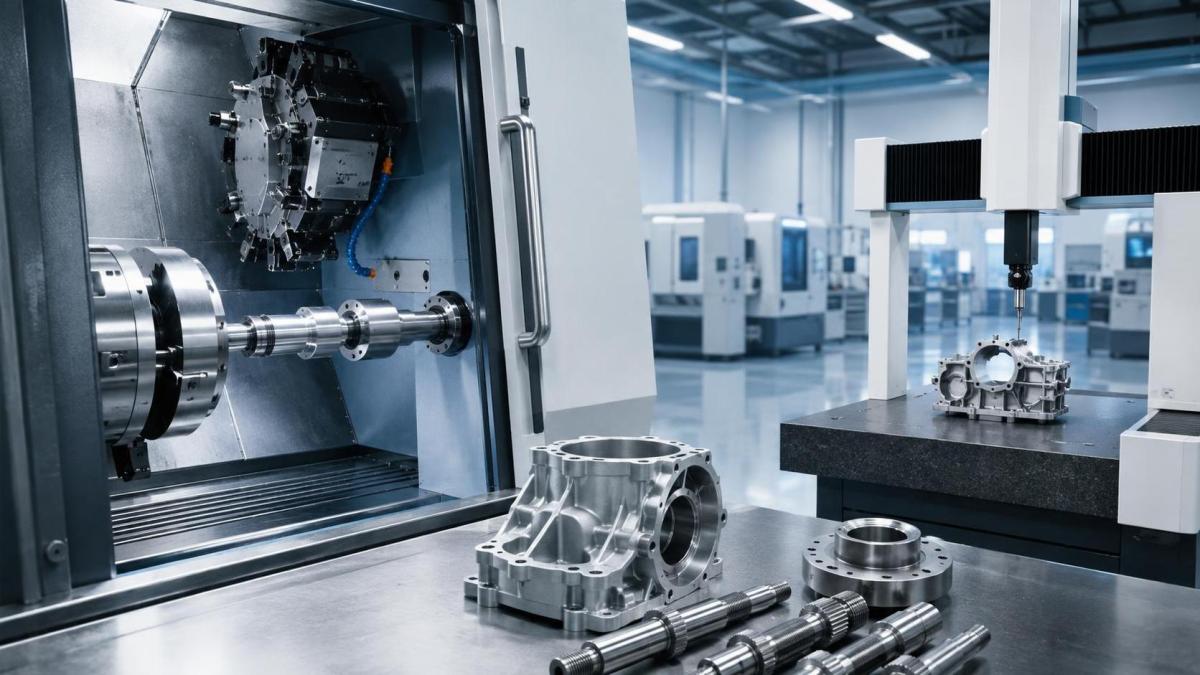
It is also worth discussing measurement methods before issuing a purchase order. If a drawing calls for a narrow tolerance, both parties should understand how it will be measured, at what stage, and under what conditions. Differences in datum interpretation, gauge selection, burr handling, or surface condition can create disputes even when both sides believe they are correct.
Questions that reveal real quality capability
- Which dimensions are checked during machining, and which are checked only at final inspection?
- Can the supplier provide first-article reports or dimensional inspection records when required?
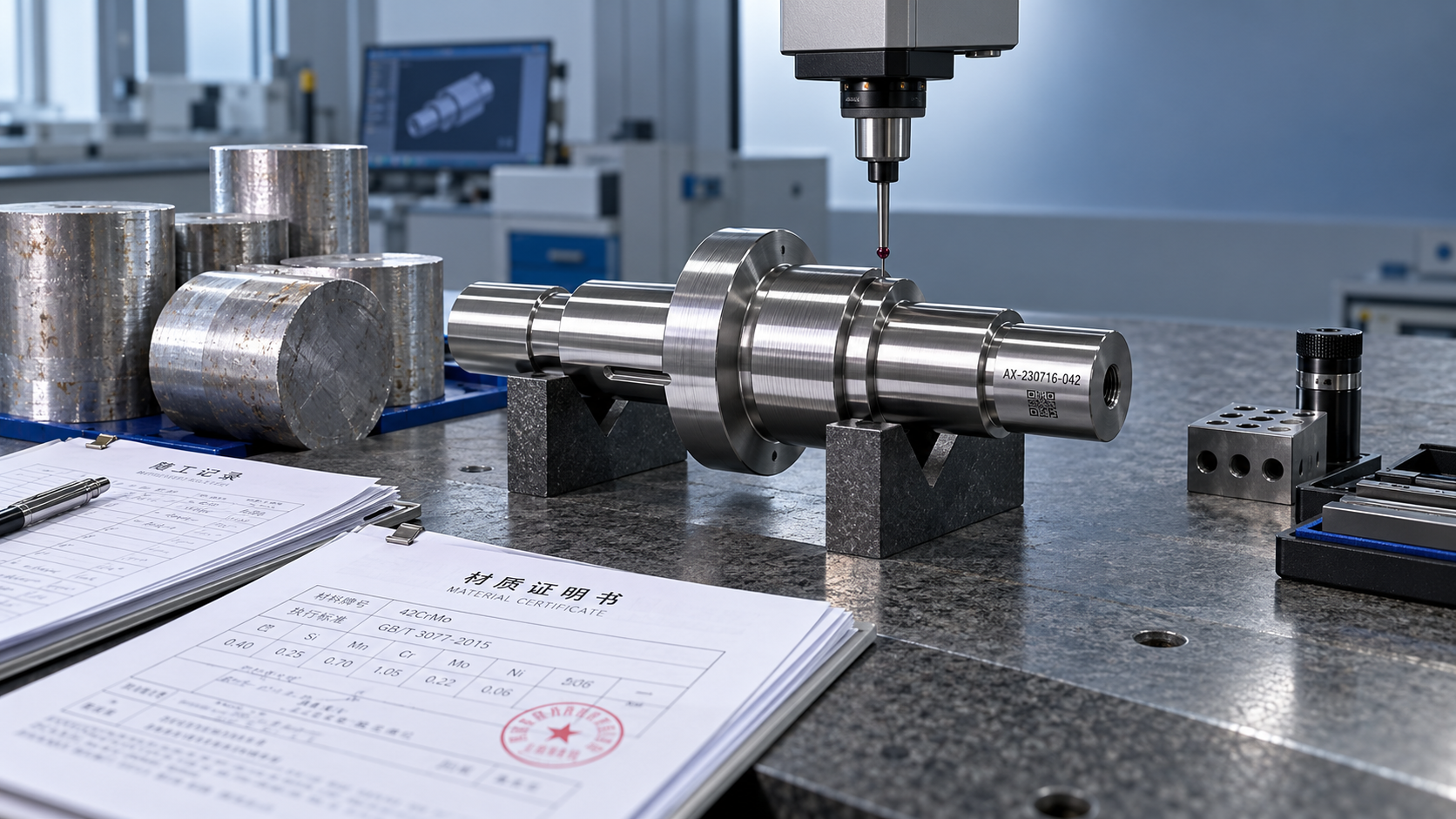
- How are material certificates, lot numbers, and outside processes linked to finished parts?
- What happens when a part is found out of tolerance after production has started?
- Can the supplier support special requirements such as deburring standards, cosmetic surfaces, cleanliness, or controlled packing?
A clear, specific answer is more valuable than a vague assurance that “quality is guaranteed.” In precision manufacturing, credibility usually appears in the details.
Lead time depends on more than machine availability
A supplier may state a short lead time, but buyers should ask what that promise includes. Does it begin after drawing approval? Does it include raw material procurement, fixture preparation, programming, first article approval, secondary processing, inspection, and export packing? Is transit time separate? These distinctions can determine whether a “three-week lead time” is actually three weeks or closer to six.
For simple, familiar parts, machining time may be the smallest part of the schedule. Material availability, plating, anodizing, heat treatment, grinding, welding, or specialized inspection can become the real bottleneck. Complex five-axis components may also require programming and setup time that cannot be compressed without increasing risk.
When comparing suppliers, request a lead-time breakdown instead of accepting one overall number. A transparent supplier can identify the longest path and flag activities that need early approval. This helps procurement teams plan around genuine constraints rather than discovering them after the order is placed.
Capacity deserves the same attention. A CNC workshop with impressive machines may still be overloaded, dependent on one key operator, or running different priorities for larger customers. Ask what production capacity is reserved for repeat programs, whether alternative machines can run the part, and how the factory handles rush orders. You do not need a supplier to promise the impossible; you need them to describe their limits early enough for you to make a plan.
Prototype speed and production reliability are different strengths
Some suppliers are excellent at rapid prototypes. They can turn around a few pieces quickly, solve a machining challenge creatively, and support design changes with little bureaucracy. Others are better suited to stable, recurring production, where fixtures, documented controls, scheduled materials, and predictable batches become more important.
Neither model is automatically better. The right choice depends on your purchasing stage. If your design is still evolving, prioritize engineering responsiveness and feedback on manufacturability. If the design is frozen and demand is growing, prioritize process repeatability, capacity planning, and supply continuity. In some cases, buyers use one qualified partner for development and another for volume production, although this approach requires careful transfer of specifications and quality expectations.
Look beyond unit price to calculate landed and failure cost
The lowest quotation often attracts attention first, especially when the same drawing produces a wide spread of prices. But a meaningful comparison requires buyers to understand what each quote includes and what risks sit outside it.
A lower unit price may reflect efficient machining and strong material purchasing power. It may also reflect omitted operations, a less expensive material interpretation, loose assumptions around tolerances, reduced inspection, or an unrealistic cycle-time estimate. The goal is not to avoid low-priced suppliers; it is to determine whether the price is based on the same technical and commercial scope.
Review quotations line by line. Confirm material grade and form, machining operations, setup charges, tooling or fixture costs, surface treatments, inspection documentation, packaging, taxes where relevant, shipping terms, and currency. If a part needs anodizing, heat treatment, grinding, laser marking, assembly, or custom protective packaging, make sure each step is visible.
Total cost also includes the financial impact of operational friction. A supplier that requires repeated clarification, misses documentation, ships mixed revisions, or delivers inconsistent batches can consume significant engineering and purchasing time. Rework, sorting, emergency freight, production downtime, and replacement orders can quickly erase a modest saving on unit price.
For recurring purchases, consider asking for pricing at several volume tiers. This reveals whether the wholesaler understands the relationship between setup cost, batch size, tool life, and material purchasing. It may be more economical to release a planned quarterly order with scheduled deliveries than to place many small urgent orders. At the same time, avoid committing to volume before the supplier has demonstrated stable quality on initial lots.
Evaluate engineering communication before it becomes urgent
CNC machining is a technical service, not merely a catalog transaction. Drawings may contain ambiguous notes, features may be difficult to reach with standard tools, and a specified finish may not suit the chosen material. The supplier’s engineering response can protect your timeline long before a machine starts cutting.
During quotation, notice whether the supplier asks useful questions. Do they identify sharp internal corners that require a radius? Do they point out tolerances that may require grinding or special tooling? Do they suggest a change that lowers cost without affecting function? These are positive signs when the recommendations are explained clearly and remain under your approval.
Communication should also be usable across teams. Purchasing needs reliable order status. Engineers need technical feedback. Quality teams need records and traceability. Logistics teams need accurate packing and shipping details. A wholesaler with a defined contact person and a disciplined update process can reduce avoidable delays, particularly when sourcing internationally across time zones.
Be cautious if the quotation is exceptionally fast but technically thin. A quick response is welcome, but it should not replace a proper review of tolerances, materials, secondary operations, and inspection expectations. Early questions are usually cheaper than late surprises.
Verify supply-chain control for secondary processes
Few manufactured parts are truly “machined only.” They may require anodizing, electroplating, powder coating, heat treatment, passivation, welding, grinding, polishing, or assembly. A CNC manufacturing wholesaler may manage these services internally or through qualified external partners. Either arrangement can work, provided responsibility is clear.
What matters is who owns the result. If the part returns from coating with blocked threads, distorted dimensions, color variation, scratches, or delayed paperwork, the buyer should not have to coordinate several subcontractors to resolve the problem. The main supplier should manage the process, confirm requirements before release, and inspect the finished part after the outside operation.
This is especially important for high-precision components. Heat treatment can affect distortion; coatings add thickness; polishing can alter edges; and transport between workshops can introduce damage or mix-ups. Ask how the wholesaler protects parts through each handoff and how production lots remain identifiable.
Use a staged qualification process instead of making a large first commitment
When a new supplier appears promising, the safest next step is usually not a large production order. A staged approach gives both sides room to verify assumptions.
- Technical review: Share the drawing package, clarify critical requirements, and confirm the manufacturing route.
- Sample or first article: Evaluate dimensions, finish, assembly fit, documentation, and communication quality.
- Pilot batch: Test repeatability, packing, delivery coordination, and response to any deviations.
- Controlled scale-up: Increase order volume once quality and lead-time performance are consistent.
This process is not about mistrust. It recognizes that successful sourcing depends on real production behavior, not only on capability statements. It also gives the supplier a clearer understanding of your requirements and future demand profile.
Warning signs buyers should not ignore
Some risks are visible early. Be careful when a supplier refuses to clarify assumptions, provides a quote with no material or process detail, or agrees to every requirement without asking technical questions. Other warning signs include shifting delivery commitments, inconsistent contact information, reluctance to share inspection examples, and unexplained price changes after an order is confirmed.
Another common issue is comparing suppliers only by the initial sample. A polished sample can be produced with extra attention, while production control remains unproven. Ask how the supplier will maintain the same standard when the quantity increases, the operator changes, or another machine is required.
International buyers should also check practical trade details: Incoterms, export packaging, shipment consolidation, customs documents, payment terms, and responsibility for freight damage. These may sound administrative, but they influence landed cost and delivery certainty just as much as machining cycle time.
A practical decision framework for procurement teams
Rather than selecting a CNC supplier on price alone, score finalists across a small number of weighted categories: technical fit, quality control, lead-time credibility, capacity, communication, commercial transparency, and supply-chain management. The weighting should reflect your risk. An aerospace-related structural part and a non-critical industrial bracket should not be sourced using the same priorities.
For high-risk components, quality evidence and process discipline may outweigh a price advantage. For mature, uncomplicated parts with broad tolerance bands, cost and delivery flexibility may take a larger share of the decision. The important point is to make those trade-offs consciously.
The best CNC manufacturing wholesaler is rarely the one that says yes to everything. It is the partner that understands the part, identifies risks before they become expensive, provides a realistic delivery path, and prices the complete scope with clarity. For procurement professionals, that combination creates something more valuable than a low quote: a supply relationship that makes production easier to plan, easier to control, and far less likely to fail when the schedule is under pressure.
PREVIOUS ARTICLE
Recommended for You
![]() Mitsubishi Electric Announces Physical AI System Linking Humanoid Robots and CNC MachinesMachine Tool Industry Editorial Team
Mitsubishi Electric Announces Physical AI System Linking Humanoid Robots and CNC MachinesMachine Tool Industry Editorial Team Precision Machining for Defense: Supplier Quality and Traceability ChecksManufacturing Market Research Center
![]() Nidec Machine Tool Launches MVR-5X Five-Axis Gantry MachineMachine Tool Industry Editorial Team
Nidec Machine Tool Launches MVR-5X Five-Axis Gantry MachineMachine Tool Industry Editorial Team Choosing a Precision Disc Parts Manufacturer in China: Tolerances and Quality ChecksManufacturing Market Research Center
![]() Siemens Executive Says AI Could Raise Factory Automation to 80%Manufacturing Market Research Center
Siemens Executive Says AI Could Raise Factory Automation to 80%Manufacturing Market Research Center Choosing Automated Machine Tools for High-Mix, Low-Volume ProductionMachine Tool Industry Editorial Team


Aris Katos
Future of Carbide Coatings
15+ years in precision manufacturing systems. Specialized in high-speed milling and aerospace grade alloy processing.
▶
Precision Machining for Defense: Supplier Quality and Traceability ChecksManufacturing Market Research Center▶
Choosing a Precision Disc Parts Manufacturer in China: Tolerances and Quality ChecksManufacturing Market Research Center▶
How to confirm short lead times for in-stock CNC milling machinesManufacturing Market Research Center▶
How to Choose a CNC Manufacturing Wholesaler for Quality, Lead Time, and CostManufacturing Market Research Center▶
China Temporarily Bans Helium ExportsManufacturing Market Research Center
▶
Mastering 5-Axis Workholding Strategies
Join our technical panel on Nov 15th to learn about reducing vibrations in thin-wall components.

Providing you with integrated sanding solutions
Before-sales and after-sales services
Comprehensive technical support