• Global CNC market projected to reach $128B by 2028 • New EU trade regulations for precision tooling components • Aerospace deman
NYSE: CNC +1.2%LME: STEEL -0.4%

How to confirm short lead times for in-stock CNC milling machines
How to confirm short lead times for in-stock CNC milling machines
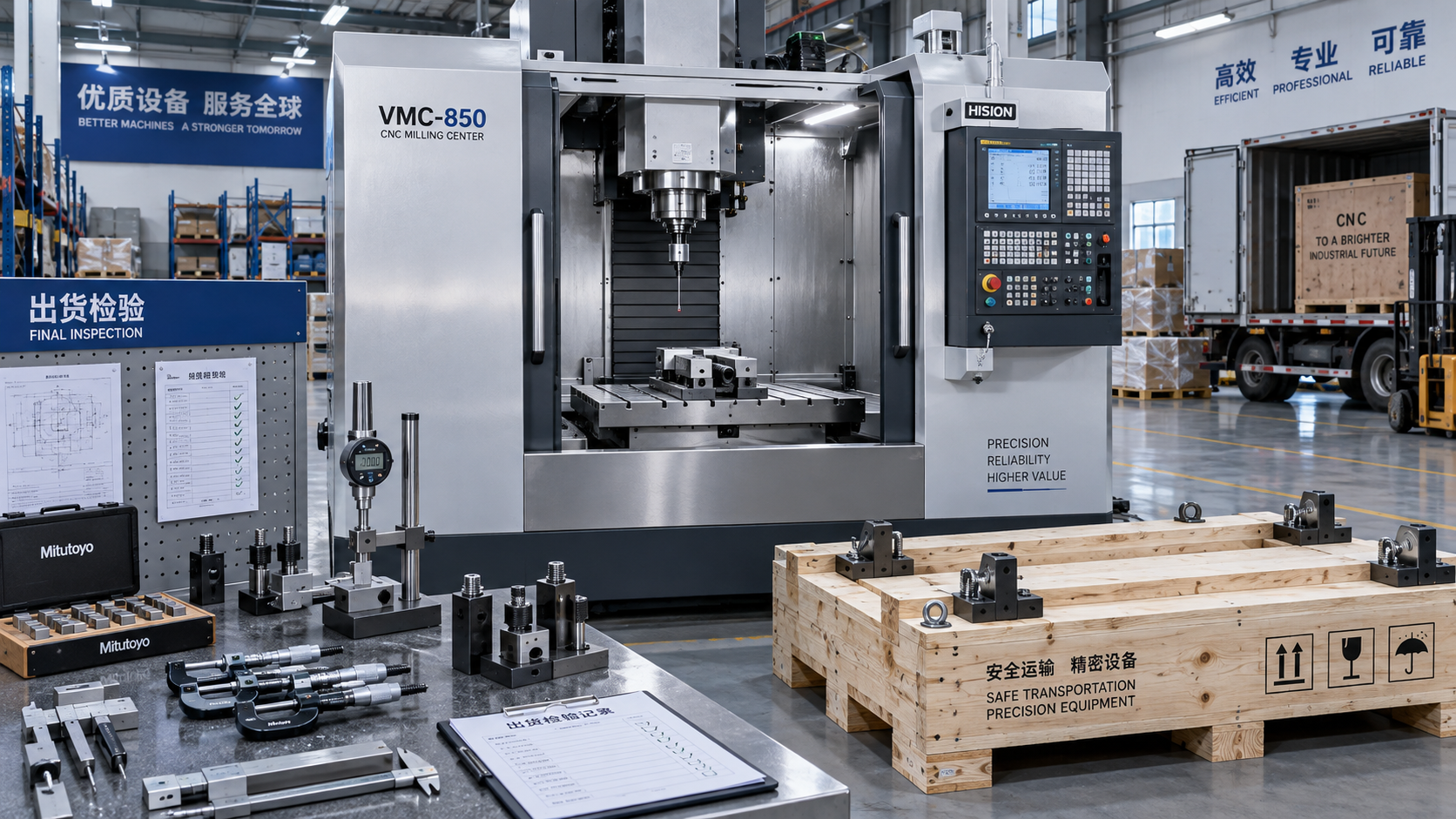
For procurement teams searching for “stock cnc milling machines short lead time,” an availability claim is only the starting point. A machine listed as in stock may still require configuration, inspection, export documentation, or transport arrangements before dispatch. To protect production schedules, buyers need to verify the exact machine’s location, readiness, and reservation status, then secure written commitments for shipment and delivery.
The distinction matters because a milling machine can be physically available without being ready for your application. A standard three-axis machining center might be awaiting a probe installation, while a machine advertised with fourth-axis capability may still need the rotary table, interface hardware, and commissioning. The useful question is not simply “Is it in stock?” It is “What remains between this specific machine and our first accepted production part?”
Define which date actually protects your schedule
Suppliers may use “lead time” to mean factory release, dispatch, arrival at a port, or delivery to your site. None necessarily includes unloading, installation, or acceptance. Before comparing quotations, ask every supplier to work toward the same milestone.
If the machine is needed for a production launch, work backward from the required first-part approval date. Allow separately for transport, customs clearance where applicable, rigging, installation, training, and process validation. Some activities can run in parallel; others cannot. Installation cannot begin merely because the machine has reached the destination port.
Ask for a dated schedule showing the event that starts the clock. “Dispatch within ten working days” is incomplete unless the supplier specifies whether that period begins after deposit receipt, technical approval, inspection acceptance, or another condition. Buyer-side approvals also need deadlines, or an apparently firm commitment can remain open-ended.
Verify the actual machine, not the inventory listing
A product page is not proof of allocated inventory. The listing may represent a model held somewhere in a dealer network, a machine reserved for another customer, or an incoming unit that has not yet cleared its own delivery process.
Request an evidence package tied to one identifiable machine:
- The serial number, exact model, manufacturing year, and current physical address.
- Recent photographs showing the machine, identification plate, control, and installed options.
- A live video walkthrough where practical, including power-on status and the components relevant to your order.
- Written confirmation of whether it is unallocated, provisionally held, or committed elsewhere.
- Disclosure of whether it is new inventory, a showroom demonstrator, previously installed equipment, or a refurbished machine.
A video helps establish identity and condition; it does not replace an acceptance test. Likewise, controller operating hours need context. They may reflect demonstrations, testing, or machining use, and should be assessed alongside service records and physical inspection.
Where a broker or dealer is involved, establish who controls the machine and who can authorize its release. A legitimate intermediary can still depend on a third-party warehouse or manufacturer for access. That dependency belongs in the delivery plan.
Freeze the configuration before accepting the promised lead time
The quickest available machine is useful only if it can do the work. Compare the stocked unit against your application requirements, not just the headline model specification. Axis travels and table size matter, but so do spindle taper, torque characteristics, tool capacity, workpiece load, coolant arrangements, and the available electrical supply.
For precision structural parts, check the proposed accuracy verification and thermal conditions. For production work, look at chip evacuation, fixture clearance, tool-change demands, and service access. A machine that accommodates the component geometrically may still be a poor fit for the intended process.
Ask the supplier to mark each quoted feature as installed and tested, available but awaiting installation, or not yet available. This simple distinction often exposes the real delivery constraint.
There is a sensible trade-off here. Nonessential monitoring functions may be deferred if they can be added safely later. An unavailable spindle configuration or essential axis interface is different. Do not treat a capability central to the process as a minor post-delivery accessory.
Find the unfinished work between stock and dispatch
Ask for a remaining-work list with an owner and completion date against every item. It should cover configuration changes, inspection, correction of defects, cleaning, preservation, packing, and release documentation. “Ready soon” becomes much easier to assess when the supplier identifies what is still unfinished.
Inspection deserves its own appointment. Confirm who will perform it, whether remote witnessing is acceptable, and what records will be supplied. Depending on the purchase, the scope may include axis movement, spindle operation, tool changing, lubrication, coolant functions, geometric checks, or a representative cutting test. Define the methods and acceptance criteria in advance rather than asking vaguely for an “accuracy certificate.”
An existing test report should identify the relevant machine and test conditions. If your parts require more demanding verification, agree that before payment milestones make changes difficult. Also establish how failed checks will be corrected and whether reinspection changes the dispatch date.
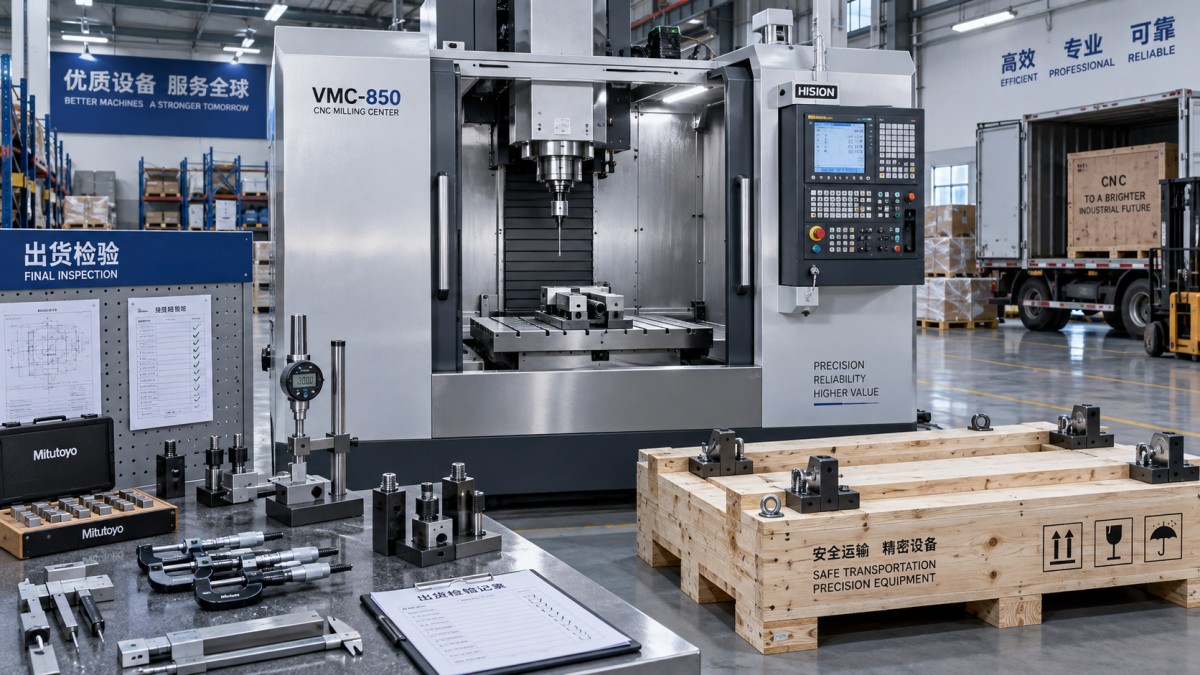
Keep packing on the schedule, too. Transport preparation may require axis restraints, protection for exposed surfaces, removal of vulnerable accessories, and a suitable crate or base. The method should follow the machine’s transport requirements and the planned route. A machine standing beside an empty crate is not necessarily ready for collection.
Test the transport promise separately
A supplier can control factory release more directly than vessel departures, border clearance, or local delivery appointments. Separate these stages instead of accepting one optimistic arrival date.
Have the freight provider review the packed dimensions, gross weight, lifting instructions, loading access, and unloading requirements. Depending on the machine and route, special handling or transport arrangements may be necessary. A preliminary freight quotation is not confirmation that suitable equipment or space has been booked.
For an international purchase, request the proposed shipping-document list and have your customs broker check destination requirements before dispatch. The applicable requirements depend on the machine, origin, destination, and transaction. Do not assume a previous shipment’s paperwork will automatically suit this one.
State the agreed Incoterms rule, named place, and version in the purchase documents. Then clarify unloading, insurance, storage, and installation separately where needed. Incoterms allocate specified transport responsibilities, costs, and risks; they do not establish a commissioning deadline or acceptance procedure.
Meanwhile, check your own receiving conditions. Door clearances, floor suitability, utilities, rigging access, and technician availability can stop an otherwise punctual delivery from becoming a working installation.
Make the reservation and delivery commitment enforceable in practice
An availability confirmation can expire while purchasing approval is underway. Obtain a written hold with an expiry date, the identified machine, and the conditions required to retain it. Clarify whether a deposit reserves that exact unit or merely places an order for the model.
The purchase order and supplier acknowledgment should agree on configuration, included accessories, inspection requirements, delivery milestones, and outstanding obligations. Require written buyer approval before substitution. A different unit may have the same model designation but different options, condition, or readiness.
Payment milestones should reflect evidence of progress where commercially possible. For example, negotiate what must be demonstrated before a pre-shipment payment becomes due. The appropriate structure depends on bargaining power and transaction risk; avoid assuming that either full advance payment or payment after installation will be available.
Agree how delays will be reported and what happens if a critical date is missed. Any cancellation, refund, or delay-remedy provisions need suitable commercial and legal review. More immediately useful is a named contact who can escalate a missed inspection or freight booking before the production schedule is affected.
Compare the cost of usable capacity, not just fast shipment
A stock premium can be justified when it avoids outsourcing or a production interruption. But compare alternatives on the same basis: machine price, necessary options, freight, applicable import costs, rigging, installation, tooling, training, and the work needed to reach acceptance.
Treat timing risk separately from confirmed expenditure. A lower-priced overseas machine with an uncertain arrival date is not directly comparable with a local unit ready for inspection. Equally, local availability does not compensate for missing process capability or inadequate service support.
Before releasing the order, ask the supplier to confirm four things in one written response: which machine is reserved, what work remains, when it will be ready for collection, and which conditions could move that date. Check those answers against the inspection plan, freight arrangements, and site readiness. If they do not align, the short lead time is still an estimate—not yet a delivery plan.
Recommended for You
![]() Mitsubishi Electric Announces Physical AI System Linking Humanoid Robots and CNC MachinesMachine Tool Industry Editorial Team
 Precision Machining for Defense: Supplier Quality and Traceability ChecksManufacturing Market Research Center
![]() Nidec Machine Tool Launches MVR-5X Five-Axis Gantry MachineMachine Tool Industry Editorial Team
 Choosing a Precision Disc Parts Manufacturer in China: Tolerances and Quality ChecksManufacturing Market Research Center
![]() Siemens Executive Says AI Could Raise Factory Automation to 80%Manufacturing Market Research Center
 Choosing Automated Machine Tools for High-Mix, Low-Volume ProductionMachine Tool Industry Editorial Team



Aris Katos
Future of Carbide Coatings
15+ years in precision manufacturing systems. Specialized in high-speed milling and aerospace grade alloy processing.
▶
Precision Machining for Defense: Supplier Quality and Traceability ChecksManufacturing Market Research Center▶
Choosing a Precision Disc Parts Manufacturer in China: Tolerances and Quality ChecksManufacturing Market Research Center▶
How to confirm short lead times for in-stock CNC milling machinesManufacturing Market Research Center▶
How to Choose a CNC Manufacturing Wholesaler for Quality, Lead Time, and CostManufacturing Market Research Center▶
China Temporarily Bans Helium ExportsManufacturing Market Research Center
▶
Mastering 5-Axis Workholding Strategies
Join our technical panel on Nov 15th to learn about reducing vibrations in thin-wall components.

Providing you with integrated sanding solutions
Before-sales and after-sales services
Comprehensive technical support