• Global CNC market projected to reach $128B by 2028 • New EU trade regulations for precision tooling components • Aerospace deman
NYSE: CNC +1.2%LME: STEEL -0.4%

High Precision Lathe Problems: What Causes Chatter, Thermal Drift, and Poor Surface Finish?
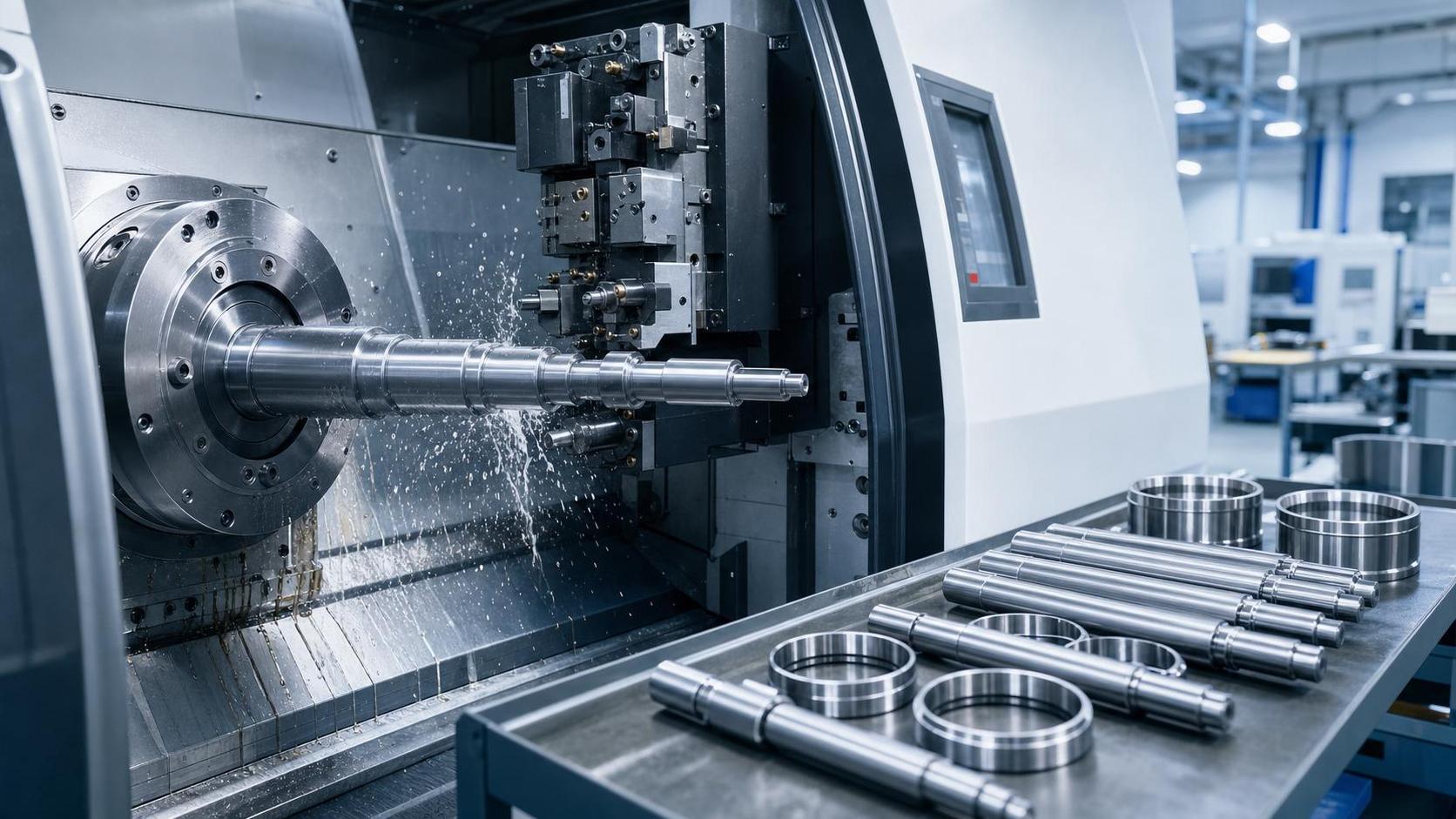
Why a High Precision Lathe Still Fails in Real Production
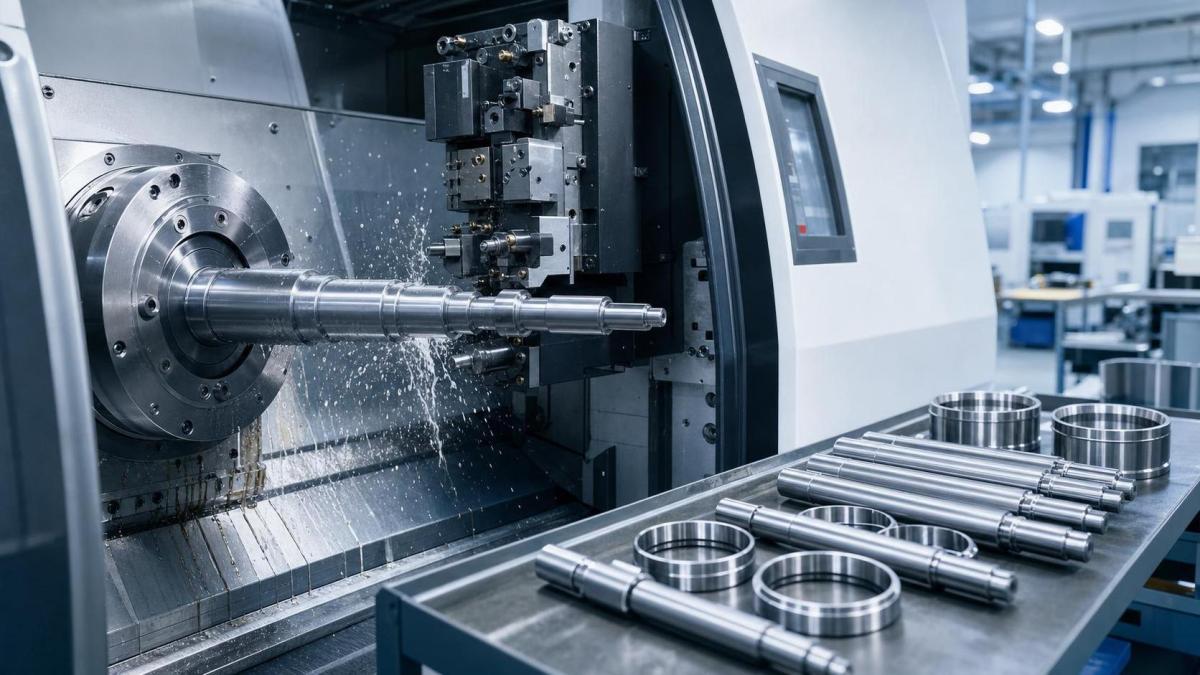
A high precision lathe is expected to hold size, control finish, and run repeatable cycles across demanding parts.
Yet in actual machining, chatter, thermal drift, and poor surface finish often appear long before the machine reaches its catalog limits.
That gap matters across automotive shafts, aerospace rings, energy fittings, and electronic hardware, where small variation can disrupt downstream assembly.
The issue is rarely one single defect.
More often, a high precision lathe is working inside a production system shaped by tooling wear, fixture rigidity, temperature change, batch rhythm, and program strategy.
In practical terms, the same machine may perform well on short aluminum parts, then struggle on slender alloy steel workpieces during a longer shift.
So the better question is not whether the machine is precise on paper.
It is whether the full process around the high precision lathe matches the application conditions on the shop floor.
Actual Use Starts With the Process Scenario
Different industries ask different things from a high precision lathe, even when tolerance looks similar in the drawing.
Aerospace parts often emphasize heat stability over long cycles.
Automotive production usually focuses on repeatability across volume.
Energy equipment may involve heavy cuts, interrupted surfaces, and difficult materials that amplify vibration.
Electronics components can be smaller, but surface integrity and burr control become more sensitive.
This is why the same high precision lathe problem should not be judged with one universal checklist.
The better approach is to identify what changes first in the process: cutting load, cycle time, thermal exposure, workholding span, or finish requirement.
Once that is clear, root causes become easier to separate.
A quick comparison of common shop conditions
When Chatter Appears, Rigidity Is Only Part of the Story
Chatter is one of the most common reasons a high precision lathe loses dimensional confidence and finish quality.
Many shops first blame machine stiffness, but field conditions are usually more layered.
On slender workpieces, the weakest link may be part support rather than spindle structure.
On harder materials, the problem may begin with insert geometry, edge wear, or an unstable speed range.
Interrupted cuts add another pattern.
A high precision lathe can look stable during roughing, then produce chatter during finishing because radial engagement becomes less forgiving.
In actual use, the fastest improvement often comes from combining several smaller corrections.
- Shorten tool overhang before changing inserts.
- Adjust spindle speed away from the vibration zone, not only downward.
- Review tailstock, steady rest, or chuck pressure on long parts.
- Check whether wear patterns match a resonance problem or a thermal issue.
A common misread is treating chatter as a tooling problem alone.
If the workholding, machine foundation, or spindle balance is drifting, insert changes may only mask the symptom for a short time.
Thermal Drift Becomes More Visible in Longer, Smarter Production Lines
Thermal drift is often underestimated because it develops gradually.
A high precision lathe may cut the first few parts correctly, then slowly shift as spindle heat, hydraulic temperature, coolant variation, and ambient change accumulate.
This matters more in digital production environments where machines run longer, data is tracked closely, and small drift becomes visible across a batch.
In one scenario, short production cycles with frequent stops create repeated warm and cool phases.
In another, unattended night runs expose a high precision lathe to hours of continuous heat growth.
These conditions require different responses.
For stop-start production, warm-up discipline and first-part verification matter more.
For long-cycle running, trend monitoring and scheduled offset correction become more useful.
The practical checks are usually straightforward.
- Track dimension change by machine runtime, not only by part count.
- Stabilize coolant temperature and flow before judging machine accuracy.
- Separate thermal drift from tool wear by comparing offset history with insert life.
- Check whether nearby equipment or plant airflow is changing the local environment.
Poor Surface Finish Usually Reflects Several Small Mismatches
Poor surface finish on a high precision lathe is rarely caused by feed rate alone.
More often, finish quality suffers because tool geometry, material behavior, machine vibration, and coolant delivery are slightly out of alignment.
Soft aluminum alloys may smear if the edge is not sharp enough.
Stainless steel may form built-up edge and leave torn surfaces.
Hardened components can show fine waviness when the machine appears dimensionally accurate.
The judgment should follow the finish pattern.
Random marks often point toward vibration or chip interference.
Consistent feed lines may indicate nose radius, feed, or pass strategy mismatch.
Discoloration or localized tearing usually suggests heat concentration or edge failure.
For a high precision lathe used in multi-industry work, finish control should be tied to part family rather than one generic cutting recipe.
What to compare before changing the whole process
The Most Common Misjudgments Happen Between Machine and Process
Many high precision lathe problems persist because the diagnosis starts from purchase specifications instead of process evidence.
That is a weak shortcut in modern manufacturing, where fixtures, robots, tool management, and production scheduling all affect machining quality.
Several blind spots appear repeatedly.
- Assuming similar parts need identical cutting conditions.
- Judging a high precision lathe before thermal equilibrium is reached.
- Focusing on spindle accuracy while ignoring chuck condition or jaw repeatability.
- Comparing tool cost without calculating scrap, rework, and offset intervention time.
- Treating digital compensation as a substitute for basic rigidity and setup control.
In plants moving toward flexible automation, these misjudgments become more expensive.
Once a high precision lathe is linked to robotic loading or mixed-part scheduling, small process instability can spread across many cycles quickly.
A More Reliable Way to Match the High Precision Lathe to the Job
The most useful improvement plan is usually simple, but it must follow the real production pattern.
Start by grouping parts by behavior, not only by drawing category.
Long slender shafts, interrupted forgings, hard finishing parts, and cosmetic surfaces should not share the same evaluation logic.
Then define a short control list for each group.
- Record stable speed ranges where the high precision lathe avoids chatter.
- Set tool life limits based on finish change, not only edge breakage.
- Monitor offsets against machine runtime to catch thermal drift early.
- Review fixture repeatability whenever finish or size variation appears suddenly.
- Use trial cuts that reflect actual batch duration, not a single sample part.
This approach fits the direction of global CNC manufacturing, where precision, automation, and data integration now have to work together.
A high precision lathe performs best when machine capability, tooling strategy, and thermal control are judged as one system.
Before the next process change, map the actual cutting scenario, compare drift and finish patterns, and confirm which variables move first.
That step usually does more for accuracy and scrap reduction than changing parameters at random.
Recommended for You
 Can CNC Machining Inconel Control Tool Wear in High-Temperature Aerospace Parts?CNC Machining Technology Center
 Machine Tool Market Outlook: Demand Drivers, Capacity Shifts, and Investment RisksManufacturing Market Research Center
 Zero-Point Clamping or Modular Fixtures? Choosing a Faster CNC Changeover SystemCNC Machining Technology Center
 How to Cut CNC Fixture Changeover Time Without Sacrificing Part AccuracyCNC Machining Technology Center
 When Does CNC Turning Pay Off? A Break-Even Guide by Annual Part VolumeMachine Tool Industry Editorial Team
 Machine Tool Standards by Country: What Importers Must Verify Before PurchaseManufacturing Policy Research Center


Aris Katos
Future of Carbide Coatings
15+ years in precision manufacturing systems. Specialized in high-speed milling and aerospace grade alloy processing.
▶
CNC Lathe Quick Installation Guide: Alignment Checks Before First Production RunCNC Machining Technology Center▶
How to Select a CNC Lathe for Small Parts Without Sacrificing Accuracy or Cycle TimeCNC Machining Technology Center▶
How to Select a Slant Bed Lathe for High-Precision Shaft and Chuck WorkCNC Machining Technology Center▶
How to Specify a CNC Lathe for High-Volume Automotive Shaft ProductionCNC Machining Technology Center▶
CNC Turning Explained: How It Works, Key Tolerances, and Best-Fit Part TypesCNC Machining Technology Center
Mastering 5-Axis Workholding Strategies
Join our technical panel on Nov 15th to learn about reducing vibrations in thin-wall components.

Providing you with integrated sanding solutions
Before-sales and after-sales services
Comprehensive technical support