• Global CNC market projected to reach $128B by 2028 • New EU trade regulations for precision tooling components • Aerospace deman
NYSE: CNC +1.2%LME: STEEL -0.4%

CNC Lathe for Mass Production: What Cycle Time, Bar Capacity, and Automation Features Matter?
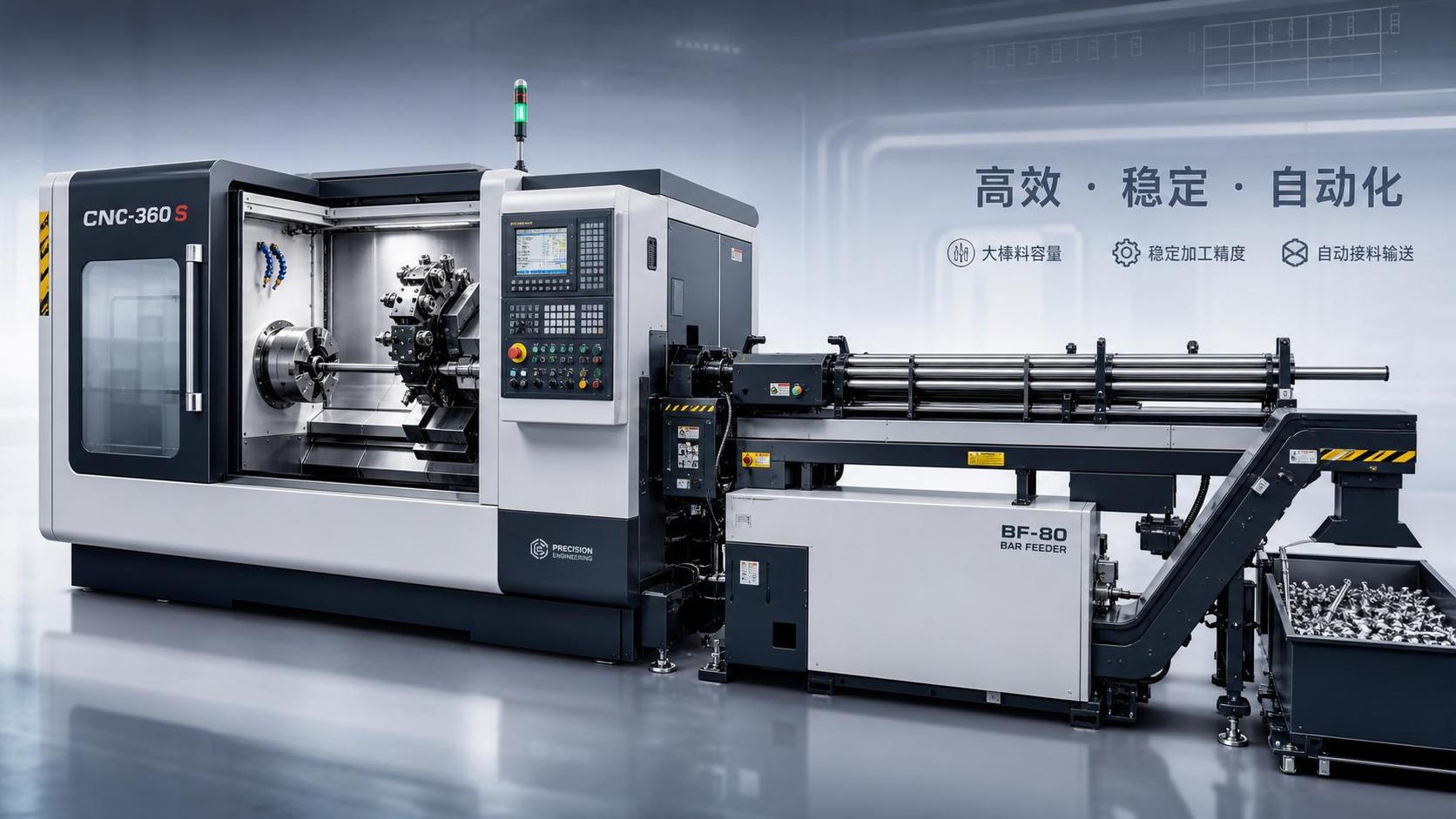
Why does a CNC Lathe for Mass Production deserve closer scrutiny?
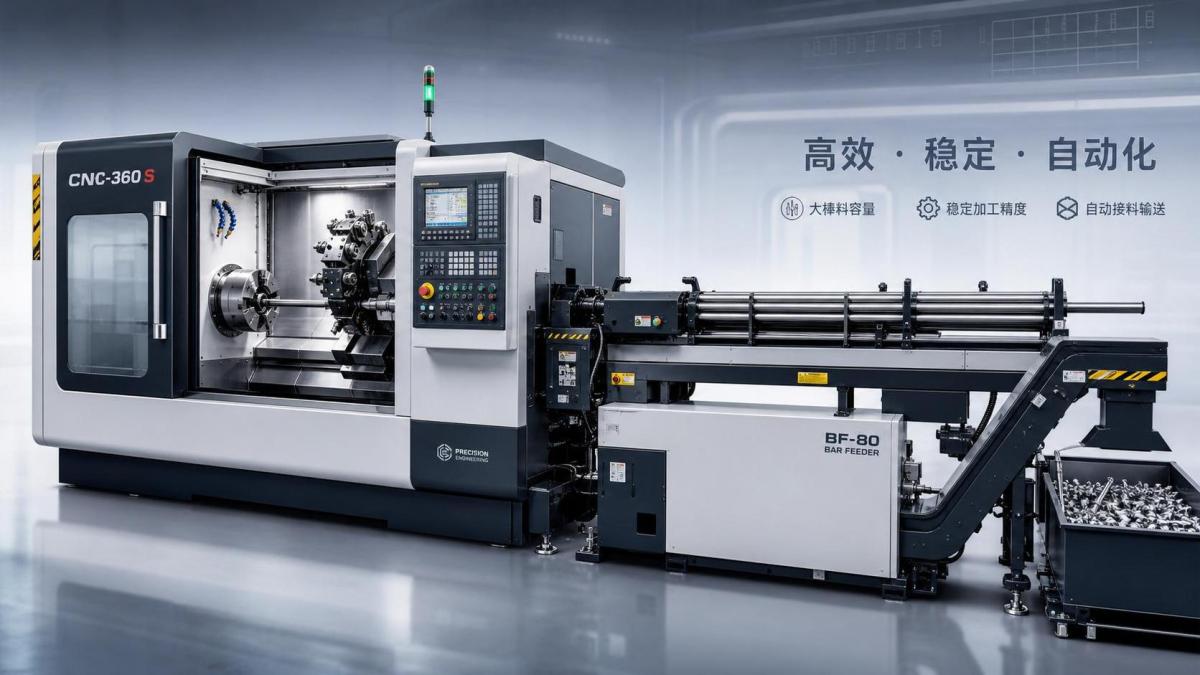
A CNC Lathe for Mass Production is not just another machine purchase. It shapes output rate, labor use, scrap exposure, and delivery consistency across an entire production program.
That matters even more now, because global manufacturing is moving toward higher automation, tighter tolerances, and stronger digital control across factories.
In automotive, aerospace, electronics, and energy equipment, production targets often rise faster than available labor. A capable lathe must therefore support stable volume, not only good sample parts.
The practical question is simple. Can the CNC Lathe for Mass Production keep unit cost predictable while meeting takt time, material flow, and unattended running goals?
When comparing options, three areas usually decide the result: cycle time, bar capacity, and automation features. Everything else should be reviewed through those operating realities.
Is cycle time really the first number to challenge?
Usually, yes. Quoted spindle speed and rapid traverse look impressive, but production economics depend on total cycle time, not isolated peak values.
For a CNC Lathe for Mass Production, total cycle time includes cutting, tool indexing, part transfer, bar feed advance, measurement stops, chip evacuation, and door movement if automation is involved.
A machine can remove metal quickly and still underperform in volume production. The reason is often dead time between cuts rather than weak cutting power.
A better evaluation method is to ask for a full cycle breakdown on a representative part family. That reveals where seconds are being lost repeatedly.
It also helps to compare best-case and stable-case numbers. Best-case time may rely on fresh tools, ideal stock, and minimal inspection interruptions.
Stable-case time is what the line can sustain over weeks. For mass production, that is the more useful metric for cost planning.
In real applications, a small cycle difference compounds fast. Saving six seconds on a 50-second part has a far greater annual effect than a slightly lower machine purchase price.
What should be checked behind a cycle time claim?
- Tool layout and whether multiple operations can be combined.
- Turret indexing speed and repeat positioning accuracy.
- Sub-spindle handoff time for completed parts.
- Chip control on long-running jobs.
- In-process gauging frequency and offset correction logic.
- Whether the quoted time includes bar remnant changeover.
How much does bar capacity affect throughput and cost?
More than many buyers expect. Bar capacity is not only a size specification. It affects material strategy, machine utilization, and which jobs can run unattended.
If the selected CNC Lathe for Mass Production has limited bar diameter range, it may force extra setups, shorter run windows, or secondary operations elsewhere.
The right capacity depends on actual part mix. A narrow family of shafts may run efficiently on a smaller spindle bore with faster handling.
A wider product range often benefits from larger bar capacity, especially when future programs are likely to increase diameter or wall thickness.
There is also a hidden tradeoff. Larger capacity can improve flexibility, but it may come with higher machine cost, more floor space, and different bar feeder requirements.
The useful question is not, “What is the biggest bar this machine can take?” It is, “What diameter range supports the next three years of production without waste?”
That becomes especially relevant in markets where mixed demand, export projects, and short lead times require flexible scheduling across several component types.
A quick decision table for bar capacity and production fit
This comparison helps connect bar capacity with operating consequences rather than treating it as a catalog number.
Which automation features actually matter in a CNC Lathe for Mass Production?
Automation should reduce variation and labor exposure, not simply add complexity. The right features depend on whether production runs are long, mixed, lights-out, or tightly monitored.
For many programs, the most valuable features are not the most dramatic ones. Reliable bar feeding, automatic part catching, tool life monitoring, and alarm recovery often matter more than flashy add-ons.
A strong CNC Lathe for Mass Production usually needs automation that supports repeatable output over an entire shift. That includes stable loading, part separation, and offset correction.
Where labor is constrained, robotic loading can make sense. Still, robotics only pay off when part presentation, gripper change, and upstream flow are already well defined.
In practice, integrated automation should be judged by three questions. Does it shorten non-cut time? Does it reduce operator dependency? Can it recover smoothly after common interruptions?
Digital integration also deserves attention. Remote monitoring, production data capture, and maintenance alerts now play a larger role in smart factory planning across global machine tool operations.
Features worth confirming before approval
- Bar feeder compatibility across target diameters and materials.
- Automatic tool breakage detection and life tracking.
- Part conveyor or catcher design for scratch-sensitive surfaces.
- Probe or gauging support for dimensional drift control.
- MES or ERP connectivity for production visibility.
- Clear alarm history and practical maintenance diagnostics.
Where do comparisons often go wrong?
A common mistake is comparing machines by purchase price alone. The cheaper option can become the more expensive one after tooling loss, downtime, and missed throughput are counted.
Another weak comparison uses a single sample part. A CNC Lathe for Mass Production should be assessed against the real part family, tolerance spread, and likely future contracts.
Some evaluations also ignore support readiness. Spare parts availability, service response, and local application engineering can affect ramp-up speed as much as machine configuration.
Needle-moving differences are often found in setup repeatability, thermal stability, and chip behavior during long runs. Those are less visible in a showroom demonstration.
It is also risky to assume all automation adds equal value. Features that do not match part geometry or shift pattern may increase maintenance without improving output.
What should be included in a realistic comparison?
How should total cost and implementation risk be judged?
The full cost of a CNC Lathe for Mass Production includes more than machine price. Tooling, automation peripherals, installation, training, software connection, and startup scrap all belong in the calculation.
Cycle time affects labor and machine-hour cost. Bar capacity affects material strategy and scheduling. Automation features affect staffing, uptime, and overnight production potential.
That is why total cost should be modeled around actual part demand. Annual volume, shift structure, tolerance level, and target utilization create a more defensible investment view.
Implementation risk is easier to control when acceptance criteria are defined early. That includes sample parts, capability targets, support timing, training scope, and data interface requirements.
A practical next step is to prepare a short evaluation sheet before supplier discussions. List your expected cycle range, diameter range, unattended runtime goal, and integration needs.
With that structure, comparisons become clearer. The best CNC Lathe for Mass Production is the one that fits current output, future flexibility, and stable operating cost at the same time.
Before moving forward, confirm one representative part family, one realistic production scenario, and one cost model. Those three checks usually expose the strongest option faster than broad specification lists.
Recommended for You
 How to Select a Machine Tool for Aerospace Parts with Tight Tolerances?Machine Tool Industry Editorial Team
 How to Select CNC Equipment for High-Mix, Low-Volume ProductionCNC Machining Technology Center
 Can CNC Machining Inconel Control Tool Wear in High-Temperature Aerospace Parts?CNC Machining Technology Center
 Machine Tool Market Outlook: Demand Drivers, Capacity Shifts, and Investment RisksManufacturing Market Research Center
 Zero-Point Clamping or Modular Fixtures? Choosing a Faster CNC Changeover SystemCNC Machining Technology Center
 How to Cut CNC Fixture Changeover Time Without Sacrificing Part AccuracyCNC Machining Technology Center

Aris Katos
Future of Carbide Coatings
15+ years in precision manufacturing systems. Specialized in high-speed milling and aerospace grade alloy processing.
▶
CNC Lathe Quick Installation Guide: Alignment Checks Before First Production RunCNC Machining Technology Center▶
How to Select a CNC Lathe for Small Parts Without Sacrificing Accuracy or Cycle TimeCNC Machining Technology Center▶
How to Select a Slant Bed Lathe for High-Precision Shaft and Chuck WorkCNC Machining Technology Center▶
How to Specify a CNC Lathe for High-Volume Automotive Shaft ProductionCNC Machining Technology Center▶
CNC Turning Explained: How It Works, Key Tolerances, and Best-Fit Part TypesCNC Machining Technology Center
Mastering 5-Axis Workholding Strategies
Join our technical panel on Nov 15th to learn about reducing vibrations in thin-wall components.

Providing you with integrated sanding solutions
Before-sales and after-sales services
Comprehensive technical support