• Global CNC market projected to reach $128B by 2028 • New EU trade regulations for precision tooling components • Aerospace deman
NYSE: CNC +1.2%LME: STEEL -0.4%

How CNC Lathe for Automotive Manufacturing Affects Part Cost, Tolerance, and Output
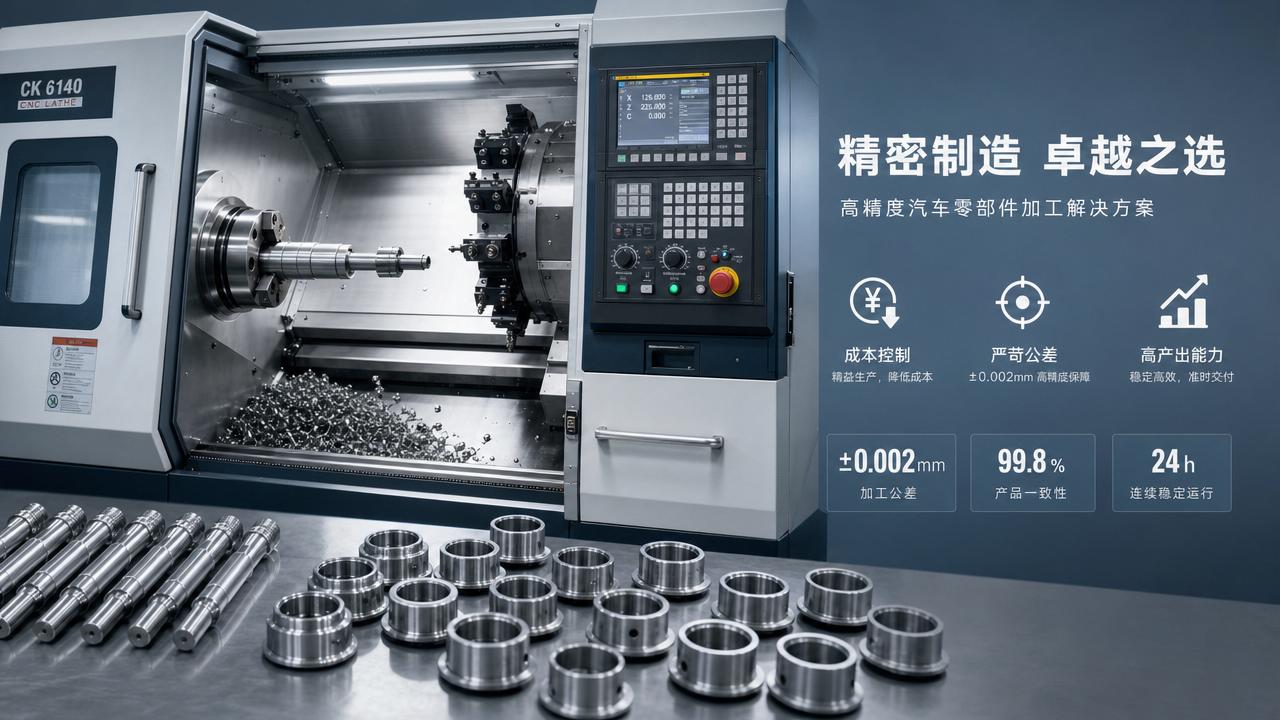
How CNC Lathe for Automotive Manufacturing Affects Part Cost, Tolerance, and Output
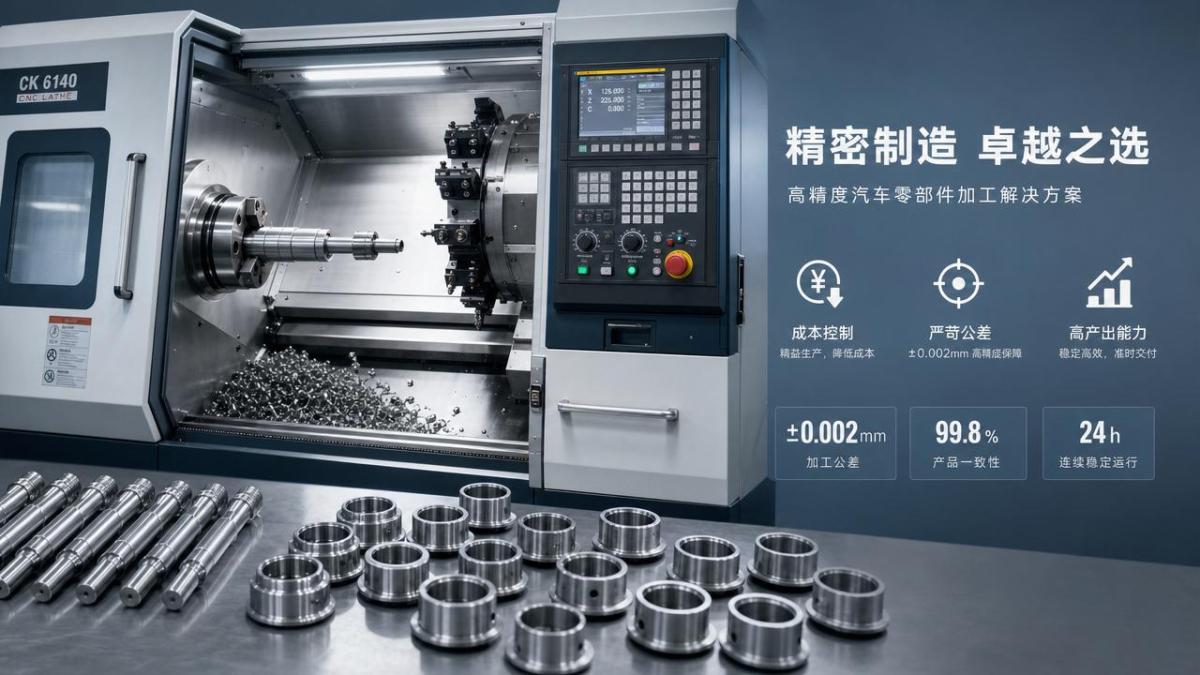
For procurement teams, choosing the right CNC Lathe for Automotive Manufacturing directly influences unit cost, dimensional tolerance, and production output.
That decision also shapes scrap rate, lead time, maintenance burden, and supplier competitiveness.
In automotive programs, those factors move together.
A lower machine price may look attractive at first.
But if the CNC Lathe for Automotive Manufacturing cannot hold tolerance or sustain output, total cost rises quickly.
That is why sourcing decisions should focus on lifecycle value, not only purchase price.
From recent market changes, the stronger signal is clear.
Automotive suppliers now need tighter consistency, faster changeover, and more traceable production data.
This makes CNC Lathe for Automotive Manufacturing a strategic investment rather than a simple equipment purchase.
Why cost, tolerance, and output are linked
In real production, cost, tolerance, and output rarely move separately.
A machine with weak rigidity often needs slower cutting parameters.
That reduces hourly output and increases cost per part.
If spindle stability or thermal control is poor, tolerance drift becomes more common.
Then rework, inspection time, and material loss start eating into margins.
A capable CNC Lathe for Automotive Manufacturing reduces those hidden losses.
It can run more stable cycles, maintain repeatability, and support larger batch consistency.
That also helps when OEM quality audits become stricter.
Key cost drivers behind machine selection
- Machine rigidity affects cutting speed, tool life, and part finish.
- Spindle power affects cycle time on harder materials and larger diameters.
- Turret speed affects non-cutting time across high-volume jobs.
- Automation readiness affects labor cost and shift utilization.
- Control system quality affects programming efficiency and process stability.
When these elements align, the CNC Lathe for Automotive Manufacturing produces more predictable economics.
That predictability matters when quoting multi-year automotive contracts.
How CNC Lathe for Automotive Manufacturing changes part cost
Part cost is more than raw machining minutes.
It includes setup time, tool wear, downtime, inspection frequency, scrap, and operator involvement.
A modern CNC Lathe for Automotive Manufacturing can lower all of them.
1. Lower cycle time
Faster rapids, stronger spindles, and efficient chip evacuation shorten each cycle.
Across thousands of parts, even small reductions matter.
2. Less scrap and rework
Stable machining keeps dimensions closer to target.
That means fewer rejected shafts, bushings, hubs, and threaded parts.
3. Lower labor input
Bar feeders, part catchers, probing, and robot loading reduce manual handling.
This is especially valuable in lights-out or multi-shift production.
4. Better tool usage
A rigid CNC Lathe for Automotive Manufacturing supports more consistent tool wear.
That helps purchasing estimate insert consumption more accurately.
The result is a clearer total cost model.
And that creates stronger negotiation power with both equipment suppliers and tiered customers.
How machine capability affects tolerance performance
Tolerance is where many sourcing decisions succeed or fail.
Automotive components often require repeatability across long production runs.
That includes diameter control, concentricity, surface finish, and thread accuracy.
A CNC Lathe for Automotive Manufacturing supports these targets through several design features.
Critical factors to check
- Thermal stability during long production runs.
- Spindle runout and bearing quality.
- Guideway structure and vibration resistance.
- Feedback system resolution and servo response.
- Chuck and fixture compatibility for part repeatability.
In practice, tolerance failure often comes from process instability, not only programming errors.
That is why a supplier should request capability data, not just a brochure.
Ask for sample part reports, Cp or Cpk references, and real application cases.
The better CNC Lathe for Automotive Manufacturing suppliers can usually provide them quickly.
What output really depends on in automotive machining
Output is not only about spindle speed.
It depends on uptime, changeover efficiency, tool access, automation, and quality consistency.
A fast machine that stops often will not deliver strong output.
A stable CNC Lathe for Automotive Manufacturing usually wins over time.
Signals of high-output performance
- Short setup and easy parameter recovery.
- Reliable chip control on steel and alloy parts.
- Integrated automation interface for bar feed or robot loading.
- Quick maintenance access and clear alarm diagnostics.
- Stable repeatability across day and night shifts.
This also connects to expansion planning.
If one CNC Lathe for Automotive Manufacturing integrates well into flexible production lines, scaling becomes easier later.
That matters when EV parts, transmission parts, or steering components shift in demand.
A practical sourcing checklist before placing an order
A smart buying process needs more than price comparison.
It should connect technical fit with operating cost and supplier support.
This checklist makes evaluation more objective.
It also helps compare each CNC Lathe for Automotive Manufacturing on the same decision basis.
Common buying mistakes and how to avoid them
One common mistake is buying only for today’s part drawing.
Automotive demand changes fast, especially across platforms and powertrain types.
A slightly more flexible CNC Lathe for Automotive Manufacturing may protect future capacity better.
Another mistake is ignoring integration cost.
Control compatibility, automation interface, and data connection can affect implementation speed.
There is also the risk of underestimating after-sales support.
Even a strong machine loses value if service response is slow.
In actual business, downtime often costs more than the original equipment discount.
- Compare total ownership cost, not only machine price.
- Request proof of tolerance stability on similar parts.
- Check automation and software compatibility early.
- Confirm local service capability before final approval.
Final decision: choose value that holds over time
The best CNC Lathe for Automotive Manufacturing is not always the cheapest or the most advanced.
It is the one that fits the part mix, holds tolerance, supports output, and keeps long-term cost under control.
For sourcing decisions, that balance is what creates dependable results.
A well-chosen CNC Lathe for Automotive Manufacturing can improve quote accuracy, reduce quality risk, and strengthen delivery performance.
That also means better confidence when planning future automotive programs.
Before placing an order, review cost structure, tolerance evidence, output expectations, and service readiness together.
That final step usually leads to a smarter purchase and a stronger manufacturing outcome.
Recommended for You
![]() JTEKT Introduces G5 Series Large CNC Cylindrical Grinder, Sales Begin October 26, 2026Machine Tool Industry Editorial Team
JTEKT Introduces G5 Series Large CNC Cylindrical Grinder, Sales Begin October 26, 2026Machine Tool Industry Editorial Team Shaft Parts for Heavy Machinery: Selecting Materials for High Shock LoadsCNC Machining Technology Center
![]() 33rd JIMTOF 2026 Set to Open in Tokyo as Taiwanese Exhibitors Seek OrdersGlobal Machine Tool Trade Research Center
33rd JIMTOF 2026 Set to Open in Tokyo as Taiwanese Exhibitors Seek OrdersGlobal Machine Tool Trade Research Center Which Fixture Type Cuts Changeover Time Most in High-Mix CNC Machining?CNC Machining Technology Center
![]() FANUC Invests $18 Million in Largest U.S. Corporate Automation Training CenterMachine Tool Industry Editorial Team
FANUC Invests $18 Million in Largest U.S. Corporate Automation Training CenterMachine Tool Industry Editorial Team Southeast Asia Machine Tool Market: Comparing Automotive Demand by CountryManufacturing Market Research Center


Aris Katos
Future of Carbide Coatings
15+ years in precision manufacturing systems. Specialized in high-speed milling and aerospace grade alloy processing.
▶
Manual vs. CNC Lathe for Simple Parts: How Batch Size Affects the ChoiceCNC Machining Technology Center▶
How to Select a CNC Metal Lathe for Tight-Tolerance Shaft and Sleeve PartsCNC Machining Technology Center▶
CNC Lathe Quick Installation Guide: Alignment Checks Before First Production RunCNC Machining Technology Center▶
How to Select a CNC Lathe for Small Parts Without Sacrificing Accuracy or Cycle TimeCNC Machining Technology Center▶
How to Select a Slant Bed Lathe for High-Precision Shaft and Chuck WorkCNC Machining Technology Center
▶
Mastering 5-Axis Workholding Strategies
Join our technical panel on Nov 15th to learn about reducing vibrations in thin-wall components.

Providing you with integrated sanding solutions
Before-sales and after-sales services
Comprehensive technical support