• Global CNC market projected to reach $128B by 2028 • New EU trade regulations for precision tooling components • Aerospace deman
NYSE: CNC +1.2%LME: STEEL -0.4%

How Advanced Manufacturing Technology Improves Precision and Reliability in Energy Equipment
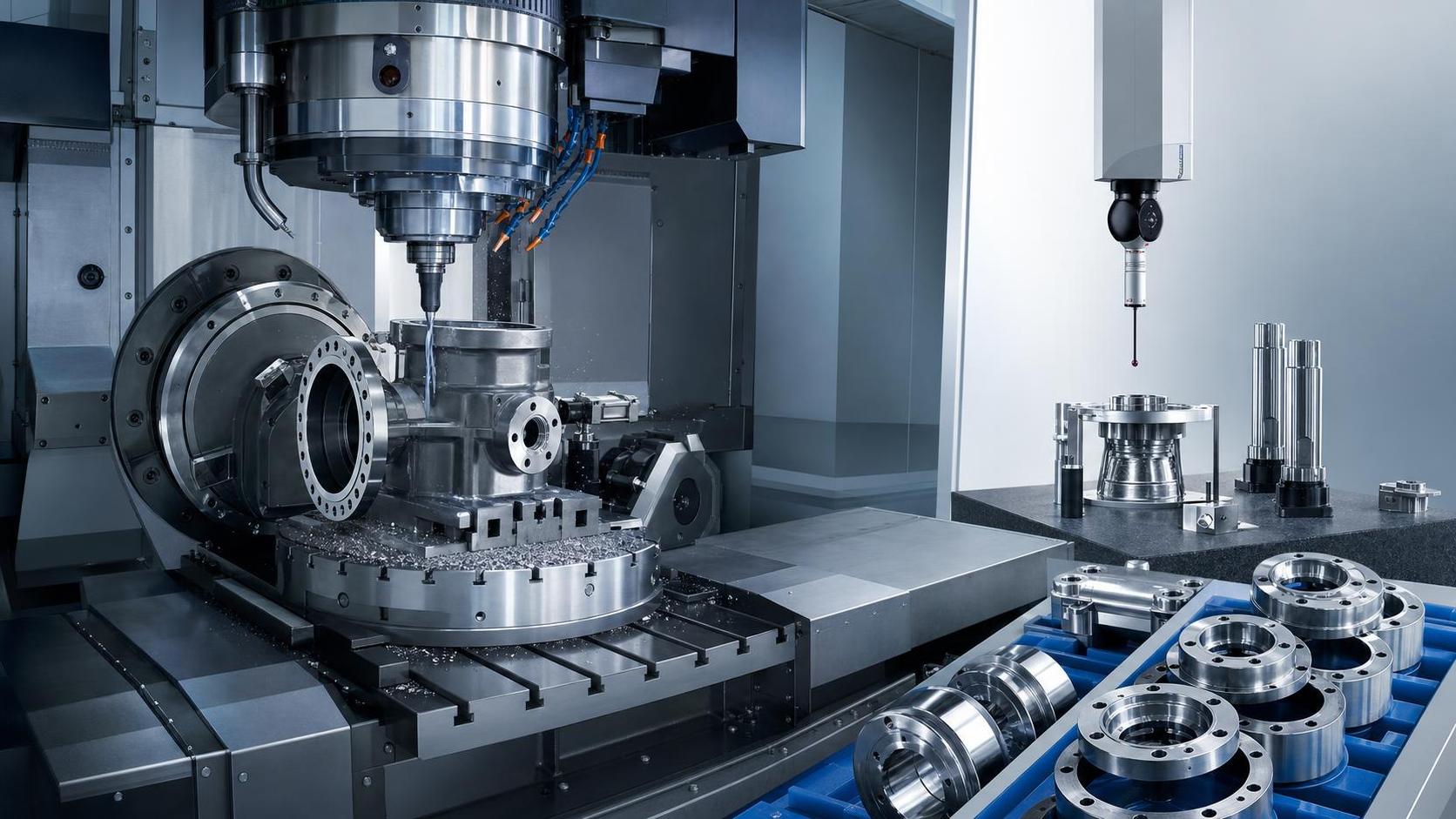
How Advanced Manufacturing Technology Improves Precision and Reliability in Energy Equipment
The phrase Advanced Manufacturing Technology for energy equipment is often used too broadly. In practice, it does not mean simply adding more automation or buying newer machines. In the energy sector, the term usually refers to a tightly controlled manufacturing system in which machining accuracy, material behavior, inspection data, and process repeatability are managed as one chain. That distinction matters because energy equipment does not fail on appearance. It fails on sealing surfaces, heat-affected zones, concentricity errors, residual stress, microcracks, coating inconsistency, or assembly variation that only becomes visible after long service under pressure, temperature cycling, vibration, corrosion, or heavy load.
For technical evaluation work, the real question is not whether a supplier uses CNC, robotics, or digital tools. Almost every serious manufacturer does. The more useful question is whether those technologies reduce variation in parts that are functionally critical. In turbine housings, valve bodies, pump shafts, bearing seats, flanges, heat exchanger parts, and structural components used in power generation or oil and gas systems, precision is inseparable from reliability. A dimension that is technically within tolerance can still create field problems if surface finish, roundness, alignment, or material integrity are unstable from batch to batch.
That is why advanced manufacturing in this context usually combines high-precision machine tools, stable fixturing, multi-axis machining, in-process measurement, tool condition monitoring, post-process inspection, and traceable production records. The point is not sophistication for its own sake. The point is to make the produced part match the engineering intent, repeatedly, under industrial conditions.
Precision in Energy Equipment Is More Than Tight Tolerance
One common misunderstanding is to treat precision as a single dimensional issue. In energy equipment manufacturing, precision is multi-layered. It includes geometric tolerances such as flatness, perpendicularity, runout, and position accuracy. It also includes surface integrity, which may involve roughness, burr control, recast layer management in some processes, and the avoidance of machining-induced defects. On components exposed to cyclic loads or high-pressure media, these details directly affect fatigue resistance, sealing performance, and service life.
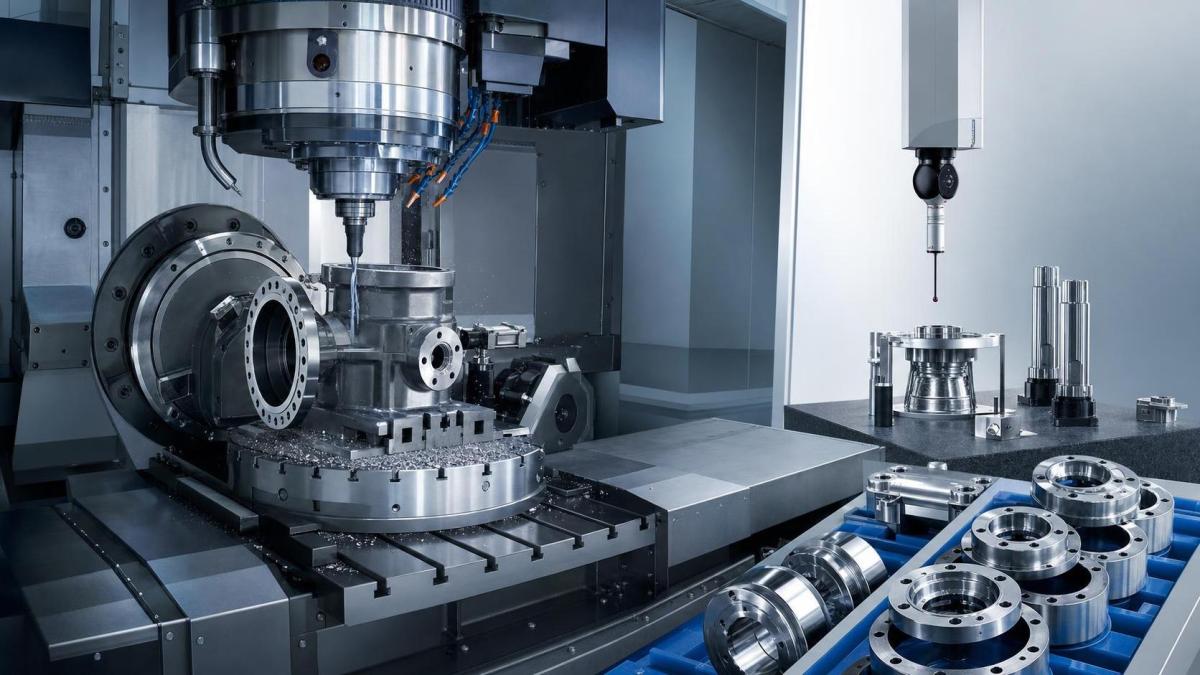
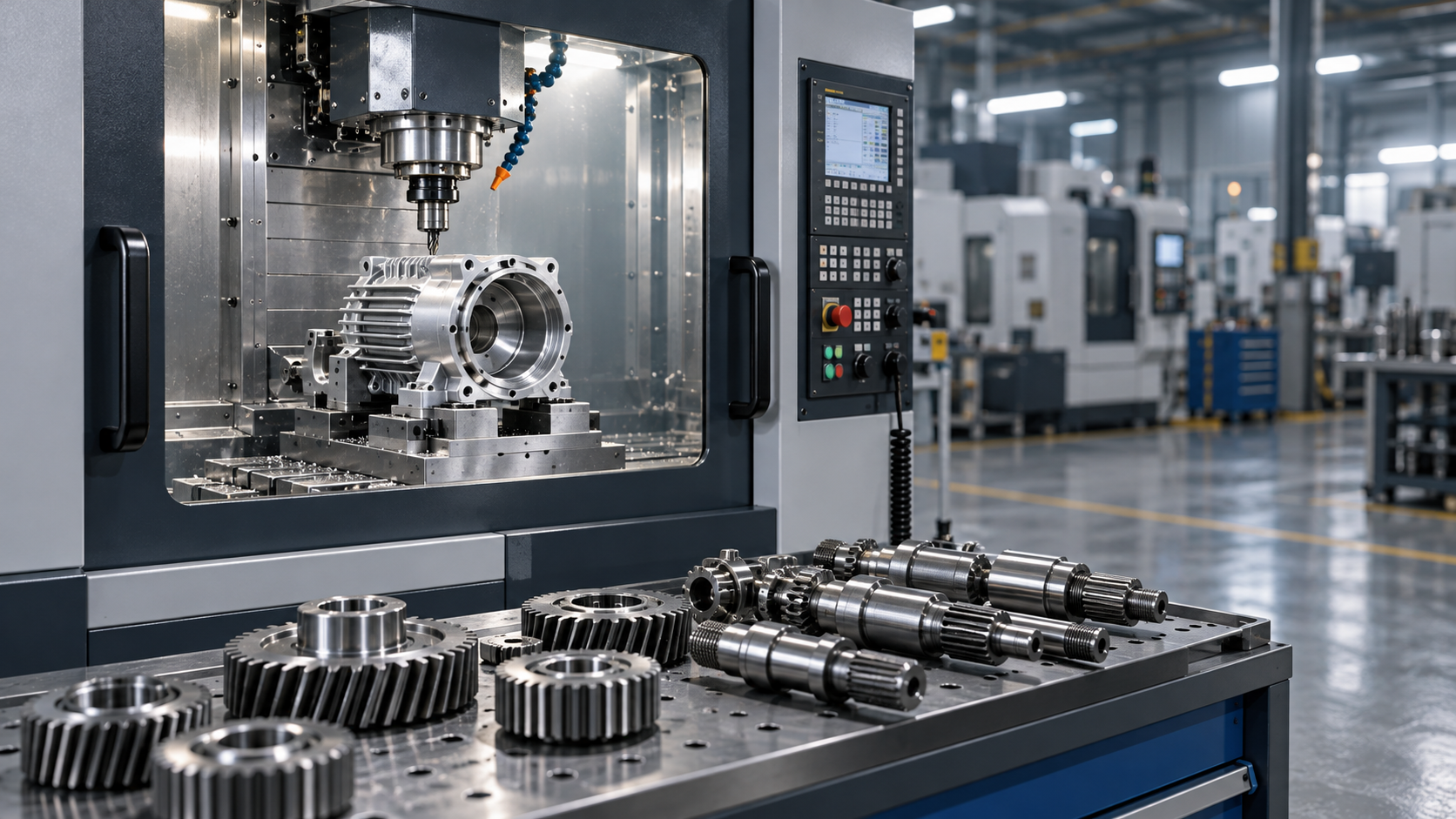
A multi-axis machining center, for example, is valuable not only because it can cut complex shapes. Its real advantage is that it can reduce multiple re-clamping operations. Fewer re-clamping steps usually mean less accumulated positional error and better consistency between related features. For parts such as impellers, manifolds, or complex valve components, that has practical consequences. Flow paths remain closer to design intent, mating surfaces align more predictably, and inspection results are less dependent on operator handling.
This is also where the CNC machine tool industry has become central to energy manufacturing. Modern CNC lathes, machining centers, and automated production lines are no longer just general-purpose metal cutting assets. In many facilities, they form part of a process architecture that links machining strategy, fixture design, toolpath control, and verification steps. When evaluators compare suppliers, machine count alone says very little. The better indicator is whether the supplier can show process capability around the dimensions and features that govern field performance.
Where Reliability Actually Comes From
Reliability in energy equipment is often discussed as if it begins in operation. In reality, a large part of it is built in during manufacturing. A shaft with excellent nominal dimensions but inconsistent hardness after machining, a sealing face that passes visual inspection but carries waviness issues, or a welded-machined assembly with uncontrolled distortion can all become reliability problems later. Advanced manufacturing reduces that risk by making hidden variation easier to detect and harder to repeat.
Several technologies matter here:
- In-process probing and measurement help detect drift before an entire batch goes out of tolerance.
- Tool monitoring can identify wear patterns that affect surface finish or profile accuracy.
- Automated inspection systems, including CMM-based verification where appropriate, improve consistency in feature validation.
- Digital traceability links part history, machine conditions, tooling, and inspection results, which is especially relevant when customers require documented quality evidence.
- Flexible automation and robotics reduce handling variability and help maintain consistency in repetitive production environments.
None of these tools guarantees a reliable product on its own. A poorly designed process can still be automated very efficiently. But when the underlying process is sound, these technologies make it more stable and more auditable. For energy applications, that auditability matters almost as much as the result itself, because many projects require evidence that manufacturing controls were followed, not just that the final dimensions looked acceptable on one report.
Why Process Control Often Matters More Than Machine Specification
Buyers and evaluators sometimes focus heavily on the advertised accuracy of a machine tool. That is understandable, but incomplete. Machine specification is only one part of the picture. In energy equipment production, repeatability depends just as much on fixture rigidity, thermal stability, cutting strategy, tool selection, coolant management, part datum logic, and inspection discipline.
Take large or heavy components as an example. Even if the machine has high nominal precision, thermal growth, vibration, clamping deformation, and tool deflection can distort the result. Advanced manufacturing technology addresses these issues through process engineering, not by relying on machine accuracy claims alone. That may involve adaptive machining routines, compensation strategies, dedicated fixtures, staged machining sequences, or coordinated measurement checkpoints between roughing and finishing operations.
For smaller high-value parts, the issue is often less about absolute size and more about feature relationships. A bore, shoulder, and sealing surface may each meet print dimensions independently while still creating assembly or performance issues if their positional relationship shifts. This is one reason integrated machining and inspection workflows are increasingly important in precision manufacturing. They help confirm the functional geometry of the part rather than treating each feature as isolated.
How to Read “Advanced” in a Supplier Context
The word “advanced” can become meaningless if it is used only to describe equipment age or automation level. In supplier evaluation, it is more useful to ask whether advanced manufacturing technology changes the control logic of production. A shop with standard CNC equipment but strong process discipline may be more reliable than a highly automated facility with weak engineering control.
A practical evaluation framework often includes the following questions:
This kind of review is often more revealing than a generic factory tour. It shifts the discussion from impressive equipment lists to actual manufacturing capability.
Standards, Qualification, and the Limits of Good Machining
In energy equipment, manufacturing quality is rarely judged by machining quality alone. It usually sits inside a larger framework of material specifications, drawing requirements, inspection procedures, and sector-specific standards. The exact standards depend on the application, whether the equipment is for power generation, oil and gas, transmission systems, or related industrial infrastructure. That means advanced manufacturing must be understood as an enabling capability, not a substitute for compliance.
A part can be precisely machined and still be unsuitable if material traceability is weak, heat treatment control is inadequate, nondestructive examination requirements are not met, or documentation does not satisfy project requirements. Technical evaluators should therefore be careful with claims that high-end equipment alone ensures quality. It does not. What it does offer is a better platform for meeting demanding specifications consistently, provided the full quality system is competent.
This is particularly relevant when suppliers serve multiple industries. A machine shop that produces excellent automotive parts may still need additional discipline to meet energy-sector expectations around documentation, process validation, hold points, and long-term traceability. The machining technology may transfer well; the quality assurance context may not.
Common Misreadings in Technical Evaluation
One frequent mistake is assuming that more automation always means lower risk. In reality, automated production lines are strongest where the process window is already understood and controlled. If the upstream engineering is weak, automation can simply produce nonconforming parts faster and more consistently.
Another is to treat digitalization as proof of maturity. Dashboards, MES integration, and machine connectivity are useful, but only when the collected data is tied to decisions. A supplier that records tool wear, offsets, inspection drift, and maintenance history in a usable way is operating at a different level from one that merely displays machine utilization on a screen.
There is also a tendency to overvalue peak machine capability and undervalue production consistency. Energy equipment programs often depend on stable quality across batches, spares, and long delivery cycles. A supplier that can achieve a tolerance once in a sample build is not necessarily the supplier that can hold it predictably over time.
What Advanced Manufacturing Really Changes
At its best, advanced manufacturing technology changes the conversation from “Can this part be made?” to “Can this part be made repeatedly, verified properly, and released with confidence?” That is a much higher bar, and it is the one that matters in energy equipment. Precision becomes a controlled outcome rather than an occasional achievement. Reliability becomes less dependent on operator skill alone and more dependent on engineered process stability.
For anyone assessing suppliers or technologies in this field, the most useful lens is practical: look for evidence that machining, measurement, automation, and quality records are connected to the functional risks of the component. That is where Advanced Manufacturing Technology for energy equipment stops being a broad industry phrase and becomes something measurable, operational, and worth trusting.
Recommended for You
![]() JTEKT Introduces G5 Series Large CNC Cylindrical Grinder, Sales Begin October 26, 2026Machine Tool Industry Editorial Team
JTEKT Introduces G5 Series Large CNC Cylindrical Grinder, Sales Begin October 26, 2026Machine Tool Industry Editorial Team Shaft Parts for Heavy Machinery: Selecting Materials for High Shock LoadsCNC Machining Technology Center
![]() 33rd JIMTOF 2026 Set to Open in Tokyo as Taiwanese Exhibitors Seek OrdersGlobal Machine Tool Trade Research Center
33rd JIMTOF 2026 Set to Open in Tokyo as Taiwanese Exhibitors Seek OrdersGlobal Machine Tool Trade Research Center Which Fixture Type Cuts Changeover Time Most in High-Mix CNC Machining?CNC Machining Technology Center
![]() FANUC Invests $18 Million in Largest U.S. Corporate Automation Training CenterMachine Tool Industry Editorial Team
FANUC Invests $18 Million in Largest U.S. Corporate Automation Training CenterMachine Tool Industry Editorial Team Southeast Asia Machine Tool Market: Comparing Automotive Demand by CountryManufacturing Market Research Center


Aris Katos
Future of Carbide Coatings
15+ years in precision manufacturing systems. Specialized in high-speed milling and aerospace grade alloy processing.
▶
FANUC Links FIELD System Data with Copilot to Advance Shop-Floor Data UseCNC Machining Technology Center▶
Smart Manufacturing for Aerospace: Building Traceability Across CNC OperationsCNC Machining Technology Center▶
Choosing a CNC Machine for Mold Making: Accuracy, Rigidity, and Surface FinishCNC Machining Technology Center▶
How to Cut CNC Machining Energy Use per Part Without Longer Cycle TimesCNC Machining Technology Center▶
Will a Mazak CNC retrofit work with your existing servo drives?CNC Machining Technology Center
▶
Mastering 5-Axis Workholding Strategies
Join our technical panel on Nov 15th to learn about reducing vibrations in thin-wall components.

Providing you with integrated sanding solutions
Before-sales and after-sales services
Comprehensive technical support