• Global CNC market projected to reach $128B by 2028 • New EU trade regulations for precision tooling components • Aerospace deman
NYSE: CNC +1.2%LME: STEEL -0.4%

How to Evaluate High-Speed CNC Manufacturing for Tight-Tolerance Parts
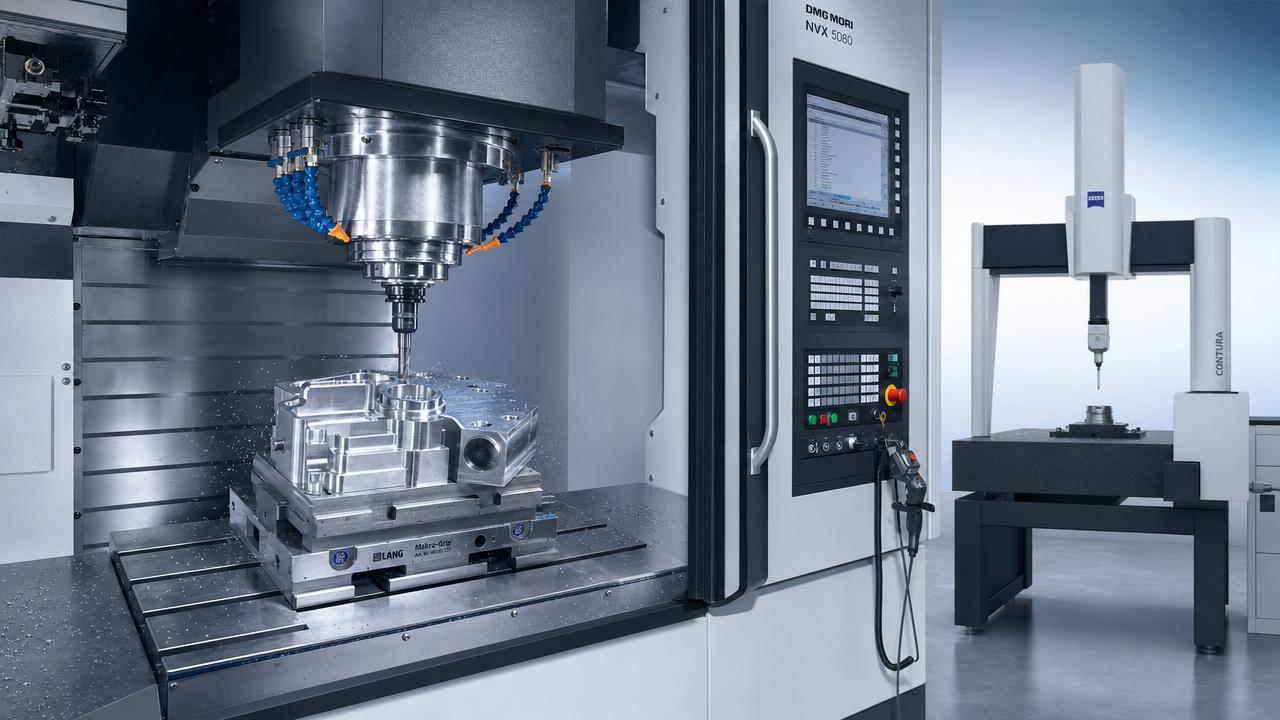
Evaluating high-speed CNC manufacturing for tight-tolerance parts is not just about headline spindle speed. What really matters is whether the process stays stable, repeatable, and efficient when real production pressure shows up.
That matters across the broader manufacturing landscape. Automotive, aerospace, electronics, and energy equipment all rely on precise parts, but each environment stresses tooling, machines, and process control in different ways.
A solid evaluation should answer a simple question: can this supplier, cell, or machine platform hold tolerance consistently without trading away cost, throughput, or quality? The points below help turn that question into something measurable.
Start with the machine behavior, not the brochure
Before reviewing capacity claims, look at how the machine behaves under cutting load. Tight-tolerance work depends on dynamic rigidity, thermal stability, and repeatable axis motion more than marketing numbers.
A machine can be fast on paper and still struggle with chatter, drift, or inconsistent finish. That is why high-speed CNC manufacturing must be judged in process, not in isolation.

The first image helps frame the practical view: spindle speed, fixturing, tooling, and inspection need to work together. If one element is weak, the whole tolerance strategy becomes fragile.
- Check spindle power across the actual operating range, not only maximum RPM. Tight-tolerance cutting often depends on torque stability during acceleration, cornering, and long finishing passes.
- Review axis positioning and repeatability data under warm conditions. Cold-start accuracy can look fine, but thermal growth often changes results once continuous production begins.
- Ask for vibration control details, including machine structure, damping, and toolholder selection. In high-speed CNC manufacturing, chatter usually appears before dimensional failure becomes obvious.
- Verify controller look-ahead, interpolation quality, and jerk management. These directly affect surface finish and contour accuracy on small radii and complex 3D paths.
- Study warm-up routines and compensation logic. A capable process for tight-tolerance parts should show how thermal offsets are managed during shift changes and long production runs.
- Compare real cut data with trial-piece results. A supplier that only shares one-off sample performance may not yet have mature high-speed CNC manufacturing control.
Focus on the full tolerance chain
Tolerance is not created by the machine alone. It comes from a chain that includes material condition, workholding, cutting tools, toolpaths, measurement methods, and operator discipline.
When evaluating high-speed CNC manufacturing, it helps to map every source of variation. This often reveals that a seemingly minor step, like re-clamping or presetting, drives the real risk.
Questions that quickly expose weak points
- Confirm material batch consistency and stress condition before machining. Even strong machines struggle to maintain tight tolerance if raw stock moves after roughing or heat input.
- Check whether fixtures locate from stable datums and resist deformation. A fast cycle means little if clamping force distorts thin walls or precision bores.
- Review tool life control by feature, not by part only. Tight-tolerance dimensions often shift gradually, so feature-level monitoring is more useful than simple tool replacement intervals.
- Inspect in-process probing strategy and offset updates. High-speed CNC manufacturing becomes more reliable when the machine can detect drift before scrap accumulates.
- Compare drawing tolerance with measuring capability. If the gage R&R or CMM method is weak, process decisions may be based on noise instead of real variation.
- Look for documented reaction plans when dimensions trend toward limits. Good teams do not only record data; they define exactly what action follows each signal.
Match the evaluation to the real production scenario
A prototype success does not always translate into production success. The right benchmark depends on whether the part runs in low-volume aerospace work, stable automotive batches, or mixed-part electronics programs.
For complex aerospace or energy components
Here, material behavior and geometric complexity often dominate the decision. Multi-axis motion, heat concentration, and long cycle times make thermal control especially important.
Ask for evidence on deep cavities, thin walls, or hard alloys. In this context, high-speed CNC manufacturing should prove contour accuracy over time, not just roughing speed.
For automotive or electronics parts
The bigger issue is often repeatability across many cycles. Cycle time still matters, but process drift, automated loading variation, and tool-change discipline usually decide overall performance.
Look closely at SPC trends, fixture maintenance intervals, and first-part approval routines. Strong high-speed CNC manufacturing in these sectors shows stable output over a full shift, not only on the first hour.
- Request capability evidence from parts similar in size, material, and geometry. Generic case studies are less useful than examples that match the actual tolerance stack-up.
- Separate prototype capability from serial production capability. Many processes cut well once, but fewer maintain the same result through tool wear, shift changes, and automation handoffs.
- Review how the line handles mixed batches and urgent schedule changes. Flexible production matters because real factories rarely run ideal, uninterrupted sequences.
- Check whether inspection feedback loops connect to machining offsets quickly. Digital integration is valuable only when data changes the process in time to prevent defects.
- Confirm maintenance rhythm for spindles, probes, toolholders, and fixtures. A stable high-speed CNC manufacturing setup depends on preventive discipline as much as cutting performance.
Do not overlook the hidden cost drivers
Fast machining can create a false sense of efficiency. If tool wear is high, scrap is intermittent, or inspection time is excessive, the total process may be less competitive than a slightly slower setup.
This is especially relevant in global CNC and precision manufacturing networks, where suppliers compete on quality, throughput, and reliability at the same time. A narrow speed comparison misses that reality.
Common signals of hidden risk
- Watch for unstable cycle times caused by manual touch-ups or repeated inspections. These usually indicate the process is compensating for inconsistency rather than controlling it.
- Check scrap and rework by feature category, not just total percentage. A low overall scrap rate can still hide chronic failures on the most critical dimensions.
- Review coolant delivery, chip evacuation, and machine cleanliness. In high-speed CNC manufacturing, poor chip control often damages finish and tool life before anyone sees a dimension issue.
- Ask how programs are version-controlled and approved. Digital integration only helps if post-process changes are traceable and protected from informal edits.
- Measure setup reduction claims carefully. Quick-change systems are valuable, but only if repeatability after each change matches the tolerance requirement.
Turn the assessment into a practical decision
The most useful evaluation framework is simple enough to compare options, but detailed enough to reveal weak control points. A weighted scorecard usually works better than a single pass-fail review.
Score machine capability, process stability, measurement control, and production readiness separately. That makes it easier to see whether a risk is technical, operational, or simply not yet validated.
- Build a short trial plan using the most sensitive features first. This makes high-speed CNC manufacturing performance easier to judge without wasting time on less critical dimensions.
- Use a consistent scorecard for every candidate process or supplier. Include tolerance hold, Cpk evidence, finish quality, tool life, and response to drift.
- Ask for data from continuous runs, not isolated samples. Repeatability over time is the clearest proof that the process can support demanding production.
- Document assumptions on material, coolant, ambient temperature, and measurement method. Small condition changes can alter results more than expected in tight-tolerance work.
- Choose the option that balances precision, resilience, and throughput. The best high-speed CNC manufacturing solution is usually the one that stays predictable under normal factory variation.
In the end, high-speed CNC manufacturing should be evaluated as a controlled production system, not a fast cutting demo. If the machine, tooling, inspection, and process response all support each other, tight-tolerance parts become much easier to scale with confidence.
A practical next step is to run a structured trial against a real part family, then compare process capability, thermal behavior, and tool wear side by side. That approach turns uncertainty into a clear decision.
Recommended for You
![]() Mitsubishi Electric Announces Physical AI System Linking Humanoid Robots and CNC MachinesMachine Tool Industry Editorial Team
Mitsubishi Electric Announces Physical AI System Linking Humanoid Robots and CNC MachinesMachine Tool Industry Editorial Team Precision Machining for Defense: Supplier Quality and Traceability ChecksManufacturing Market Research Center
![]() Nidec Machine Tool Launches MVR-5X Five-Axis Gantry MachineMachine Tool Industry Editorial Team
Nidec Machine Tool Launches MVR-5X Five-Axis Gantry MachineMachine Tool Industry Editorial Team Choosing a Precision Disc Parts Manufacturer in China: Tolerances and Quality ChecksManufacturing Market Research Center
![]() Siemens Executive Says AI Could Raise Factory Automation to 80%Manufacturing Market Research Center
Siemens Executive Says AI Could Raise Factory Automation to 80%Manufacturing Market Research Center Choosing Automated Machine Tools for High-Mix, Low-Volume ProductionMachine Tool Industry Editorial Team


Aris Katos
Future of Carbide Coatings
15+ years in precision manufacturing systems. Specialized in high-speed milling and aerospace grade alloy processing.
▶
Choosing a CNC Machine for Mold Making: Accuracy, Rigidity, and Surface FinishCNC Machining Technology Center▶
How to Cut CNC Machining Energy Use per Part Without Longer Cycle TimesCNC Machining Technology Center▶
Will a Mazak CNC retrofit work with your existing servo drives?CNC Machining Technology Center▶
Do energy-efficient machine tools reduce power use at partial load?CNC Machining Technology Center▶
Comparing energy-efficient machine tools by energy use per partCNC Machining Technology Center
▶
Mastering 5-Axis Workholding Strategies
Join our technical panel on Nov 15th to learn about reducing vibrations in thin-wall components.

Providing you with integrated sanding solutions
Before-sales and after-sales services
Comprehensive technical support