• Global CNC market projected to reach $128B by 2028 • New EU trade regulations for precision tooling components • Aerospace deman
NYSE: CNC +1.2%LME: STEEL -0.4%

Precision CNC Selection Guide: Which Tolerances, Materials, and Volumes Matter Most?
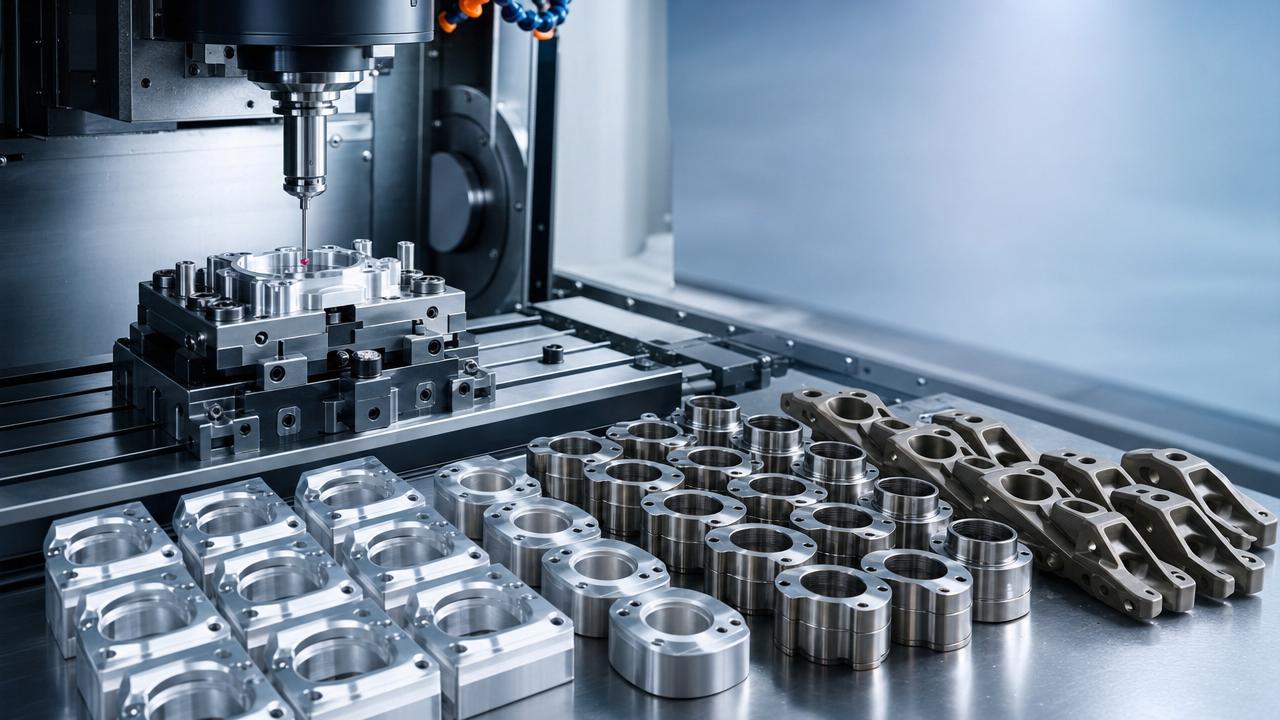
Selecting a precision CNC approach is rarely about chasing the tightest number on a drawing. The real decision sits at the intersection of tolerance, material response, and production volume. In today’s manufacturing landscape, where automation, digital process control, and global supply chains shape competitiveness, those choices directly influence cost, repeatability, delivery risk, and future scalability.
Why precision CNC selection matters now
Precision CNC has become central to automotive systems, aerospace structures, electronics housings, energy equipment, and industrial assemblies.
That shift is not only about higher accuracy. It is also about stable throughput, traceable quality, and compatibility with automated production lines.
As machine tools, fixtures, cutting tools, and software become more integrated, selection errors become more expensive.
A part may be technically machinable, yet still be poorly matched to the process window, inspection strategy, or planned production ramp.
That is why precision CNC evaluation now extends beyond geometry. It must include process capability, material consistency, machine availability, and downstream assembly requirements.
A useful reference point is the relationship between design intent and process realism.
When that relationship is clear, tighter control supports performance. When it is unclear, over-specification often adds cost without adding value.
Tolerance is important, but not every dimension is critical
Tolerance is usually the first topic in any precision CNC discussion, yet it should not be treated as a blanket requirement.
Some dimensions affect fit, sealing, alignment, vibration, or thermal expansion. Others only influence appearance or non-critical clearance.
The most effective evaluations separate critical-to-function features from general machining dimensions.
Where tight tolerances really pay off
Tight tolerances are usually justified when they protect assembly performance, rotational balance, positional accuracy, or long-term wear behavior.
Examples include bearing seats, sealing faces, optical interfaces, mating bores, datum structures, and features used for automated alignment.
In those cases, precision CNC capability supports measurable business outcomes: less rework, lower field failure risk, and smoother process validation.
Where over-tolerancing creates problems
Unnecessarily tight callouts can force slower feeds, extra finishing passes, specialized tooling, and stricter environmental control.
Inspection cost also rises. More dimensions require more measurement points, more calibration discipline, and sometimes coordinate measuring machine time.
In practical terms, the goal is not maximum precision everywhere. It is precision exactly where function demands it.
Material choice changes the machining strategy
Material selection is not separate from precision CNC performance. It defines chip formation, thermal behavior, tool wear, burr risk, and surface response.
A tolerance that is routine in aluminum may become expensive in stainless steel, hardened alloy, or thin-wall titanium geometry.
Even plastics can complicate precision CNC work because of heat sensitivity, moisture absorption, and post-machining dimensional movement.
Common material-driven trade-offs
- Aluminum supports fast machining and strong dimensional efficiency, but thin sections may deform during clamping.
- Stainless steel offers corrosion resistance, yet work hardening can narrow the stable cutting window.
- Titanium suits high-performance sectors, but heat concentration and slower cutting rates raise cycle time.
- Engineering plastics machine cleanly in some cases, but may shift after release from fixture stress.
This is where supplier capability matters. The best precision CNC partner is not only equipped with advanced machines.
It also understands how workholding, coolant strategy, cutter geometry, and in-process measurement should change with each material family.
Volume determines whether the process can scale
A prototype-ready process does not automatically become a production-ready process.
Volume changes the economics of fixturing, setup time, automation, tool life management, statistical quality control, and machine allocation.
That is why production volume belongs in the earliest precision CNC evaluation, not at the quoting stage alone.
Low volume versus repeat production
For low volumes, flexibility often matters more than full optimization. Standard fixtures, faster programming, and broader tolerances may be reasonable.
For repeat production, process variation becomes more visible. Small inefficiencies multiply across every lot and every machine hour.
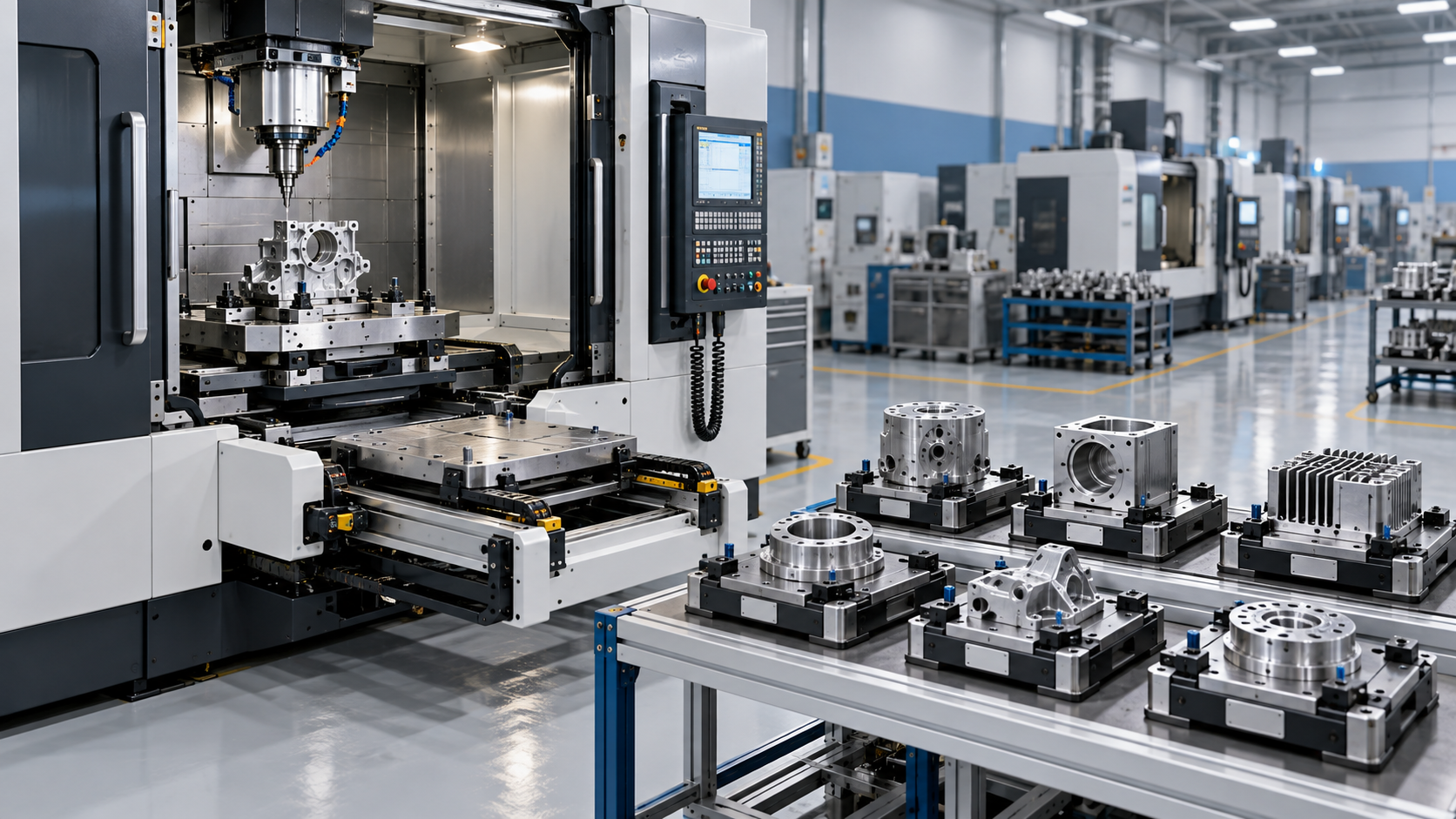
In that context, precision CNC selection should account for palletization, multi-axis consolidation, automated probing, and gauge strategy.
The underlying question is simple: can the process hold the requirement at scale, not just on the first five parts?
What should be reviewed before approving a machining route
A strong review balances drawing requirements with manufacturing evidence. It should test whether the requested precision CNC path is technically sound and commercially sensible.
- Identify functional dimensions and classify them by risk, not by habit.
- Check whether the selected material introduces distortion, wear, burr, or thermal stability concerns.
- Review machine type fit, including lathe, machining center, or multi-axis system.
- Confirm whether inspection methods match the tolerance scheme and production tempo.
- Compare prototype assumptions with expected annual volume and lot-to-lot consistency needs.
- Look at secondary processes such as heat treatment, coating, grinding, or assembly influence.
These checks are increasingly relevant as smart manufacturing expands. Digital integration improves visibility, but it also exposes weak assumptions faster.
In globally connected supply chains, consistent precision CNC execution matters as much as machine specification.
How industry trends are reshaping evaluation priorities
Global machine tool development is moving toward higher precision, greater automation, and tighter software integration.
That affects precision CNC selection in three practical ways.
First, process capability is becoming more data-driven. Probing, machine monitoring, and traceability reduce guesswork.
Second, flexible production lines are making setup reduction more valuable than ever, especially for mixed-part manufacturing.
Third, international sourcing requires clearer evaluation criteria because machine platforms, quality systems, and process maturity vary across regions.
Industrial clusters in China, Germany, Japan, and South Korea continue to push capability upward, yet the best choice still depends on part requirements and supply model fit.
A practical way to move from specification to decision
A useful precision CNC decision starts with three filters: what must be accurate, what the material allows, and how many parts must be made reliably.
When those filters are aligned, technical evaluation becomes clearer. Tolerances can be prioritized, materials can be matched to realistic process windows, and volume can guide automation choices.
That approach usually produces better results than selecting a process based only on nominal accuracy or machine brand.
The next step is to map critical features, challenge non-essential tight callouts, and compare machining routes against expected production behavior.
In precision CNC work, better decisions often begin with fewer assumptions and more disciplined review.
Recommended for You
![]() Mitsubishi Electric Announces Physical AI System Linking Humanoid Robots and CNC MachinesMachine Tool Industry Editorial Team
Mitsubishi Electric Announces Physical AI System Linking Humanoid Robots and CNC MachinesMachine Tool Industry Editorial Team Precision Machining for Defense: Supplier Quality and Traceability ChecksManufacturing Market Research Center
![]() Nidec Machine Tool Launches MVR-5X Five-Axis Gantry MachineMachine Tool Industry Editorial Team
Nidec Machine Tool Launches MVR-5X Five-Axis Gantry MachineMachine Tool Industry Editorial Team Choosing a Precision Disc Parts Manufacturer in China: Tolerances and Quality ChecksManufacturing Market Research Center
![]() Siemens Executive Says AI Could Raise Factory Automation to 80%Manufacturing Market Research Center
Siemens Executive Says AI Could Raise Factory Automation to 80%Manufacturing Market Research Center Choosing Automated Machine Tools for High-Mix, Low-Volume ProductionMachine Tool Industry Editorial Team

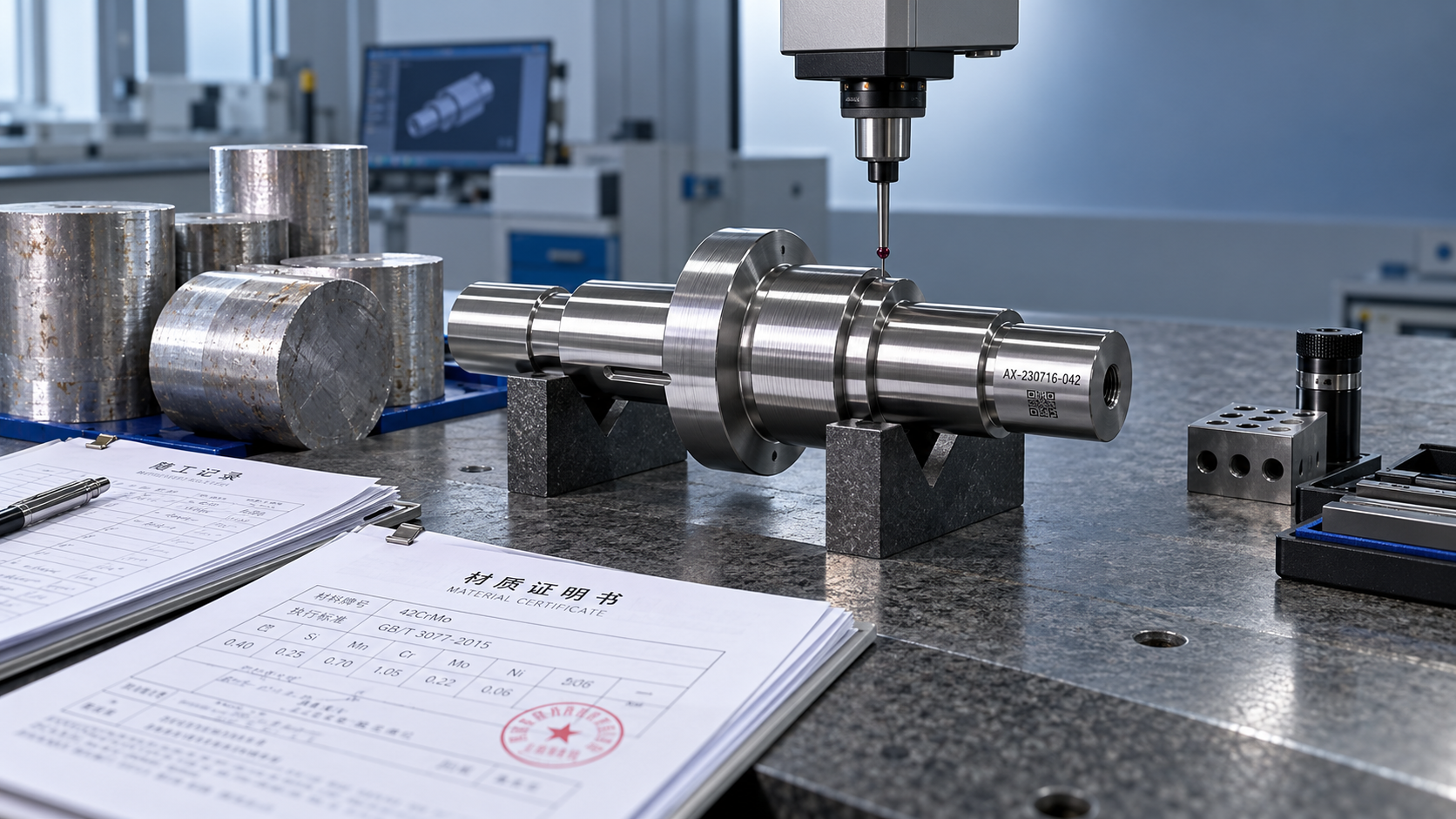

Aris Katos
Future of Carbide Coatings
15+ years in precision manufacturing systems. Specialized in high-speed milling and aerospace grade alloy processing.
▶
Choosing a CNC Machine for Mold Making: Accuracy, Rigidity, and Surface FinishCNC Machining Technology Center▶
How to Cut CNC Machining Energy Use per Part Without Longer Cycle TimesCNC Machining Technology Center▶
Will a Mazak CNC retrofit work with your existing servo drives?CNC Machining Technology Center▶
Do energy-efficient machine tools reduce power use at partial load?CNC Machining Technology Center▶
Comparing energy-efficient machine tools by energy use per partCNC Machining Technology Center
▶
Mastering 5-Axis Workholding Strategies
Join our technical panel on Nov 15th to learn about reducing vibrations in thin-wall components.

Providing you with integrated sanding solutions
Before-sales and after-sales services
Comprehensive technical support