• Global CNC market projected to reach $128B by 2028 • New EU trade regulations for precision tooling components • Aerospace deman
NYSE: CNC +1.2%LME: STEEL -0.4%

Japan Updates Import Technical Standards for CNC Equipment Cybersecurity

On May 10, 2026, Japan’s Ministry of Economy, Trade and Industry (METI) revised the Technical Standards for Import of Electromechanical Equipment, introducing mandatory electromagnetic immunity requirements for cybersecurity-related modules in CNC machine tools. This update directly affects manufacturers and importers supplying to Japan’s OEM, after-sales, and industrial automation markets.
Event Overview
Effective immediately as of May 10, 2026, METI updated the Technical Standards for Import of Electromechanical Equipment. The revision adds a compulsory electromagnetic immunity requirement for built-in human-machine interfaces (HMI), remote diagnostic modules, and network-connected programmable logic controllers (PLCs) in CNC equipment. These components must now pass the ‘voltage dips and short interruptions’ test specified in JIS X 61000-4-30:2026. Non-compliant devices will be ineligible for the PSE diamond mark — a prerequisite for market access in Japan.
Impact on Specific Industry Segments
Direct Exporters and Importers of CNC Equipment
These entities are directly responsible for product conformity assessment and PSE certification. Failure to meet the new JIS X 61000-4-30:2026 requirement blocks PSE diamond mark issuance, halting customs clearance and domestic distribution. Impact manifests as delayed shipments, rejected consignments, and potential contract penalties with Japanese OEMs or system integrators.
CNC Machine Tool Manufacturers (Including Tier-1 Suppliers)
Manufacturers embedding HMIs, remote diagnostics, or networked PLCs into their machines must now verify electromagnetic resilience under voltage dip conditions during design validation. This affects firmware behavior, power supply architecture, and hardware-level surge/dip protection — requiring updates to internal testing protocols and potentially requalification of existing models.
After-Sales and Retrofit Service Providers
Providers offering remote diagnostics, cloud-based monitoring, or connectivity upgrades for legacy CNC systems may find their solutions non-compliant if installed post-factory without retesting against JIS X 61000-4-30:2026. This constrains aftermarket digitalization efforts and could require co-certification with original equipment manufacturers.
Industrial Automation Component Suppliers
Suppliers of embedded HMIs, industrial gateways, or PLCs intended for integration into CNC platforms must ensure their modules meet the standard individually — not just as part of a final assembled system. This shifts compliance responsibility upstream and may trigger demand for pre-validated, JIS X 61000-4-30:2026–tested modules.
What Relevant Enterprises or Practitioners Should Focus On Now
Confirm applicability to current and upcoming product lines
Verify whether existing CNC models — especially those with integrated HMI, remote diagnostics, or Ethernet/IP-enabled PLCs — fall within the scope of the revised standards. Review technical documentation and PSE application records to determine whether prior certifications remain valid or require re-submission under the updated criteria.
Engage accredited testing laboratories early for JIS X 61000-4-30:2026 validation
Testing capacity for JIS X 61000-4-30:2026 (particularly the voltage dip and short interruption test sequence) is limited in many regions outside Japan. Schedule test slots well in advance and confirm laboratory accreditation status under Japan’s Registered Conformity Assessment Bodies scheme.
Review supply chain documentation and component-level compliance claims
Where third-party HMIs, PLCs, or communication modules are used, obtain formal compliance statements — including test reports referencing JIS X 61000-4-30:2026 — from suppliers. Do not rely solely on generic IEC/EN 61000-4-30 references; the Japanese standard version and year (2026) are explicit requirements.
Monitor METI’s official guidance for transitional provisions or clarification
Although the revision is effective immediately, METI may issue implementation notices, FAQs, or transitional allowances (e.g., grace periods for inventory already shipped but not yet cleared). Subscribe to METI’s official notifications and consult Japan’s Product Safety Association (JPSA) for updates.
Editorial Perspective / Industry Observation
Observably, this update reflects Japan’s tightening alignment between industrial cybersecurity policy and electromagnetic compatibility (EMC) regulation — treating networked control functions not merely as IT features, but as safety-critical subsystems vulnerable to real-world electrical disturbances. Analysis shows the inclusion of ‘voltage dips and short interruptions’ specifically targets operational continuity risks: momentary power anomalies common in factory environments can now disrupt remote diagnostics or cause HMI freezes, potentially leading to unsafe states or unlogged faults.
This revision is best understood not as an isolated technical amendment, but as an early signal of broader regulatory convergence — where functional safety (IEC 61508), cybersecurity (IEC 62443), and EMC (JIS X 61000 series) requirements increasingly intersect in industrial equipment certification. From an industry perspective, it marks a shift from treating connectivity as optional to treating its resilience as mandatory.
Current enforcement appears focused on new PSE applications; there is no indication yet of retroactive audits for already-certified products. However, given Japan’s history of phased enforcement escalation, sustained attention to METI’s communications remains essential.
Conclusion
This revision underscores that cybersecurity readiness in industrial equipment is no longer defined solely by software patches or firewall configurations — it includes physical-layer robustness against electrical disturbances. For stakeholders serving the Japanese market, compliance with JIS X 61000-4-30:2026 is now a prerequisite for market access, not a differentiator. It is more accurately interpreted as an operational necessity than a strategic initiative — and one that demands cross-functional coordination across engineering, regulatory affairs, and supply chain management.
Source Attribution
Main source: Japan Ministry of Economy, Trade and Industry (METI), Technical Standards for Import of Electromechanical Equipment, revised May 10, 2026.
Note: Transitional arrangements, enforcement practices, and interpretation of ‘network-connected PLC’ scope remain subject to ongoing observation and official clarification from METI and the Japan Electrical Safety & Environment Technology Laboratories (JET).
Recommended for You
 Zero-Point Clamping or Modular Fixtures? Choosing a Faster CNC Changeover SystemCNC Machining Technology Center
 How to Cut CNC Fixture Changeover Time Without Sacrificing Part AccuracyCNC Machining Technology Center
 When Does CNC Turning Pay Off? A Break-Even Guide by Annual Part VolumeMachine Tool Industry Editorial Team
 Machine Tool Standards by Country: What Importers Must Verify Before PurchaseManufacturing Policy Research Center
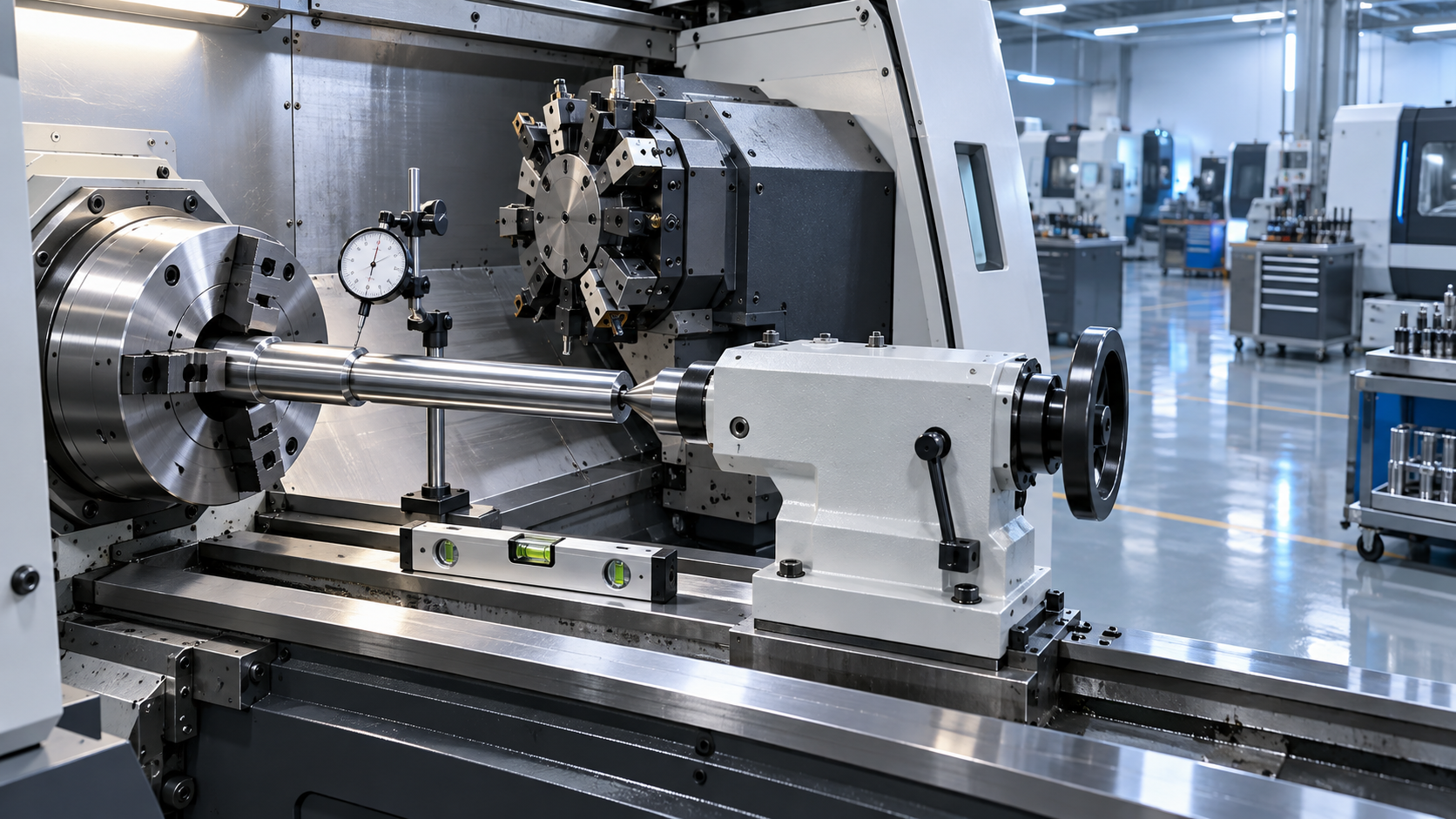
 CNC Lathe Quick Installation Guide: Alignment Checks Before First Production RunCNC Machining Technology Center
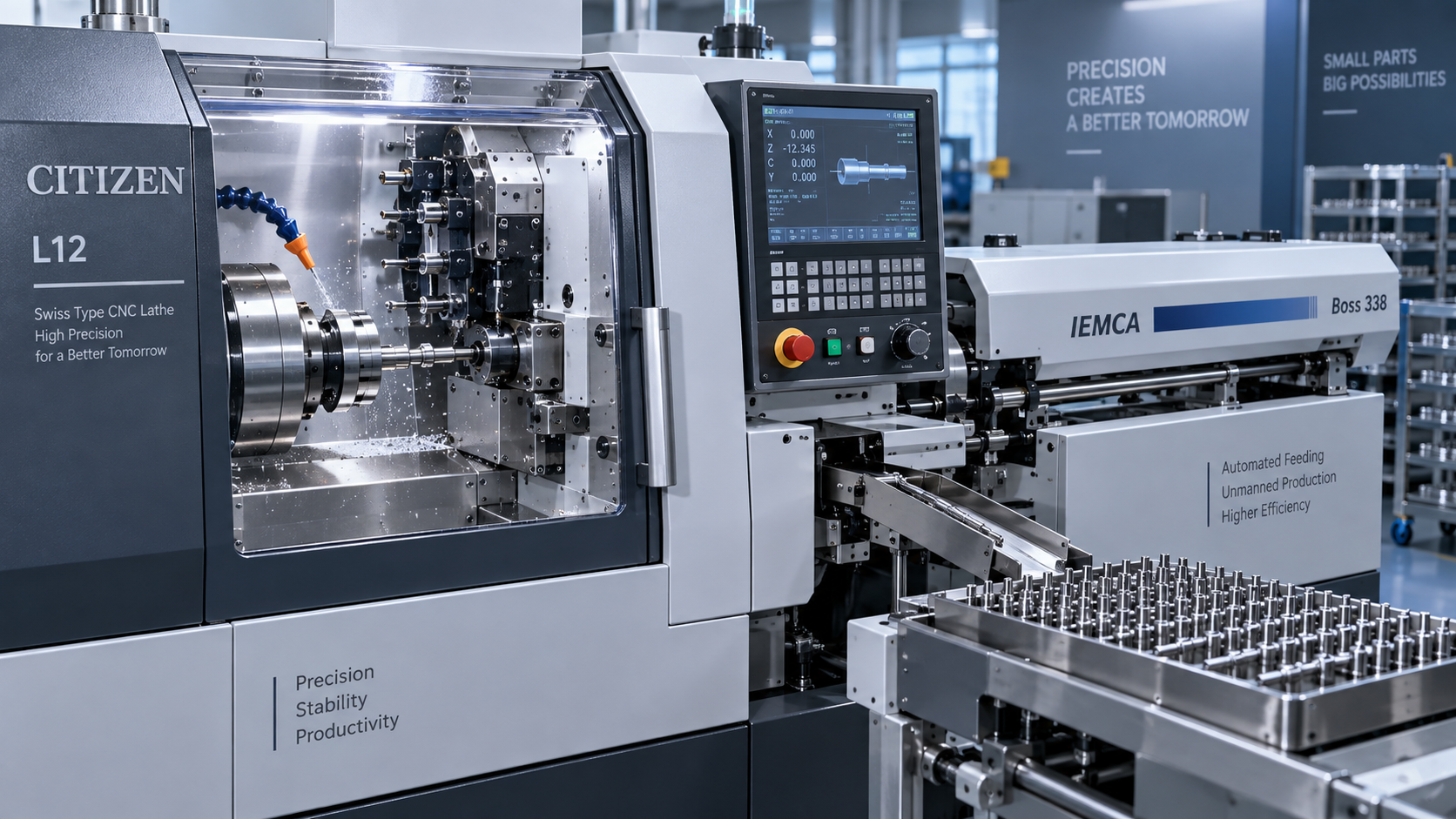
 How to Select a CNC Lathe for Small Parts Without Sacrificing Accuracy or Cycle TimeCNC Machining Technology Center

Aris Katos
Future of Carbide Coatings
15+ years in precision manufacturing systems. Specialized in high-speed milling and aerospace grade alloy processing.
▶
How Automated Precision Machining Maintains Tolerance in High-Mix ProductionCNC Machining Technology Center▶
CNC Programming Explained: From CAD Models to Reliable Shop-Floor ToolpathsCNC Machining Technology Center▶
How Multi-Axis Machining Produces Complex Components With Fewer SetupsCNC Machining Technology Center▶
How Much Does CNC Programming Software Cost in 2026?CNC Machining Technology Center▶
CNC Machining Explained: Processes, Tolerances, and Parts It Can ProduceCNC Machining Technology Center
Mastering 5-Axis Workholding Strategies
Join our technical panel on Nov 15th to learn about reducing vibrations in thin-wall components.

Providing you with integrated sanding solutions
Before-sales and after-sales services
Comprehensive technical support