• Global CNC market projected to reach $128B by 2028 • New EU trade regulations for precision tooling components • Aerospace deman
NYSE: CNC +1.2%LME: STEEL -0.4%

When Is High Precision CNC Manufacturing Worth the Cost?
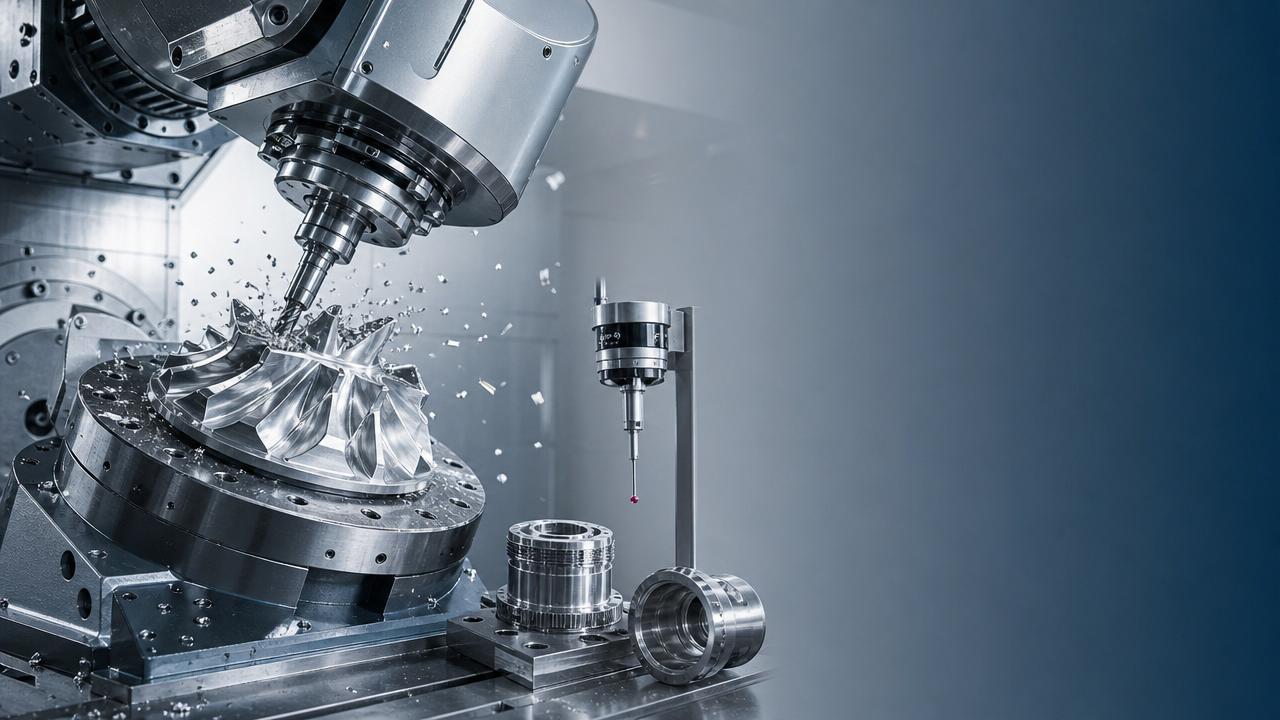
High precision CNC manufacturing can deliver tighter tolerances, fewer defects, and more reliable production outcomes—but it often comes with higher equipment, tooling, inspection, and programming costs. For financial approvers, the key question is not whether advanced machining is impressive, but whether it protects margins, reduces risk, and supports long-term competitiveness. This article explains when the added investment is justified, helping decision-makers evaluate cost, quality, production volume, and strategic value before approving a precision manufacturing project.
Where high precision CNC manufacturing creates financial value
High precision CNC manufacturing is most valuable when dimensional error, surface variation, or unstable repeatability can cause expensive downstream consequences. These consequences may include assembly failure, warranty claims, rework, scrap, delayed shipment, or certification risk.
For financial approvers, the decision should not start with the machine price. It should start with the cost of nonconformance, the value of production stability, and the commercial impact of missed specifications.
Situations where the premium is easier to justify
- The part has tight tolerance requirements, such as precision shafts, aerospace brackets, energy equipment components, or electronic housings with demanding alignment features.
- The component affects system reliability, safety, sealing, vibration control, thermal transfer, or high-speed rotation performance.
- Scrap or rework is already eroding margin, especially when raw material costs, inspection labor, or delivery penalties are significant.
- The customer requires stable process capability, traceable inspection data, and documented quality controls before approving a supplier.
In these cases, high precision CNC manufacturing is not simply a technical upgrade. It becomes a margin protection tool, because it reduces uncertainty across engineering, purchasing, production, and customer acceptance.
How to compare standard machining and high precision CNC manufacturing
A practical comparison helps finance teams understand why one quotation may be higher than another. The difference often comes from programming time, fixture design, tool control, thermal stability, inspection requirements, and operator expertise.
The right choice depends on risk concentration. If a part is simple and non-critical, standard CNC machining may be sufficient. If failure affects assembly yield or customer approval, high precision CNC manufacturing deserves serious consideration.
Which cost factors should finance teams review before approval?
The quotation for high precision CNC manufacturing often includes invisible work that protects the project. Financial review should separate one-time engineering costs from recurring production costs, because the business case changes with volume.
Cost categories that influence the total investment
A higher unit price may be reasonable if it reduces failures across multiple cost centers. The table below gives approvers a clearer way to discuss pricing with engineering and suppliers.
This view prevents a narrow “lowest quote wins” decision. High precision CNC manufacturing should be assessed against avoided costs, especially when late rework is more expensive than early process control.
Application scenarios where precision protects margin
Across automotive, aerospace, energy equipment, electronics, industrial automation, and smart manufacturing, the same financial rule applies: precision is worth more when defects multiply across the production chain.
Automotive and electric mobility
Precision machining supports transmission components, motor housings, battery fixtures, sensor mounts, and structural parts. High precision CNC manufacturing helps maintain repeatability when production volumes increase and assembly lines cannot tolerate variation.
Aerospace and high-reliability equipment
Aerospace components often require tight geometric tolerances, stable surface quality, and traceable inspection. Even when volumes are lower, the financial exposure from rejection or requalification can be substantial.
Energy equipment and industrial machinery
Turbine-related parts, precision couplings, valve bodies, bearing seats, and rotating components benefit from stable machining. Poor dimensional control may create vibration, leakage, wear, or premature maintenance costs.
Electronics and automation systems
Electronics production often requires compact housings, heat sinks, connector plates, and robotic assembly fixtures. High precision CNC manufacturing can reduce assembly mismatch and improve repeatability in automated lines.
What parameters make the investment necessary?
Not every drawing requires premium machining. Financial approvers should ask engineering teams to identify which tolerances are function-critical, which are cosmetic, and which can be relaxed without damaging performance.
Before approving high precision CNC manufacturing, review the parameter set below. It helps connect technical requirements to measurable financial impact rather than general claims about better quality.
The strongest business case appears when several of these parameters apply simultaneously. A complex multi-axis part with tight datum relationships usually justifies deeper process planning than a simple plate.
Procurement checklist for financial approvers
Finance teams do not need to become machinists, but they should require enough evidence to validate cost, delivery, and risk assumptions. A disciplined checklist also improves supplier comparison.
Questions to ask before releasing budget
- Which features on the drawing truly require high precision CNC manufacturing, and which tolerances can be reviewed for cost reduction?
- Does the supplier propose a clear machining route, including CNC lathe, machining center, multi-axis process, or secondary finishing operations?
- What inspection method will confirm conformity, and will reports be supplied for first article approval or batch verification?
- Are fixture, programming, and tool costs separated from recurring unit price so that repeat-order economics are visible?
- What is the expected delivery timeline for prototype, sample approval, pilot run, and mass production transition?
These questions help avoid two common errors: rejecting a necessary precision process because the quote appears high, or approving excessive accuracy where the application does not need it.
When alternatives may be better than high precision CNC manufacturing
High precision CNC manufacturing is powerful, but it is not always the most economical route. Alternatives may work when geometry, tolerance, material, or production volume points in another direction.
Potential alternatives to review
- Standard CNC machining can be appropriate for non-critical components with moderate tolerances and low downstream failure cost.
- Casting, forging, or extrusion followed by finish machining may reduce material waste for larger production volumes.
- Additive manufacturing may support prototypes or complex internal channels, although surface finish and tolerance may require post-machining.
- Design-for-manufacturing review may reduce unnecessary tolerance demands before any supplier begins production.
The best decision is often hybrid. A near-net-shape process may create the blank, while high precision CNC manufacturing is reserved for functional surfaces, sealing faces, bores, and critical datums.
Compliance, inspection, and documentation considerations
Financial approvers should understand that documentation is not administrative overhead when the buyer serves regulated or high-reliability markets. Records reduce dispute risk and support customer audits.
Common documentation to request
- First article inspection report, especially for new parts, revised drawings, or supplier qualification projects.
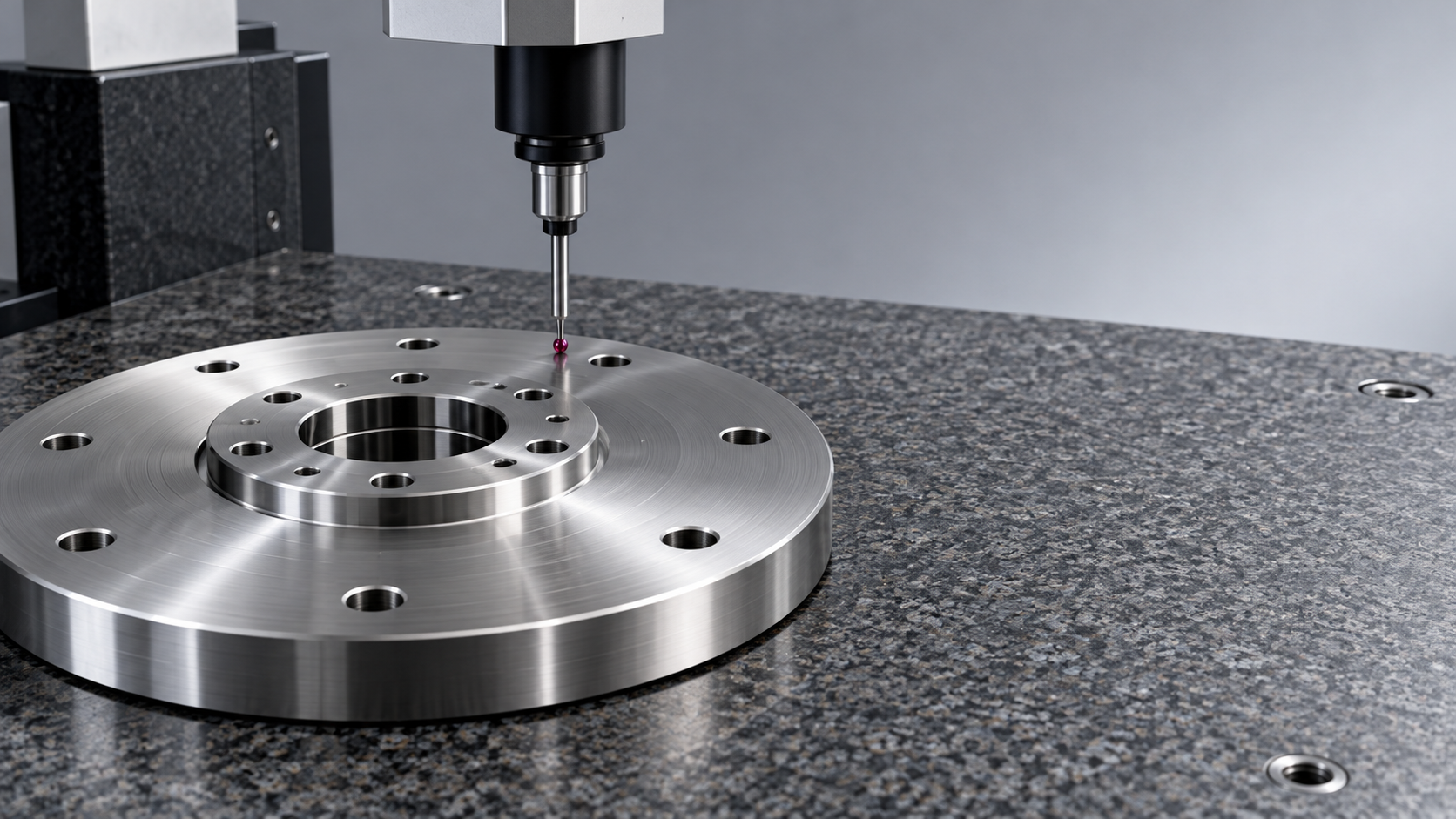
- Dimensional inspection results from CMM, height gauge, micrometer, roughness tester, or other suitable measuring equipment.
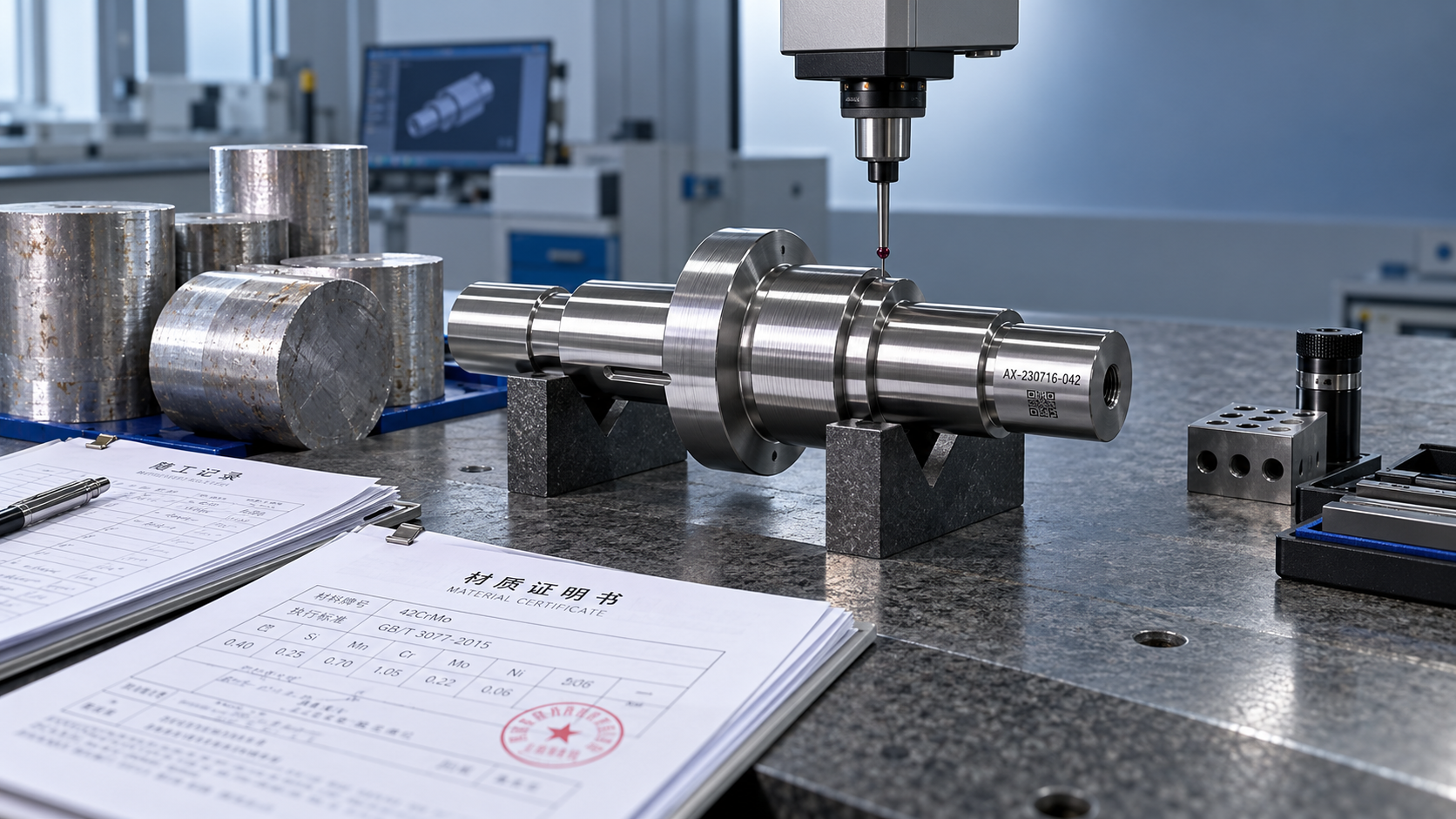
- Material certificates or traceability documents when the application requires controlled grades, heat treatment, or special alloy performance.
- Process capability or in-process inspection records where repeatability is critical for batch production.
Relevant standards may include ISO 9001 quality management principles, ISO 2768 general tolerances, AS9100 expectations for aerospace supply chains, or customer-specific inspection requirements. Applicability should be confirmed before contracting.
FAQ: approval questions about high precision CNC manufacturing
How do I know if high precision CNC manufacturing is worth the extra quote?
Compare the premium with the cost of failure. Include scrap, rework, delayed shipment, assembly downtime, customer rejection, warranty exposure, and engineering time spent resolving quality issues.
Is high precision CNC manufacturing mainly for low-volume production?
No. It is used for prototypes, pilot runs, and large-scale production. At higher volume, stable fixtures, automated loading, tool monitoring, and inspection planning can improve total economics.
What should be included in a supplier quotation?
A useful quotation should separate material, machining, programming, tooling, fixture, finishing, inspection, packaging, and logistics assumptions. This makes hidden cost drivers easier to challenge or approve.
Can design changes reduce the need for high precision CNC manufacturing?
Yes. Engineering may relax non-critical tolerances, simplify deep pockets, increase radii, change datum strategy, or split a difficult part into manufacturable assemblies without compromising function.
Why choose us for precision manufacturing insight and supplier decisions?
We focus on the global CNC machining and precision manufacturing sector, covering machine tools, automation, tooling, fixtures, inspection, smart factory trends, and international trade developments.
For financial approvers, we help connect technical requirements with procurement logic. That means clearer discussions about parameters, process capability, delivery risk, certification expectations, and total cost impact.
Contact us when you need support reviewing high precision CNC manufacturing requirements, confirming machining parameters, comparing process options, preparing quotation questions, discussing sample support, or evaluating delivery schedules.
A well-approved precision project should not simply buy tighter tolerances. It should buy stable production, fewer surprises, stronger customer confidence, and a more defensible return on manufacturing investment.
PREVIOUS ARTICLE
Recommended for You
![]() Mitsubishi Electric Announces Physical AI System Linking Humanoid Robots and CNC MachinesMachine Tool Industry Editorial Team
Mitsubishi Electric Announces Physical AI System Linking Humanoid Robots and CNC MachinesMachine Tool Industry Editorial Team Precision Machining for Defense: Supplier Quality and Traceability ChecksManufacturing Market Research Center
![]() Nidec Machine Tool Launches MVR-5X Five-Axis Gantry MachineMachine Tool Industry Editorial Team
Nidec Machine Tool Launches MVR-5X Five-Axis Gantry MachineMachine Tool Industry Editorial Team Choosing a Precision Disc Parts Manufacturer in China: Tolerances and Quality ChecksManufacturing Market Research Center
![]() Siemens Executive Says AI Could Raise Factory Automation to 80%Manufacturing Market Research Center
Siemens Executive Says AI Could Raise Factory Automation to 80%Manufacturing Market Research Center Choosing Automated Machine Tools for High-Mix, Low-Volume ProductionMachine Tool Industry Editorial Team


Aris Katos
Future of Carbide Coatings
15+ years in precision manufacturing systems. Specialized in high-speed milling and aerospace grade alloy processing.
▶
Choosing a CNC Machine for Mold Making: Accuracy, Rigidity, and Surface FinishCNC Machining Technology Center▶
How to Cut CNC Machining Energy Use per Part Without Longer Cycle TimesCNC Machining Technology Center▶
Will a Mazak CNC retrofit work with your existing servo drives?CNC Machining Technology Center▶
Do energy-efficient machine tools reduce power use at partial load?CNC Machining Technology Center▶
Comparing energy-efficient machine tools by energy use per partCNC Machining Technology Center
▶
Mastering 5-Axis Workholding Strategies
Join our technical panel on Nov 15th to learn about reducing vibrations in thin-wall components.

Providing you with integrated sanding solutions
Before-sales and after-sales services
Comprehensive technical support