• Global CNC market projected to reach $128B by 2028 • New EU trade regulations for precision tooling components • Aerospace deman
NYSE: CNC +1.2%LME: STEEL -0.4%

Which Metals Are Hardest to Machine With Standard Tools, and Why?
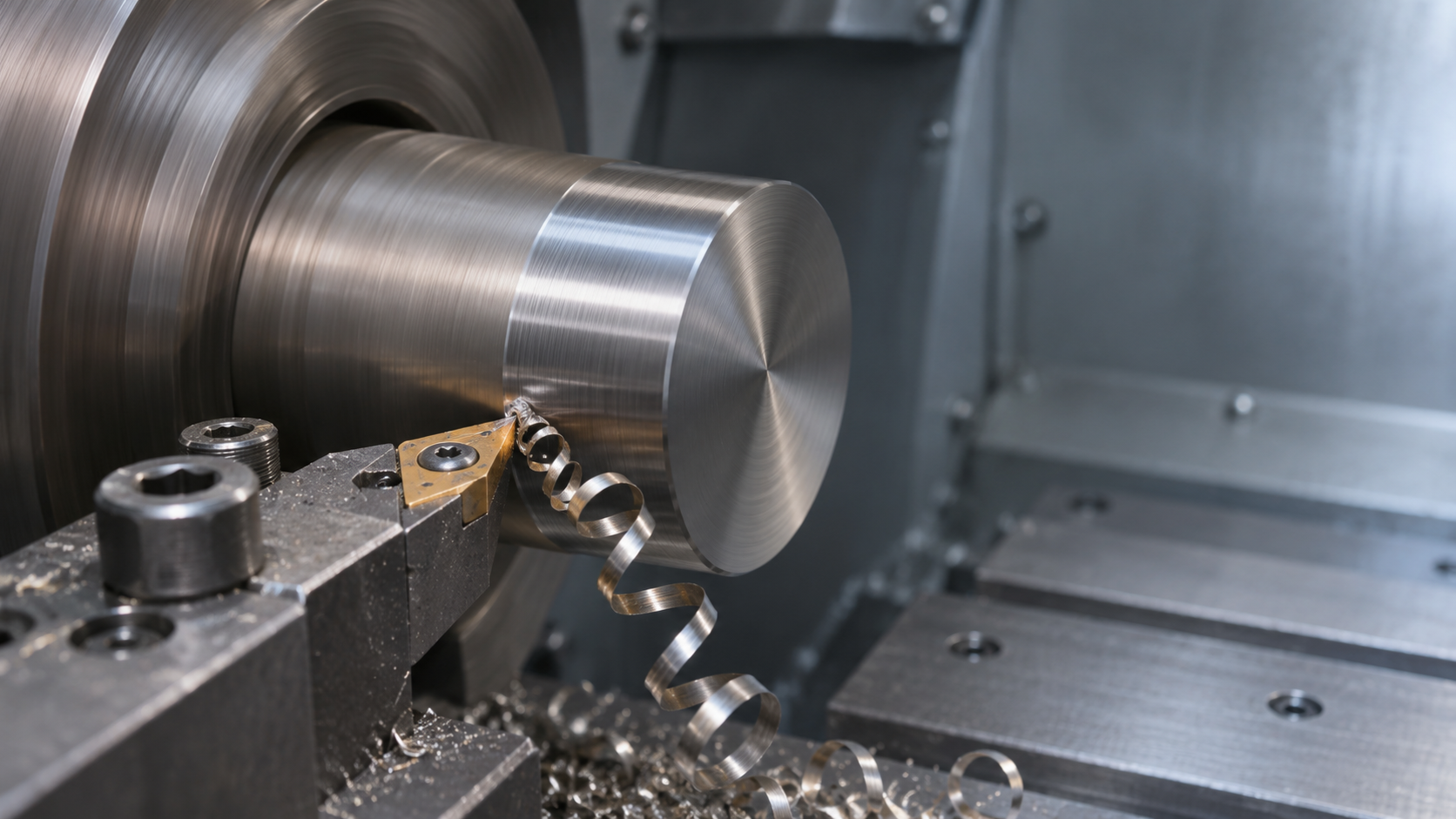
Nickel-based superalloys, titanium alloys, hardened tool steels and tungsten are among the metals most likely to defeat a general-purpose machining setup. They are difficult for different reasons: nickel alloys retain strength at cutting temperatures and can work-harden; titanium concentrates heat near the cutting edge and deflects readily; hardened steels abrade and overload the tool; and tungsten combines high strength, low ductility and abrasive wear.
There is no universal ranking. A material that is manageable in turning may be troublesome in drilling, threading or thin-wall milling. The answer also depends on whether “standard tools” means high-speed steel (HSS), general-purpose carbide, or a dedicated carbide grade used on an otherwise conventional CNC machine.
What makes a metal difficult to machine?
Machinability is not the inverse of hardness. It describes how a material behaves under a specified machining operation, including the forces, temperature, tool wear, chip formation and surface condition produced. A relatively soft material can adhere to the cutting edge or form long, difficult chips; a very hard material can sometimes be machined predictably with a suitable tool and stable setup.
For comparison, assume a conventional CNC lathe or machining center with general-purpose HSS or carbide tools, ordinary workholding and no material-specific process development. Under those conditions, the most demanding materials combine several of these mechanisms:
- High cutting-zone temperature: Heat softens or degrades the cutting edge and accelerates wear.
- Work hardening: Material beneath the cut becomes harder as it deforms, making a subsequent pass more demanding.
- Abrasion: Hard particles or a hard workpiece surface wear the tool flank and cutting edge.
- Adhesion and chemical interaction: Workpiece material bonds to the tool and breaks away, carrying tool material with it.
- Deflection and vibration: Low workpiece stiffness, a long tool overhang or an interrupted cut causes dimensional variation and edge damage.
These mechanisms interact. Reducing cutting speed may lower temperature, for example, but it does not automatically solve rubbing, deflection or chip evacuation.
Nickel-based superalloys: heat, strength and work hardening
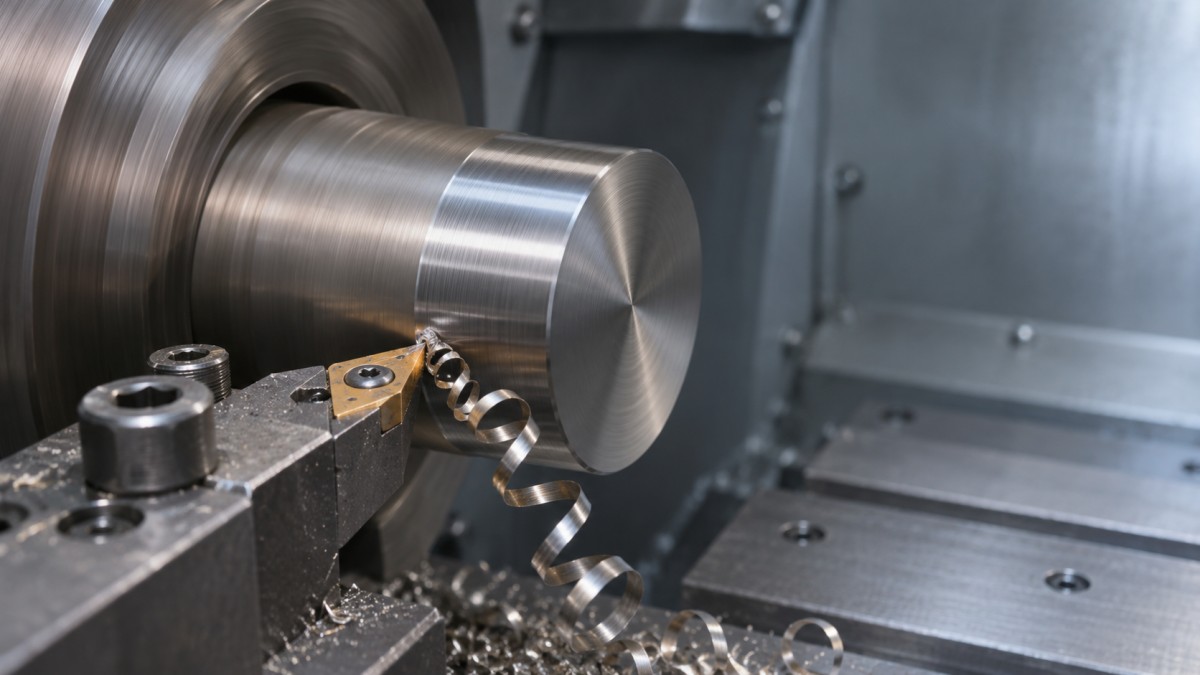
Nickel-based superalloys such as Inconel 718 are designed to retain strength at elevated temperatures. That property is useful in service but demanding in cutting: the material continues to resist deformation where a conventional tool is already hot. Heat is concentrated close to the cutting zone, contributing to rapid edge wear and, under unsuitable conditions, plastic deformation of the cutting edge.
Many nickel alloys also work-harden. If a tool rubs instead of cutting cleanly, or if a subsequent pass enters a previously affected surface layer, the edge encounters harder material. Notch wear can develop around the depth-of-cut line, especially where the tool repeatedly engages a work-hardened region or a workpiece surface with a difficult skin.
The material condition matters. Inconel 718 in an annealed condition should not be treated as equivalent to the same alloy after precipitation hardening. Forged surfaces, scale, interrupted cuts and variations in stock allowance can also change the first engagement substantially.
General-purpose carbide may remove material, but repeatable production generally requires a grade and geometry chosen for heat resistance, edge strength and chip control. A stable setup and a feed that maintains cutting rather than prolonged rubbing are important. Cutting data should come from the tool supplier for the specific alloy, condition and operation; simply using the same parameters as for carbon steel is not a meaningful test.
Titanium alloys: concentrated heat and unstable cutting
Titanium is not necessarily the hardest material on the workpiece drawing. Its difficulty comes from the combination of relatively low thermal conductivity, high strength for its weight and a tendency to interact with cutting-tool materials at elevated temperatures. Less heat is conducted away through the workpiece than with many common steels, leaving a demanding thermal load near the edge.
Titanium also has a relatively low elastic modulus. Thin sections can deflect under cutting pressure and spring back after the tool passes. This can produce variable wall thickness, rubbing and vibration even when the tool itself remains sharp. Long-reach tools compound the problem by adding deflection on the machine side.
Ti-6Al-4V illustrates why alloy identification matters: its behavior should not be assumed to represent every commercially pure titanium grade or titanium alloy. Heat treatment, section thickness and the operation all affect the result. A short, supported turning cut is a different problem from finish milling a deep pocket with a thin floor.
A practical evaluation should therefore examine both tool wear and part movement. Sharp cutting edges, rigid workholding, controlled tool engagement and effective coolant delivery can improve reliability, but coolant must reach the cutting zone rather than merely flood the enclosure. Excessively light finishing passes can also be counterproductive if deflection causes the edge to rub instead of maintain a consistent cut.
Hardened steels: the hardness number is only a starting point
Hardened tool steels and bearing steels place high mechanical and abrasive loads on the cutting edge. As hardness rises, ordinary HSS generally loses usefulness for direct cutting, while general-purpose carbide may suffer rapid wear or chipping. Hard turning and hard milling can be feasible, but they depend on the workpiece grade and hardness, tool material and geometry, machine rigidity and the interruption of the cut.
Hardness alone does not describe the full challenge. Alloy composition and microstructure affect the type and distribution of carbides that abrade the tool. A steel with a hard surface layer and a softer core can impose a different load from a uniformly hardened component. Scale and interrupted features can damage an edge before steady cutting conditions are established.
For suitable hard-finishing operations, ceramic or cubic boron nitride (CBN) tooling may outperform general-purpose carbide. CBN is not a universal substitute: the grade, edge preparation and application must match the hardness, finish allowance and degree of interruption. Grinding may be preferable where surface finish, geometry or process capability makes cutting with a single-point tool less suitable.
The key comparison is not whether a tool can make one pass through hardened steel. It is whether it can hold the required dimensions and surface condition over an acceptable tool life without introducing unacceptable surface damage.
Tungsten and tungsten-containing materials: do not treat them as one category
Pure tungsten is difficult to machine conventionally because of its high strength, low ductility at ordinary temperatures and abrasive effect on cutting tools. Chipping of the workpiece or tool can become a concern, particularly at edges and in thin sections. The manufacturing route and material condition affect how it behaves.
Tungsten heavy alloys are a separate category. They contain tungsten with a metallic binder and can behave differently from pure tungsten; their composition and processing must be identified before selecting a cutting process. Neither should be confused with tungsten carbide used in cutting tools. Cemented carbide is a hard composite, not simply another grade of tungsten metal, and often requires grinding or other specialized processing rather than ordinary machining.
For a tungsten component, feasibility depends heavily on geometry and available stock. Roughing a supported external surface is not equivalent to drilling a small deep hole or producing a delicate sharp edge. Depending on the material and feature, grinding, electrical discharge machining (EDM) or another nonconventional method may be appropriate. EDM requires an electrically conductive workpiece and introduces its own surface-integrity and finishing considerations.
Other difficult materials that can mislead a standard-tool comparison
Cobalt-based alloys can combine elevated-temperature strength with hard, wear-resistant constituents. The exact alloy and condition determine whether heat, abrasion, work hardening or interrupted cutting is the dominant problem. Tool selection must account for the particular grade rather than treating all cobalt alloys as interchangeable.
Austenitic stainless steels, including common 300-series grades, are generally more accessible than the most demanding superalloys, but can still challenge a general-purpose setup. Their tendency to work-harden and produce tough, continuous chips makes a dull edge, rubbing or poor chip control especially costly. Their machinability varies significantly with composition and condition; a free-machining grade should not be used to predict the behavior of every stainless steel.
High-manganese austenitic steel presents an especially pronounced work-hardening problem. A surface that has been deformed in service or by an earlier machining pass can be much harder to cut than the underlying material. Avoiding repeated rubbing and understanding the condition of the incoming surface are central to process selection.
By contrast, a soft, ductile metal is not necessarily easy to machine accurately. Adhesion, built-up edge, burrs and long chips can compromise finish and automation even when cutting forces are modest. That is a different difficulty from the heat and wear associated with superalloys or hardened steel.
Comparing materials without creating a misleading ranking
A comparison is most useful when the operation is held constant. External turning with a short toolholder may favor a material differently from deep-hole drilling, where coolant delivery and chip evacuation limit performance. Interrupted milling introduces repeated impacts that can make a tough cutting edge more important than maximum abrasion resistance. In finishing, dimensional stability and surface integrity may matter more than the rate at which stock is removed.
How to judge whether standard tooling is adequate
Start with the exact material designation and supplied condition, not a family name alone. Record heat treatment, hardness where specified, stock form, surface scale and any previously hardened layer. Then define the actual operation: engagement, tool reach, feature depth, required finish, tolerance and whether the cut is continuous or interrupted.
Tool performance should be assessed through more than visible wear. Monitor flank wear and chipping, but also look for notch wear, built-up edge, changes in cutting sound or force, dimensional drift, burr formation and chip evacuation. A tool that survives a short demonstration cut may still be unsuitable if wear accelerates unpredictably or the part moves outside tolerance before the planned tool change.
Separate machine capability from cutting-tool capability. A dedicated insert cannot compensate fully for inadequate spindle stability, weak workholding or an unsupported thin wall. Conversely, a capable machine cannot make a general-purpose edge suitable for every hardened or heat-resistant material. Coolant pressure and delivery, toolholder reach and chip removal should be evaluated as part of the same system.
When the material, geometry or quality requirement exceeds that system’s capability, the realistic alternatives are a material-specific cutting tool, a revised sequence, a change in stock condition where the specification permits it, or a different process. The decisive question is whether the chosen combination can produce the required feature repeatedly while controlling tool wear, dimensional variation and surface condition—not whether the material can be cut at all.
NEXT ARTICLE
Recommended for You
![]() Perpetua Resources Signs MOU to Evaluate US Tungsten Supply ChainManufacturing Market Research Center
 Choosing an Automated Lathe: Bar Capacity, Accuracy and Production VolumeCNC Machining Technology Center
![]() US Cutting Tool Shipments Reach $287.6 Million in September 2026Machine Tool Industry Editorial Team
 Choosing a Machine Tool Supplier: Service, Lead Times and Total CostManufacturing Market Research Center
![]() India Announces Domestic Five-Axis CNC Machine With 2-Micron AccuracyMachine Tool Industry Editorial Team
 Integrating Industrial Automation into Existing Production Lines: Key StepsMachine Tool Industry Editorial Team


Aris Katos
Future of Carbide Coatings
15+ years in precision manufacturing systems. Specialized in high-speed milling and aerospace grade alloy processing.
▶
Which Metals Are Hardest to Machine With Standard Tools, and Why?CNC Machining Technology Center▶
Space-Saving CNC Manufacturing: Shop Layout Strategies for Small FacilitiesCNC Machining Technology Center▶
CNC Milling Spindle Speed for Titanium: How to Calculate RPMCNC Machining Technology Center▶
CNC Machine Tool Accuracy Standards Compared: ISO 230 vs. ASME B5.54CNC Machining Technology Center▶
FANUC Links FIELD System Data with Copilot to Advance Shop-Floor Data UseCNC Machining Technology Center
▶
Mastering 5-Axis Workholding Strategies
Join our technical panel on Nov 15th to learn about reducing vibrations in thin-wall components.

Providing you with integrated sanding solutions
Before-sales and after-sales services
Comprehensive technical support