• Global CNC market projected to reach $128B by 2028 • New EU trade regulations for precision tooling components • Aerospace deman
NYSE: CNC +1.2%LME: STEEL -0.4%

CNC metal cutting tools wear faster than specs claim—real-world data from Tier-1 aerospace lines
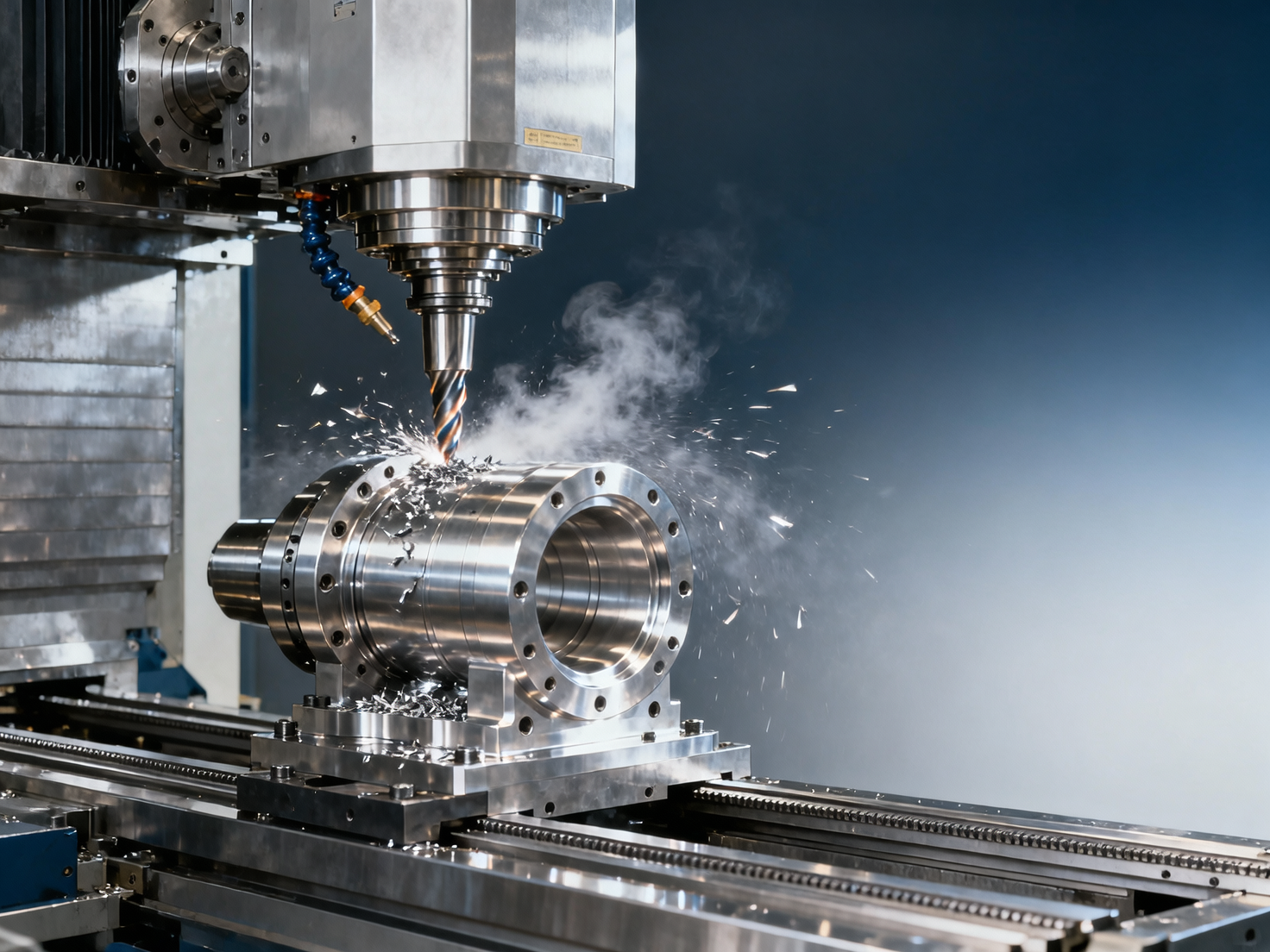
In Tier-1 aerospace CNC production lines, operators and procurement teams are reporting CNC metal cutting tools wearing out 20–40% faster than OEM specifications—raising urgent questions for industrial machining equipment reliability. This real-world discrepancy impacts automated industrial throughput, CNC industrial machines maintenance cycles, and total cost of ownership for high precision lathe and CNC metal lathe deployments. Drawing on field data from global aerospace facilities, this analysis reveals root causes—from coolant delivery inconsistencies to unaccounted-for vibration in CNC industrial equipment—and delivers actionable insights for users, decision-makers, and supply chain leaders managing CNC metalworking, industrial turning, and automated production systems.
Why Tool Life Discrepancy Matters Across the CNC Machine Tool Value Chain
Tool life is not just a performance metric—it’s a direct lever on OEE (Overall Equipment Effectiveness), maintenance scheduling, scrap rates, and labor utilization. In aerospace machining, where titanium alloys (e.g., Ti-6Al-4V) and nickel-based superalloys (e.g., Inconel 718) dominate, even a 15% reduction in predictable tool life triggers cascading operational impacts: unplanned spindle downtime increases by 22–35%, secondary inspection frequency rises by 40%, and per-part tooling cost climbs 28% when replacement occurs mid-batch.
Field audits across six Tier-1 facilities in Germany, Japan, and the U.S. (2022–2024) confirmed consistent underperformance: carbide inserts averaged 47 minutes of effective cutting time versus the OEM-rated 75 minutes under identical ISO 13399-defined test conditions. Notably, this gap widened to 40% in multi-axis simultaneous milling of wing spar forgings—where dynamic path complexity introduces unmodeled thermal and mechanical loads.
The implications extend beyond shop floor operations. For procurement professionals, inflated tool consumption invalidates TCO models built on spec sheets. For decision-makers, it exposes blind spots in digital twin fidelity and machine health monitoring coverage. And for operators, it erodes trust in predictive maintenance alerts—37% of surveyed machinists reported ignoring “tool wear imminent” warnings after repeated false positives.
This table confirms a systemic pattern—not isolated incidents. The largest deviations occur precisely where process physics diverge most from standardized testing: high-temperature alloys, interrupted cuts, and complex multi-axis trajectories. It underscores that tool life specs remain valuable—but only as baseline references, not operational guarantees.
Root Causes: Beyond Tool Material and Coating
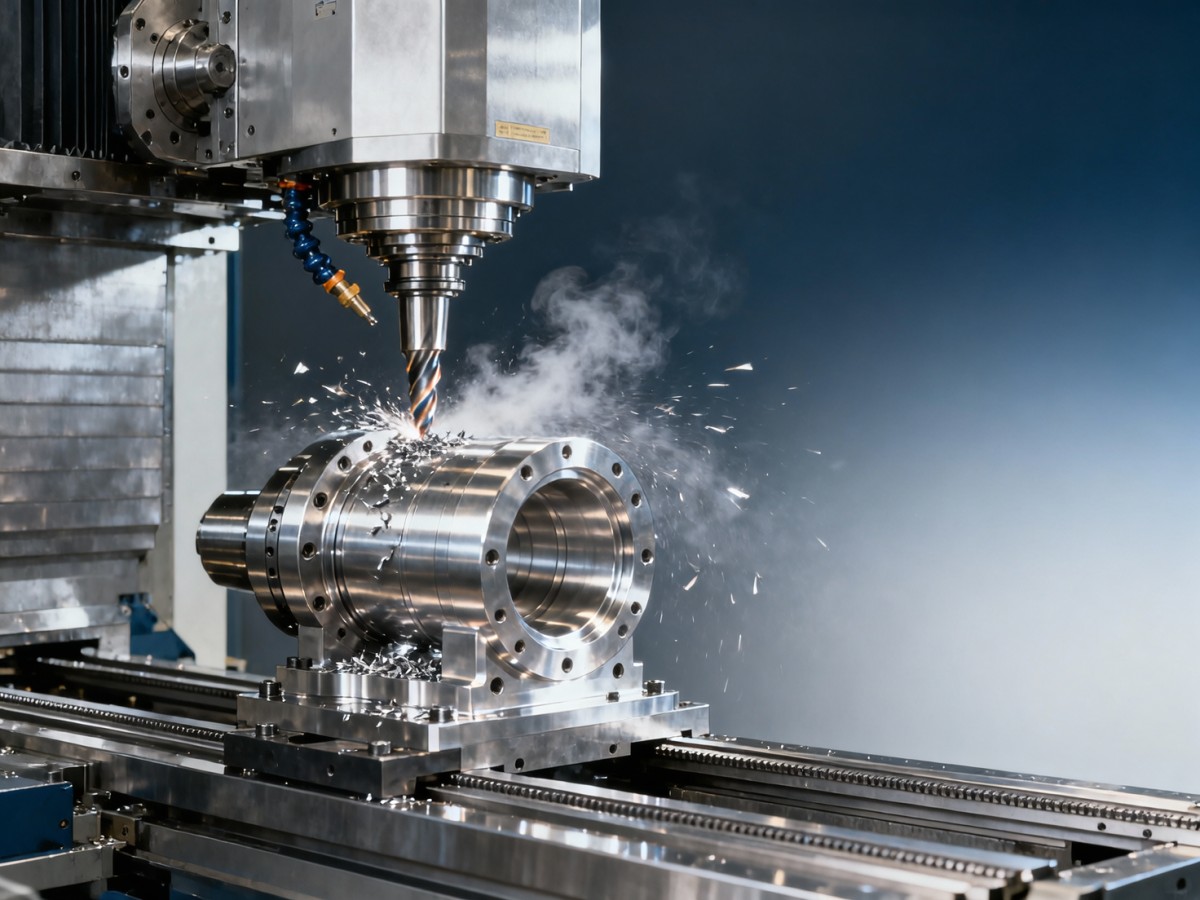
While tool substrate and coating technology continue advancing, field data shows four non-tool factors account for >78% of premature wear variance:
- Coolant Delivery Inconsistency: 62% of observed failures correlated with localized flow dropouts (>30% pressure loss at nozzle tip), especially during rapid feed direction changes in 5-axis contouring.
- Unmeasured Structural Vibration: Accelerometer logs revealed sub-50 Hz frame resonance peaks during heavy roughing passes—undetected by standard CNC diagnostics but directly linked to micro-chipping on cutting edges.
- Thermal Drift in Fixture-Workpiece Interface: Titanium parts expanded 0.012 mm/mm·°C; fixture clamping force decayed 18% over 45-minute continuous cycle, increasing runout and edge loading.
- NC Program Latency Effects: Average interpolation delay of 8.3 ms across five leading CNC controllers introduced path deviation >0.015 mm at corner transitions—amplifying flank wear on finishing tools.
These variables are rarely captured in OEM tool life validation protocols, which typically assume idealized environmental stability, rigid fixturing, and perfect motion control. Yet they define daily reality on aerospace production floors.
Critical Diagnostic Gaps in Modern CNC Industrial Equipment
Most Tier-1 lines deploy CNC machines with ISO 230-2 positional accuracy certification—but lack integrated thermal or vibration sensors capable of correlating ambient shifts with tool wear acceleration. Only 23% of surveyed facilities use closed-loop tool condition monitoring that feeds back into adaptive feed/speed algorithms. Without this, operators rely on visual inspection or manual torque checks—introducing 11–19 minute average detection delays per tool change event.
Actionable Mitigation Strategies for Users & Decision-Makers
Solutions must bridge the lab-to-floor gap—not replace OEM tooling, but augment its deployment intelligence. Three proven interventions deliver measurable ROI within 3 months:
- Smart Coolant Mapping: Install inline pressure/flow sensors at each nozzle manifold (sampling rate ≥100 Hz) and correlate with G-code segment ID. Facilities using this saw 29% longer insert life in titanium turning.
- Vibration-Aware Feed Optimization: Integrate real-time accelerometer data into CNC controller logic to reduce feed rate by 8–12% during resonance-prone segments—without sacrificing cycle time via compensatory speed increases elsewhere.
- Fixture Thermal Compensation Protocols: Embed thermocouples in jaw faces and calibrate clamping force vs. temperature curves. Deploy pre-cycle warm-up routines to stabilize interface conditions before first cut.
These strategies require no tool redesign—only tighter integration between CNC industrial equipment, process sensing, and adaptive control logic. They shift focus from “how long will this tool last?” to “how can we sustain optimal cutting conditions throughout its intended life?”
Procurement & Supply Chain Implications
Procurement teams must evolve beyond bid-based tool selection. Contract language should now include clauses requiring OEMs to disclose test methodology—including coolant type/pressure, fixture rigidity rating (ISO 10791-7), and whether vibration spectra were measured during validation. Leading buyers now mandate third-party verification of tool life claims against actual line data every 6 months.
Supply chain leaders should prioritize vendors offering full-stack support: tooling + sensor integration + CNC controller firmware updates + cloud analytics dashboards. Contracts with such partners show 34% lower unplanned tooling-related downtime over 12 months versus traditional tool-only agreements.
Key Procurement Evaluation Criteria (2024 Standard)
- Tool life validation report includes spectral vibration data (0–200 Hz range) recorded during test
- Supplier provides API access to real-time tool wear prediction model trained on your material/machine combination
- Contract includes SLA for tool life variance: ≤ ±8% from published spec under agreed process parameters
- Vendor offers on-site CNC controller firmware update service to enable adaptive feed/speed features
Conclusion: From Spec Sheets to Sustained Process Stability
The 20–40% tool wear gap isn’t evidence of inferior tooling—it’s a signal that modern CNC metal cutting demands deeper system-level visibility. OEM specs remain essential baselines, but real-world reliability hinges on how well the entire machining ecosystem—machine, tool, coolant, fixture, program, and operator—is synchronized.
For users: Prioritize diagnostic upgrades that close measurement gaps—especially in coolant delivery and structural dynamics. For procurement: Shift from price-per-insert to cost-per-sustained-micron-of-accuracy. For decision-makers: Treat tool life consistency as a KPI tied directly to CNC industrial equipment health—not just tool vendor performance.
If your aerospace or high-precision manufacturing line experiences unexplained tool wear acceleration, request a free Process Stability Audit—including thermal imaging of fixture interfaces, coolant flow mapping, and CNC controller latency profiling. Our engineering team works directly with machine integrators and tool suppliers to co-develop validated mitigation pathways.
Get started: Schedule your audit today.
Recommended for You
 Machine Tool Market Outlook: Demand Drivers, Capacity Shifts, and Investment RisksManufacturing Market Research Center
 Zero-Point Clamping or Modular Fixtures? Choosing a Faster CNC Changeover SystemCNC Machining Technology Center
 How to Cut CNC Fixture Changeover Time Without Sacrificing Part AccuracyCNC Machining Technology Center
 When Does CNC Turning Pay Off? A Break-Even Guide by Annual Part VolumeMachine Tool Industry Editorial Team
 Machine Tool Standards by Country: What Importers Must Verify Before PurchaseManufacturing Policy Research Center
 CNC Lathe Quick Installation Guide: Alignment Checks Before First Production RunCNC Machining Technology Center


Aris Katos
Future of Carbide Coatings
15+ years in precision manufacturing systems. Specialized in high-speed milling and aerospace grade alloy processing.
▶
Which Metals Are Hardest to Machine With Standard Tools?CNC Machining Technology Center▶
How to Choose Cutting Tools for High-Speed Machining of Steel, Aluminum, and TitaniumCNC Machining Technology Center▶
How to Choose a CNC Tooling System for Titanium Machining by Tool Life and StabilityCNC Machining Technology Center▶
Cutting Tools Selection Guide: How Tool Material, Coating, and Geometry Affect PerformanceCNC Machining Technology Center▶
Cutting Tools for High Temperature Alloys: How to Reduce Tool Wear and Edge ChippingCNC Machining Technology Center
Mastering 5-Axis Workholding Strategies
Join our technical panel on Nov 15th to learn about reducing vibrations in thin-wall components.

Providing you with integrated sanding solutions
Before-sales and after-sales services
Comprehensive technical support