• Global CNC market projected to reach $128B by 2028 • New EU trade regulations for precision tooling components • Aerospace deman
NYSE: CNC +1.2%LME: STEEL -0.4%

Which Metals Are Hardest to Machine With Standard Tools?
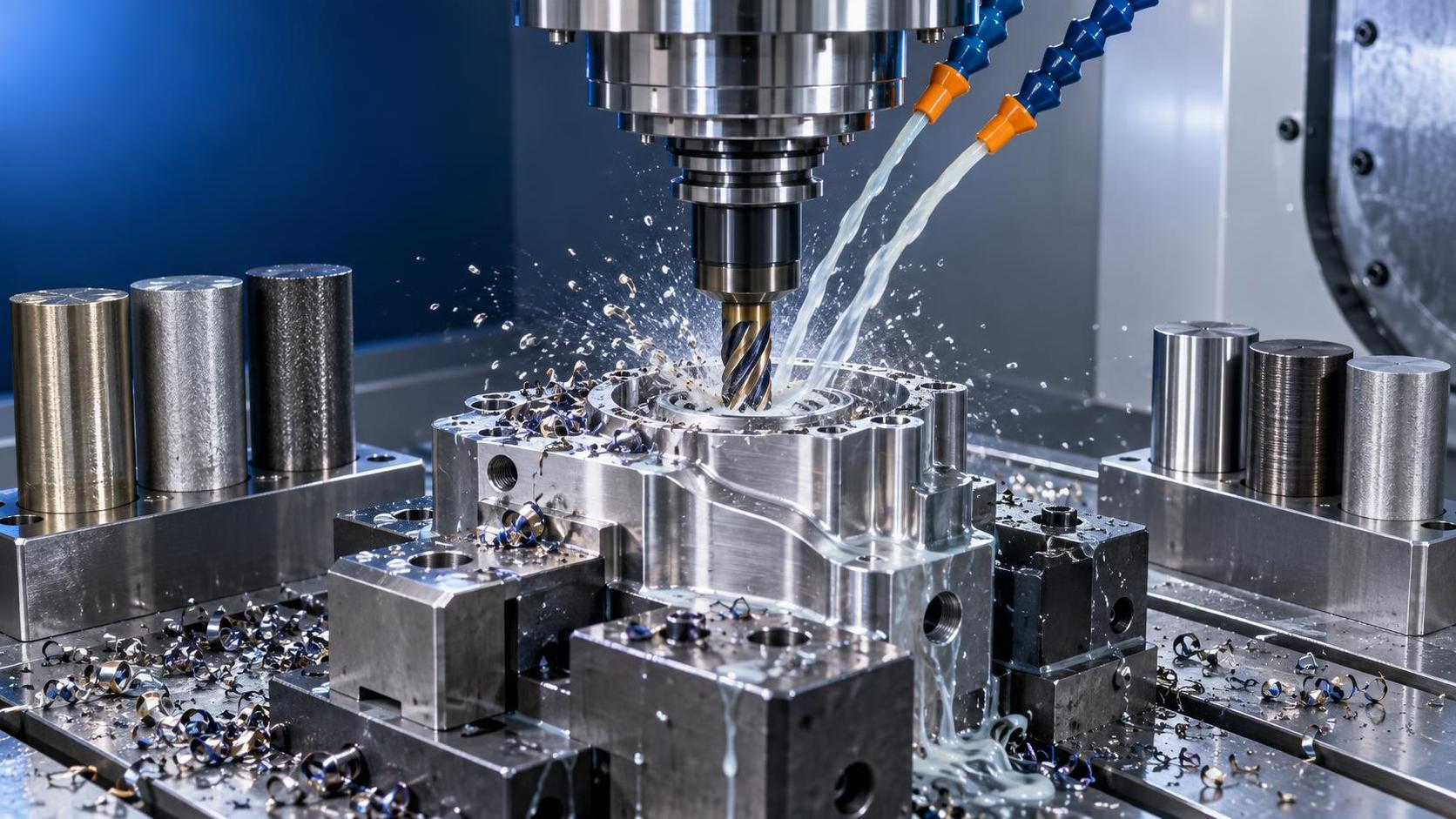
Some of the hardest metals to machine with standard tools are titanium alloys, nickel-based superalloys such as Inconel, hardened tool steels, cobalt-chromium alloys, and certain high-manganese steels. Their difficulty does not come from hardness alone. A metal can be relatively moderate in bulk hardness yet remain difficult to cut because it retains strength at high temperature, work-hardens at the cutting edge, transfers heat poorly, produces abrasive particles, or resists forming a stable chip.
Standard carbide end mills, drills, inserts, holders, and flood-coolant setups can machine many of these materials, but the process window is narrower than it is for aluminum, mild steel, or common stainless grades. Tool life, surface finish, dimensional control, and cycle stability depend on matching the cutting strategy to the material's behavior rather than simply reducing speed.
Hardness is only part of the machining problem
Hardness matters because a harder workpiece places greater stress on the cutting edge. Yet it is an incomplete way to predict machinability. A heat-treated steel at high hardness may be difficult mainly because it abrasively wears the tool and risks chipping the edge. Titanium, by contrast, is often difficult even when its hardness is lower because heat stays near the cutting zone and the material can weld to the tool under poor conditions.
Several material properties commonly combine to make cutting difficult:
- High hot strength: the metal remains strong where the cutting edge is hottest, so the tool encounters high forces instead of a softened chip.
- Low thermal conductivity: heat does not move efficiently into the chip or workpiece. The insert, drill margin, or end-mill corner absorbs more of it.
- Work hardening: a previously cut surface becomes harder than the base material. Light rubbing passes then create a more difficult layer for the next edge engagement.
- Abrasive microstructure: hard carbides, intermetallic phases, or inclusions wear tool coatings and edges even when the nominal bulk hardness appears manageable.
- Poor chip control: long, stringy, serrated, or segmented chips can trap heat, mark finished surfaces, and interfere with automated cutting cycles.
The hardest metal to machine in a particular job is therefore not always the one with the highest hardness value. Hole depth, interrupted cuts, wall thickness, part rigidity, coolant access, stock condition, and tolerance requirements can change the answer.
Titanium alloys: heat concentrated at the cutting edge
Titanium alloys are among the most demanding materials for standard CNC tools, especially in deep pockets, thin-wall components, and drilled features. Titanium does not conduct heat as readily as steel, so much of the generated heat stays close to the cutting edge. At the same time, the material retains strength under cutting temperatures and has a tendency to react with tool materials. The result is localized wear, edge buildup, galling, and sudden failure if the cut becomes unstable.
A common mistake is to treat titanium as simply a slower-cutting steel. Reducing surface speed is often appropriate, but slowing the feed too far can be harmful. When the chip load falls below the tool's ability to cut cleanly, the edge rubs instead of shearing. Rubbing increases heat and encourages work hardening near the surface. A tool can appear to be cutting gently while actually losing life faster.
Radial engagement is especially important in milling. A high-efficiency toolpath with limited radial engagement can reduce the time any one cutting edge remains buried in hot material. Axial depth should remain sufficient to distribute wear over more of the flute length. Entry and exit moves need to avoid dwelling at a corner, where heat and chip recutting accumulate quickly.
For drilling titanium, chip evacuation is often the limiting factor rather than spindle power. Deep holes require reliable coolant delivery and a drill geometry that forms compact, repeatable chips. A drill that pauses, rubs, or packs chips in the flutes may overheat before the diameter or surface finish shows an obvious problem. Reaming should remove a controlled allowance; asking a reamer to correct an undersized, hardened, or wandering drilled hole creates inconsistent results.
Nickel-based superalloys: strength that persists under heat
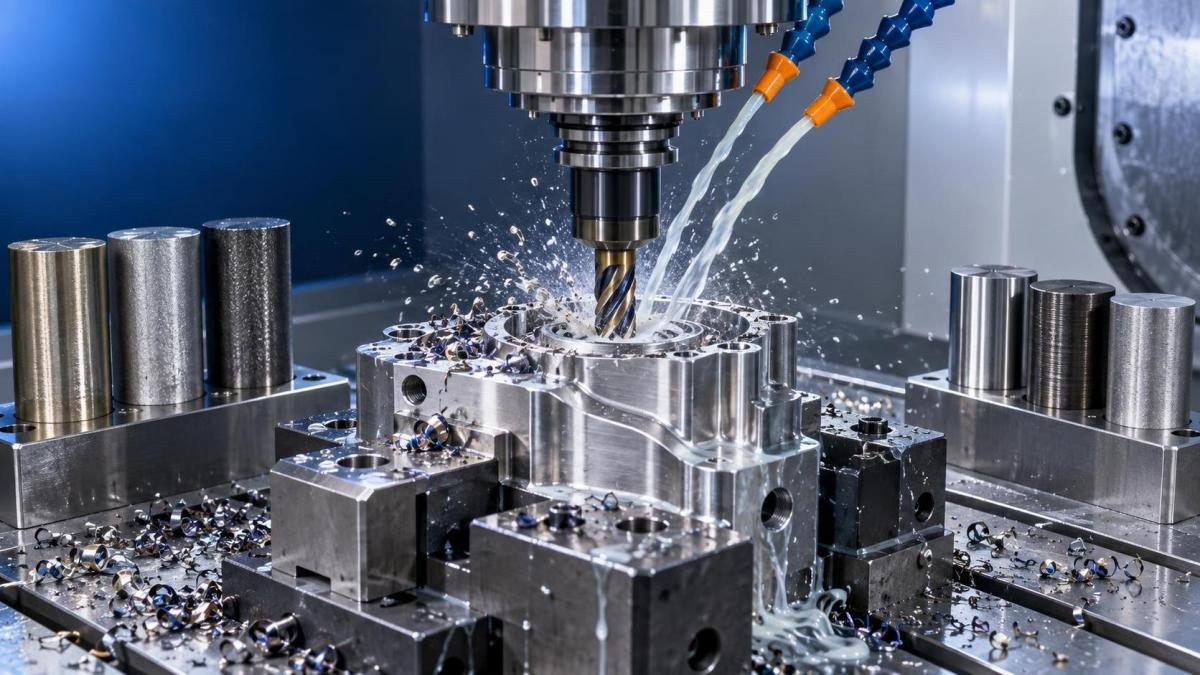
Nickel-based superalloys, including Inconel-type materials, are difficult because they were designed to retain mechanical properties at temperatures that soften many other alloys. That useful service characteristic becomes a cutting problem. The cutting edge must shear material that remains tough and strong while the temperature at the tool-workpiece interface rises rapidly.
These alloys also work-harden. If a turning insert takes a shallow finishing pass over a surface altered by a previous pass, it can cut mostly hardened material. The process may produce a polished-looking surface while increasing flank wear and notch wear near the depth-of-cut line. Notch wear is not merely cosmetic: as it grows, it changes cutting forces and can produce a taper, a shoulder mark, or a sudden edge fracture.
Keeping the depth of cut away from the same hardened boundary helps spread wear. When part geometry permits it, varying the axial position of a milling pass or changing the depth-of-cut line in turning can prevent repeated loading in one narrow zone. This does not replace proper tool selection, but it can delay the localized failure pattern common in superalloys.
Nickel alloys respond poorly to interrupted, hesitant motion. Machine vibration, loose workholding, and unstable stick-out become visible quickly as chipped corners and irregular surface texture. A rigid holder, short practical tool projection, smooth toolpath transitions, and consistent feed through corners matter more than chasing an aggressive catalog value. The cutter should remain engaged in a predictable manner rather than repeatedly entering a hardened edge.
Hardened steels: abrasive wear and brittle edge failure
Hardened tool steel, bearing steel, die steel, and other heat-treated steels can exceed the comfortable range of conventional carbide tooling. The exact challenge depends on the heat-treatment condition and the feature being machined. Continuous finishing of a rigid hardened surface is different from roughing a scale-covered forged blank or machining an interrupted feature with keyways and holes.
At elevated hardness, carbide edges wear by abrasion and can chip under shock. A sharp, delicate edge may cut efficiently at first but fail when it reaches an interrupted section. A heavily honed edge may survive impact better but generates more heat and cutting force. The correct edge preparation depends on whether the operation is a light finishing pass, a rough interrupted cut, a hard-milling operation, or a bore that must hold form after heat treatment.
Hard milling frequently favors smaller radial engagement, stable toolpaths, and controlled stepovers rather than large slotting cuts. Full-width slots are demanding because both sides of the cutter are heavily loaded and chip escape is limited. Where geometry permits, roughing before heat treatment and leaving a predictable finishing allowance after hardening often reduces risk. The allowance must be sufficient to remove distortion, scale, and decarburized surface material without forcing a finishing tool into an erratic skin.
Surface integrity deserves attention on hardened steels. Excess heat, tool rubbing, or edge chipping can leave a visibly acceptable surface with micro-cracks, burn marks, tensile stress, or altered metallurgical structure near the surface. This is particularly relevant on dies, rolling-contact parts, and components where fatigue performance is tied to the finished layer.
Cobalt-chromium alloys and other tough medical-grade materials
Cobalt-chromium alloys combine corrosion resistance, high strength, and wear resistance. They also tend to generate heat, resist chip breaking, and work-harden. Their toughness can produce long chips in turning, while their abrasive characteristics accelerate flank wear. The difficulty increases on small features because a small-diameter tool has less core strength and fewer paths for coolant and chips to escape.
Tool deflection is easy to misread in these alloys. A tapered wall, oversized slot, or drifting bore may be blamed on an incorrect offset, although the real cause is changing cutting force as the tool wears or as engagement rises around a contour. Correcting offsets repeatedly can hide the underlying instability and create inconsistent parts from one tool life stage to the next.
Sharp internal corners are also problematic. They concentrate load on a small portion of the tool and leave little room for chip movement. Adding a realistic internal radius, where design conditions permit, often makes the feature more repeatable than attempting to force a full-radius cutter into a tight corner at low feed.
High-manganese steel: work hardening under pressure
High-manganese steel is known for severe work hardening. Its surface can become harder when it is rubbed, deformed, or cut with an inadequate chip load. This makes it especially unforgiving in operations that involve repeated light passes, dull tools, or unstable fixturing. Once a hardened layer develops, the next pass sees a different material condition from the original stock.
The response is to maintain a positive cutting action and avoid letting an edge skate across the surface. A rigid setup is essential because vibration creates intermittent rubbing. Tools must be changed before they become excessively worn; a worn edge does not simply make the process slower, it can alter the workpiece surface into a harder condition for the replacement tool.
Stainless steel is not one machining category
Many stainless steels are challenging, but grouping all stainless grades together leads to poor process decisions. Free-machining grades behave very differently from austenitic grades, duplex stainless steels, precipitation-hardening grades, and high-temperature stainless alloys. Austenitic stainless steels commonly work-harden and produce stringy chips. Duplex grades combine high strength with lower thermal conductivity and can place high demand on drills and taps. Precipitation-hardening grades become far more abrasive and force-intensive after aging.
For difficult stainless materials, a common failure sequence begins with a small issue: a weak clamp, excessive tool projection, poor coolant direction, or a worn insert. The tool begins to rub, the surface work-hardens, heat rises, and the next engagement becomes heavier. Stopping this sequence early is more effective than repeatedly reducing speed after tool life has already collapsed.
Choosing a workable strategy with standard tools
“Standard tools” does not have to mean unsuitable tools. Coated carbide end mills, indexable inserts, solid-carbide drills, rigid holders, and through-tool coolant are standard equipment in many machining environments. The limitation is usually using a general-purpose tool and general-purpose cutting pattern for a material that needs deliberate control of heat, engagement, and chip formation.
Start with the exact material condition. The alloy designation alone is not enough. Annealed, solution-treated, cold-worked, aged, forged, cast, and heat-treated stock can behave differently even within the same alloy family. Surface scale, residual stress, inclusions, and hardness variation matter most on the first roughing pass and near interrupted features.
Then separate the operation into roughing, semi-finishing, finishing, drilling, threading, and boring. A parameter that works for side milling may fail in a deep cavity. A turning insert that survives roughing may leave unacceptable finish on a final pass because its edge hone is too strong for the remaining allowance. Treating every operation as one material problem often causes more trouble than the alloy itself.
Control heat without starving the cut
Lower cutting speed is often necessary for titanium and nickel alloys, but feed must still create a real chip. The target is not the lowest possible load; it is a stable shearing action that carries heat away in the chip. Feed per tooth, feed per revolution, and actual chip thickness should be considered together. When radial engagement becomes small, programmed feed may need adjustment to maintain an effective chip load.
Protect rigidity from the spindle to the fixture
Hard-to-machine metals expose flexibility throughout the setup. Long tool overhang, a narrow clamp contact area, thin unsupported walls, weak jaws, and loose holder interfaces all turn cutting energy into vibration. Reducing engagement can help, but it should not become a substitute for correcting a preventable rigidity issue. Where part design allows, leave support ribs or sacrificial material until late in the process, then remove them with a controlled finishing operation.
Use coolant as a chip-management tool
Coolant does more than lower temperature. Properly aimed flow clears chips from flutes, prevents recutting, lubricates contact zones, and keeps the cutting process visible. Flood coolant that misses the cutting zone has limited value in a deep pocket. Through-tool coolant is particularly useful in drilling and deep cavity work because it reaches areas that external nozzles cannot reliably serve.
Dry machining, minimum-quantity lubrication, flood coolant, and high-pressure coolant each require compatible tools and process conditions. Switching methods without considering thermal cycling can shorten tool life. Some carbide tools perform poorly when intermittently cooled during a hot cut, while others depend on continuous coolant delivery for chip evacuation. The process must be consistent from the first part through the last.
Symptoms that point to the real cause
The most difficult metals are manageable when their specific failure mode is identified early. Titanium asks for heat control and stable chip load. Nickel superalloys punish dwell and repeated cutting at a hardened depth line. Hardened steels demand resistance to abrasion and shock. Cobalt alloys and high-manganese steels reveal weaknesses in chip control, rigidity, and edge condition. Standard tools become effective when the setup, toolpath, coolant path, and cutting parameters are chosen around those behaviors rather than around nominal hardness alone.
NEXT ARTICLE
Recommended for You
 How to Specify a CNC Lathe for High-Volume Automotive Shaft ProductionCNC Machining Technology Center
 How Automated Precision Machining Maintains Tolerance in High-Mix ProductionCNC Machining Technology Center
 How to Evaluate a Machine Tool Factory Before Sourcing CNC EquipmentGlobal Machine Tool Trade Research Center
 CNC Programming Explained: From CAD Models to Reliable Shop-Floor ToolpathsCNC Machining Technology Center
 How Multi-Axis Machining Produces Complex Components With Fewer SetupsCNC Machining Technology Center
 Which Metals Are Hardest to Machine With Standard Tools?CNC Machining Technology Center



Aris Katos
Future of Carbide Coatings
15+ years in precision manufacturing systems. Specialized in high-speed milling and aerospace grade alloy processing.
▶
Which Metals Are Hardest to Machine With Standard Tools?CNC Machining Technology Center▶
How to Choose Cutting Tools for High-Speed Machining of Steel, Aluminum, and TitaniumCNC Machining Technology Center▶
How to Choose a CNC Tooling System for Titanium Machining by Tool Life and StabilityCNC Machining Technology Center▶
Cutting Tools Selection Guide: How Tool Material, Coating, and Geometry Affect PerformanceCNC Machining Technology Center▶
Cutting Tools for High Temperature Alloys: How to Reduce Tool Wear and Edge ChippingCNC Machining Technology Center
Mastering 5-Axis Workholding Strategies
Join our technical panel on Nov 15th to learn about reducing vibrations in thin-wall components.

Providing you with integrated sanding solutions
Before-sales and after-sales services
Comprehensive technical support