• Global CNC market projected to reach $128B by 2028 • New EU trade regulations for precision tooling components • Aerospace deman
NYSE: CNC +1.2%LME: STEEL -0.4%

CNC Manufacturing for Electronics: Key Challenges in Burr Control and Micro-Part Accuracy
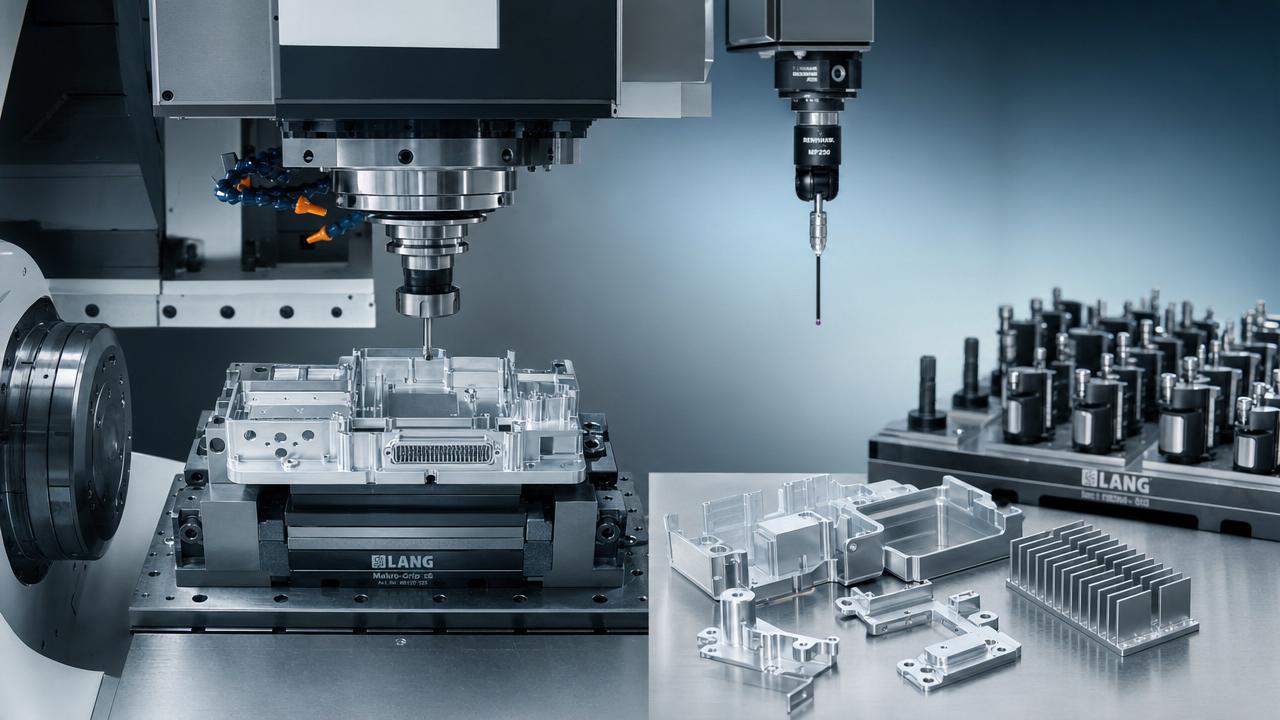
Why CNC Manufacturing for Electronics Becomes Critical at Small Scale
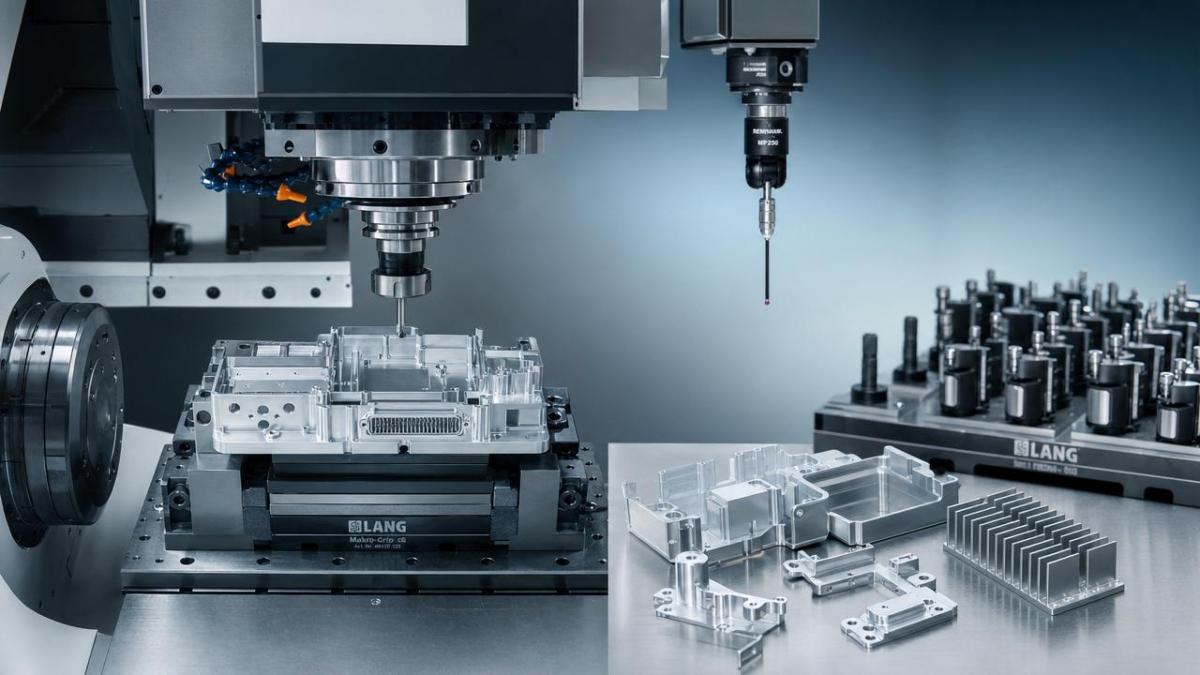
CNC manufacturing for electronics is rarely judged by cutting speed alone.
The real challenge appears when burr control and micro-part accuracy begin to affect assembly yield, insulation safety, and long-term reliability.
In electronic production, a burr that seems minor under standard inspection can scratch a flex cable, disturb connector seating, or create hidden contamination risks.
That is why CNC manufacturing for electronics demands tighter process discipline than many larger mechanical applications.
This matters across the broader machine tool sector.
Modern CNC lathes, machining centers, and multi-axis systems already support high-volume precision work in automotive, aerospace, energy, and electronics.
Yet electronics pushes those platforms into a different tolerance conversation.
Feature sizes shrink, surface sensitivity rises, and downstream automation leaves less room for variation.
In actual production, the key question is not whether CNC manufacturing for electronics is precise.
It is whether the process remains stable when geometry becomes delicate and inspection windows become unforgiving.
Different Electronics Parts Create Different Burr Risks
Not every electronic component creates the same machining pressure.
A shielding cover, a heat sink, a connector shell, and a miniature bracket may all use CNC machining, but the failure logic differs.
Thin-wall housings often struggle with edge rollover and deformation during finishing.
Connector-related parts are more sensitive to burrs at slot edges, corners, and hole exits.
Heat dissipation parts usually require dimensional consistency across many fins, pockets, or contact faces.
Micro-structural supports add another layer of risk because clamping force can alter part behavior before the tool even cuts.
More commonly, the judging point is tied to downstream assembly.
If the part enters robotic insertion, automated fastening, or optical alignment, very small burrs can become process blockers.
If the part supports thermal or electrical contact, micro-part accuracy matters more on flatness, concentricity, and surface integrity than on nominal size alone.
A practical way to compare common machining situations
This is where CNC manufacturing for electronics should be judged by use condition, not by a generic tolerance claim.
When Burr Control Decides Whether a Part Is Truly Usable
Burrs in electronics machining are not only a cosmetic issue.
They can become mechanical interference, conductive debris, coating defects, or operator handling hazards.
That changes how CNC manufacturing for electronics should be planned from the start.
For soft aluminum alloys, built-up edge may increase burr height unexpectedly during long production runs.
For copper and brass variants, chip behavior can change edge condition around small drilled features.
For stainless or plated materials, post-process burr removal may introduce secondary damage if access is limited.
In actual application, burr control works best when combined with toolpath design, tool condition monitoring, and realistic exit-edge planning.
A process that relies only on manual deburring often becomes unstable at scale.
It can also create hidden variation between shifts, batches, or supplier locations.
What usually improves burr control in electronics machining
- Match cutter geometry to material ductility and feature depth.
- Reduce unsupported exit conditions on holes, slots, and thin edges.
- Monitor tool wear before burr growth becomes visible in final inspection.
- Separate critical cosmetic edges from functional datum surfaces during cleanup.
- Confirm that deburring does not shift micro-part accuracy beyond assembly limits.
Micro-Part Accuracy Is More Than Holding a Tight Tolerance
Many teams assume micro-part accuracy means using a tighter machine specification.
In CNC manufacturing for electronics, that view is usually incomplete.
Tiny parts respond differently to heat, vibration, spindle dynamics, workholding pressure, and even measurement method.
A dimension can be correct at the machine and still fail during assembly because orientation features drifted slightly.
This is common in parts with narrow ribs, miniature threads, micro-holes, or delicate datum surfaces.
More careful operations usually focus on process capability rather than isolated sample accuracy.
That means looking at repeatability over tool life, not just first-off approval.
It also means checking whether in-line automation, fixturing transfer, and post-machining cleaning can preserve the original geometry.
In smart manufacturing environments, digital feedback helps, but data alone does not solve instability.
The useful question is whether machine data is tied to the exact feature that fails in production.
Different Production Conditions Change the Right Decision
The best CNC manufacturing for electronics process in a prototype cell may not fit a high-volume automated line.
Low-volume work can tolerate slower cycle times if burr risk drops and inspection access improves.
High-volume work usually needs a more balanced approach.
Small cycle gains are meaningless if burr formation increases sorting, rework, or stoppage in robotic assembly.
Global electronics supply chains add another layer.
Facilities in China, Germany, Japan, South Korea, and other manufacturing hubs may use different tooling practices, operator habits, and inspection thresholds.
If process definitions are too broad, the same part drawing can produce different practical outcomes.
That is why cross-site process transfer should define burr limits by function, not by vague appearance language.
Where requirement differences usually appear
- Prototype builds value access for inspection and fast parameter changes.
- Mass production values stable edge quality across long unattended cycles.
- Parts entering automated assembly need tighter consistency on orientation features.
- Parts with coatings or plating need burr control before finishing, not after defects appear.
Mistakes That Often Distort CNC Manufacturing for Electronics Decisions
One frequent mistake is judging feasibility only by machine accuracy ratings.
That ignores tool wear patterns, fixture repeatability, coolant strategy, and measurement resolution.
Another mistake is treating similar electronic parts as identical machining cases.
A small bracket for grounding, for example, may need very different edge treatment than a visible external housing.
A third issue is focusing on unit price while overlooking rework, cleaning time, and scrap caused by unstable burr behavior.
There is also a common blind spot around inspection design.
If burr acceptance is described loosely, different operators may pass parts with very different functional risks.
In electronics, that ambiguity can travel downstream and surface only after assembly or reliability testing.
How to Build a Better Fit Before Process Release
A better approach starts with a narrow review of actual use conditions.
For CNC manufacturing for electronics, that means linking each critical feature to its real assembly or performance consequence.
Then the process window becomes easier to define.
- Identify edges where burrs affect insertion, contact, insulation, or coating adhesion.
- Separate critical dimensions from supporting dimensions before capability studies begin.
- Validate workholding on thin or miniature parts under real cycle conditions.
- Check whether deburring, cleaning, and handling change measured geometry.
- Use trial runs long enough to expose wear-related burr growth, not only startup performance.
Where digital integration is available, connect tool life data, vision inspection, and defect mapping to the same feature logic.
That supports more reliable process correction than reviewing machine alarms in isolation.
In practice, CNC manufacturing for electronics performs best when machining, inspection, and assembly are judged as one chain.
The next step is usually straightforward.
Map the actual part scenarios, compare burr-sensitive features, confirm micro-part accuracy limits, and define acceptance around functional risk.
That creates a stronger basis for process release, supplier alignment, and stable high-precision production.
Recommended for You
![]() JTEKT Introduces G5 Series Large CNC Cylindrical Grinder, Sales Begin October 26, 2026Machine Tool Industry Editorial Team
JTEKT Introduces G5 Series Large CNC Cylindrical Grinder, Sales Begin October 26, 2026Machine Tool Industry Editorial Team Shaft Parts for Heavy Machinery: Selecting Materials for High Shock LoadsCNC Machining Technology Center
![]() 33rd JIMTOF 2026 Set to Open in Tokyo as Taiwanese Exhibitors Seek OrdersGlobal Machine Tool Trade Research Center
33rd JIMTOF 2026 Set to Open in Tokyo as Taiwanese Exhibitors Seek OrdersGlobal Machine Tool Trade Research Center Which Fixture Type Cuts Changeover Time Most in High-Mix CNC Machining?CNC Machining Technology Center
![]() FANUC Invests $18 Million in Largest U.S. Corporate Automation Training CenterMachine Tool Industry Editorial Team
FANUC Invests $18 Million in Largest U.S. Corporate Automation Training CenterMachine Tool Industry Editorial Team Southeast Asia Machine Tool Market: Comparing Automotive Demand by CountryManufacturing Market Research Center


Aris Katos
Future of Carbide Coatings
15+ years in precision manufacturing systems. Specialized in high-speed milling and aerospace grade alloy processing.
▶
How thermal drift affects accuracy in high-precision manufacturingCNC Machining Technology Center▶
What Tolerances Are Typical in Precision Machining?CNC Machining Technology Center▶
Industrial Machining: Selecting Processes for Tight-Tolerance Metal PartsCNC Machining Technology Center▶
How Does Precision Machining Differ From Standard Machining?CNC Machining Technology Center▶
CNC Precision: Which Tolerances, Materials, and Processes Fit Your Part?CNC Machining Technology Center
▶
Mastering 5-Axis Workholding Strategies
Join our technical panel on Nov 15th to learn about reducing vibrations in thin-wall components.

Providing you with integrated sanding solutions
Before-sales and after-sales services
Comprehensive technical support