• Global CNC market projected to reach $128B by 2028 • New EU trade regulations for precision tooling components • Aerospace deman
NYSE: CNC +1.2%LME: STEEL -0.4%

CNC Manufacturing for Medical Devices: Tolerances, Materials, and Compliance Basics
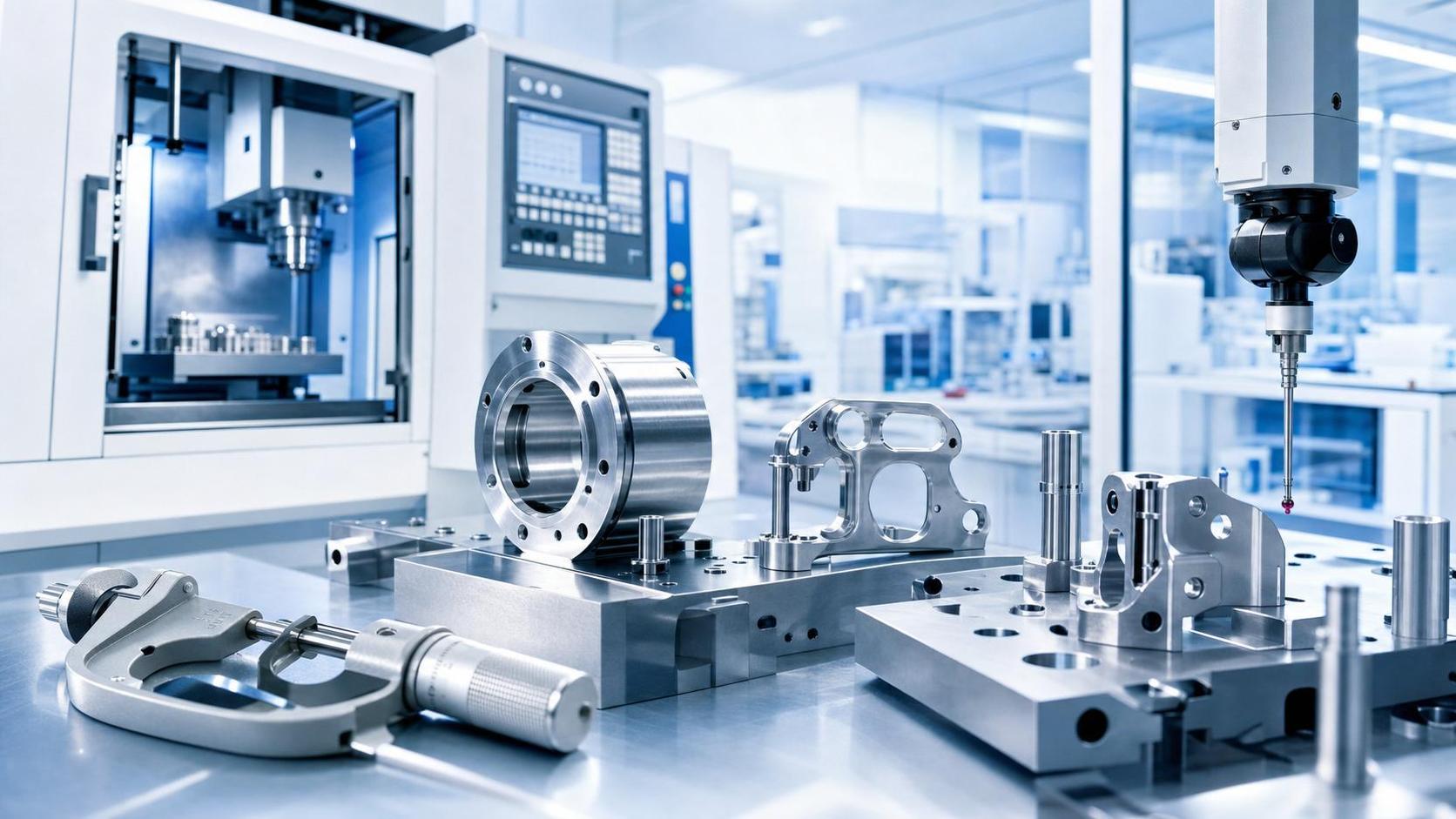
Why does CNC manufacturing for medical devices require a different level of control?
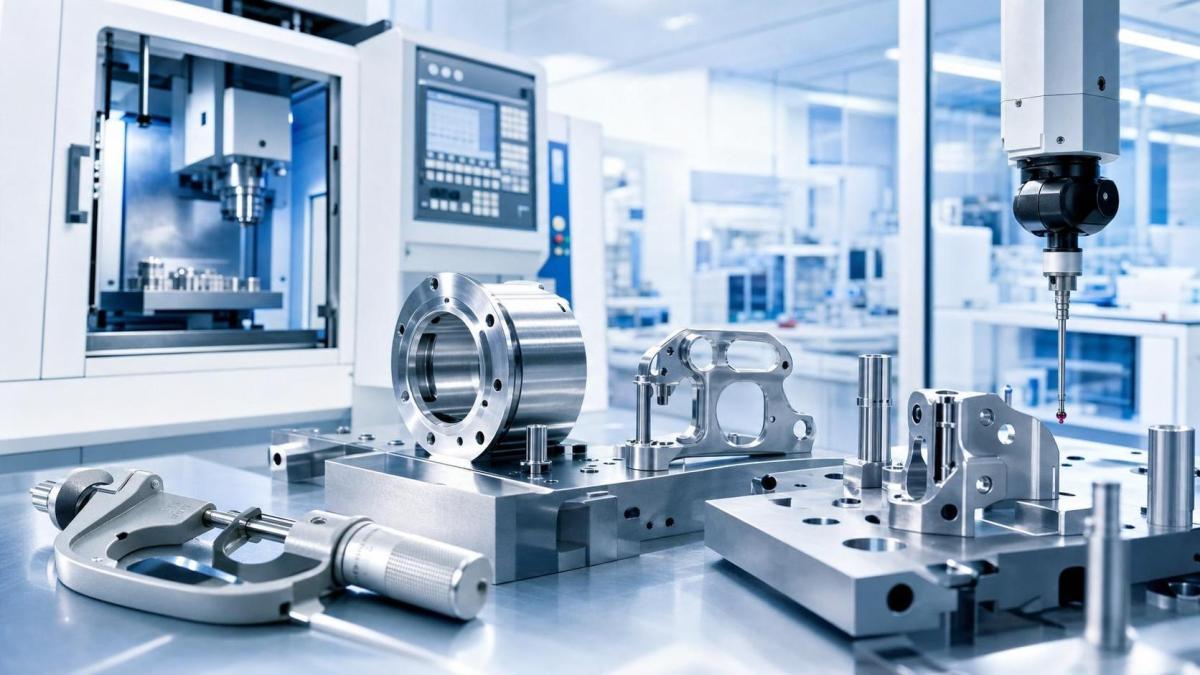
CNC manufacturing for medical devices is not just about making precise parts. It is about making repeatable, traceable, and safe parts under tightly managed conditions.
In many industrial sectors, a small dimensional shift may affect fit or efficiency. In medical use, the same shift can affect sealing, movement, sterility, or patient safety.
That is why this topic sits at the intersection of machining capability, material behavior, and compliance discipline. Precision alone is only the starting point.
The broader CNC machine tool industry already supports aerospace, automotive, energy, and electronics with advanced automation. Medical production applies that same high-precision base under stricter documentation and validation expectations.
In practice, CNC manufacturing for medical devices often involves smaller batches, complex geometries, difficult materials, and tighter release controls than standard industrial work.
A useful way to frame the issue is simple: can the process hold tolerance, preserve material integrity, and prove compliance at the same time?
How tight do tolerances really need to be?
Not every medical component needs ultra-micron tolerance. The better question is whether the tolerance matches the function, risk level, and assembly interface.
For example, implant-related parts, surgical tool joints, fluid-handling features, and mating surfaces often need tighter dimensional control than housings or external support parts.
More common trouble appears when drawings specify aggressive tolerances without linking them to actual use. That raises scrap, extends setup time, and increases inspection burden without improving safety.
In CNC manufacturing for medical devices, tolerance decisions should connect to several practical checks:
- Does the feature affect fit, motion, sealing, or dose accuracy?
- Will the part face sterilization, repeated loading, or body contact?
- Can the machining process hold the target repeatedly across batches?
- Does inspection equipment have enough resolution and stability?
Geometric tolerances matter as much as size. Flatness, concentricity, runout, and position often drive performance more directly than a single linear dimension.
Surface finish also deserves attention. A part may pass dimensional inspection and still fail functional expectations because burrs, tool marks, or roughness affect cleaning or wear.
In real production, the strongest approach is a risk-based tolerance strategy. Critical-to-quality features get deeper process study, while non-critical features avoid unnecessary tightening.
A quick tolerance and risk reference
This table helps separate features that need strict control from those that need sensible control.
Which materials are usually chosen, and what can go wrong?
Material choice in CNC manufacturing for medical devices is rarely based on machinability alone. Biocompatibility, corrosion resistance, strength, sterilization response, and traceability all matter.
Common metals include stainless steel grades, titanium alloys, cobalt-chrome alloys, and aluminum for selected non-implant uses. Engineering plastics may include PEEK, PTFE, UHMW, and acetal where appropriate.
The risk is not only choosing the wrong material family. Problems often come from heat lot variation, undocumented substitutions, mixed stock, or poor handling after machining.
For instance, titanium supports excellent strength-to-weight performance and biocompatibility, but it is sensitive to heat buildup and tool wear during machining. Process drift can damage surface integrity.
Stainless steel is widely used because it balances corrosion resistance and machinability. Even so, different grades behave differently under cutting loads, passivation, and sterilization cycles.
Medical plastics create another set of questions. They may machine cleanly, but they can deform with clamping pressure, absorb moisture, or react poorly to certain cleaning agents.
A practical material review should confirm these points before release:
- Material grade matches the approved specification.
- Heat number or batch record stays linked to each lot.
- Machining does not create harmful surface damage.
- Post-processing supports corrosion and cleanliness targets.
- Packaging and storage prevent mix-ups and contamination.
This is where smart manufacturing trends become useful. Digital material tracking, automated process logging, and integrated inspection reduce errors that manual systems often miss.
What does compliance actually mean in CNC manufacturing for medical devices?
Compliance does not mean collecting certificates at the end. It means building evidence that the process, the material, and the finished part meet defined medical requirements.
Depending on the market and device type, common references include ISO 13485, FDA Quality System expectations, ISO 14971 for risk thinking, and material-related standards such as ISO 10993.
Not every machine shop needs to perform every regulatory task. Still, CNC manufacturing for medical devices must align with the customer’s quality system and documented process controls.
The most common compliance gap appears in the middle of the process. A supplier may machine accurately, yet lack full control over revision status, operator records, calibration, cleaning, or nonconformance handling.
Audit readiness usually depends on whether these records can be shown quickly and consistently:
- Approved drawing revision and process route
- Material certification and lot traceability
- Machine, tool, and inspection calibration status
- In-process and final inspection results
- Cleaning, passivation, or finishing records
- Deviation, rework, and CAPA documentation
In a globally connected machine tool industry, many suppliers now use digital production systems. That helps maintain revision control and process visibility across locations.
The important point is this: compliance is strongest when it is designed into workflow, not added after parts are already finished.
Where do quality problems usually start?
Failures in CNC manufacturing for medical devices often begin before cutting starts. Poor drawings, unclear critical features, and incomplete acceptance criteria create avoidable risk.
Another frequent issue is assuming a capable machine guarantees a capable process. Even advanced multi-axis systems need validated setups, controlled tooling, and stable measurement methods.
Surface contamination is also underestimated. Coolant residue, embedded particles, or handling damage can turn an acceptable part into a rejected one during downstream cleaning or validation.
More subtle problems include excessive tool wear, fixture distortion, thermal drift, and operator workarounds that never enter formal records.
When teams review recurring issues, these checkpoints usually reveal the root cause faster than final inspection alone:
- Was the feature classified correctly as critical or non-critical?
- Did first-article approval include realistic process capability data?
- Were burr, edge break, and finish standards defined clearly?
- Did packaging protect the part after machining and cleaning?
- Were deviations documented instead of handled informally?
The shift toward automated production lines and smart factory methods can reduce these risks, but only when process rules are clear enough to automate correctly.
How should you evaluate a machining process before scaling it?
A sound evaluation looks beyond unit price. CNC manufacturing for medical devices should be judged by stability, documentation quality, response to change, and the ability to manage risk under production pressure.
In early review, it helps to compare the process in four layers: machining capability, material control, inspection discipline, and compliance readiness.
If one layer is weak, scale-up usually exposes it. A process that works for prototype quantities may fail when tool life, scheduling, or operator variation enters the picture.
Before moving forward, a practical checklist can keep evaluation focused:
This approach is especially important in a global supply environment. International machine tool clusters offer strong capacity, but consistency depends on control systems, not location alone.
What is the smartest next step if you are tightening control?
Start by mapping critical features to function, then connect each feature to material risk, process capability, and inspection evidence. That creates a clearer control plan than adding checks everywhere.
For CNC manufacturing for medical devices, the strongest improvements usually come from better definition, not more paperwork. Clear tolerances, approved materials, and traceable process steps reduce confusion early.
It also helps to review whether automation and digital records are supporting decisions or simply storing data. Good systems make deviations visible before they become lot-level failures.
If a process is under review, focus on a few actions first:
- Reconfirm which dimensions and finishes are truly critical.
- Check material traceability from receiving through shipment.
- Review cleaning, passivation, and packaging as part of quality.
- Compare inspection limits with actual process variation.
- Close documentation gaps before the next audit or transfer.
CNC manufacturing for medical devices works best when machining excellence, material discipline, and compliance basics move together. That is what supports safer production and more reliable release decisions.
Recommended for You
 Smart Manufacturing for Small Businesses: Where Automation Delivers the Fastest ROIMachine Tool Industry Editorial Team
 How to Specify a CNC Lathe for High-Volume Automotive Shaft ProductionCNC Machining Technology Center
 How Automated Precision Machining Maintains Tolerance in High-Mix ProductionCNC Machining Technology Center
 How to Evaluate a Machine Tool Factory Before Sourcing CNC EquipmentGlobal Machine Tool Trade Research Center
 CNC Programming Explained: From CAD Models to Reliable Shop-Floor ToolpathsCNC Machining Technology Center
 How Multi-Axis Machining Produces Complex Components With Fewer SetupsCNC Machining Technology Center



Aris Katos
Future of Carbide Coatings
15+ years in precision manufacturing systems. Specialized in high-speed milling and aerospace grade alloy processing.
▶
How Does Precision Machining Differ From Standard Machining?CNC Machining Technology Center▶
CNC Precision: Which Tolerances, Materials, and Processes Fit Your Part?CNC Machining Technology Center▶
How to Choose Metal Machining Processes for Tight Tolerances and Production VolumeCNC Machining Technology Center▶
Production Process Explained: Key Stages, Controls, and Quality CheckpointsCNC Machining Technology Center▶
How to Select a Machine Tool for Electronics Manufacturing with Tight Tolerance NeedsCNC Machining Technology Center
Mastering 5-Axis Workholding Strategies
Join our technical panel on Nov 15th to learn about reducing vibrations in thin-wall components.

Providing you with integrated sanding solutions
Before-sales and after-sales services
Comprehensive technical support