• Global CNC market projected to reach $128B by 2028 • New EU trade regulations for precision tooling components • Aerospace deman
NYSE: CNC +1.2%LME: STEEL -0.4%

What Is a Production Process? Key Stages, Workflow Elements, and Quality Control
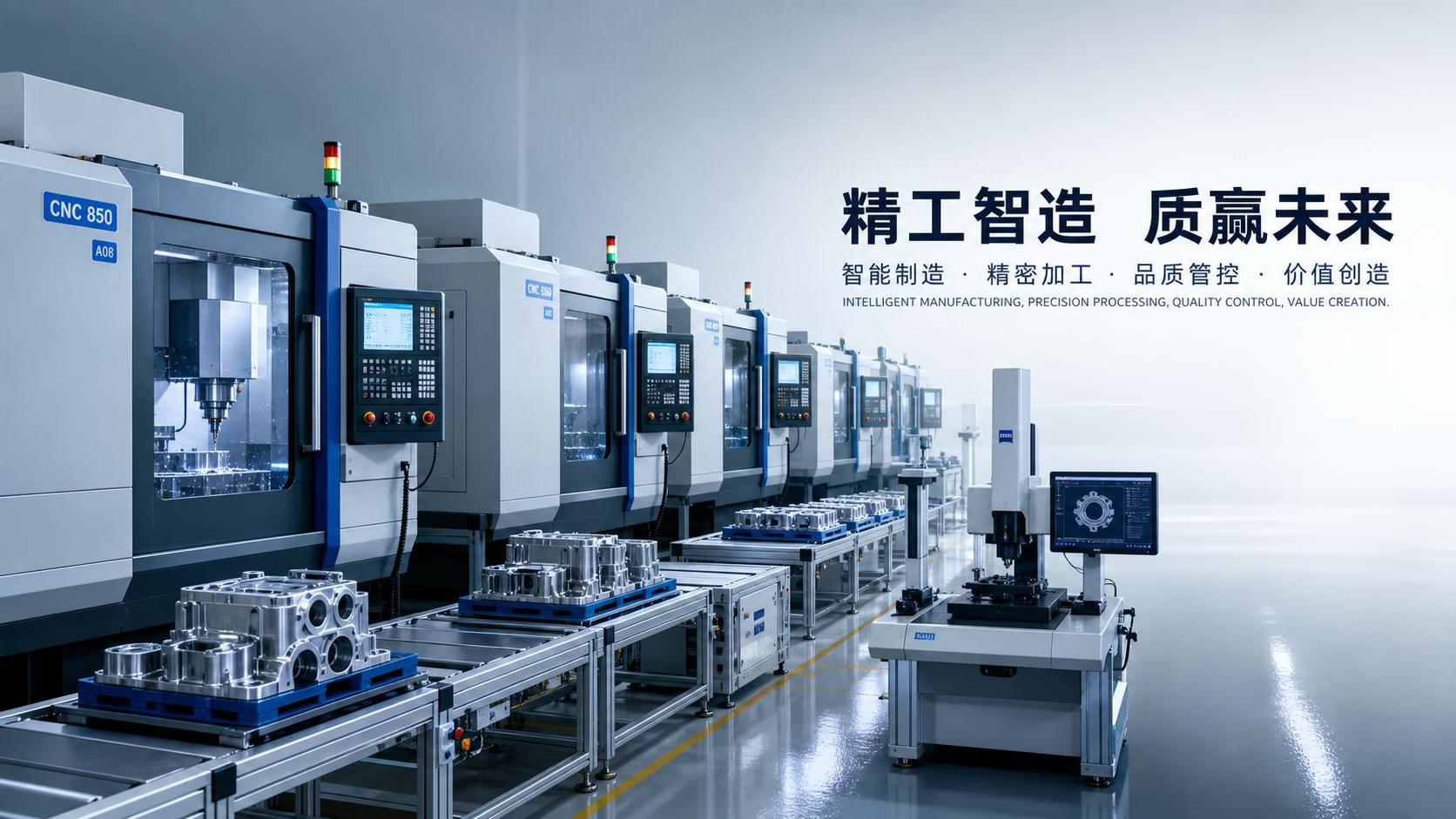
A Production Process Is More Than a Sequence of Steps
A production process is the practical system a business uses to turn an idea, drawing, raw material, or semi-finished component into a finished product that can be shipped with predictable quality. That sounds simple, but in manufacturing it means much more than “the steps on the shop floor.” A real production process includes planning, material flow, machine setup, tooling, inspection points, operator actions, rework rules, documentation, and the controls that keep output stable when volumes rise or product complexity changes.
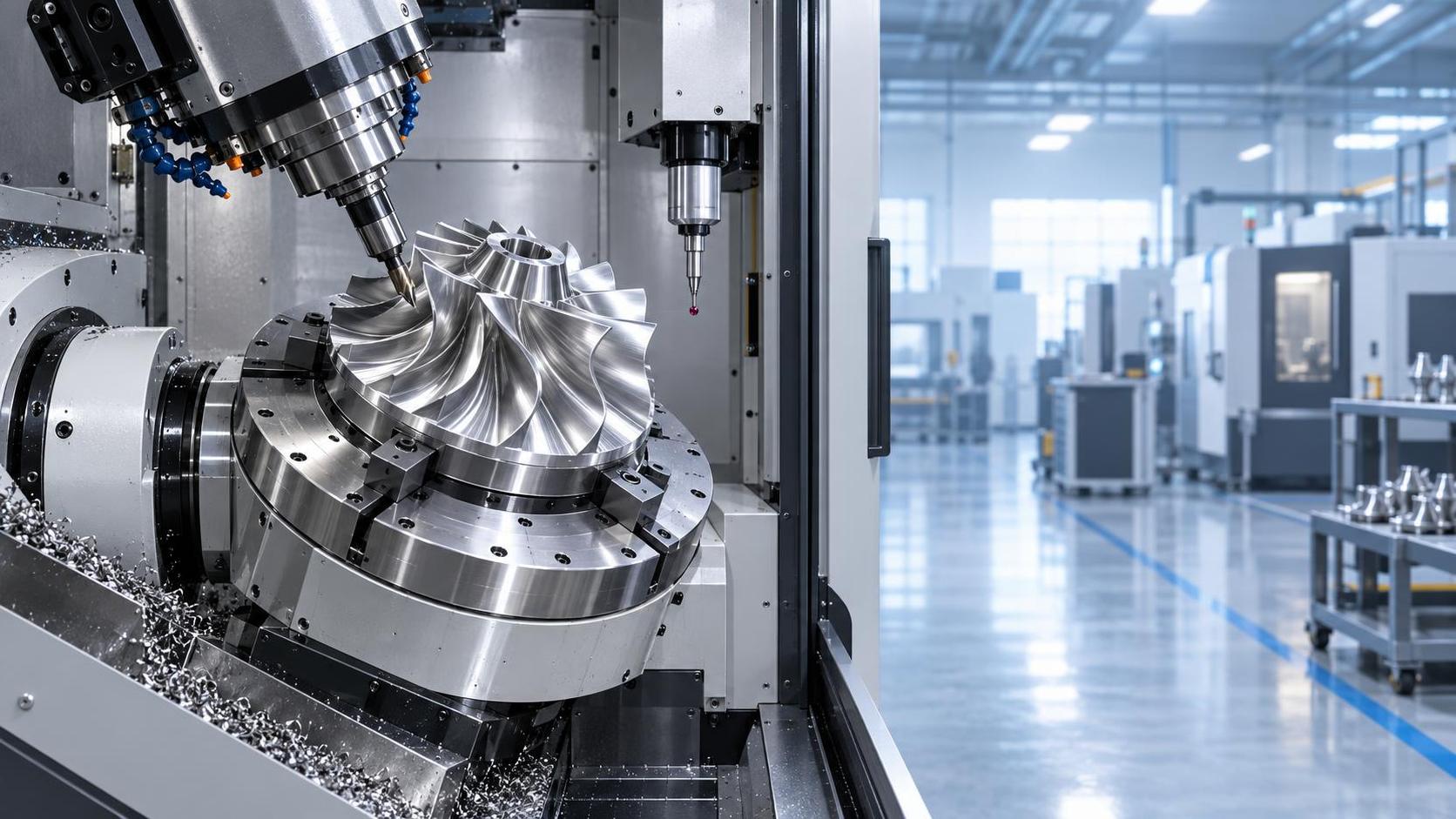
This is where many descriptions become too shallow. People often treat production as if machining, assembly, or packaging were the process itself. In practice, those are only visible stages. The production process is the logic that connects them. If that logic is weak, even advanced CNC equipment, automated handling systems, or multi-axis machining centers will not produce consistently. Parts may still come out late, scrap may increase, and inspection may end up catching problems that should have been prevented much earlier.
In sectors such as automotive, aerospace, electronics, and energy equipment, this distinction matters because tolerance requirements, batch traceability, and throughput pressure all exist at the same time. A shop may have excellent machine tools and cutting technology, yet still struggle if routing is unclear, fixtures are poorly matched to the part, or process capability is not understood before full production begins.
Where the Process Really Starts
The production process usually starts before any material is cut. It begins when product requirements are translated into manufacturing requirements. That means reviewing drawings, tolerances, surface finish expectations, material specifications, lot size, delivery frequency, and sometimes downstream assembly needs. For machined parts, this early interpretation affects almost everything that follows: machine selection, fixture design, toolpath strategy, inspection method, and the order in which features are created.
A simple shaft component and a complex aerospace bracket may both be “machined parts,” but their production processes differ sharply. One may run efficiently on a CNC lathe with standardized tooling and short setup time. The other may require multiple operations, workholding changes, in-process probing, careful distortion control, and extensive dimensional verification. The concept is the same; the workflow architecture is not.
That is why experienced manufacturers do not define a production process only by the final operation list. They look at how information, material, and control points move together. If one of those streams is missing, the process may still exist on paper, but it is not ready for reliable execution.
Key Stages You Will Usually Find
Most production environments, whether highly automated or still labor-intensive, include a recognizable set of stages. The names vary by industry, but the underlying functions are fairly consistent.
Not every factory will separate these stages cleanly. In a flexible CNC cell, machining, probing, and some inspection may happen inside one integrated workflow. In a high-volume line, assembly and testing may be tightly synchronized. What matters is not the label, but whether each function has been intentionally designed.
Workflow Elements That Determine Whether the Process Works
When engineers talk about workflow, they are not only referring to task order. They are looking at the operating conditions that make the task order repeatable. In precision manufacturing, several elements tend to decide whether the production process is robust or fragile.
One is routing clarity. A part should move through the factory in a way that minimizes unnecessary handling, queue time, and work-in-progress confusion. Another is setup discipline. A machining center may be capable of excellent accuracy, but if setup offsets, fixture locations, or tool data are inconsistent, the process will drift. Tool management is another overlooked area. Tool wear, presetting, replacement intervals, and backup availability directly affect surface quality, dimensional stability, and cycle interruptions.
Then there is information control. Operators need the correct revision of the drawing, program, setup sheet, and inspection criteria. In more digitalized factories, this may connect to MES, ERP, or machine monitoring systems. In less integrated environments, the control can still be strong, but only if version discipline is strict. A production process does not become “smart” just because machines are connected; it becomes better when decision-critical information is current, accessible, and tied to execution.
Material traceability also becomes essential once products carry regulatory, safety, or warranty consequences. The level of documentation depends on the industry, but the principle is universal: if a defect appears, the manufacturer should be able to identify what material, process route, and production conditions were involved.
Why Quality Control Is Part of the Process, Not a Separate Department
A common misunderstanding is that quality control sits at the end of production and filters out bad parts. That is a narrow and expensive way to think about it. In a well-designed production process, quality control starts with process design itself. It shows up in feature sequencing, datum strategy, fixture repeatability, machine capability, gauge selection, and the decision about where to place inspection gates.
For CNC machining, this often means checking critical dimensions before the full batch is completed, not after. It may include first-article verification, in-process measurement, statistical monitoring in stable high-volume work, and clear reaction rules when a trend moves toward the tolerance limit. Final inspection still matters, but it cannot rescue a process that is fundamentally unstable.
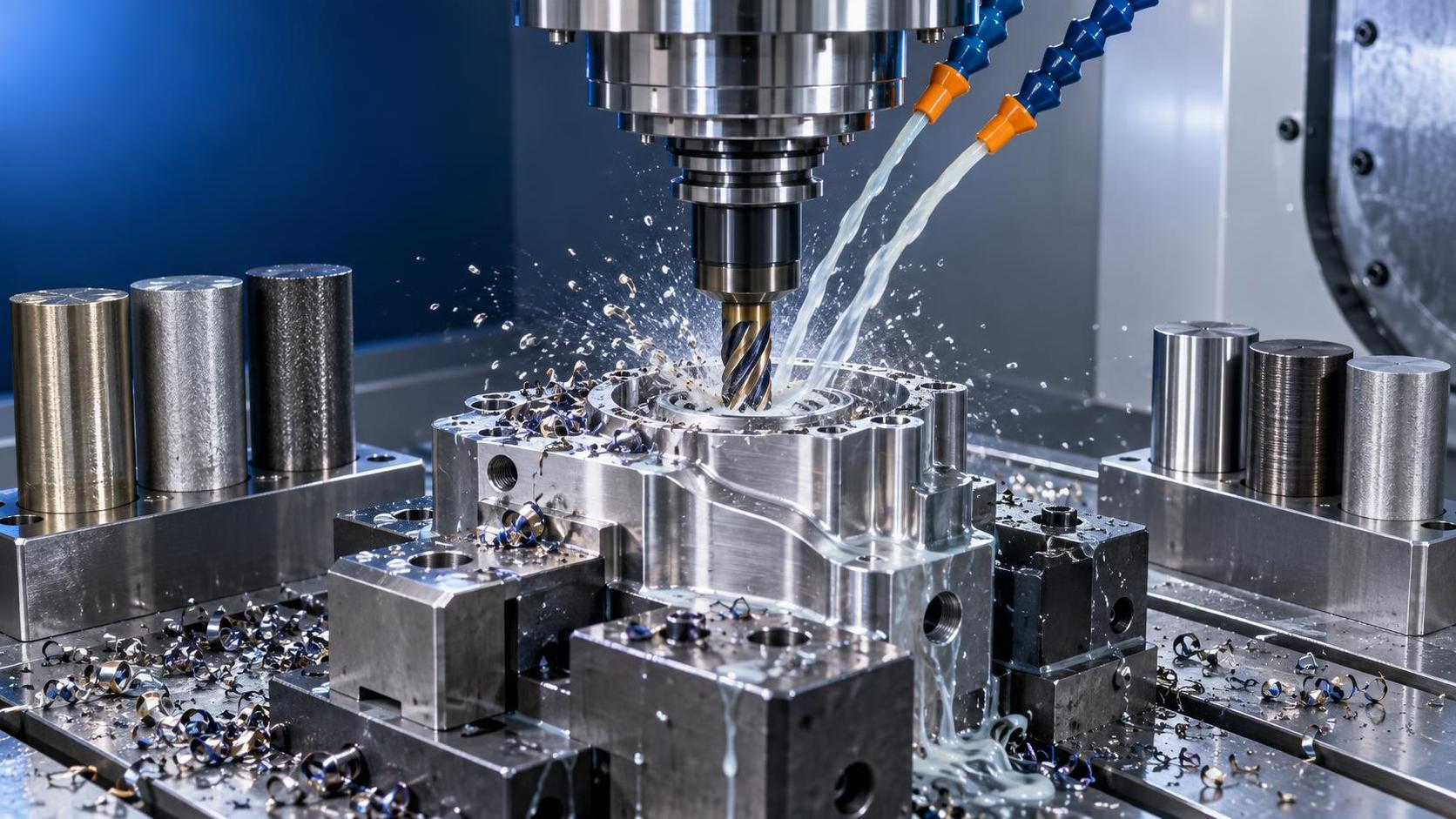
This is also why “high precision equipment” and “high quality output” are not interchangeable ideas. Machine accuracy matters, but process control matters just as much. A premium machine tool cannot compensate for poor chip evacuation, thermal instability, weak clamping, or an unrealistic cycle plan that pushes tools past reliable wear limits.
Different Industries Use the Same Term Differently
The phrase production process is broad enough that it can mislead people if the industrial context is ignored. In discrete manufacturing, it usually refers to the route by which individual parts or assemblies move through controlled operations. In process industries such as chemicals or food, it may describe continuous transformation with very different control logic. Even inside manufacturing, the term shifts. A job shop producing low-volume precision components will think in terms of setup efficiency, routing flexibility, and inspection adaptability. A mass-production automotive supplier will care more about takt alignment, line balancing, and repeatability over long runs.
For readers researching production process in the CNC and machine tool context, the most useful interpretation is this: it is the manufacturing method made operational. Not only “what machine cuts the part,” but how the whole system turns design intent into repeatable output at the required quality and cost.
What People Often Get Wrong
Several mistakes appear repeatedly when people try to assess a factory or compare suppliers.
One is assuming a shorter process is always better. Fewer steps can reduce handling and cycle time, but combining operations only makes sense if accuracy, maintainability, and changeover control remain intact. Another is focusing only on machine count or automation level. A highly automated line with poor exception handling can create expensive bottlenecks. A less automated but well-controlled process may outperform it for mixed-product work.
There is also a tendency to treat rework as a normal planning element. In reality, a process that depends on routine correction is signaling weak upstream control. Some rework is unavoidable in complex manufacturing, but if it becomes structurally necessary, the process definition is incomplete.
Another error is evaluating the process only by output speed. Throughput matters, but a fast line that produces unstable dimensions, inconsistent surface finish, or poor assembly fit is not truly efficient. Cost, delivery, and quality are linked. Separating them usually leads to misleading conclusions.
How to Judge Whether a Production Process Is Well Built
A useful assessment does not require access to every internal metric. Even from the outside, a few questions reveal a lot. Is the process clearly defined from incoming material to final release? Are critical operations tied to specific control methods? Is there a plan for setup repeatability, tool wear, and inspection frequency? Can the manufacturer explain why the routing is arranged the way it is? If a tolerance is tight or geometry is complex, is there evidence that the process was designed around that challenge rather than hoping the machine will absorb it?
In more mature operations, you can also see whether the process is scalable. A workflow that functions for prototype quantities may fail under serial production if changeovers are too slow, measurement load becomes excessive, or fixture life is too short. Good production processes are not only technically correct; they remain workable when volume, mix, and scheduling pressure change.
That is the point worth keeping in mind. A production process is not just a manufacturing definition. It is the operating framework that determines whether a product can be made repeatedly, economically, and within specification. For anyone studying suppliers, factory capability, or industrial workflow, that is the level at which the term starts to become useful.
Recommended for You
 How to Specify a CNC Lathe for High-Volume Automotive Shaft ProductionCNC Machining Technology Center
 How Automated Precision Machining Maintains Tolerance in High-Mix ProductionCNC Machining Technology Center
 How to Evaluate a Machine Tool Factory Before Sourcing CNC EquipmentGlobal Machine Tool Trade Research Center
 CNC Programming Explained: From CAD Models to Reliable Shop-Floor ToolpathsCNC Machining Technology Center
 How Multi-Axis Machining Produces Complex Components With Fewer SetupsCNC Machining Technology Center
 Which Metals Are Hardest to Machine With Standard Tools?CNC Machining Technology Center



Aris Katos
Future of Carbide Coatings
15+ years in precision manufacturing systems. Specialized in high-speed milling and aerospace grade alloy processing.
▶
How Does Precision Machining Differ From Standard Machining?CNC Machining Technology Center▶
CNC Precision: Which Tolerances, Materials, and Processes Fit Your Part?CNC Machining Technology Center▶
How to Choose Metal Machining Processes for Tight Tolerances and Production VolumeCNC Machining Technology Center▶
Production Process Explained: Key Stages, Controls, and Quality CheckpointsCNC Machining Technology Center▶
How to Select a Machine Tool for Electronics Manufacturing with Tight Tolerance NeedsCNC Machining Technology Center
Mastering 5-Axis Workholding Strategies
Join our technical panel on Nov 15th to learn about reducing vibrations in thin-wall components.

Providing you with integrated sanding solutions
Before-sales and after-sales services
Comprehensive technical support