• Global CNC market projected to reach $128B by 2028 • New EU trade regulations for precision tooling components • Aerospace deman
NYSE: CNC +1.2%LME: STEEL -0.4%

How to Evaluate a High Precision Machining Center for Medical Equipment Production
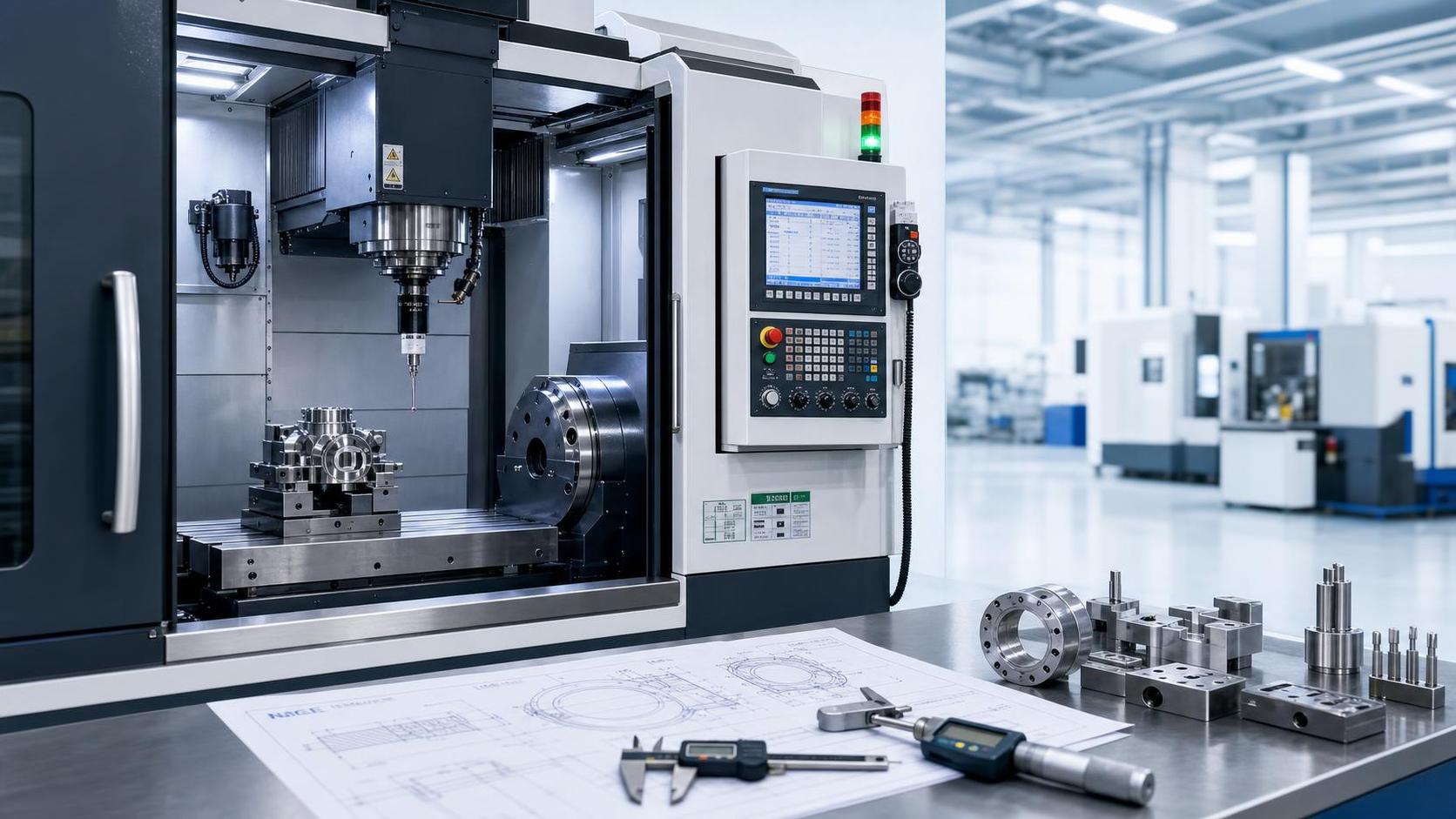
Start with the part, not the machine brochure
When evaluating a High precision Machining Center for medical equipment production, the biggest mistake is comparing spindle speed, travel, and price before the part requirements are clear. Medical work is rarely forgiving. A machine that looks impressive on paper can still struggle if your parts involve thin walls, hard-to-machine alloys, fine surface finishes, or features that must hold position over long production runs.
Start with a real evaluation pack: part drawings, tolerance zones, material list, expected lot size, surface finish requirements, burr limits, and any downstream process that can expose variation. If a component will be cleaned, coated, welded, assembled, or inspected with high-resolution metrology later, those steps should shape the machine selection from day one. This is where technical evaluators save a project from becoming an expensive debugging exercise.
Check whether the machine can hold the tolerances repeatedly
Accuracy is only part of the story. What matters in production is whether the machine can hit the target again and again, across shifts, tool changes, warm-up cycles, and different operators. For medical components, repeatability usually matters more than a single demonstration cut.
Ask the supplier to show how machine positioning accuracy and repeatability are documented, and look at the measurement method behind the numbers. A clean specification sheet is useful, but it does not replace a controlled sample run on a representative part. If your component has tight bore location, concentricity, or flatness requirements, ask for evidence that those features can be maintained over a sequence of parts, not just on the first one after setup.
One practical test: review how the machine behaves after thermal stabilization and how long it takes to get there. On some high precision machining center platforms, the first hour of production tells a very different story from the rest of the shift.
Match the machine structure to the materials you actually cut
Medical equipment production can involve stainless steels, titanium alloys, aluminum, engineering plastics, and specialty materials. A machine that performs well on aluminum housings may not stay stable when cutting tougher alloys with long cycle times and higher heat load.
Look at the machine structure with that in mind: base rigidity, spindle characteristics, axis drive behavior, vibration control, and chip evacuation. If you expect a mixed-material production environment, ask how performance changes by material type. This is especially relevant when one machine is expected to cover both prototype and production work.
A common evaluation error is assuming a machine built for general precision work will behave the same way on difficult medical parts with thin walls or deep pockets. It often will not.
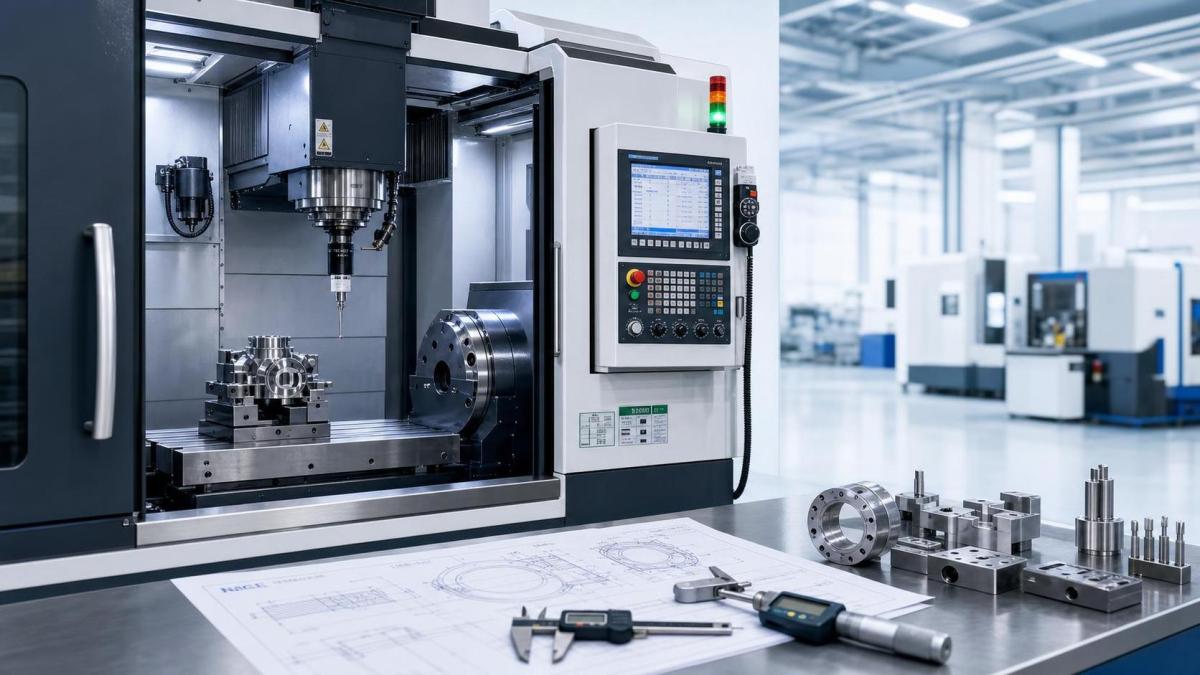
Review spindle and axis behavior under real cutting conditions
The brochure number that gets attention is spindle speed. The number that usually matters more is how the spindle behaves under load and for how long. Ask about spindle runout, thermal growth management, and how the machine handles prolonged high-speed or high-precision cycles.
Axis acceleration and feed capability also need context. Fast moves are useful, but only if contouring accuracy stays intact on small radii, micro features, and frequent direction changes. If your parts include fine interpolated bores, slots, or sealing surfaces, request a sample path that stresses axis synchronization rather than a simple roughing demo.
For multi-axis work, do not stop at asking whether 5-axis machining is available. Evaluate rotary axis stiffness, clamping reliability, indexing repeatability, and collision avoidance support in the control. A weak rotary platform can quietly erase the advantage of an otherwise strong machine.
Do not separate machine evaluation from tooling and fixturing
A high precision machining center is only as stable as the tooling and workholding strategy around it. If you evaluate the machine in isolation, you miss one of the most common sources of scrap and rework.
Check tool interface rigidity, tool length management, broken tool detection options, and whether the machine supports the level of in-process measurement your parts need. Then review fixture access, clamping repeatability, deformation risk, and loading consistency. Delicate medical components often fail because the workholding solution leaves no room for stable cutting or measurement access.
If the supplier’s test cut uses an unusually favorable fixture that does not match your production approach, treat the result carefully. You want a machine that works with your manufacturing reality, not just in a showroom setup.
Inspect cleanliness control as a production requirement
Medical equipment parts often move into assembly environments where chips, coolant residue, and cross-contamination create real downstream problems. This is where machine selection becomes more than a cutting performance exercise.
Evaluate enclosure design, coolant management, chip flow, washdown effectiveness, and how easily the work zone can be cleaned between jobs. If your product mix includes both stainless steel and nonmetallic materials, ask how material carryover is controlled during changeover. If internal passages or precision sealing features are involved, residual contamination can become a hidden quality issue long after machining is done.
This point is often underestimated because it does not show up in a cycle time comparison. It shows up later in cleaning cost, inspection rejects, and assembly trouble.
Evaluate the control system for process discipline, not just ease of use
A polished control interface is nice. What technical evaluators should really care about is process control: offset management, traceable alarm history, user access levels, program revision handling, probing integration, and the ability to standardize setup routines across shifts.
Medical component manufacturing tends to punish casual setup habits. If the machine control makes it easy to apply offsets inconsistently, bypass checks, or run undocumented program edits, the risk grows even when the hardware itself is excellent.
Also review connectivity. If your plant uses MES, SPC, central program management, or digital maintenance records, the machine should fit that environment without workarounds. Digital integration is not a bonus feature when traceability and process consistency matter.
Ask how the machine supports inspection and process capability
Selection decisions get stronger when inspection strategy is discussed at the same time as machining strategy. You need to know whether the machine supports touch probing, tool measurement, datum recovery, and consistent handoff to external metrology.
For precision medical parts, it helps to map critical dimensions into three groups: features verified in-machine, features checked at first article, and features monitored during production sampling. If the machine cannot support that plan efficiently, the hidden cost lands on inspection labor and delayed feedback.
Look beyond nominal compliance and check documentation readiness
A machining center does not make a medical product compliant by itself, but poor machine documentation can slow validation, maintenance control, and audit preparation. Review what the supplier can provide for installation records, calibration references, maintenance schedules, backup procedures, software version control, and training documentation.
The right level of documentation depends on your product type, market, and quality system. That is exactly why you should check early which internal documents your quality team needs from capital equipment suppliers, then match the machine vendor against that list. Waiting until purchase approval is late.
Test maintainability before you trust uptime claims
Every supplier talks about reliability. The more useful question is how quickly the machine returns to stable production when something drifts, wears, or fails. Ask about preventive maintenance access, spare parts availability, remote diagnostics, and the service organization that covers your region.
Pay attention to parts that affect precision gradually: spindle condition, ball screw health, axis backlash, probing calibration, and coolant system cleanliness. If those checks are hard to perform or depend too heavily on a single specialist, your practical risk is higher than the sales presentation suggests.
A machine that is slightly more expensive but easier to maintain in a controlled way often wins over a lower-priced option that becomes unpredictable after a year of mixed production.
Run the commercial comparison after the technical screen is real
Once the technical shortlist is honest, then compare price, delivery, training, installation scope, and long-term support. Do not let commercial pressure flatten important differences between machines that are not equally suitable.
A useful decision sequence is simple:
- Confirm the part family, materials, and critical tolerances.
- Screen machines for repeatable precision, structural fit, and cleanliness control.
- Review tooling, fixturing, probing, and inspection compatibility.
- Check documentation, connectivity, maintenance support, and service response.
- Only then compare total cost and implementation timing.
That order keeps the decision anchored in production risk rather than presentation quality. For technical evaluators, that is usually the difference between buying a machine that can make a good sample part and buying one that can carry medical equipment production without constant intervention.
Recommended for You
 How Automated Precision Machining Maintains Tolerance in High-Mix ProductionCNC Machining Technology Center
 How to Evaluate a Machine Tool Factory Before Sourcing CNC EquipmentGlobal Machine Tool Trade Research Center
 CNC Programming Explained: From CAD Models to Reliable Shop-Floor ToolpathsCNC Machining Technology Center
 How Multi-Axis Machining Produces Complex Components With Fewer SetupsCNC Machining Technology Center
 What Production Volume Justifies a CNC Turning Investment?Manufacturing Market Research Center
 How Much Does CNC Programming Software Cost in 2026?CNC Machining Technology Center




Aris Katos
Future of Carbide Coatings
15+ years in precision manufacturing systems. Specialized in high-speed milling and aerospace grade alloy processing.
▶
CNC Precision: Which Tolerances, Materials, and Processes Fit Your Part?CNC Machining Technology Center▶
How to Choose Metal Machining Processes for Tight Tolerances and Production VolumeCNC Machining Technology Center▶
Production Process Explained: Key Stages, Controls, and Quality CheckpointsCNC Machining Technology Center▶
How to Select a Machine Tool for Electronics Manufacturing with Tight Tolerance NeedsCNC Machining Technology Center▶
How to Optimize Stainless Steel Machining for Tool Life, Finish, and Cycle TimeCNC Machining Technology Center
Mastering 5-Axis Workholding Strategies
Join our technical panel on Nov 15th to learn about reducing vibrations in thin-wall components.

Providing you with integrated sanding solutions
Before-sales and after-sales services
Comprehensive technical support