• Global CNC market projected to reach $128B by 2028 • New EU trade regulations for precision tooling components • Aerospace deman
NYSE: CNC +1.2%LME: STEEL -0.4%

Shaft Parts for Agricultural Machinery: Materials, Tolerances, and Uses
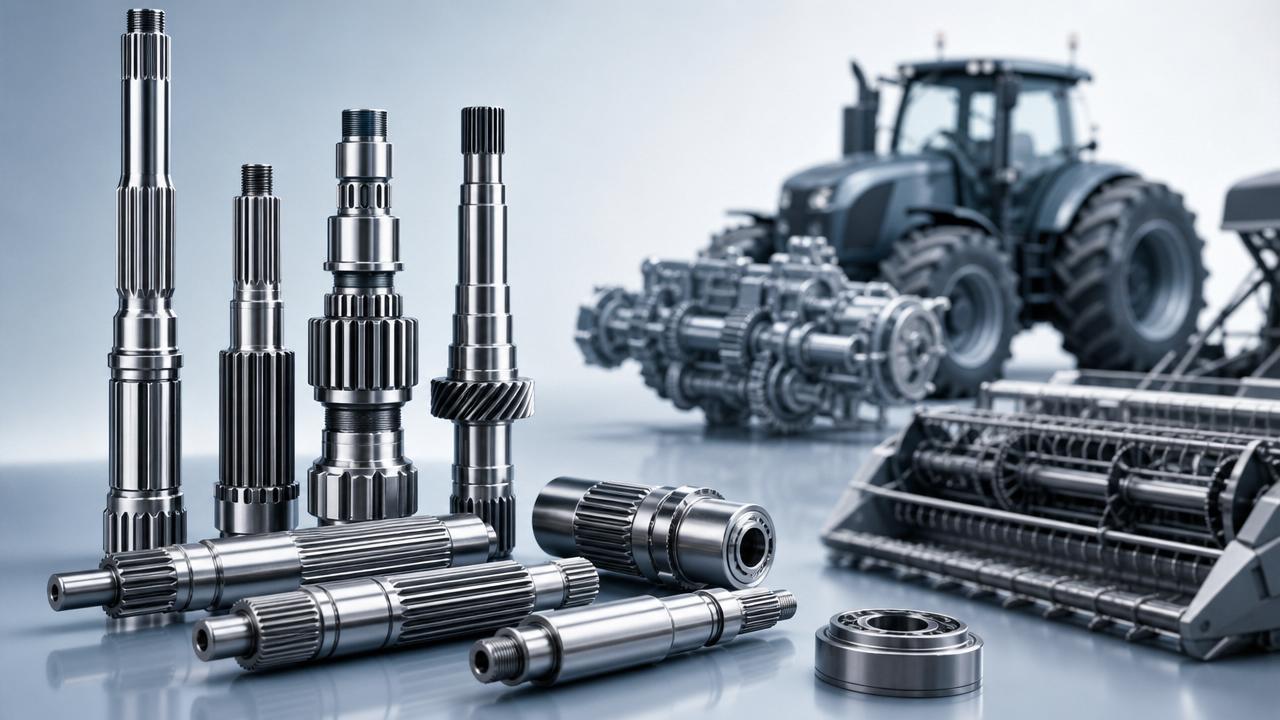
Choosing the right Shaft Parts for Agricultural Machinery is critical for equipment reliability, field performance, and long-term maintenance cost control.
Material selection, machining tolerances, surface treatments, and application loads all influence how a shaft performs under dust, vibration, torque, and seasonal workload peaks.
This guide explains practical scenario-based decisions for tractors, harvesters, seeders, tillage machines, and other farm equipment using precision-machined shaft components.
Field Conditions Decide How Shaft Parts for Agricultural Machinery Should Be Specified
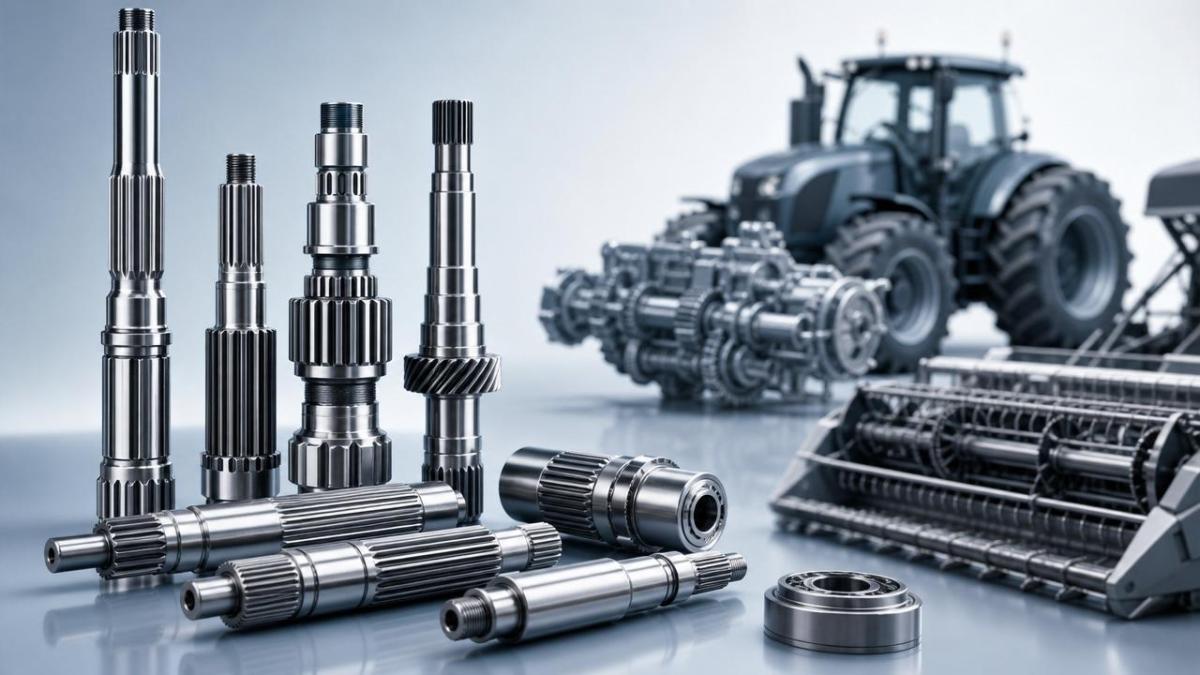
Agricultural machinery rarely works in clean, stable environments. Shafts face mud, fertilizer residue, water, impact loads, and frequent speed changes.
Because of these conditions, Shaft Parts for Agricultural Machinery must be assessed by working scenario, not only by drawing dimensions.
A transmission shaft in a tractor needs torsional strength. A seed metering shaft needs stable rotation and precise concentricity.
A harvester shaft may need impact resistance, wear protection, and excellent balance to handle crop residue and long operating hours.
Reliable Shaft Parts for Agricultural Machinery depend on matching material, heat treatment, machining process, and inspection method to the real field load.
Tractor Drivetrain Scenarios Require High Torque Capacity
Tractors use shafts in power take-off systems, gearboxes, steering assemblies, axle structures, and hydraulic pump drives.
These locations place strong demands on torque transmission, fatigue resistance, spline accuracy, and dimensional stability after heat treatment.
For these applications, Shaft Parts for Agricultural Machinery often use alloy steels such as 40Cr, 42CrMo, 4140, or carburizing steels.
Quenching and tempering improve core strength. Carburizing or induction hardening increases surface wear resistance on splines and bearing seats.
Critical checks include runout, spline fit, hardness depth, bearing seat tolerance, and surface roughness around sealing positions.
Key judgment points for tractor shaft use
- Confirm rated torque and overload conditions.
- Check spline profile, pressure angle, and fit class.
- Control bearing seat roundness and coaxiality.
- Specify hardness range after heat treatment.
- Require inspection reports for critical dimensions.
Harvester Scenarios Demand Wear Resistance and Dynamic Stability
Harvesters operate under high seasonal intensity. Shafts may drive cutting platforms, threshing drums, conveyors, augers, and cleaning systems.
Crop residue, dust, stones, and vibration increase the risk of surface wear, bending fatigue, and bearing failure.
Shaft Parts for Agricultural Machinery used in harvesters should combine adequate toughness with local hardened surfaces at wear-prone areas.
Long shafts may require straightening, dynamic balancing, and strict runout control to reduce vibration during continuous harvesting.
Surface finishes also matter. Ground bearing journals help protect seals and bearings from early wear caused by misalignment.
Where corrosive crop juice or fertilizer dust is present, black oxide, phosphating, zinc plating, or protective oil may be considered.
Seeder and Planter Scenarios Prioritize Precision and Smooth Rotation
Seeders and planters require uniform operation. Shafts may control seed metering, fertilizer distribution, wheel drives, and depth adjustment systems.
In these machines, Shaft Parts for Agricultural Machinery are not always exposed to extreme torque, but precision remains essential.
Poor concentricity can affect seed spacing. Excessive play can cause uneven feeding, inaccurate fertilizer output, or unstable row control.
Medium carbon steel, stainless steel, or surface-treated alloy steel may be selected according to load, corrosion exposure, and cost limits.
For shafts with small diameters, thread accuracy, keyway position, burr control, and assembly consistency should receive close attention.
Practical checks for precision planting systems
- Verify shaft straightness before assembly.
- Control burrs around holes and grooves.
- Match surface coating to fertilizer exposure.
- Use stable tolerances for repeated batch production.
Tillage and Soil Preparation Scenarios Need Impact Toughness
Rotary tillers, cultivators, and soil preparation machines face shock loads from stones, roots, hard soil, and sudden tool resistance.
Shaft Parts for Agricultural Machinery in these systems should avoid excessive brittleness after heat treatment.
A shaft that is too soft may deform. A shaft that is too hard may crack under repeated impact.
The best choice often balances tensile strength, impact toughness, fatigue life, and serviceable surface hardness.
CNC turning, milling, grinding, and drilling must maintain groove transitions without sharp stress risers.
Fillet radius, keyway finish, and transition chamfers are small details that strongly affect shaft life in soil-contact machinery.
Material Choices Should Follow Load, Environment, and Maintenance Needs
There is no universal material for Shaft Parts for Agricultural Machinery. The correct option depends on load direction and exposure conditions.
Carbon steel suits moderate loads and cost-sensitive structures. Alloy steel supports higher strength, better fatigue resistance, and improved hardenability.
Stainless steel helps where corrosion resistance is important, especially near fertilizer, moisture, chemicals, or cleaning water.
For sliding or rotating contact zones, surface hardening can be more effective than increasing hardness across the full section.
Tolerance Decisions Should Reflect Function, Not Only Drawing Habit
Over-tight tolerances increase machining cost. Loose tolerances increase vibration, leakage, assembly difficulty, and premature failure.
For Shaft Parts for Agricultural Machinery, tolerance planning should separate functional zones from non-critical surfaces.
Bearing seats, seal areas, spline connections, threaded ends, and gear mounting zones usually need tighter control.
Non-contact sections may allow wider tolerances if balance, strength, and assembly clearance remain acceptable.
Common inspection items include diameter tolerance, cylindricity, perpendicularity, runout, surface roughness, hardness, and thread gauge results.
- Bearing journals may require grinding after heat treatment.
- Seal areas need stable roughness and no scratches.
- Splines require profile control and smooth engagement.
- Long shafts may need runout and straightness reports.
Surface Treatments Help Match Shafts to Corrosion and Wear Exposure
Surface treatment is often decisive for Shaft Parts for Agricultural Machinery working outdoors or near soil and fertilizer.
Induction hardening improves wear resistance on localized contact areas while keeping the shaft core relatively tough.
Carburizing suits components requiring a hard case and strong core, especially small gears or splined shafts.
Nitriding can improve wear resistance and fatigue strength with lower distortion than some high-temperature treatments.
Zinc plating, black oxide, phosphating, or painting may support corrosion protection, depending on friction and assembly needs.
The coating thickness must be considered when final dimensions are critical, especially at bearing seats, threads, or spline fits.
Scenario Differences Should Be Confirmed Before Production Approval
Before ordering Shaft Parts for Agricultural Machinery, the operating scenario should be converted into measurable technical requirements.
This reduces ambiguity between drawings, machining processes, heat treatment plans, and final inspection criteria.
Common Misjudgments That Increase Shaft Failure Risk
One frequent mistake is selecting material only by price while ignoring hardenability, fatigue strength, and dimensional stability.
Another mistake is requesting high hardness everywhere, even when the application needs impact toughness and ductility.
For Shaft Parts for Agricultural Machinery, uncontrolled heat treatment distortion can cause assembly problems even if hardness meets the requirement.
Ignoring burr removal is also risky. Burrs around keyways, oil holes, and threaded sections can damage mating parts.
Corrosion protection is sometimes underestimated because agricultural shafts may sit outdoors before installation or during off-season storage.
A qualified machining process should include packaging protection, rust prevention, traceability, and dimensional inspection before shipment.
Practical Steps for Sourcing Suitable Shaft Parts for Agricultural Machinery
The next step is to connect the working scenario with drawings, inspection standards, and expected production volume.
For custom Shaft Parts for Agricultural Machinery, provide application details, material preference, heat treatment needs, and critical tolerance zones.
Sample approval should include dimensional inspection, hardness testing, surface review, and trial assembly when possible.
For repeat orders, stable CNC machining, controlled tooling, fixture consistency, and batch inspection records are essential.
- Share drawings in PDF and CAD formats.
- Mark critical surfaces and functional dimensions.
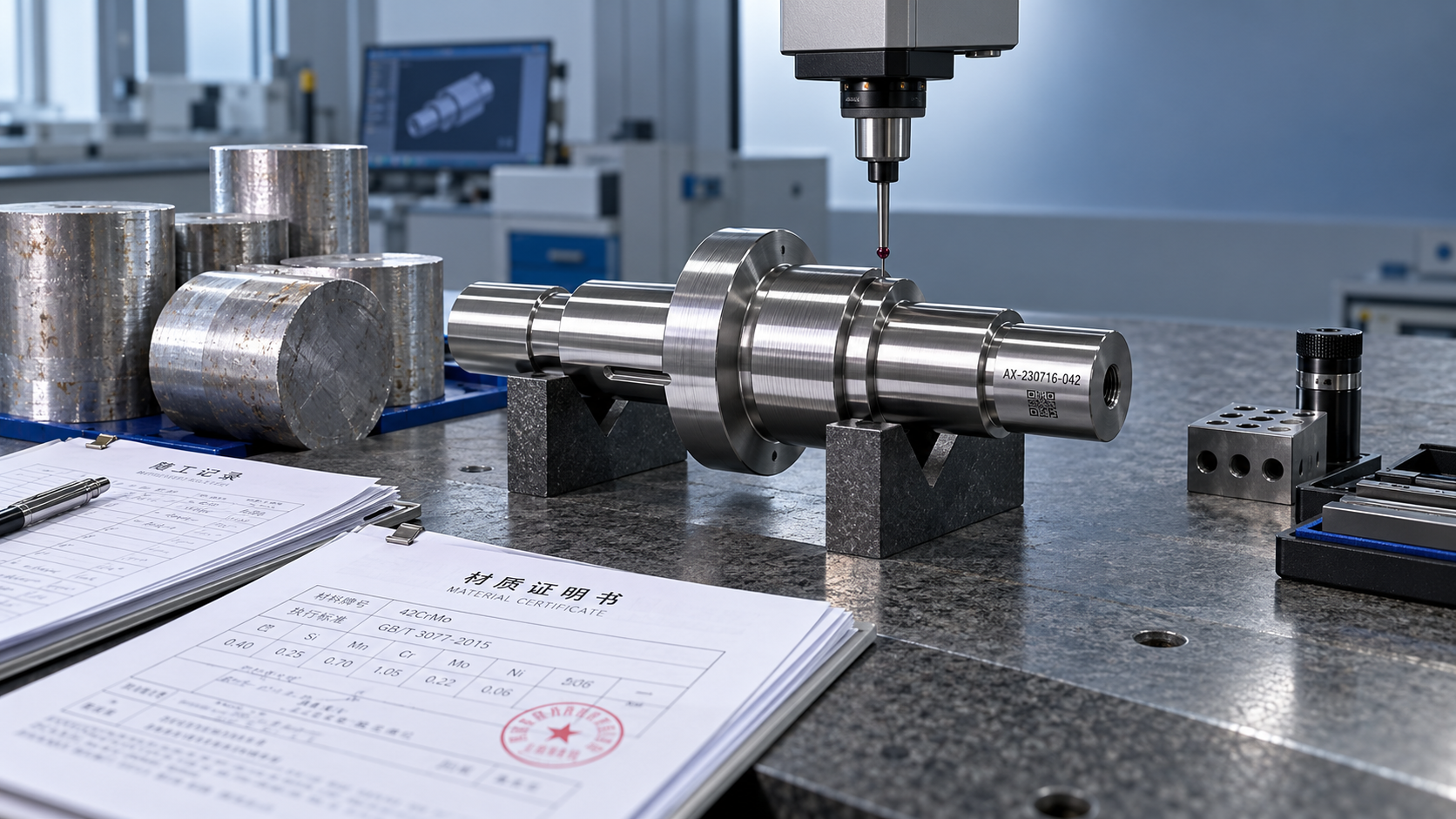
- Confirm material certificates and heat treatment reports.
- Request first article inspection for new components.
- Define packaging for corrosion and impact protection.
Well-specified Shaft Parts for Agricultural Machinery improve reliability, reduce downtime, and support efficient operation across demanding agricultural environments.
To move forward, compare each shaft design against its field scenario, then align material, tolerances, surface treatment, and inspection requirements.
Recommended for You
![]() Mitsubishi Electric Announces Physical AI System Linking Humanoid Robots and CNC MachinesMachine Tool Industry Editorial Team
Mitsubishi Electric Announces Physical AI System Linking Humanoid Robots and CNC MachinesMachine Tool Industry Editorial Team Precision Machining for Defense: Supplier Quality and Traceability ChecksManufacturing Market Research Center
![]() Nidec Machine Tool Launches MVR-5X Five-Axis Gantry MachineMachine Tool Industry Editorial Team
Nidec Machine Tool Launches MVR-5X Five-Axis Gantry MachineMachine Tool Industry Editorial Team Choosing a Precision Disc Parts Manufacturer in China: Tolerances and Quality ChecksManufacturing Market Research Center
![]() Siemens Executive Says AI Could Raise Factory Automation to 80%Manufacturing Market Research Center
Siemens Executive Says AI Could Raise Factory Automation to 80%Manufacturing Market Research Center Choosing Automated Machine Tools for High-Mix, Low-Volume ProductionMachine Tool Industry Editorial Team


Aris Katos
Future of Carbide Coatings
15+ years in precision manufacturing systems. Specialized in high-speed milling and aerospace grade alloy processing.
▶
How thermal drift affects accuracy in high-precision manufacturingCNC Machining Technology Center▶
Industrial Machining: Selecting Processes for Tight-Tolerance Metal PartsCNC Machining Technology Center▶
How Does Precision Machining Differ From Standard Machining?CNC Machining Technology Center▶
CNC Precision: Which Tolerances, Materials, and Processes Fit Your Part?CNC Machining Technology Center▶
How to Choose Metal Machining Processes for Tight Tolerances and Production VolumeCNC Machining Technology Center
▶
Mastering 5-Axis Workholding Strategies
Join our technical panel on Nov 15th to learn about reducing vibrations in thin-wall components.

Providing you with integrated sanding solutions
Before-sales and after-sales services
Comprehensive technical support