• Global CNC market projected to reach $128B by 2028 • New EU trade regulations for precision tooling components • Aerospace deman
NYSE: CNC +1.2%LME: STEEL -0.4%

CNC Manufacturing for Aerospace: Materials, Tolerances, and Risks
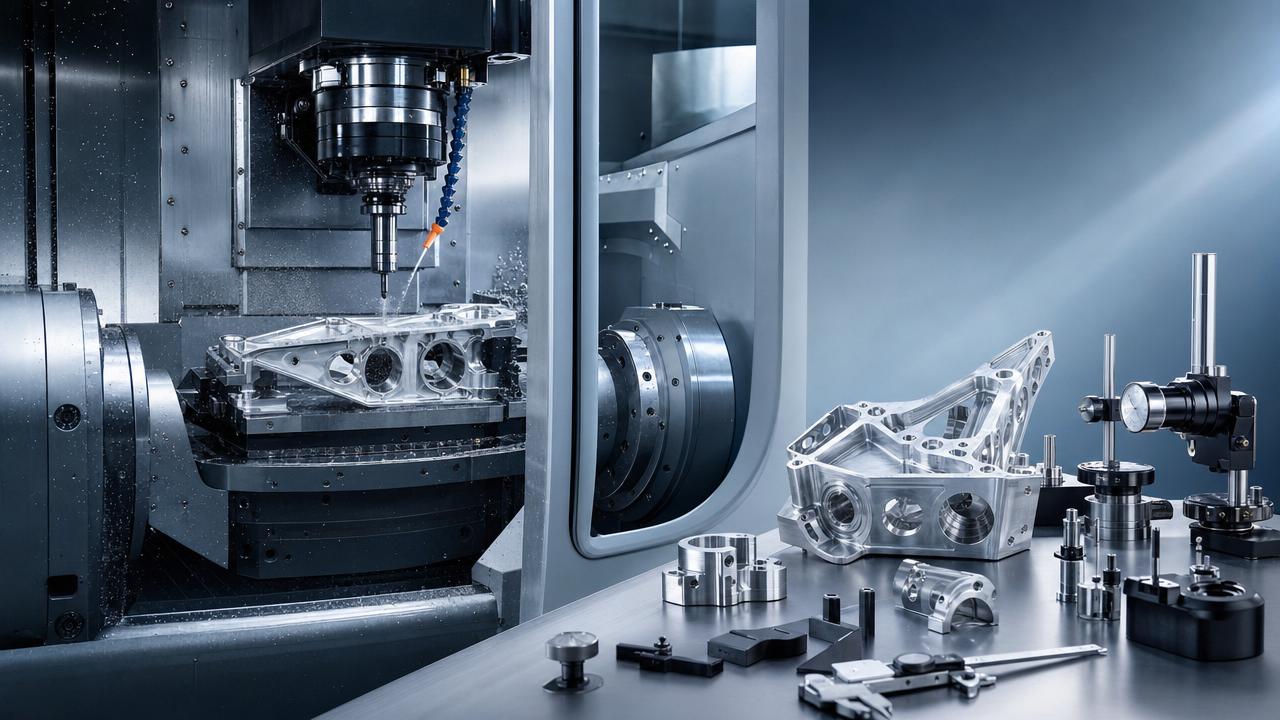
CNC manufacturing for aerospace demands more than precision machining—it requires strict material control, verified tolerances, and proactive risk management at every production stage.
For quality and safety-focused operations, alloys, machining parameters, inspection methods, and compliance rules must work together to protect flight-critical reliability.
This guide explains materials, tolerance expectations, and operational risks that define CNC manufacturing for aerospace across modern precision production environments.
What Makes CNC Manufacturing for Aerospace Different?
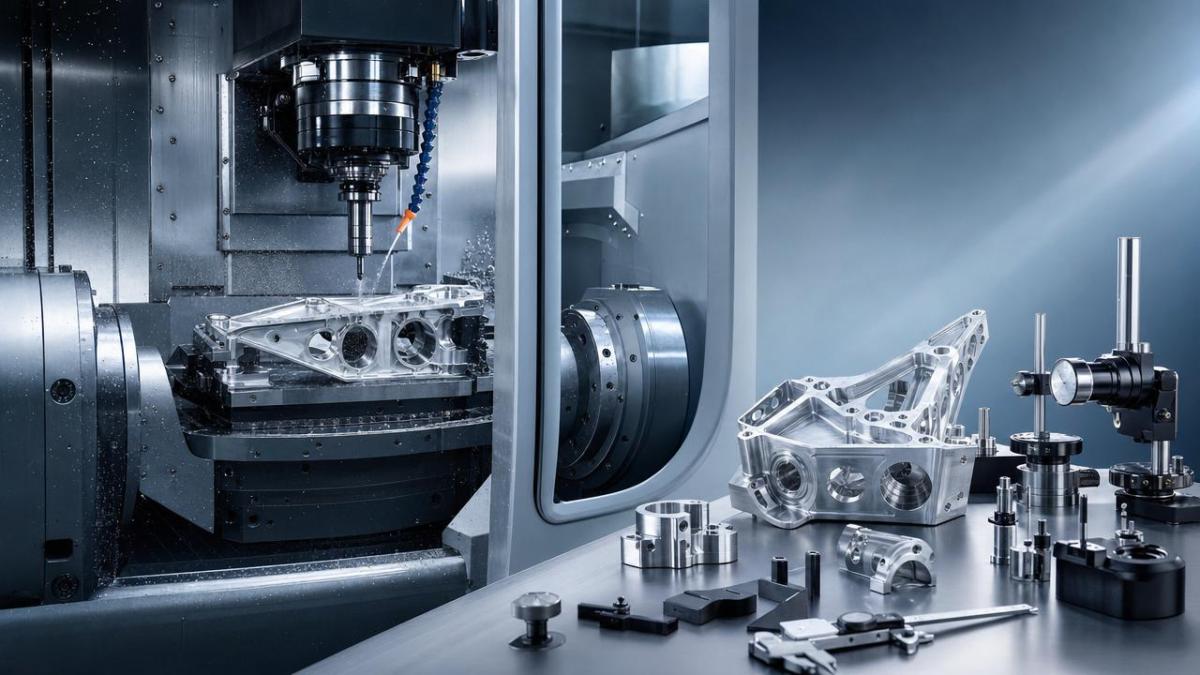
CNC manufacturing for aerospace differs because every part may affect structural integrity, system reliability, or passenger safety.
A bracket, housing, shaft, or turbine-related component can face vibration, pressure, heat, fatigue, and corrosion during service.
This creates higher expectations for process control than many general industrial machining applications.
The core difference is not only tighter dimensions. It is the need to prove how each dimension was achieved.
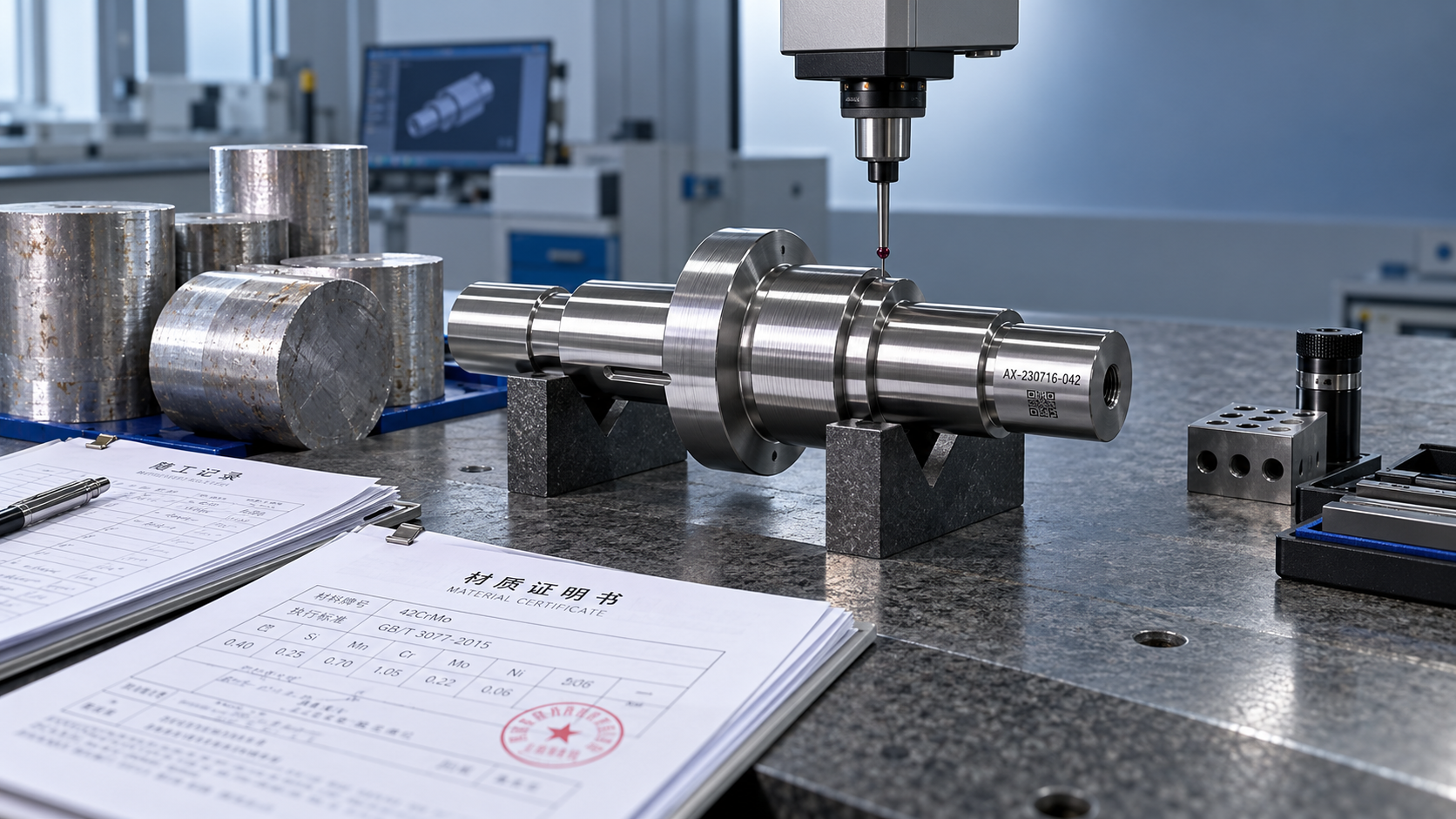
Traceability, inspection records, material certificates, tool history, and nonconformance handling become part of the manufacturing result.
In CNC manufacturing for aerospace, repeatability matters as much as first-piece accuracy.
A stable process must hold tolerance across batches, shifts, machines, and operators without hidden variation.
- Documented material origin and heat lot identity.
- Controlled machine setup and approved programs.
- Calibrated measurement systems and inspection plans.
- Risk review before production release.
- Clear segregation of suspect or nonconforming parts.
These requirements make CNC manufacturing for aerospace a quality-managed production system, not simply a cutting operation.
Which Materials Are Common in Aerospace CNC Machining?
Material choice controls machinability, strength, weight, fatigue life, corrosion behavior, and final component cost.
CNC manufacturing for aerospace often uses aluminum alloys, titanium alloys, stainless steels, nickel superalloys, and engineering plastics.
Why are aluminum alloys widely used?
Aluminum alloys offer excellent strength-to-weight ratios and good machinability for structural parts, panels, housings, and interior components.
Grades such as 6061, 7075, and 2024 are common, but each has different fatigue and corrosion behavior.
In CNC manufacturing for aerospace, aluminum may require careful fixturing because thin walls can distort after roughing.
When is titanium preferred?
Titanium alloys provide high strength, low weight, and strong corrosion resistance, especially in demanding structural or engine-adjacent applications.
However, titanium has poor thermal conductivity, so heat concentrates near the cutting edge.
Tool wear, work hardening, and surface damage must be controlled through cutting speed, coolant delivery, and tool geometry.
What about nickel alloys and stainless steels?
Nickel superalloys resist heat and stress, making them suitable for harsh thermal environments.
They are difficult to machine because of hardness, work hardening, and rapid tool degradation.
Stainless steels are used where corrosion resistance and mechanical strength are required, but burr control and heat management remain important.
Reliable CNC manufacturing for aerospace begins with matching material behavior to component function, inspection needs, and lifecycle risk.
How Tight Are Aerospace CNC Tolerances?
Tolerance expectations depend on part function, assembly interface, load path, and regulatory requirements.
CNC manufacturing for aerospace may involve tolerances measured in microns, especially for bearing seats, sealing faces, and precision bores.
Not every feature requires extreme precision. Over-tolerancing increases cost, cycle time, scrap, and inspection complexity.
A practical approach separates critical characteristics from standard features before process planning begins.
What should be controlled beyond size?
Dimensional tolerance is only one part of quality. Geometry, surface finish, edge condition, and residual stress may matter equally.
- Flatness and parallelism for sealing and mounting faces.
- True position for bolt patterns and assembly alignment.
- Concentricity for rotating or shaft-related components.
- Surface roughness for fatigue-sensitive zones.
- Edge breaks to prevent cracks and handling damage.
In CNC manufacturing for aerospace, tolerance planning should also consider measurement uncertainty.
A feature cannot be reliably accepted if the inspection system lacks enough resolution and repeatability.
How do machines and fixtures affect tolerances?
Machine rigidity, spindle condition, thermal growth, tool runout, and fixture repeatability directly influence tolerance capability.
Five-axis machining can reduce setups and improve alignment, but it requires accurate calibration and verified rotary positioning.
Stable CNC manufacturing for aerospace depends on process capability, not a single successful inspection report.
What Risks Can Compromise Aerospace CNC Parts?
The most serious risks often develop quietly during setup, cutting, handling, or documentation.
CNC manufacturing for aerospace requires prevention because late discovery can cause rework, delivery delays, or full batch rejection.
Material and traceability risks
Wrong material, mixed heat lots, missing certificates, or unapproved substitutions can invalidate an otherwise accurate component.
Positive material identification, controlled storage, and traveler documentation reduce these risks.
Machining and surface integrity risks
Excess heat, dull tools, chatter, or aggressive feeds can create microcracks, smearing, burns, or residual tensile stress.
These defects may not be obvious during visual inspection, yet they can reduce fatigue life.
For CNC manufacturing for aerospace, surface integrity should be treated as a functional requirement.
Inspection and data risks
Inspection errors can come from poor probe calibration, unstable part temperature, wrong datum setup, or incomplete sampling.
Digital records must match the physical part, drawing revision, machine program, and production lot.
A mismatch in documentation can become as serious as a dimensional defect.
How Should CNC Manufacturing for Aerospace Be Planned?
Planning should begin with design intent, not with toolpath generation.
Critical features, datum structures, inspection methods, and risk controls should be reviewed before material is released.
A strong plan links engineering, machining, quality, procurement, and documentation into one controlled workflow.
Recommended planning sequence
- Review drawing revisions, standards, and customer-specific requirements.
- Confirm material grade, heat treatment, and certificate requirements.
- Identify critical characteristics and likely failure modes.
- Select machines, fixtures, tools, coolant, and inspection equipment.
- Validate first article results before full production.
- Monitor process capability and tool condition during production.
This sequence supports repeatable CNC manufacturing for aerospace and reduces preventable quality escapes.
It also helps balance cost and precision by applying advanced controls where they create real value.
What Questions Should Be Asked Before Production Approval?
Before production approval, the main question is whether the process can repeatedly meet requirements under normal operating conditions.
The following table summarizes practical checks for CNC manufacturing for aerospace projects.
These questions are simple, but they reveal whether CNC manufacturing for aerospace is ready for controlled execution.
How Do Cost and Lead Time Affect Aerospace CNC Decisions?
Cost in CNC manufacturing for aerospace is shaped by material price, tool wear, inspection depth, documentation, and setup complexity.
Titanium and nickel alloys usually increase cycle time because conservative cutting parameters protect tools and surface integrity.
Complex five-axis components may reduce assembly steps, but programming and validation can extend preparation time.
Lead time is also affected by first article inspection, special processes, external testing, and documentation review.
Trying to compress these steps can create hidden risk, especially for flight-critical or safety-related components.
A better decision model compares total lifecycle risk, not only unit machining price.
- Use manufacturability review to reduce unnecessary tolerance burden.
- Choose materials based on service conditions and inspection feasibility.
- Plan fixture strategy early for repeatable datum control.
- Reserve time for first article inspection and corrective action.
- Evaluate suppliers by process capability, not quote price alone.
For CNC manufacturing for aerospace, the lowest immediate cost can become expensive if traceability, inspection, or fatigue performance fails.
Conclusion: Building Reliable Aerospace CNC Production
CNC manufacturing for aerospace succeeds when precision machining is supported by material discipline, tolerance strategy, and risk-based control.
The best results come from connecting engineering intent with stable machines, qualified tooling, verified inspection, and complete production records.
Before launching a project, review critical features, material evidence, fixture repeatability, surface integrity, and documentation flow.
This practical review helps prevent defects, protect compliance, and improve confidence in every aerospace CNC component.
Use the checklist above as a starting point for safer, more predictable CNC manufacturing for aerospace decisions.
PREVIOUS ARTICLE
Recommended for You
![]() Mitsubishi Electric Announces Physical AI System Linking Humanoid Robots and CNC MachinesMachine Tool Industry Editorial Team
Mitsubishi Electric Announces Physical AI System Linking Humanoid Robots and CNC MachinesMachine Tool Industry Editorial Team Precision Machining for Defense: Supplier Quality and Traceability ChecksManufacturing Market Research Center
![]() Nidec Machine Tool Launches MVR-5X Five-Axis Gantry MachineMachine Tool Industry Editorial Team
Nidec Machine Tool Launches MVR-5X Five-Axis Gantry MachineMachine Tool Industry Editorial Team Choosing a Precision Disc Parts Manufacturer in China: Tolerances and Quality ChecksManufacturing Market Research Center
![]() Siemens Executive Says AI Could Raise Factory Automation to 80%Manufacturing Market Research Center
Siemens Executive Says AI Could Raise Factory Automation to 80%Manufacturing Market Research Center Choosing Automated Machine Tools for High-Mix, Low-Volume ProductionMachine Tool Industry Editorial Team


Aris Katos
Future of Carbide Coatings
15+ years in precision manufacturing systems. Specialized in high-speed milling and aerospace grade alloy processing.
▶
How thermal drift affects accuracy in high-precision manufacturingCNC Machining Technology Center▶
Industrial Machining: Selecting Processes for Tight-Tolerance Metal PartsCNC Machining Technology Center▶
How Does Precision Machining Differ From Standard Machining?CNC Machining Technology Center▶
CNC Precision: Which Tolerances, Materials, and Processes Fit Your Part?CNC Machining Technology Center▶
How to Choose Metal Machining Processes for Tight Tolerances and Production VolumeCNC Machining Technology Center
▶
Mastering 5-Axis Workholding Strategies
Join our technical panel on Nov 15th to learn about reducing vibrations in thin-wall components.

Providing you with integrated sanding solutions
Before-sales and after-sales services
Comprehensive technical support