• Global CNC market projected to reach $128B by 2028 • New EU trade regulations for precision tooling components • Aerospace deman
NYSE: CNC +1.2%LME: STEEL -0.4%

CNC Metalworking vs Conventional Machining: Which Fits Small-Batch Production Better?
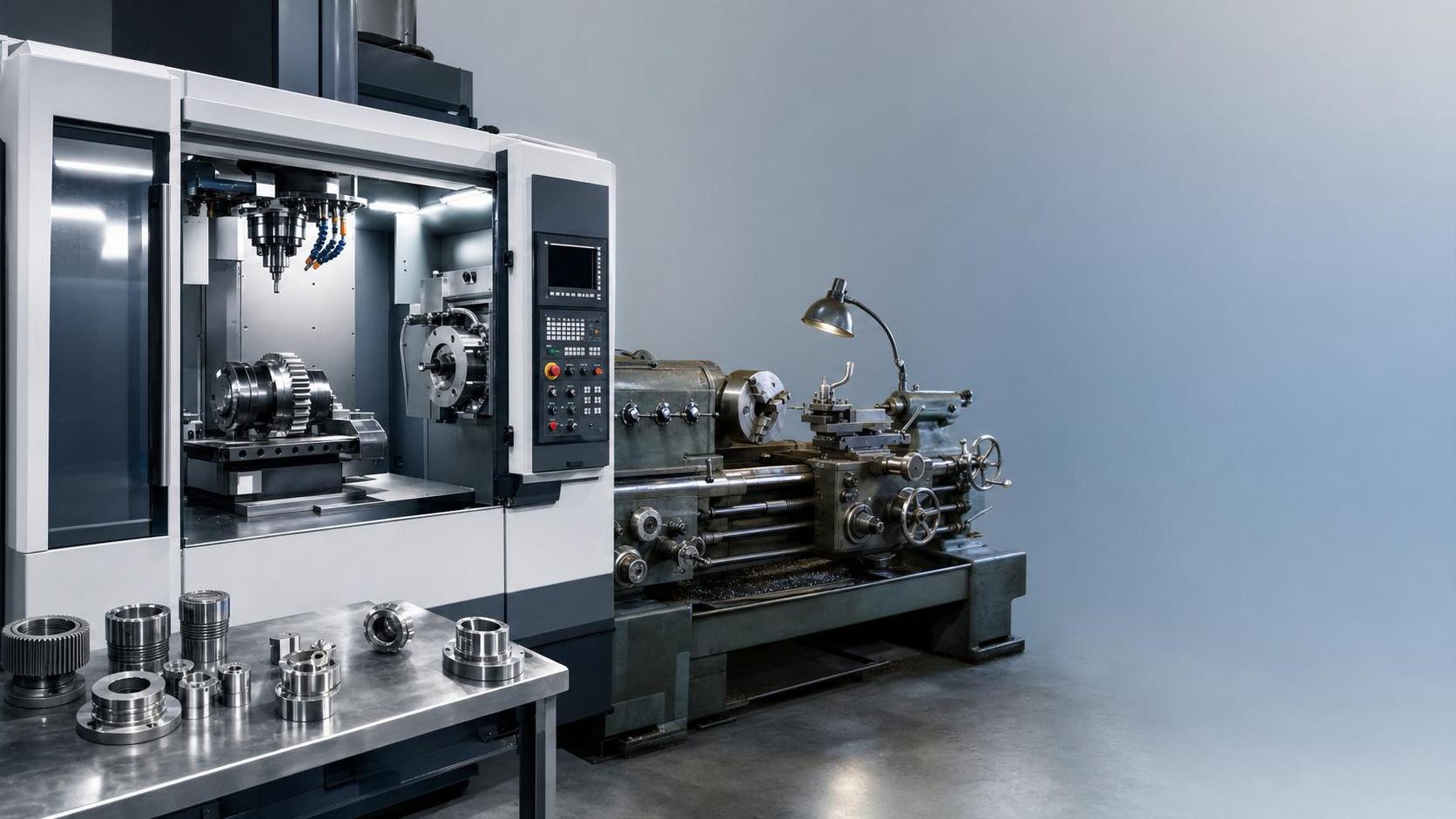
Choosing between CNC metalworking and conventional machining becomes more complicated when order volume is limited. In small-batch production, cost per part matters, but so do setup time, repeatability, design changes, and delivery risk.
Both methods still play important roles across automotive, aerospace, energy equipment, and electronics manufacturing. The better option depends less on labels and more on part geometry, tolerance targets, material behavior, and how often the job may change.
Why this comparison matters now
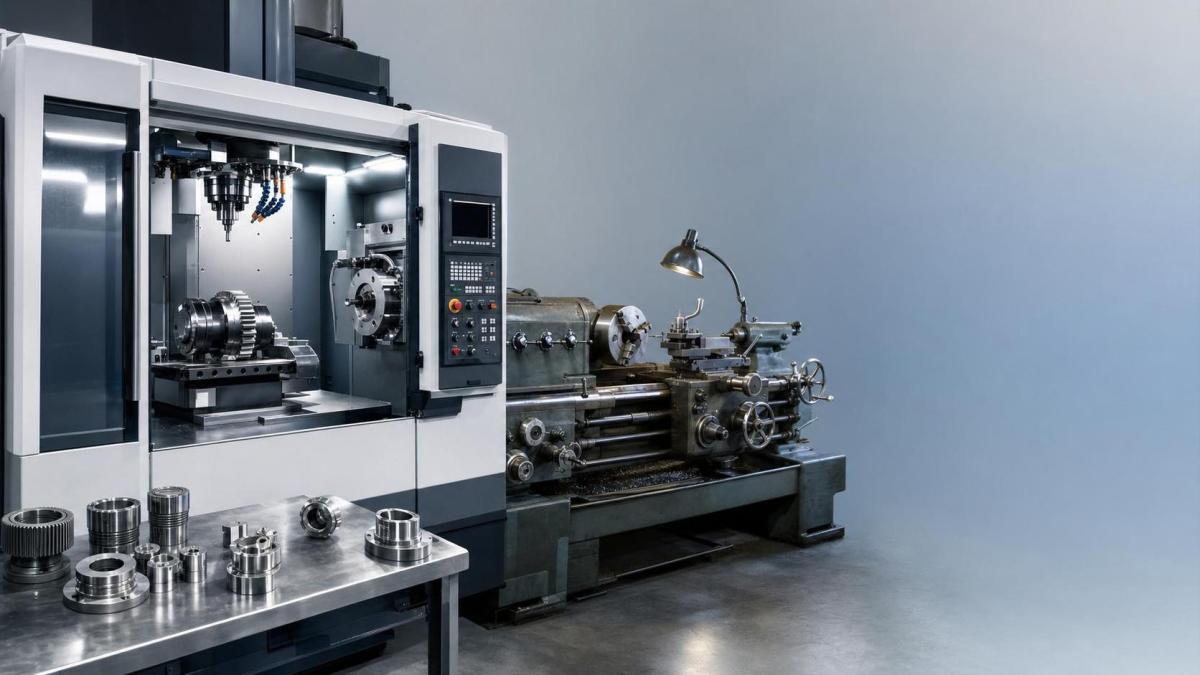
Global manufacturing is moving toward higher precision, stronger automation, and tighter digital control. That shift has made CNC metalworking more accessible, while also raising expectations for traceability and consistent quality.
At the same time, conventional machining remains relevant because many limited-volume parts do not require full automation. For straightforward shapes, a skilled operator with manual equipment can still deliver acceptable results at sensible cost.
This matters especially when lead times are short, drawings evolve, or multiple part variants must be sourced together. In those cases, process selection affects not only manufacturing cost, but also supplier coordination and inventory planning.
What separates CNC metalworking from conventional machining
CNC metalworking uses programmed machine tools to control cutting paths, spindle speed, feed rate, and positioning. The process is usually driven by CAD and CAM data, then executed on lathes, machining centers, or multi-axis systems.
Conventional machining relies more directly on manual operation. A machinist controls movement, tool engagement, and measurement through experience, fixtures, and machine settings adjusted at the shop floor level.
The key difference is not simply automation. It is how each method handles precision, repeatability, setup burden, and engineering changes when the production run is too small for mass manufacturing, but too important for trial-and-error.
A practical side-by-side view
Where CNC metalworking tends to perform better
CNC metalworking is often the stronger choice when part complexity rises faster than order volume. A batch of twenty parts can still justify CNC if the geometry includes compound angles, deep cavities, threaded features, or close positional tolerances.
It also becomes more attractive when documentation quality matters. Digital programs, controlled tool offsets, and recorded process parameters support inspection records and make future reorders easier to manage.
In sectors with demanding compliance expectations, that traceability matters. Aerospace brackets, energy system housings, precision discs, and electronics fixtures often require confidence that the tenth part matches the first.
Typical small-batch cases suited to CNC
- Prototype-to-pilot runs that may expand later
- Complex shaft components with multiple operations
- Precision structural parts with narrow tolerance bands
- Repeat orders expected across several months
- Jobs requiring stable quality across multiple suppliers or facilities
When conventional machining still makes sense
Conventional machining is not obsolete. It remains useful for repair parts, simple brackets, basic bushings, and low-complexity components where programming time would outweigh any productivity gain.
It can also be practical when the drawing is unfinished. If dimensions are still being adjusted and several features may be removed, manual machining can reduce sunk setup effort during the early decision stage.
For some materials and part shapes, a manual approach may support quick workshop response. That is especially true when only a few units are needed, tolerances are moderate, and surface finish requirements are not highly demanding.
The tradeoff buyers often overlook
A lower quoted price on conventional machining does not always mean a lower total sourcing cost. More variation between parts can increase inspection time, fitting work, or assembly delays later.
In other words, workshop savings may shift hidden cost downstream. For small-batch production, that shift is often more expensive than the original machining charge.
The real decision points in small-batch production
The most useful comparison is not machine against machine. It is process capability against business requirement. Several questions usually reveal the better path faster than a broad cost discussion.
Key factors to examine before placing an order
- How complex is the geometry, and how many setups are required?
- Are tight tolerances needed on every part, or only on critical features?
- Will the batch likely be repeated, revised, or scaled later?
- Does the material create tool wear or dimensional stability issues?
- How important are traceability, inspection reports, and process records?
- What is the cost of variation during assembly or field use?
If most answers point toward consistency, future repeatability, and feature complexity, CNC metalworking usually provides better control. If the job is simple, low-risk, and unlikely to repeat, conventional machining may remain the efficient choice.
How supplier capability changes the outcome
Process choice cannot be separated from supplier capability. A well-equipped shop with CNC lathes, machining centers, suitable fixtures, and disciplined programming can reduce scrap and shorten delivery even on limited runs.
The opposite is also true. CNC metalworking delivers less value when programs are rushed, tooling is mismatched, or inspection routines are weak. Equipment alone does not guarantee a better small-batch result.
This is why many global machine tool clusters continue to invest in digital integration, cutting tools, automation support, and flexible production systems. The competitive edge comes from process discipline, not only machine ownership.
Useful signs during supplier evaluation
A balanced way to make the call
For small-batch production, CNC metalworking is usually the better fit when precision, complexity, and repeatability are central to the order. Conventional machining remains valuable when the part is simple, urgent, and unlikely to return in the same form.
The strongest decisions come from comparing total production impact, not only quoted machining price. Looking at setup effort, change frequency, inspection burden, and future reorder potential creates a more reliable sourcing picture.
Before moving forward, it helps to sort parts by geometry, tolerance, and repeat demand, then request process recommendations alongside quotations. That approach turns CNC metalworking from a general term into a practical decision tool.
Recommended for You
 Industrial Machining: Selecting Processes for Tight-Tolerance Metal PartsCNC Machining Technology Center
 Manufacturing Technology Trends That Improve Throughput and Quality ControlManufacturing Market Research Center
 How to Design Cost-Effective Fixtures That Maintain Cycle Time in Mass ProductionCNC Machining Technology Center
 Is Learning CNC Programming Worth It for Shop Owners Seeking Higher Margins?CNC Machining Technology Center
 CNC Machine Arrival Inspection: Check Shipping Damage, Accuracy, Safety, and DocumentsCNC Machining Technology Center
 How to Select a Machine Tool for Aerospace Parts with Tight Tolerances?Machine Tool Industry Editorial Team

Aris Katos
Future of Carbide Coatings
15+ years in precision manufacturing systems. Specialized in high-speed milling and aerospace grade alloy processing.
▶
Industrial Machining: Selecting Processes for Tight-Tolerance Metal PartsCNC Machining Technology Center▶
How Does Precision Machining Differ From Standard Machining?CNC Machining Technology Center▶
CNC Precision: Which Tolerances, Materials, and Processes Fit Your Part?CNC Machining Technology Center▶
How to Choose Metal Machining Processes for Tight Tolerances and Production VolumeCNC Machining Technology Center▶
Production Process Explained: Key Stages, Controls, and Quality CheckpointsCNC Machining Technology Center
Mastering 5-Axis Workholding Strategies
Join our technical panel on Nov 15th to learn about reducing vibrations in thin-wall components.

Providing you with integrated sanding solutions
Before-sales and after-sales services
Comprehensive technical support